
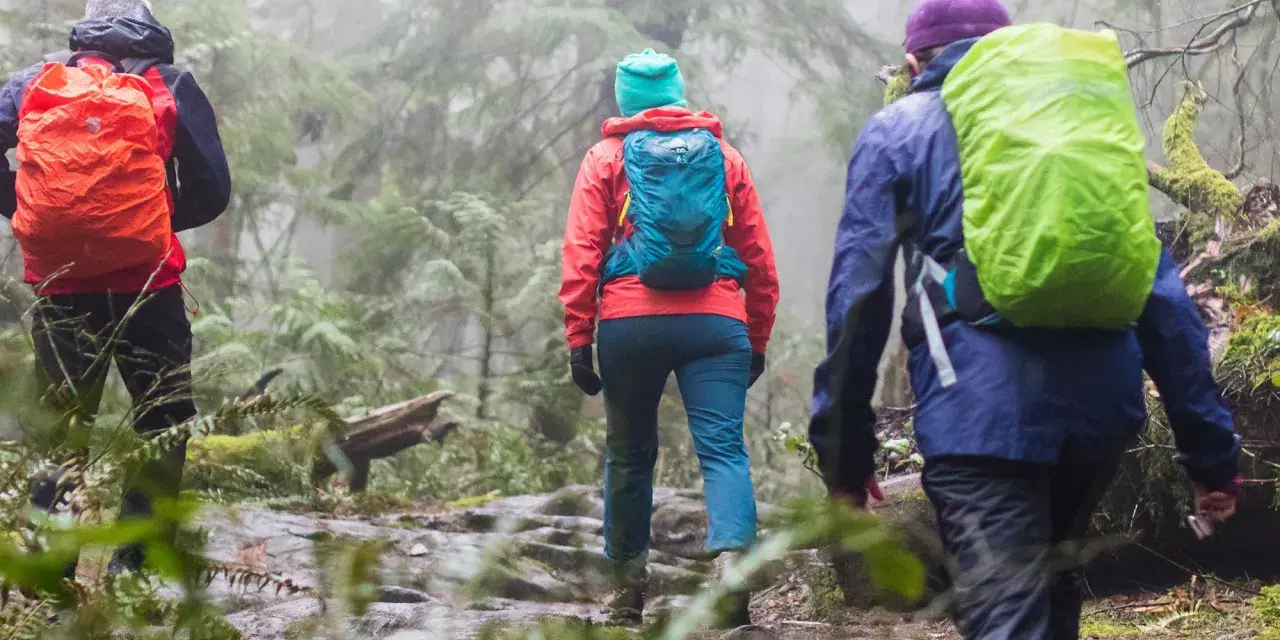
Rain changes a hike in a very practical way: it affects your pace, your footing, your temperature, and how much margin you have if the day runs long. I treat hiking in the rain as a planning problem, not a test of toughness, and that mindset usually leads to better decisions. In the guide below, I cover what to wear, what to pack, how to read a wet trail in the UK, and what changes once a day hike turns into an overnight backpacking trip.
What matters most before you step onto a wet trail
- Wind, cold, and visibility matter more than light rain on its own.
- A waterproof-breathable shell and good traction are more useful than expensive extras.
- In the UK, muddy descents, slick roots, and exposed ridges are the main trouble spots.
- Dry storage inside the pack is more reliable than a rain cover alone.
- For backpacking, campsite choice and a dry sleep system are part of the safety plan.
When a rainy hike is reasonable and when I would skip it
Not every wet forecast is a reason to cancel. Light, steady rain on a well-known low-level route is often manageable if you have the right kit and enough daylight. The situation changes fast when rain is combined with gusty wind, poor visibility, exposed ground, or a route that relies on tricky navigation. In the UK, that combination is what turns a simple walk into a decision-making exercise.
| Conditions | How I treat it | My response |
|---|---|---|
| Light rain, low wind, familiar low-level trail | Usually fine | Go ahead, but slow the pace and keep layers accessible |
| Steady rain with muddy ground and some climb | Manageable with care | Choose a shorter route and keep an eye on turnaround time |
| Heavy rain plus wind or mist | Higher risk | Stay below exposed ridges and avoid routes that depend on clear views |
| Flooded paths, swollen streams, thunder, or fading daylight | Good reason to stop | Change the plan or turn back early |
I also pay attention to the terrain itself. A forest track can feel perfectly safe in drizzle and turn into a slick, root-filled descent after an hour of rain. Moorland and coastal paths can be even less forgiving because water, wind, and poor footing tend to arrive together. Once I decide the weather is acceptable, I focus on clothing, because comfort is won or lost there.

The clothing system that keeps you dry enough
Rainwear works best as a system, not a single jacket that promises miracles. I want the layers next to my skin to move moisture away, the middle layer to keep warmth in, and the outer shell to block rain while still letting sweat escape. That is what people mean by waterproof-breathable: the fabric resists outside water, but it also gives perspiration a way out so you do not end up damp from the inside.
| Item | What I look for | What I avoid |
|---|---|---|
| Base layer | Synthetic or merino that dries quickly | Cotton, which stays wet and cools you down |
| Mid layer | Light fleece or synthetic insulation | Bulky insulation that soaks up moisture too easily |
| Rain shell | Waterproof-breathable jacket with a good hood and vents | Only “water-resistant” fabric if the rain is persistent |
| Rain trousers | Lightweight shell pants for long or cold wet days | Thinking the jacket alone will keep you comfortable |
| Footwear | Sturdy shoes or boots with reliable grip | Smooth soles that skate on wet mud or rock |
| Socks and gloves | Spare dry pair in the pack; thin gloves for cold rain | Only one pair of socks for the whole day |
Two details make a bigger difference than many people expect. First, a hood with a stiff peak helps keep rain out of your eyes and improves visibility when the weather turns foul. Second, venting matters: underarm zips, front zip management, and sensible pacing stop the jacket from becoming a personal sauna. I also avoid the trap of buying for the label instead of the fit. A technically excellent shell that is too tight, too short, or awkward over layers will underperform in real use. With your body protected, the pack becomes the next line of defense.
Pack for wet conditions, not just for rain
A rain jacket is useful, but it is not enough. If the rest of your kit is exposed to water, a wet day becomes a chain reaction: damp gloves, cold hands, reduced comfort, slower movement, and more mistakes. I prefer to think in terms of dry zones inside the pack. That means a liner or dry bags for the items that must stay dry, plus a few comfort items that make the day easier when the weather refuses to improve.
- Pack liner or dry bags for insulation, spare clothes, and sleep kit.
- Map, compass, and offline navigation because a phone alone is a weak plan in mist and rain.
- Power bank and waterproof phone pouch so your battery and electronics do not fail together.
- Head torch in case the route takes longer than expected.
- Spare base layer and socks for the end of the day or a safe rest stop.
- Food you can eat quickly, ideally without a long exposed stop.
- Small first-aid and blister kit because wet skin breaks down faster.
- Microfibre towel or sit pad for changing clothes without sitting in mud.
Choose the right route and pace for UK weather
Rain changes terrain in different ways, so I choose routes with that in mind. In the UK, low-level woodland loops, valley paths, and routes with simple escape options are often better than exposed ridge walks when the forecast is uncertain. On upland ground, I am more cautious because cloud, wind, and rain can reduce visibility quickly and make it harder to navigate between features that would be obvious on a dry day.
| Trail situation | How I handle it | Why |
|---|---|---|
| Exposed ridge or open moor | Choose an easier alternative if rain and wind are both rising | Exposure magnifies the discomfort and the risk |
| Wooded descent with roots or clay | Slow down and shorten stride | Slips happen most often on descents |
| Stream crossings or drainage gullies | Check carefully before committing | Water levels can rise much faster than expected |
| Familiar route with clear alternatives | Good candidate for a wet-day hike | You can turn around without losing the whole day |
One term I use for myself is turnaround time, which is the latest point at which I will still be comfortable heading back. That matters more in rain because pace almost always drops. A route that looks easy on paper can become a longer day once the ground softens, photos stop for weather checks, and you start moving more carefully. If I need the hike to be enjoyable rather than merely possible, I build in more margin than usual. That same idea becomes even more important once you are carrying a tent and sleeping out.
Backpacking in the rain needs a different camp routine
A backpacking trip has a second weather problem that a day hike does not: you still need to sleep, cook, and stay organised after the walking stops. I look for camping spots that are slightly raised, not in a dip, and not directly under anything that could shed water or branches onto the tent. I also try to pitch quickly and keep the inner tent dry from the first minute, because once the sleeping kit is damp, the next day starts badly.
Before I stop walking
I like to have my wet-weather layers ready before I arrive. That means rain protection at the top of the pack, a dry insulating layer in an easy-to-reach sack, and food that does not require a long exposed pause. If I know I will be putting up a tent in the rain, I also keep the groundsheet, poles, and outer tent organised so I am not fumbling while everything gets wetter.
At camp
Condensation is the detail people underestimate. Even if rain never leaks into the tent, moisture from breathing and cooking can make everything clammy. I ventilate the shelter as much as conditions allow, use the porch or vestibule carefully, and change into dry clothes as soon as I can. If there is any safe shelter nearby, that is where I sort dry and wet items rather than doing it out in the open.
Read Also: Hike Training - Prepare for the Trail & Conquer Any Climb
The next morning
In the morning, I dry what I can before packing, but I do not waste the day chasing perfect dryness. Wet backpacking usually means making small, practical trade-offs: pack the damp tent in a way that protects the sleeping bag, keep electronics in their own dry system, and accept that a few items will need air and sunlight later. The next step is knowing the mistakes that quietly make wet days feel much worse than they need to be.
The mistakes that make wet hiking feel worse than it is
Most rainy-day problems are not dramatic; they are cumulative. A slightly damp base layer, a poor hood, a sloppy pace, and one navigational mistake can add up to a miserable afternoon. I see the same errors repeated often enough that they are worth naming plainly.
- Wearing cotton, which absorbs water and steals warmth.
- Starting too fast, then sweating inside the shell and cooling down later.
- Assuming waterproof means invincible, instead of managing ventilation and exposure.
- Trusting the phone alone when rain, mist, or battery loss makes it unreliable.
- Ignoring descent quality, even though slips usually happen when people are tired and heading downhill.
- Letting a cold break turn into a long stop, which is when comfort drops fastest.
The other mistake is psychological: treating a wet forecast as if it automatically means either heroics or cancellation. In reality, there is a middle ground. If the weather is stable enough, the route is sensible, and your layers are in order, a rainy walk can still be a very good day outside. Once those errors are removed, I fall back on a simple go, shorten, or turn-back rule.
The rain-day rule I trust before leaving the house
My decision rule is straightforward. If the rain is steady but the route is low-level, the wind is modest, the ground is not waterlogged, and I can finish with daylight to spare, I go. If the forecast starts adding layers of risk - stronger wind, poor visibility, muddy descent, or difficult navigation - I shorten the route or move to easier ground. If I am dealing with thunder, flooding, or a forecast that keeps getting worse instead of better, I leave the hike for another day.
That approach keeps wet-weather hiking practical instead of stressful. I want to finish tired, not soaked through, cold, and guessing my way home. In the UK, where the weather can shift quickly and the terrain often gets slick faster than people expect, a bit of restraint is not overcautious; it is good outdoor judgment. The hills will still be there when the rain passes, and a smarter choice today usually means a better trip tomorrow.
