
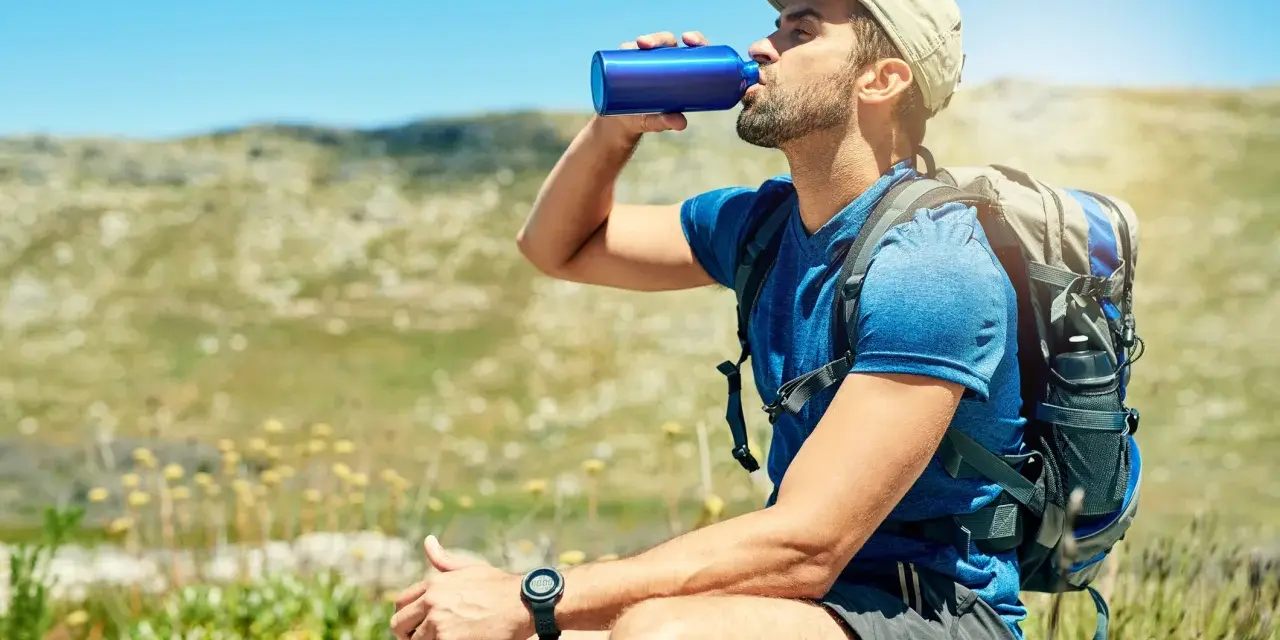
Long climbs, wind, and a heavy pack can drain fluid faster than the weather forecast suggests, especially on UK routes where cool air hides how hard your body is working. The real answer to how to stay hydrated while hiking is a mix of pre-hike prep, steady sipping, and a sensible plan for bottles, electrolytes, and refill points. In this guide, I’ll cover how much to drink, what to carry, how to spot trouble early, and the mistakes that catch hikers out.
The trail hydration rules that matter most
- Start the walk already hydrated: aim for 400-600 ml 2-3 hours before setting off, then take a small top-up just before you begin.
- Use about 0.5 litre per hour as a practical baseline in mild conditions; move closer to 1 litre per hour when the climb, heat, or pack weight rises.
- Make drinking easy. If every sip means stopping and unpacking, you will drink less than you need.
- Electrolytes matter most on long, hot, or very sweaty hikes, especially if you are eating lightly.
- Dark yellow urine, dizziness, headache, and peeing less often are warning signs that you are already behind.
Start the hike already hydrated
The easiest hydration fix happens before you reach the trailhead. The British Heart Foundation suggests 400-600 ml of water 2-3 hours before exercise, followed by a smaller top-up before you start. That fits hiking well: breakfast, a drink, a final check of your bottles, and then you leave without trying to “catch up” on the trail.
I also like to think about the night before. Normal meals, normal drinking, and enough salt with food usually do more for the next day’s walk than a last-minute flood of water. If you are setting off early with children, give everyone a few small drinks before you leave and again at the first real pause, because family walks often fail on the simplest thing: people wait too long to ask.
One practical rule: do not start thirsty and do not start empty. If you already feel dry, light-headed, or unusually tired at the car park, fix that before the first climb. It is far easier to begin well hydrated than to recover after an hour of ascent.

Choose a carry system that makes sipping effortless
The best water container is the one you will actually use while walking. I choose based on how often I need to drink, whether I am carrying a daypack or a bigger rucksack, and how much I value easy access over pure capacity.
| Option | Best for | Why it works | Trade-offs |
|---|---|---|---|
| Water bottle | Short day walks, family hikes, easy refills | Simple, cheap, easy to see how much is left | Can be awkward to reach in a full pack |
| Hydration reservoir | Longer hikes, steep climbs, backpacking | Hands-free sipping makes regular drinking easier | Harder to clean and harder to judge remaining volume |
| Soft flask | Smaller packs, faster-paced walks, kids | Light, flexible, easy to stash in front pockets | Less total capacity than a full bottle or bladder |
| Belt or vest system | Hot days and frequent sipping on the move | Keeps water close to hand and reduces friction | Extra kit to buy and fit properly |
My own bias is simple: if drinking requires too much effort, I do it less often. For a longer UK route, a hydration reservoir plus a small bottle gives me a useful backup. For a family walk or a short coastal path, a couple of easy-to-reach bottles is usually enough. The format matters less than the fact that you can sip without breaking your rhythm.
That design choice matters because hydration on the trail is a behaviour problem as much as a supply problem. The less friction you build into drinking, the more likely you are to do it regularly.
Match fluid intake to the route, pace, and weather
There is no universal litres-per-mile rule that works for every hiker. Sweat rate, body size, pack weight, and pace all change the equation. Still, I find it useful to start with a few practical ranges and adjust from there.
| Hike type | Starting target | What that means in practice |
|---|---|---|
| Easy walk under 90 minutes in cool weather | A few sips to 250-500 ml total | If you start well hydrated, thirst is usually enough here |
| Half-day hill walk in mild weather | Around 0.5 litre per hour | Small, steady sips usually work better than big drinks at rest stops |
| Hot, steep, or exposed route | 0.75-1 litre per hour | Heat, sun, and climbing all push fluid needs up quickly |
| Backpacking day with a heavy pack | Start at the upper end and plan refill points | The goal is to avoid arriving at camp already drained |
Those are starting points, not fixed rules. If you want a more personal estimate, weigh yourself before and after a long walk, using the same clothing. Every 1 kg of body weight lost is roughly 1 litre of fluid. That is one of the simplest ways to learn whether you underdrink, overdrink, or sit somewhere in the middle.
UK weather deserves a special note. A cool, windy morning can make you feel fresher than you are, so you may not notice fluid loss until you are already short. On a long ascent, especially with a loaded pack, I would rather sip early than wait for thirst to become obvious.
When water is enough and when electrolytes help
Plain water is still the default for most hikes. You do not need a sports drink on every countryside stroll, and you do not need to turn a family ramble into a science experiment. But there are times when electrolytes make more sense than water alone.
| Situation | Best choice | Why |
|---|---|---|
| Short, cool walk | Plain water | Fluid losses are usually modest |
| Long, hot, or steep day | Water plus an electrolyte tablet or sports drink | Sweat carries sodium with it |
| Backpacking day with lunch and camp food | Water plus salty food | Food can replace part of the sodium you lose |
| Very sweaty effort over several hours | Water and electrolytes together | Helps you avoid drinking large volumes of plain water only |
A heavy sweater can lose roughly 500-700 mg of sodium in an hour of vigorous exercise. That does not mean every hike needs a branded electrolyte product. It does mean that a long, sweaty, summer ascent is not the same as a gentle woodland path in April. In those conditions, salty snacks, an electrolyte tab, or a sports drink can be useful, mainly because they are convenient and easy to carry.
I am also cautious about the opposite problem: too much plain water for hours on end. Low blood sodium, or hyponatraemia, can happen if you keep drinking far beyond what you are losing. The practical fix is not “drink as much as possible”; it is drink regularly, keep some sodium in the mix when sweat loss is high, and avoid forcing water when you are not thirsty.
Spot dehydration early before it turns into a rescue issue
The NHS lists thirst, headache, light-headedness, dark yellow or strong-smelling pee, peeing less often than usual, tiredness, and a dry mouth as common warning signs. On a trail, I treat those as a signal to slow down immediately rather than a reason to power on and hope for the best.
- Stop and take small, regular sips instead of chugging a full bottle at once.
- Move out of direct sun, reduce your pace, and take pressure off the climb if you can.
- Add a salty snack if you have been sweating for hours and not eating much.
- If you feel dizzy when standing, become confused, develop a racing heartbeat, or cannot keep fluids down, stop the hike and seek urgent help.
- Give children and older adults more active prompts to drink, because they often do not signal the problem early enough.
Dark urine later in the day is not a badge of honour. It usually means you have already fallen behind. The useful habit is to check in before the warning signs become obvious, especially on hot days or on routes with long gaps between water stops.
That is also why I prefer to build hydration into the walk itself, rather than treating it as a separate task.
The trail routine I would trust on British day hikes and backpacking trips
If I had to keep this dead simple, I would use the same routine for most day hikes in the UK. Start hydrated, carry enough for the next leg, sip before I feel desperate, and pair water with food instead of trying to solve everything with one big drink at lunch. On family walks, I treat drink breaks like snack breaks: regular, predictable, and non-negotiable.
- Before leaving: fill bottles for the next leg, not just the first hour.
- On the move: take a few mouthfuls every 15-20 minutes on climbs or warm sections.
- At breaks: drink a little, eat something, and check whether you are actually keeping up.
- For backpacking: map the next refill point before you set off, and carry enough to reach it comfortably.
- After the hike: keep drinking over the next hour or two instead of trying to recover with one huge bottle.
For backpacking trips, the main mistake is underestimating the gap between water sources. A route that looks straightforward on a map can still leave you dry if the spring is slow, the campsite tap is seasonal, or the detour to a reliable source is longer than expected. I would rather carry a little extra weight than gamble on a refill that is not there when I need it.
If I had to reduce the whole thing to one practical rule, it would be this: make drinking easy enough that you do it before you feel bad. That one habit solves most hydration problems on the trail.
