
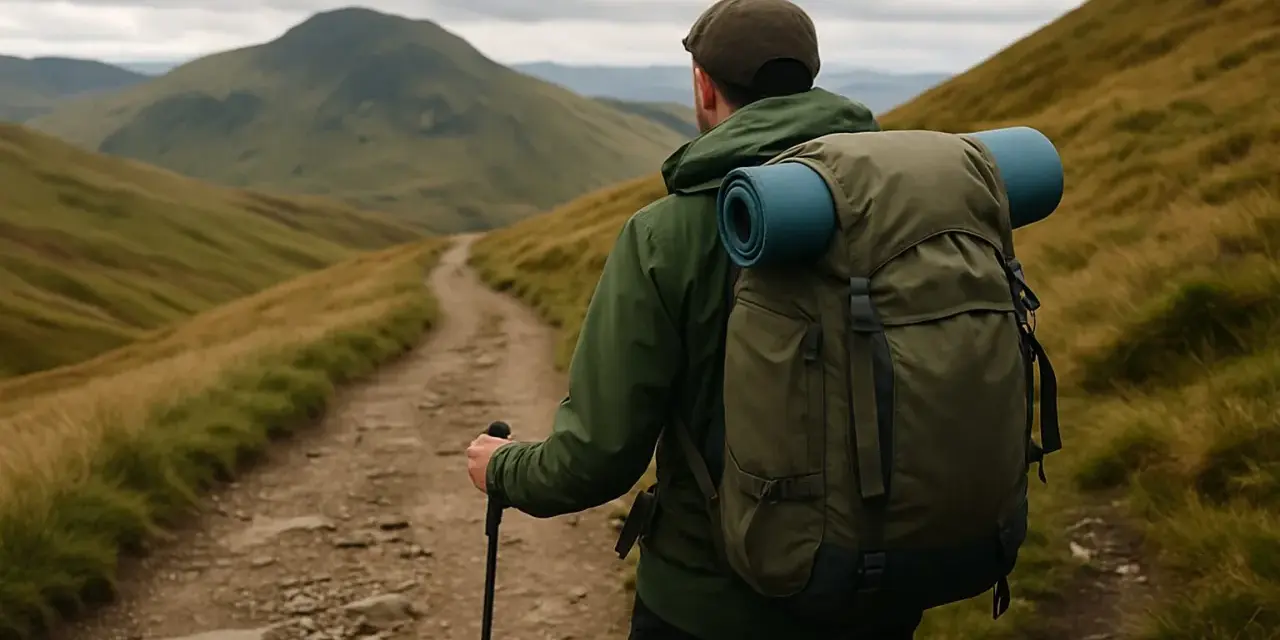
Good backpacking is less about owning the fanciest kit and more about making the trip easier to carry, safer to navigate, and simpler to enjoy. The best backpacking tips are rarely glamorous: they are the small decisions that stop a wet, windy hill day from turning into a miserable one. In the UK, that usually means planning around changeable weather, choosing the right pack, and knowing what to leave behind.
What matters most before you head out
- Choose the route first, then size the pack and food around it.
- For one to three nights, a 30-50 litre rucksack is usually enough; longer trips may need 50-80 litres.
- Keep a loaded pack around 20% of body weight or less, and lighter is still better on steep, boggy ground.
- Check mountain weather, carry offline navigation, and always have an exit plan if visibility drops.
- Use layers, waterproofs, and broken-in footwear rather than hoping for dry, calm conditions.
- Respect access rules: England and Wales usually require permission for camping; Scotland follows different access rights, but leave-no-trace still applies.
Start with a route you can actually enjoy
I always think the route should decide the kit, not the other way around. A gentle two-night loop on well-marked paths calls for a very different setup than a steep ridge walk with exposed sections, rough ground, and a long stretch between water sources. If you get this wrong, everything else becomes harder: the pack feels heavier, the food disappears faster, and the day starts to feel like a test instead of a trip.
For a first overnight, I would keep the mileage honest. In the UK, that often means a route with a simple escape option, a reasonable climb profile, and a campsite or stopping point that does not depend on perfect weather. On popular National Trails, places can fill quickly in spring, summer, and bank holiday periods, so I would book ahead rather than assume something will be available. That small bit of planning removes a lot of pressure later.
My rule is simple: if the route feels ambitious on paper, it is probably too ambitious for a first or second trip. Once the route is realistic, the next decision is whether the pack supports it or gets in the way.
Choose a pack size that fits the trip
Pack volume is one of those things people overthink in the shop and underthink on the hill. A rucksack that is too large encourages overpacking; one that is too small forces awkward compromises. For most backpacking trips, I prefer to match volume to nights out, not to some fantasy list of “just in case” gear.
| Trip length | Practical pack volume | What it should comfortably hold |
|---|---|---|
| 1 night | 30-40 litres | Sleep system, one spare layer, stove, food, water, small wash kit |
| 2-3 nights | 40-50 litres | Slightly more food, extra socks, waterproofs, repair kit, camp essentials |
| 3-5 nights | 50-80 litres | Bulkier sleep kit, warmer insulation, more food, and a bit of flexibility |
| Winter or bulky camera gear | 60-80 litres+ | Extra insulation, thicker sleep system, and room for safety margin |
As a rough guide, I try to keep a loaded backpacking pack below about 20% of body weight; for a day hike, around 10% feels far more comfortable. That is not a law, just a practical benchmark. The lighter the pack, the less energy you waste on every climb, descent, and awkward stile.
Fit matters just as much as volume. The hip belt should carry most of the load, the shoulder straps should stabilise rather than dig in, and the heaviest items should sit close to your back and around mid-height. Food and water are usually the heaviest things in the bag, so I pack them where they are easy to reach but not hanging low and pulling the whole sack backwards. From here, the next question is what should actually go into that pack.

Pack clothing for a forecast that will probably change
UK hill weather can turn quickly enough to make optimism a liability. I would rather carry one extra dry layer than trust a forecast that looked kind at breakfast. The trick is not to bring lots of clothing; it is to bring the right system of layers that works in wind, rain, and brief sunshine.
The simplest approach is a three-part clothing system:
- Base layer - a moisture-wicking top that pulls sweat away from your skin. Cotton is the wrong choice because it stays wet and cold.
- Mid layer - usually a fleece or light insulated layer for warmth when you stop or the wind picks up.
- Shell layer - a waterproof jacket, and ideally waterproof trousers too, because a soaking front or a wet seat on the ground can ruin the day quickly.
Footwear is more personal than most people admit. Some walkers are happier in sturdy boots; others prefer trail shoes that dry faster and feel less clumsy on long days. I would choose based on terrain, pack weight, and what you can walk in for several hours without hotspots. Whatever you choose, break them in before the trip. New footwear and a long descent are a bad combination.
For changeable conditions, I like a dry pair of socks sealed away for camp, a hat, light gloves, and a spare layer that never gets worn while walking. That one dry set can make the evening feel dramatically better. Once clothing is sorted, the trip starts to depend less on comfort and more on fuel and pacing.
Eat, drink, and recover before you crash
People often think they need more grit when what they really need is better timing. If you wait until you are hungry, tired, or cold, you are already behind. I prefer to snack regularly, drink before I feel dehydrated, and stop for food before the whole group starts moving at different speeds.
On the trail, simple food usually wins. Wraps, nuts, chocolate, flapjacks, instant oats, cheese, jerky, and dried fruit are not fancy, but they are easy to eat when you are tired. If you are cooking, choose meals that are quick, hot, and predictable rather than complicated recipes that demand a perfect setup. A one-pot dinner with a clean-up routine beats a “better” meal that takes forever to make.
A few practical habits help more than most people expect:
- Eat something small before the climb starts, not after the energy dip.
- Keep snacks in an outer pocket so you do not need to unpack the whole bag.
- Plan more food than you think you need, especially if the route is colder or hillier than expected.
- Carry water in a way you will actually use, whether that is bottles, a reservoir, or both.
If you are walking with children, I would overestimate snack demand and underestimate how far they will happily go without a pause. Short legs, big appetites, and curious detours can make a small route feel much bigger. That is not a problem if you plan for it; it is a problem if you pretend it will not happen. Once food and water are covered, the next risk is simple disorientation.
Navigate with more than one method
This is where many first trips go wrong. A phone app is useful, but it is not a complete navigation plan. Batteries fail, screens crack, and cloud can erase the landscape faster than people expect. In low cloud, visibility can drop to under 50 metres, which is exactly the kind of day when “I’ll just follow the path” stops being a strategy.
My standard navigation setup is boring on purpose: a paper map in a waterproof case, a compass, an offline map on my phone, and a charged power bank. If the route crosses open moorland, ridgelines, or complex junctions, I want the map and compass to be usable without opening an app first. GPS is helpful, but it should support navigation rather than replace it.
Before I set out, I also share three things with someone else: the route, the expected finish time, and the point at which I would turn back if conditions deteriorate. That last one matters. A turnaround time is not pessimism; it is the line between a manageable day and a late, stressful exit in fading light.
A small safety kit finishes the job: headtorch, spare batteries, whistle, first aid basics, and any medication you personally need. If you want one piece of advice that saves the most trouble, it is this: carry the gear that still works when the weather, your pace, or your phone does not. After navigation, the final big topic is how you camp without causing problems for yourself or anyone else.
Respect access rules and make camp lightly
Camping rules are not identical across the UK, and that matters. In England and Wales, camping usually needs permission from the landowner, so on National Trails and many other routes an official campsite is the cleanest option. Scotland is different: access rights allow responsible wild camping on most unenclosed land, but the same principles of small tents, short stays, and leave-no-trace behaviour still apply.
If I am pitching for the night, I keep the camp small, discreet, and as temporary as possible. That means no spreading kit everywhere, no bright lights if I can avoid them, and no fire unless the place clearly allows it and it is genuinely appropriate. A stove is usually the better answer in the UK. It is safer, cleaner, and far less likely to create a mess or a complaint.
There are a few habits that make a disproportionate difference:
- Stay on durable ground rather than trampling fragile grass or wet peat.
- Take every bit of litter home, including food scraps.
- Use toilets where available and follow local guidance when they are not.
- Keep dogs under control and away from livestock.
- Pack out anything you brought in, because “biodegradable” is not the same as harmless in the landscape.
That approach is not just polite; it protects the places you want to return to. The last piece is less about rules and more about the habits that make a trip feel smooth instead of scrappy.
The checks I would never skip before setting off
Before every overnight, I do the same unglamorous routine: I test the stove, check the headtorch, make sure the waterproofs are easy to reach, and confirm that the phone has an offline map loaded. I also look at the route again with fresh eyes, because the best time to notice a weak plan is before the parking ticket is bought and the bags are on.
If I had to narrow all of this down to three priorities, they would be: keep the route realistic, keep the pack honest, and keep the weather and access rules in mind. That combination does more for comfort and safety than any expensive gadget. It also leaves more room for the parts of backpacking that actually matter: the quiet hour before camp, the view after a long climb, and the feeling of arriving with enough energy left to enjoy it.
In practice, the best trips are usually the ones that feel slightly too easy on paper. That is not boring; it is efficient. The hill, the weather, and your own legs will add enough difficulty on their own.
