
The quietest sleeping pad is rarely the lightest one, and that trade-off matters if you wake easily or share a tent. In practice, the best choice depends on how much crinkle you can tolerate, how cold your nights get, and whether you are car camping in the UK or carrying everything on your back. This guide breaks down the noisiest materials, the quietest pad types, and the features I would actually check before buying.
What matters most when silence is the priority
- Closed-cell foam is the quietest option, but it is bulky and less cushioned.
- Self-inflating pads are usually the best middle ground for silence, comfort and durability.
- On inflatable pads, matte or textured shells and gentler inflation help more than marketing claims.
- For most UK three-season trips, I would start around an R-value of 3 to 4; move higher for colder spring, autumn or hill camps.
- If you share a tent, a softer, quieter pad matters more than saving a few grams.
What actually makes a sleeping pad noisy
Most pad noise comes from three places: the shell fabric, the air chambers inside, and the way the pad flexes when your body shifts. Thin, shiny laminates tend to crinkle, tightly tensioned air chambers can squeak, and a fully pumped pad can feel and sound like a drum skin. Noise also gets worse when the pad and sleeping bag slide against each other, especially on smooth tent floors.That is why a pad can look brilliant on paper and still be annoying at night. I pay attention to how the surface feels under a sleeping bag, not just to the headline weight or thickness. A small amount of texture often does more to calm the sound than a dramatic change in inflation pressure, which is worth keeping in mind before comparing whole product ranges.
- Shell material matters because stiff or glossy fabrics usually sound sharper when you roll over.
- Internal pressure matters because overinflated pads rebound more loudly and feel less forgiving.
- Baffle design matters because large, rigid chambers can move more noisily than softer, better supported structures.
- Surface grip matters because slipping against your sleeping bag creates extra rustle that people often blame on the pad itself.
Once you understand where the noise comes from, it becomes much easier to separate genuinely quiet pads from those that are only quiet in a product description.

Which pad types are quietest
| Pad type | Noise level | Comfort | Packed size | Best use |
|---|---|---|---|---|
| Closed-cell foam | Almost silent | Firm | Bulky | Minimal noise, sit pad use, backup layer |
| Self-inflating | Usually very quiet | Balanced | Medium to large | Car camping, family camping, cooler weather |
| Standard inflatable air pad | Varies a lot | High | Small | Backpacking where weight matters most |
| Quiet premium air pad | Low for an air pad | High | Small to medium | Backpacking when you want less crinkle without moving to foam |
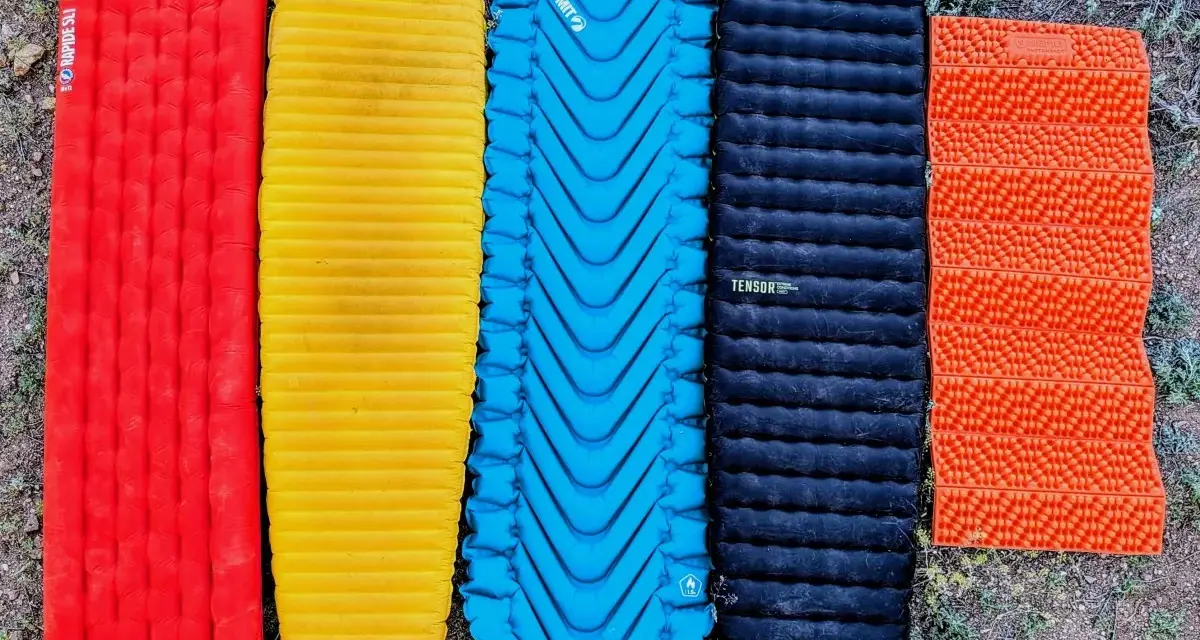
If silence is the top priority, closed-cell foam wins on noise almost by default. The catch is obvious: it is less cushioned and usually much bulkier than a true inflatable. For most people, the sweet spot is a self-inflating pad or a well-made air pad with a softer shell, because that is where you get a noticeable drop in noise without giving up all comfort.
That ranking is more useful than chasing a single model name, because it tells you which category actually fits your trip. From there, the next question is how much warmth you need for your usual camping conditions.
How to choose for UK camps and family trips
For most UK spring-to-autumn camping, I would usually start around an R-value of 3 to 4. That range suits cool nights without forcing you into the extra bulk of a winter pad. If you camp in frosty conditions, on exposed hills, or in the Scottish Highlands shoulder season, move toward 4.0 to 5.4. For genuine winter use, 5.5 and above is the safer band.
That matters because a quieter pad that leaves you cold is not a good trade. On damp ground, the right insulation can feel more important than another half-step down in noise. R-value is additive too, so a thin closed-cell foam layer under another pad can boost warmth, add protection against punctures, and improve sleep comfort without turning the system into a concertina of noise.
- Car camping and family weekends suit self-inflating pads because they are quiet, forgiving and easy to live with.
- Backpacking trips usually need a quieter air pad, but I would only choose the loudest ultralight option if the weight saving is genuinely worth it.
- Wet or cold ground often justifies a foam underlay, especially if you camp on rough pitches or want more insulation margin.
- Side sleepers need enough thickness to stop hip pressure, but a pad that is rock-hard usually sounds worse and sleeps worse.
- Shared tents make noise more noticeable, so I would favour low-rustle materials over a tiny packed-size advantage.
If you camp mainly in Britain, that balance usually beats chasing extreme ultralight specs. The next step is understanding which details make one low-noise pad better than another.
The details that separate a calm pad from a crinkly one
| Feature | What I look for | Why it matters |
|---|---|---|
| Top fabric | Matte or lightly textured rather than glossy | Usually sounds softer and helps the sleeping bag stay put |
| Internal build | Stable baffles and a less “springy” feel | Reduces the hollow, plastic-like noise that cheap inflatables can make |
| Inflation method | Pump sack or integrated pump for top-ups | Keeps breath moisture out and makes it easier to fine-tune firmness |
| Firmness | Supportive, but not drum-tight | Overinflation tends to increase both noise and pressure points |
| Warmth system | Reflective film, foam, or fibre insulation | Lets you choose warmth without automatically ending up with a louder pad |
There is a practical limit here. Softer, quieter fabrics can sacrifice a bit of durability, and that trade-off is real. I would rather accept a small amount of sound than buy a fragile mat that wears through too quickly, especially if the pad will see family trips, rough ground or repeated use on European campsites. That is why I look for quiet construction plus sensible materials, not just the softest shell available.
Another trick that helps more than people expect is sleeping on a slightly softer setup. If you let the pad settle after inflation, then release just enough air to contour to your body, the sound usually drops and the comfort improves. You do not want sag, but you also do not want a noisy inflatable that feels inflated to the limit.
A short list of quieter pads worth looking at in 2026
I would not call any one pad universally perfect, but a few current models show the kind of construction I would trust when quiet nights matter. These are better treated as examples of what to look for than as a final ranking, because stock and sizing vary across UK and European retailers.
| Example pad | Why it stands out for noise | Trade-off |
|---|---|---|
| Therm-a-Rest NeoAir XLite NXT | Improved internal construction, 3 in / 7.6 cm thick, and a claimed 83% noise reduction versus the previous model | Still an air pad, so it is quieter rather than silent |
| Sea to Summit UltraLight Insulated Mat | Manufacturer language emphasises that both the reflective material and outer laminate are very quiet | Moderate warmth, not a deep-winter specialist |
| EXPED Ultra 6.5R | Matte, slightly textured fabric and a reputation for being one of the quietest ultralight pads | Not the cheapest, and still louder than a foam or self-inflating mat |
| Big Agnes Insulated Air Core Ultra | Quieter nylon double-ripstop fabric and a stable, thick sleep surface | Comfortable and warm, but not the lightest choice |
| Any solid self-inflating foam pad | Foam-based construction generally avoids the crinkly air-chamber sound altogether | Bulkier in the pack, especially for backpacking |
If I were choosing for a family tent or a relaxed weekend away, I would start with a self-inflating option. If I were carrying the pad on a longer walk, I would narrow it to the quieter premium inflatables first and ignore the cheapest ultralight models, because they are often the crinkliest in real use. That choice is usually more honest than trying to buy the lightest possible pad and hoping the noise will not matter.
The strongest signal here is simple: the quieter pads tend to be the ones that mix a softer face fabric with a stable internal structure and enough insulation to keep you warm without needing excessive inflation. That combination is what I would look for before I let a brand name influence the decision.
How I would choose in practice
If silence is everything, choose closed-cell foam and accept the bulk. If you want the best all-round option for car camping or family trips, choose a self-inflating pad with open-cell foam. If you need backpacking packability, buy a quieter premium air pad rather than the cheapest ultralight inflatable, because the lowest price often buys you the loudest night.
- For the lightest sleepers, quietness should outrank weight once the pad is comfortable enough to keep you sleeping through the night.
- For couples and families, the less rustle the pad makes, the less likely you are to wake someone else when you turn over.
- For colder UK trips, warmth and quietness should be chosen together, not one after the other.
- For rough campsites, a slightly tougher shell is worth it if it stops you replacing a pad too soon.
My own test is straightforward: I inflate the pad at home, lie on it on a hard floor, and roll from back to side a dozen times. If it sounds intrusive in a quiet room, it will sound louder in a still tent. That simple check is often the fastest way to find the quietest sleeping pad for your own sleep style, not just the one with the nicest spec sheet.
