
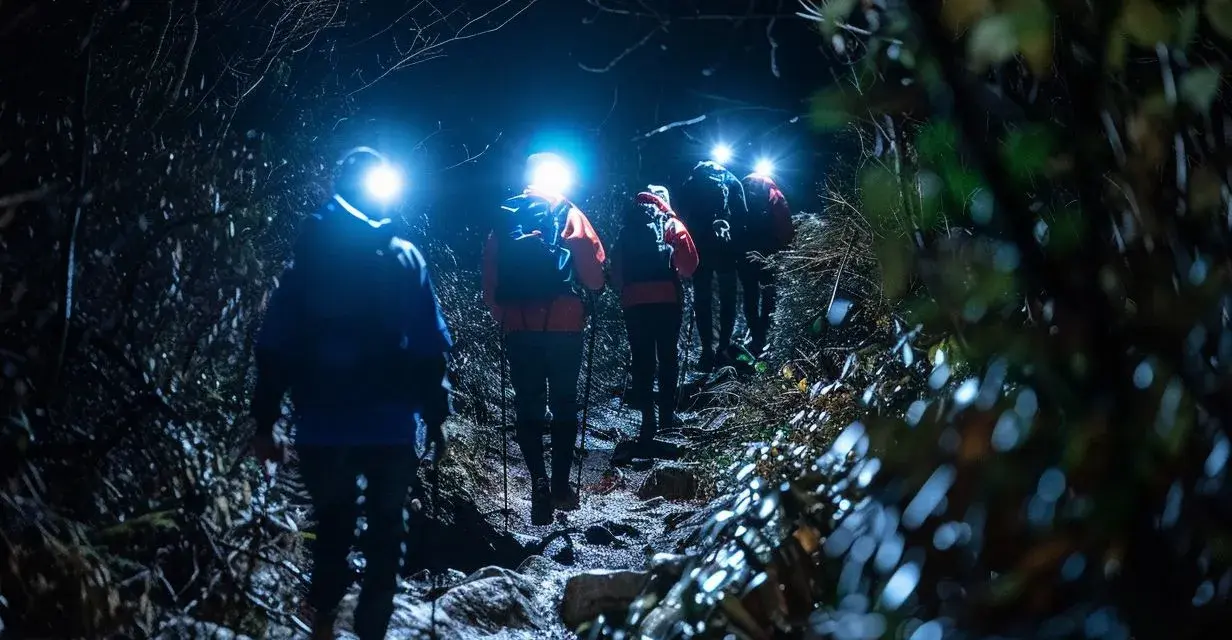
Night hiking can be one of the most memorable ways to enjoy the UK outdoors: the paths are quieter, the air cools fast, and familiar hills feel completely different after sunset. The short answer to what are the best night hiking tips? is that route choice, lighting discipline, and simple navigation habits matter more than speed or fancy gear. In this guide, I focus on the practical decisions that keep an after-dark walk calm, safe, and enjoyable rather than awkward or overcomplicated.
What matters most before you head out after dark
- Start with a familiar, low-consequence route so you are not learning navigation and terrain at the same time.
- Carry a headtorch, backup power, map, and compass; a phone alone is not enough in the hills.
- Let your eyes adapt to the dark and use white light only when it genuinely helps.
- Keep the plan short and reversible, especially for a first UK night hike or a family walk.
- Turn back early if wind, rain, bog, or fatigue makes simple decisions harder than expected.
Start with a route that is easy to reverse
When I plan a night hike, I begin by asking a boring but important question: how quickly can I get out if things change? That is why I favour routes I can explain in one sentence, such as a clear valley path, a towpath, a low-level loop with obvious junctions, or a familiar out-and-back route with a simple return line.
For a first outing, the goal is not distance; it is reducing the number of things that can go wrong at once. I would avoid exposed ridges, cliff edges, steep scrambles, boggy moorland, and complicated junctions where one missed turn can cost an hour. In the UK, I also check sunset, wind, rain, temperature drop, and mist, because each of those can make familiar ground feel strangely hard to read once daylight is gone. If I am walking with children or mixed-ability friends, I shorten the plan again and build in an obvious bailout point. Once the route is simple, the next question is what to carry so a minor mistake does not become a long, cold problem.

Pack for darkness, not just distance
Night hiking kit is less about weight and more about consequences. If a torch dies, a layer is soaked, or the phone battery drops, you need enough redundancy to keep moving or get back without panic. I like to keep the essentials within easy reach, not buried at the bottom of the pack where they only become visible once I have already stopped to rummage in the dark.
| Item | Why I carry it | Practical note |
|---|---|---|
| Headtorch with a red-light mode | Keeps my hands free and protects night vision better than a harsh white beam | Keep it accessible, not packed away |
| Spare batteries or a power bank | Backup if the first light or phone fails | Test them at home before leaving |
| Paper map and compass | Still works when signal, battery, or screen does not | Carry the map in a waterproof sleeve |
| Warm layer and waterproof shell | UK evenings cool quickly and damp air bites harder than people expect | Put them on before you are cold |
| Snacks and water | Night pace is slower, and energy drops catch up faster | Choose food you can eat without faffing about |
| Whistle and emergency bivvy | Gives you a simple fallback if progress stops | Useful even on short routes |
I also keep my phone in a battery-saving mode unless I need signal, because it stretches runtime and stops me relying on it as a crutch. The rule I use is simple: if an item would matter a lot in daylight, it matters even more after dark. With the kit sorted, the skill that actually keeps you moving is navigation.
Navigation matters more than fitness at night
I treat night navigation as a series of short, verifiable decisions. I want to know where I am, what the next obvious feature is, and how I will confirm it before I start walking again. On easy ground, that can be as basic as following a wall, fence, stream, or clear path. On more complex ground, I write down bearings and distances before I leave the last reliable feature, because memory is a poor substitute once the dark starts flattening the landscape.
Offline maps are useful, but I still want a paper map and compass because screens fail, GPS wanders, and fog can make every landmark look flatter than you expected. The skills that pay off fastest are these:
- Taking a bearing from a map and following it in short, controlled legs.
- Using attack points, such as a gate, bridge, or wall corner, to find a smaller feature.
- Estimating distance by time and terrain instead of guessing.
- Checking junctions deliberately rather than assuming the path will stay obvious.
I also practise all of this in daylight first, because night is a terrible classroom for basic skills. Once you can reliably tell where you are, the last big variable is how you use light without ruining the very night vision you need.
Use light in a way that protects your night vision
I like to give my eyes time to adjust before I set off, especially if I have come straight from a lit car park or café. Night vision can take 20 to 45 minutes to settle properly, and a bright white beam resets that progress in a second. That is why I use the lowest useful setting, switch to red light for short checks when possible, and keep the torch pointed down rather than sweeping the whole hillside.
If I am hiking with others, I never shine my beam into their faces, because it is rude and it steals the advantage they have earned from letting their eyes adapt. A few habits make a big difference here:
- Use white light only when it genuinely helps, such as reading the map or checking footing.
- Use red light for brief checks if your headtorch offers it.
- Let your eyes settle instead of switching lights on and off every minute.
- Keep the beam low and steady so you preserve contrast on the ground.
- Avoid blasting other walkers, because one careless flash can undo their night vision too.
Even perfect lighting cannot fix a poor route choice, which is why terrain matters so much after sunset.
Choose terrain that stays forgiving after sunset
For UK night hikes, wet grass, roots, bog, and uneven stone paths can be more limiting than darkness itself. On a first walk, I prefer low-level paths, familiar forestry tracks, or a simple valley route with multiple easy exits. I would leave exposed ridges, cliff paths, and route-finding on featureless moorland for later, when the navigation is second nature.
| Terrain type | Good for a first night hike? | Why |
|---|---|---|
| Low-level riverside or valley path | Yes | Clear line, easy exits, fewer hazards |
| Familiar woodland loop | Usually | Works well if junctions are limited and well marked |
| Open moorland with handrails | Sometimes | Can work in clear weather, but mist and bog raise the stakes |
| Ridge walk or cliff-edge path | No for a first attempt | Exposure and missteps matter too much in the dark |
| Scrambly or rough mountain descent | No | Descending in darkness is where small errors multiply |
For a first family outing, I would go even smaller and choose a route that stays interesting without becoming technical. A night hike should feel like a controlled test, not a rescue scenario waiting to happen. When the terrain gives you room to make a few small mistakes, the whole experience stays calmer, which is exactly what the final checks are for.
The final checks I use before stepping off
Right before I leave, I run through a short checklist that keeps the evening honest. It is not complicated, but it catches the sort of mistakes that usually show up once people have already started moving.
- Tell someone the route and return time, including a realistic turn-back point.
- Start before sunset if possible, so the first part of the route feels familiar.
- Check the forecast one last time, especially for wind, mist, and rain.
- Keep the torch, map, compass, and snacks easy to reach instead of buried in the pack.
- Set a hard turn-around time before you leave, not halfway through.
- Stay conservative on pace; if breathing, footing, or confidence drops, I slow down immediately.
The best night hikes are not the ones where you push hardest; they are the ones where darkness stays part of the experience rather than the problem. If I can keep the route simple, the kit redundant, and the navigation calm, I get all the atmosphere of night hiking without turning it into guesswork. That is the standard I would use in the UK whether I was out alone, with friends, or keeping a family walk short and memorable.
