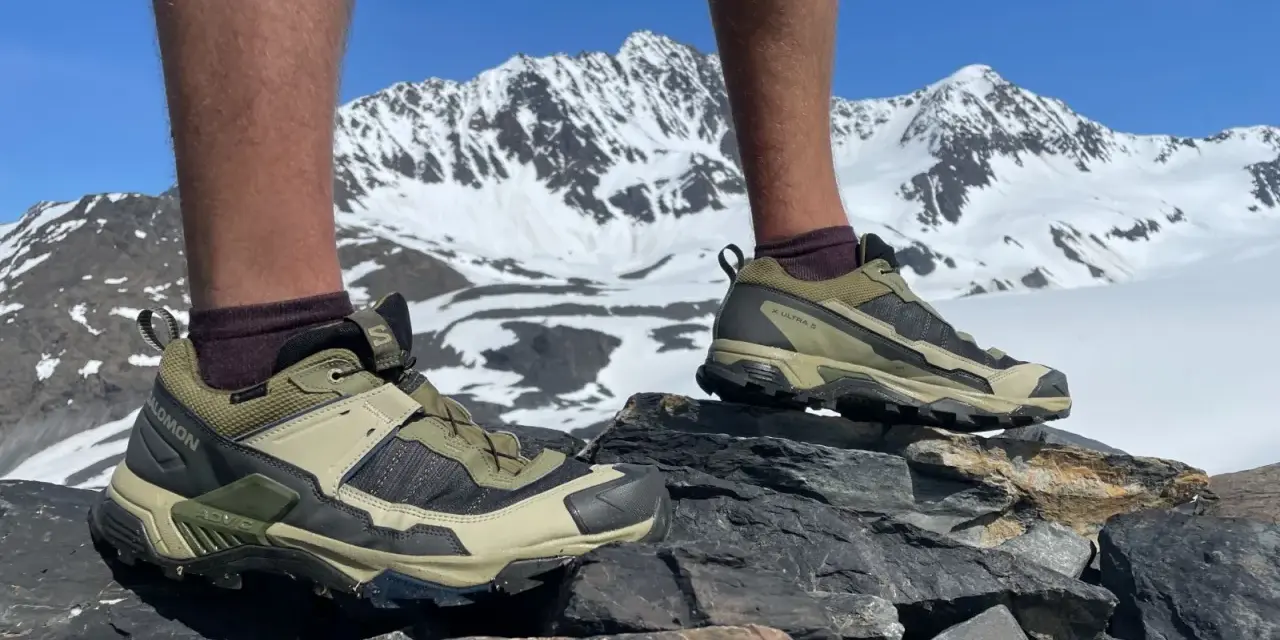
Salomon’s X Ultra 5 GTX sits between a lightweight trail shoe and a proper hiking boot, which is exactly why it gets so much attention. It is built for walkers who want waterproof protection, secure footing and enough support for uneven ground without carrying unnecessary bulk on every outing. In this guide I break down what the model is actually for, how it behaves on wet British trails, how the different versions compare, and what I would check before spending money on it.
The points that matter most before you buy
- Salomon UK currently prices the low GTX at £150 and the mid GTX at £165.
- The low version weighs 320 g for women and 380 g for men; the mid version weighs 390 g for women and 440 g for men.
- GORE-TEX keeps rain and spray out, but it also makes this a warmer shoe than a non-waterproof alternative.
- Contagrip and advancedCHASSIS are the key stability and traction features for mixed terrain.
- If you are between sizes, Salomon recommends going half a size up.
- Men’s wide GTX versions exist if the regular fit feels too narrow.
What the shoe is built to do
The X Ultra 5 GTX is not trying to be a soft, casual walking shoe, and it is not a stiff mountaineering boot either. I read it as a very deliberate middle ground: light enough for a long day out, structured enough for rocky paths, muddy bridleways and uneven hillsides. That is a useful balance for UK walking, where one route can move from pavement to wet grass to rough stone in a single hour.
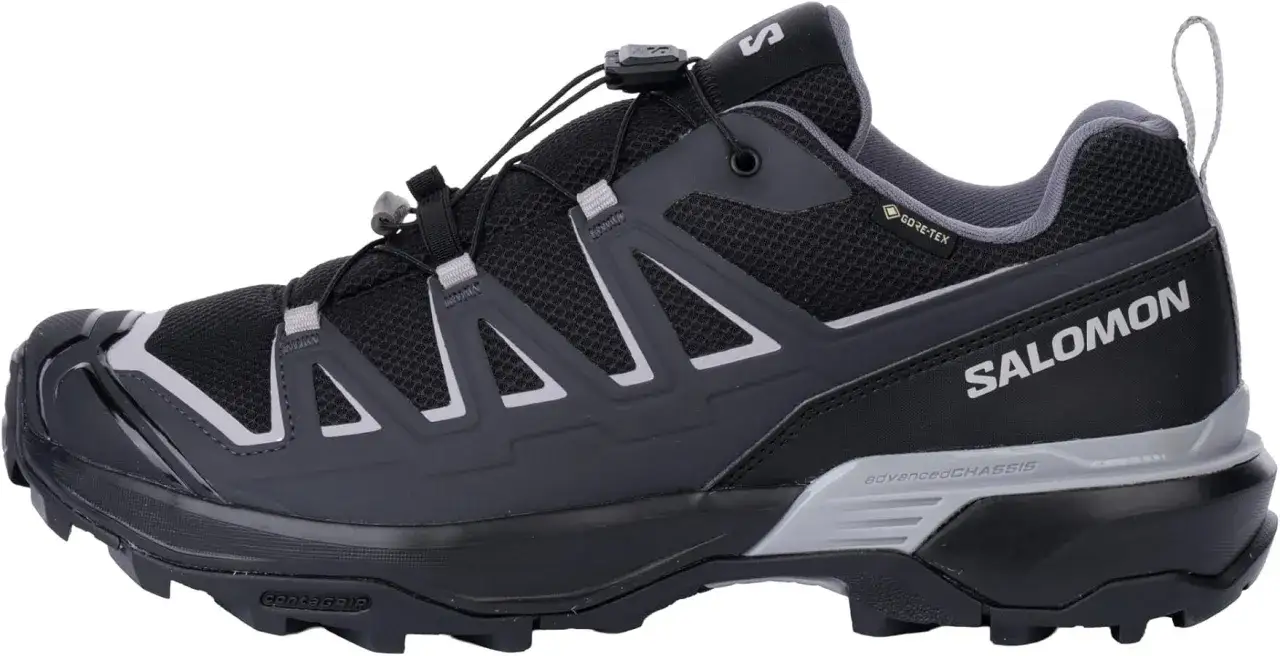
The construction explains the intent. Matryx is the abrasion-resistant woven upper, reinforced with high-tenacity Kevlar and technical yarn, so it stays tough without feeling overbuilt. advancedCHASSIS is the stabilising insert embedded in the outsole; in plain English, it helps the shoe resist twisting on uneven ground while still moving naturally. Add the EnergyCell midsole and OrthoLite sockliner, and you get a shoe that is meant to stay comfortable on full-day hikes rather than only on short dog walks. That design choice matters most once the ground turns sloppy, which is where the shoe either proves itself or annoys you.
Why it works so well on wet British trails
For the UK, the waterproof version makes immediate sense. Rain, damp grass, puddled paths and wet leaf litter are exactly the conditions where a membrane like GORE-TEX earns its keep. It keeps external moisture out while still letting the shoe breathe to a degree, so your feet are more likely to stay dry when you are crossing a muddy field or picking your way through a soaked woodland path.
The outsole is the other part that matters. Contagrip is Salomon’s all-terrain rubber, and it is designed to bite into a wide mix of surfaces rather than only one ideal trail type. That is useful on chalk, wet stone, loose gravel and compacted mud, especially on routes where grip changes every few minutes. The honest tradeoff is that waterproof shoes usually run warmer than non-waterproof ones, so I would choose this model for shoulder-season hikes, rainy weekends and changeable conditions more than for hot summer rambles on dry ground. That leads straight into fit, because a shoe like this only works if the shape suits your foot.
Fit, sizing and comfort in real use
Fit is where many hikers get the decision wrong, and I would not rush it here. Salomon lists the regular width as standard on the main GTX versions, which is great if you like a secure, precise feel through the midfoot. If your forefoot is broad or you hate pressure around the little toe, the men’s wide GTX option is the safer place to start.
If you are between sizes, I would follow Salomon’s own advice and go half a size up. That is especially important if you wear thicker hiking socks, walk on descents often, or plan to use the shoe on longer days when feet naturally swell. The low version uses Quicklace, which makes adjustment fast and keeps the upper tidy; the mid version adds more collar coverage, so it feels a touch more boot-like without becoming heavy. I also like that the shape is supportive without being brick-like. It still feels like a walking shoe, just a more serious one.
In practice, I would think of the fit in three layers: foot length, foot width, and how much upper you want around the ankle. Get those right and the shoe becomes very easy to live with. Once that is clear, the low, mid and wide versions become much easier to compare.
Low, mid and wide versions compared
The biggest mistake I see is treating the whole line as if every version solves the same problem. It does not. The low shoe is the lighter and quicker-feeling option; the mid adds more coverage and a slightly more protective feel on rougher ground; the wide version is there for foot shape, not just for comfort in the abstract.
| Version | Weight | UK price | Best for | Main tradeoff |
|---|---|---|---|---|
| Men’s low GTX | 380 g | £150 | Day hikes, mixed trails, lighter packing | Less ankle coverage than the mid |
| Women’s low GTX | 320 g | £150 | Fast day walks, family hikes, wet trail use | Less protection than the mid |
| Men’s mid GTX | 440 g | £165 | Rougher terrain, longer hikes, more support | Heavier and warmer |
| Women’s mid GTX | 390 g | £165 | Technical day hikes, mixed conditions, extra coverage | Less airy than the low version |
If the main issue is width, the men’s wide GTX is the version I would try before jumping to another brand. That is a practical fix when the shoe length is right but the regular fit feels pinched. Once you know which cut suits your foot, the real question becomes whether this is the right shoe for your kind of walking, or merely a well-made shoe that is a bit more than you need.
Where it earns its keep and where I would choose something else
I would buy this shoe for hikers who regularly deal with damp ground, mixed terrain and all-day comfort demands. It suits weekend walkers, hill walkers and family outings where the route may be simple but the weather is not. It is also a sensible choice if you like a confident, locked-in feel underfoot and prefer a shoe that stays stable when the path turns rough.
- Good fit for: wet woodland paths, coastal walks, rocky approaches, moorland tracks and mixed British terrain.
- Good fit for: walkers who want one pair that can handle spring, autumn and rainy summer days.
- Less ideal for: hot weather, where a non-waterproof shoe usually breathes better.
- Less ideal for: people who want maximum cushioning and a very soft, trainer-like ride.
- Less ideal for: hikers carrying heavy loads over long distances, where a sturdier boot may make more sense.
That is the core decision: this shoe is strongest when you want dependable protection without fully stepping into boot territory. If your walks are mostly dry, warm and easy, I would save the waterproof premium for later and look at the lighter non-GTX sibling instead. If your routes are unpredictable, the GTX version starts to look like the smarter buy. That brings me to the final checks I would make before clicking order.
The checks I would make before ordering
Before buying, I would confirm three things: whether I need low or mid height, whether the regular fit or wide fit is the safer choice, and whether waterproofing is a daily need or just insurance for occasional rain. Those three decisions solve most of the common mistakes people make with this model.
- Choose the low version if you want a lighter, more agile feel.
- Choose the mid version if you want extra collar coverage and a more boot-like feel.
- Go half a size up if you are between sizes or plan to wear thicker socks.
- Pick the wide GTX if the forefoot feels narrow in standard Salomon shoes.
Salomon UK currently offers 30-day exchanges or returns, although returns carry a £5 fee, so the first fit decision matters more than usual. If those basics line up, the X Ultra 5 GTX is one of the more sensible all-round hiking shoes in the current UK market: stable, weather-ready and light enough to wear for a full day without thinking about it too much.