
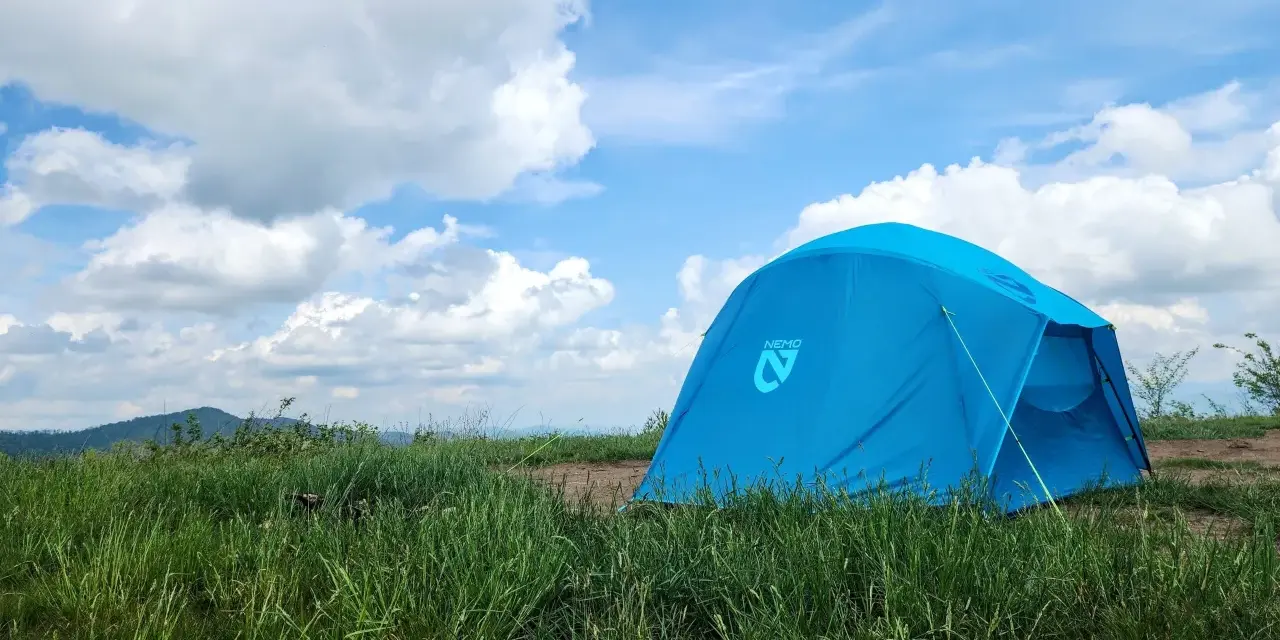
NEMO Aurora is a comfort-first tent family, not a minimalist shelter, and that distinction matters more than the name on the stuff sack. The Aurora Ridge line leans toward backpackers who still want real interior space, while Aurora Highrise is built for campsite comfort, standing height, and easier family living. If you are choosing between them in the UK, I would focus on carry weight, living space, and how often the tent will spend its life on a campsite rather than on your back.
What matters most before choosing an Aurora tent
- The Aurora Ridge is the lighter, more carry-friendly option for 2 to 3 people.
- The Aurora Highrise is the family camping tent: taller, roomier, and noticeably heavier.
- Both are three-season shelters, so they suit spring to autumn rather than winter exposure.
- The Ridge bundle includes a footprint, while the Highrise footprint is a separate accessory.
- For UK campers, the real decision is usually comfort versus weight, not capacity alone.
Which Aurora tent family you are actually looking at
In 2026, the Aurora name covers two distinct jobs. The Aurora Ridge models are the backpacking-leaning tents, usually seen in 2P and 3P sizes, while the Aurora Highrise is the standing-height camping tent built for 4P and 6P use. That split is the first thing I would clear up, because people often search one name and end up comparing two very different shelters.
For UK buyers, that difference matters even more. The Ridge is the version you can still imagine carrying to a remote pitch, even if it is not ultra-light. The Highrise is the one I would put in the car for family weekends, longer stays, and campsites where you want to spend time inside the tent without feeling boxed in.
The practical takeaway is simple: if your trip starts with a hike, think Ridge; if it starts with a boot full of bags and a campsite booking, think Highrise. That split leads directly into the part most people care about next, which is how usable the tent feels once it is pitched.

Why it feels roomy once it is pitched
The Aurora line stands out because it tries to solve the part of camping that gets annoying fast: low ceilings, awkward door placement, and gear scattered across the sleeping area. On the Highrise, the tall frame gives you standing height and steep sidewalls, so the tent feels more like a compact room than a sleeping pod. That is a real quality-of-life upgrade on damp UK evenings when everyone ends up inside earlier than planned.
The Ridge takes a different route, but the goal is similar. It uses vertical-leaning walls, two doors, and two vestibules to make the interior easier to live with. You are not just getting a place to lie down; you are getting somewhere to change clothes, stash boots, and sit upright without constantly brushing the fly.
Small design details matter here too. NEMO’s Nightlight pockets diffuse headlamp light so the tent glows more evenly, Gatekeeper clips keep doors out of the way, and the included footprint on the backpacking version gives you a cleaner floor from day one. I like that approach because it solves ordinary camp friction instead of chasing marketing drama.
Once you understand that layout, the next question is how much space you are paying for in grams.
The numbers that matter before you buy
If I am comparing tents seriously, I do not stop at capacity labels. I want the actual floor area, the peak height, and the packed weight, because those three numbers tell you whether a tent will feel generous or merely large on paper. Here is the practical version of that comparison for the most relevant Aurora models in the UK market.
| Version | Best for | Weight | Space | My read |
|---|---|---|---|---|
| Aurora Ridge 2P | Solo campers or two people with compact kit | 1,866 g total weight, excluding pegs, footprint, and bags | 31.8 sq ft floor area, 112 cm peak height | Good if you want a tent that still feels backpackable without becoming cramped |
| Aurora Ridge 3P | Two adults, or one adult plus a child, dog, or extra gear | 2,694 g total weight, excluding pegs and bags | 44.0 sq ft floor area, 112 cm peak height | The sweet spot if comfort matters more than shaving every gram |
| Aurora Highrise 4P | Family camps and basecamp-style weekends | About 6.2 kg before pegs and bags | Standing-height interior, 2 doors, 2 vestibules | A proper camp room, not a carry-everywhere tent |
NEMO’s own pad-fit guidance also helps here. For the Ridge 3P, the floor can take three regular pads, or two regular pads plus one wide pad, or two wide pads, which tells you the tent is sized for realistic sleeping setups rather than fantasy packing. That is the kind of detail I trust more than “three-person” printed on a tag.
If you regularly camp with a partner and want space to stretch out, the 3P is usually the smarter buy. If you want a family tent that feels genuinely livable, the Highrise is the honest option, but you are accepting a much heavier load to get that comfort. That trade-off is not a flaw; it is the whole design brief.
After the numbers, the real choice becomes where and how you camp.
Where each version makes sense on UK trips
I would think about the Aurora line in terms of trip style, not just tent size. A tent can be technically large enough and still be the wrong tool if you have to carry it too far, pitch it too often, or live inside it through a rainy weekend.
- Aurora Ridge 2P makes sense for solo trips, lightweight overnighters, or couples who already travel efficiently and do not carry much extra kit.
- Aurora Ridge 3P is the best all-rounder for two adults who want elbow room, or for one adult with a dog, child, or bulky equipment.
- Aurora Highrise 4P is the better call for family campsites, festival weekends, and road trips where the tent is part of the living space.
- Aurora Highrise 6P is the direction to take if you regularly need a larger basecamp, but UK stock tends to be less predictable than the smaller sizes.
For typical UK use, I would not treat the Highrise as a “do everything” tent. It shines when your campsite is the destination and the tent is meant to make the stay more comfortable. The Ridge, by contrast, is the better fit when the trip still involves some carrying, but you refuse to give up interior comfort entirely.
That distinction also explains why the Aurora line feels more relevant to European camping than many stripped-back ultralight tents. Campsites are often smaller, wetter, and more social here, so sitting upright, drying kit, and living in the tent for a few hours really does matter. Before you click buy, though, a few small checks can save you from the wrong size or an annoying accessory surprise.
What to check before you order
The first thing I would confirm is whether the footprint is included. On the backpacking Aurora, it is part of the package; on the Highrise, it is a separate accessory. That sounds minor until you realise a footprint is cheap insurance on rough, stony, or muddy pitches, and it can help keep the floor in better shape over time.
Next, check the packed size against how you travel. The Ridge packs far more neatly than the Highrise, which matters if you are using trains, ferries, bike storage, or a small boot. If your camping style is mostly car-based, the bigger bag is easier to forgive, but if you are carrying it any distance, the volume becomes just as important as the weight.
I would also keep the three-season rating in mind. These tents are designed for spring, summer, and autumn use, not for harsh winter exposure or exposed mountain conditions. In practice, that means they are excellent for most family and touring camps, but they are not the shelter I would choose for a cold-weather expedition.
Finally, check the small print on older stock. NEMO supports repairs and spare parts for many models, but discontinued items can be harder to service, so a low sale price is not automatically the best buy if the model is old or the accessories are missing.
That leaves the practical answer: which version I would actually pick.
The decision I would make for a campsite or a hike
If I were buying for a UK campsite with a partner, I would lean toward the Aurora Ridge 3P first. It gives enough room to live comfortably without turning the carry into a chore, and that balance is usually where a tent starts feeling useful instead of merely impressive. If I were buying for family road trips or longer stays, I would choose the Highrise without hesitation and accept the extra weight as the price of a better camp life.
My rule of thumb is simple: buy the smallest Aurora that still lets you sit up, move your kit out of the sleeping area, and handle a wet evening without feeling trapped. If that points you to the Ridge, stay lighter; if it points you to the Highrise, take the heavier bag and enjoy the extra space. That trade-off is the real story behind this tent family, and it is exactly why the right choice depends more on how you camp than on the name stitched into the fly.
