
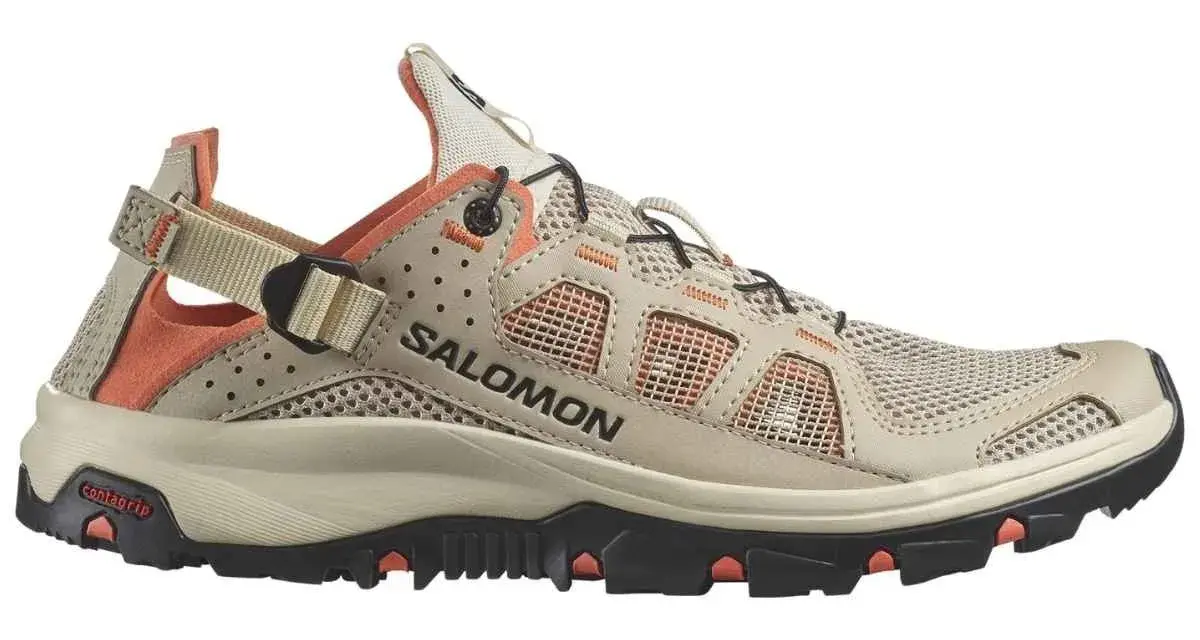
Some footwear tries to be a sandal, a trainer, and a water shoe all at once. The Salomon Techamphibian 5 sits in that narrow space between a wet-weather specialist and a light hiking shoe, which is exactly why it is worth looking at properly if your plans include rivers, coastal paths, campsite showers, or paddle days. In this article I break down what it is good at, where it feels compromised, how it fits, and whether it makes sense for UK outdoor trips in 2026.
Key points at a glance
- This is a hybrid water shoe with more protection and grip than a soft aqua shoe.
- It suits wet trails, river crossings, wild swimming access, paddle sports, and summer campsite use.
- Salomon UK currently places it in the premium water-shoe bracket, with sale pricing around £77 and a list price of £110.
- The main strengths are fast drying, toe protection, and a grippy outsole that handles slick rock better than most lightweight alternatives.
- The main trade-off is feel: it is sturdier and less flexible than a softer water shoe or sandal.
- Fit matters more than usual, because the secure shape and structured build can feel narrow if you prefer extra toe room.
What this shoe is really for
This is not a general-purpose walking shoe with drainage holes. It is built for mixed wet and dry use, where you may be on gravel, slippery stone, short trail sections, or a boat launch within the same hour. That is why it makes sense for UK settings such as coastal rambles, riverbank walks, lake access, holiday park showers, or a summer campsite where you keep stepping from grass to wet concrete and back again.
I would place it in the “one pair does several jobs” category. It is useful when you do not want to carry a separate sandal for the campsite, a separate shoe for water, and a separate trainer for the walk to and from the car. That said, it is still a specialist piece of kit, so the real question is not whether it is versatile, but whether your trip genuinely includes enough water and rough ground to justify the compromise.
Salomon positions it for full-day hikes and summer adventure, which is a strong clue about the intended use: not winter slogs, not heavy backpacking, but warm-weather days where the route changes under your feet. That distinction matters, because the next thing buyers usually want to know is whether the build actually matches the promise.

What matters once you put it on
The shoe’s best feature is the way the upper and outsole work together. The upper is made to get wet and dry quickly, with breathable materials and an anti-debris mesh that helps keep grit and small stones out. In plain terms, that means it is trying to drain fast without feeling like a loose beach shoe. The reinforced toe cap adds a useful layer of protection when you are stepping onto rocks, jetties, or uneven campsite paths.
The outsole is the part I would pay closest attention to if I were comparing it with cheaper water shoes. The rubber uses siping, which means small slits or grooves cut into the tread to help the sole stay in contact with wet surfaces. That is a practical detail, not marketing fluff. On slick stone, river edges, or wet trail sections, it can make the difference between feeling planted and feeling tentative.
There is also a collapsible heel, which lets you wear the shoe more like a slip-on when you are moving around camp or changing footwear at a car park. Paired with the quick-pull lace system, it makes the shoe easy to get on and off without turning the whole process into a minor project. I like that kind of detail because it reflects how outdoor kit is actually used: half in motion, half in transition, and often with wet hands.
The result is a shoe that feels more structured than a simple water sandal. That is its strength, but it also explains why some people will find it less soft and forgiving than they expect. The next issue is fit, which is where most of the real buying mistakes happen.
How it fits, and where people get caught out
Fit is the part I would not rush. The shoe uses a regular width and a 9 mm drop, which means the heel sits slightly higher than the forefoot. If you normally wear hiking shoes, that will feel familiar. If you prefer barefoot-style footwear or very low-profile water shoes, it will feel more built up underfoot.
The weight is also worth noting. The men’s version is listed at 301 g per shoe, while the women’s version comes in at 250 g. Those numbers are not heavy for a structured outdoor shoe, but they are heavier than a soft aqua shoe or minimalist beach trainer. You are buying protection and grip, not featherweight packability.
In practice, I would describe the fit as secure rather than roomy. That is useful if you want the shoe to stay stable on uneven ground, but it can also mean the forefoot feels less generous than the sizing chart suggests. If you plan to wear thin socks, that is one thing. If you expect to wear thicker socks, or you know your feet swell on hot days, I would try them carefully before committing to a long route.
One practical lesson from real-world wear is to give them a short break-in period. Even a few indoor hours can reveal whether the collar rubs, whether the tongue sits comfortably, and whether the front of the shoe gives enough space on the descent. I would not take a brand-new pair straight into a long day of scrambling and water crossings unless I had already tested them at home. That leads neatly into the question of where they actually earn their keep.
Where it earns its place in a UK kit bag
| Use case | How well it works | Why |
|---|---|---|
| Wild swimming access | Very well | The toe protection and wet-surface grip are useful on rock, gravel, and riverbanks. |
| Kayaking or canoeing | Very well | It dries fast and is easy to slip on and off between land and water. |
| Campsite showers and shared facilities | Well | The collapsible heel makes it convenient for quick changes and short walks. |
| Coastal walks with wet rock | Well | The sole is more confidence-inspiring than most soft water shoes. |
| Long dry hikes | Only sometimes | You can use it, but you are paying for wet-use features you may not need. |
| Cold-season outdoor use | Poorly | The breathable, quick-drying design is built for warmer conditions, not warmth. |
This is the kind of kit that makes sense on a family holiday where the day starts with a campsite breakfast, moves to a pebble beach or river access point, and ends with muddy grass around the tent. It is less compelling for someone who mainly walks dry bridleways or spends most outings on straightforward paths. That is why a comparison with simpler options is useful before you spend money.
How it compares with lighter options
| Option | Main strength | Main trade-off | Best for |
|---|---|---|---|
| Hybrid water shoe | Best balance of grip, protection, and drying speed | More rigid and pricier than simple alternatives | Mixed wet-dry days with rocks, rivers, and campsite use |
| Soft aqua shoe | Very light and cheap | Poor toe protection and limited support on rough ground | Beach entries and casual splash use |
| Trail sandal | Breathable and easy to adjust | Less protection from stone, debris, and toe strikes | Warm, dry walks and easy campsite wear |
| Trail runner with drainage-friendly build | Familiar comfort for longer walking | Usually heavier when wet and slower to dry | Longer days where walking comfort matters more than water performance |
If your itinerary is mostly dry, a trail runner or sandal may be the better value. If your day repeatedly crosses water, slick stone, or muddy banks, the hybrid shoe starts to justify itself. I think that is the cleanest way to judge it: not by category, but by how often the trip actually forces you to deal with wet terrain. In the UK, that question changes quickly once coastal weather or river levels come into play.
What I would check before buying a pair
Before I would recommend this model to someone, I would check five things: foot shape, sock choice, water temperature, walking distance, and how often the shoe will be used on dry ground. If your feet are broad or you hate a snug forefoot, I would pay attention to the fit first and the colour second. If you plan to wear the shoe mostly bare-footed, make sure the interior feels comfortable without socks, because a water shoe that only works with thick socks is missing part of the point.
I would also think honestly about the trip itself. For a weekend of paddleboarding, shore access, campsite showers, and short walks, this is a smart piece of kit. For a full week of dry hiking with one occasional stream crossing, it is probably overkill. That is the real value test here, and it is the one that prevents impulse buys from turning into expensive cupboard residents.
For the right kind of outdoor trip, this Salomon model is a sensible, well-built compromise: more protective than a beach shoe, more water-ready than a light hiking shoe, and more versatile than many people expect. If you want one pair that can handle warm-weather movement between land and water without feeling flimsy, it is an easy candidate to shortlist; if your routes are mostly dry, I would save the budget for a true walking shoe instead.
