
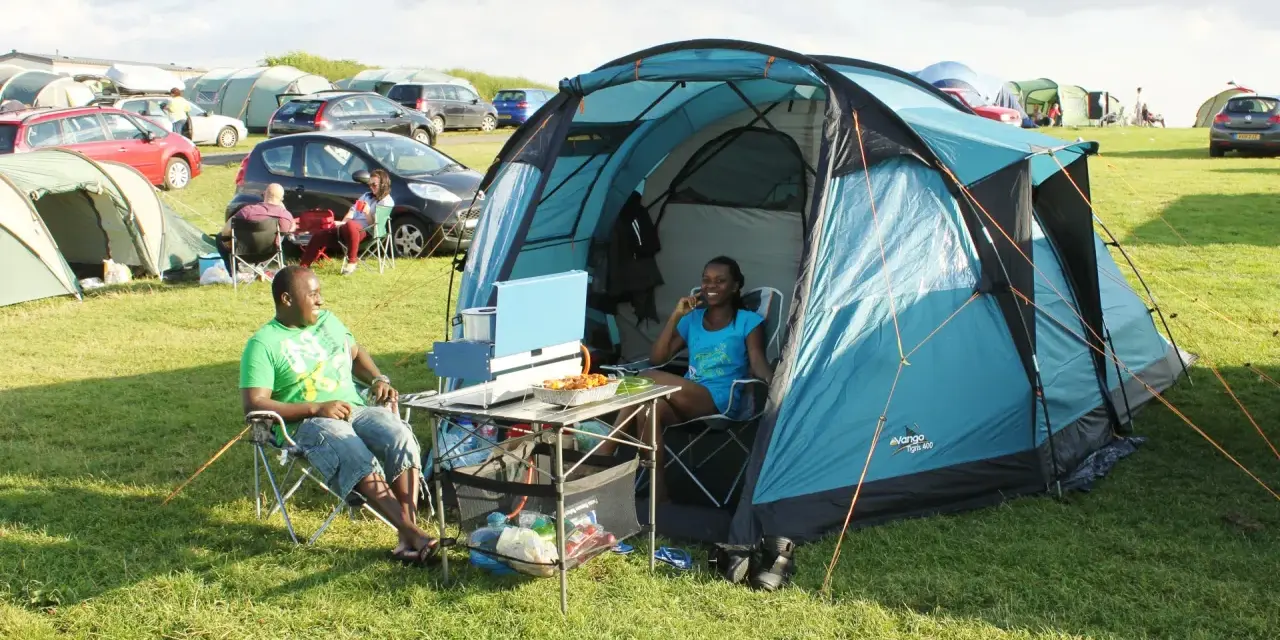
A good camping trip is rarely about owning more gear. It is about choosing the right kind of stay, packing for damp British weather, and making a few sensible decisions before dark so the night stays calm. This guide shows how to camp in the UK with practical steps on site choice, kit, pitching, comfort, and the rules that matter on local land.
The essentials that make a first camp work
- Start with a managed campsite unless you already know the area and the access rules.
- Buy a tent one size larger than the number of sleepers so there is room for bags and wet kit.
- Put money into the sleep system first: mat, then bag, then clothing layers.
- Practice pitching at home so the real setup is not a fight with poles and pegs.
- Keep meals, lighting, and bedtime simple, especially on a family trip.
- Check local rules before you go, because camping permissions vary across the UK.
Choose a first trip that matches your confidence
For a first overnight, I would usually pick a proper campsite within an easy drive of home. Toilets, water, level pitches, and a reception desk remove a lot of friction, and friction is what makes a beginner trip feel harder than it needs to be. If children are coming along, that convenience matters even more.
| Style | Best for | Trade-off | UK note |
|---|---|---|---|
| Managed campsite | Beginners, families, and short breaks | Less privacy, more rules, more people | The safest default for a first trip |
| Pre-pitched tent or pod | People who want less setup time | Higher cost and less flexibility | A smart middle step if you want comfort without buying everything at once |
| Wild camping | Experienced walkers with lightweight kit | More planning, more weather risk, no facilities | Responsible wild camping is a different game from campsite camping and is not the right first choice for most people |
My rule is simple: if the first trip is low-drama, you learn faster. Once you know what your tent, sleep system, and routine can handle, the rest of the gear list becomes much easier to judge. That leads straight into the one thing that makes or breaks comfort: packing the right kit.
Pack the kit that actually improves the night
If the shelter and sleep system are right, a lot of other problems shrink. I usually tell people to spend first on warmth and dryness, not on gadgets they will forget to use after the first night. A sleep system is simply the combination of your mat, sleeping bag, and base layers, and it matters more than almost anything else.
| Item | What I look for | Typical starter spend | Why it matters |
|---|---|---|---|
| Tent | One size larger than your group, preferably double-skinned with a porch | £80-£200 | Double-skinned means there is an inner and outer layer, which helps with condensation and damp weather |
| Sleeping bag | A season-appropriate rating rather than a bargain label | £30-£120 | Warmth is what decides whether you sleep well or spend the night cold |
| Sleeping mat | Foam or insulated inflatable mat with enough thickness for your comfort | £20-£80 | The ground steals heat quickly, and the mat is what stops that |
| Headtorch | Comfortable beam, spare batteries or a rechargeable option | £10-£25 | Hands-free light makes pitching, cooking, and late-night toilet trips much easier |
| Cooking kit | Small stove, one pot, lighter, mug, and simple utensils | £20-£70 | One-pot cooking keeps the campsite cleaner and the washing up shorter |
| Dry storage | Dry bags, stuff sacks, or even decent bin bags inside a rucksack | £10-£40 | British rain does not care how organised your packing looked at home |
For a workable new starter setup, I would expect roughly £170-£450 before clothes, depending on how serious the tent and sleep system are. If you already own waterproof layers and a torch, that number drops quickly. Once the gear is sorted, the real skill is putting the tent where the night will be easiest.

Pitch the tent where the night will be easiest
The best pitch is the one that stays dry, quiet, and easy to leave in the morning. I look for slightly raised ground, shelter from the worst wind, and enough space to keep guy lines straight; guy lines are the cords that hold the flysheet taut when the weather turns. A tent that is technically upright but badly placed can still feel miserable by midnight.
- Choose slightly raised ground so rain can run away from the tent.
- Avoid hollows, stream edges, and obvious drainage lines.
- Face the smallest profile into the wind when you can.
- Use every guy line that came with the tent, especially in open or coastal spots.
- Keep ventilation open enough to reduce condensation, which is the moisture that builds inside when warm air meets cold fabric.
- Practice once at home if the tent is new, because the first real pitch should not be your first attempt.
If rain is forecast, I also think about the tent as a small workflow: boots outside, wet jackets in the porch, sleeping area dry, cooking separate from bedding. That kind of order saves time and stops the site from turning into a mess. Once the shelter is sorted, the rest of the trip is mostly about comfort, and that starts with food and sleep.
Keep food, sleep, and routines simple
Camp food does not need to be clever. I would rather cook one easy meal well than carry ingredients for a plan that only works if the weather is perfect. For water, I usually keep 2-3 litres per adult on hand for a day around camp, and more if the weather is warm or there is a long walk involved.
- Bring one easy dinner that needs little chopping and one backup meal.
- Keep breakfast simple: porridge, cereal, toast, or pastries work better than an elaborate fry-up when the weather is poor.
- Separate sleep clothes from day clothes so the bed stays dry and warm.
- Pack socks and a base layer in a sealed bag, because a dry change can save the whole evening.
- For children, keep bedtime cues familiar: a torch, a story, a snack, and the same sort of routine they know at home.
- Store food in a box or bag that seals properly so the tent does not smell like dinner all night.
Sleeping well is mostly about blocking cold and moisture. A decent mat under the bag, dry layers next to skin, and a warm hat for colder evenings can make a bigger difference than an expensive gadget. When food and sleep are predictable, the whole campsite feels calmer and less temporary. The last major piece is making sure the trip is legal and low-impact.
Camp legally and leave no trace
This is the part people skip until it goes wrong, but it is the part that protects the trip. In England and Wales, the Countryside Code is the baseline I trust: follow local signs, do not assume access land means a right to pitch, and check for local restrictions before you unload the car. Camping rights are not the same everywhere, so the best habit is to verify before you arrive.
In Scotland, the Scottish Outdoor Access Code allows responsible wild camping on most unenclosed land, but the standard is still low-impact camping, not a mini-festival. Keep the group small, stay only as long as needed, avoid camping near buildings or busy routes, and treat open fires as an exception rather than part of the setup. If you are dealing with waste away from facilities, keep it well away from water and paths and leave the place exactly as you found it.
- Keep away from livestock, fences, and obvious farm tracks.
- Use a stove instead of an open fire whenever possible.
- Pack out all litter, including food scraps, wipes, and packaging.
- Do not wash dishes or empty grey water directly into streams or lakes.
- If there are no toilets, carry a trowel and a sealable bag for waste-related litter.
- Leave the pitch looking unused when you walk away.
The legal side sounds dry, but it is what separates a relaxing night from an avoidable problem. After that, the only thing left is making the first evening feel calm and manageable.
Make the first night feel controlled, not ambitious
The biggest mistake on a first trip is trying to do too much. I keep the first evening boring on purpose: arrive early, pitch in daylight, eat something easy, and leave space for mistakes. A campsite is not a place to prove anything; it is a place to learn what actually works.
- Arrive while you can still see the pitch clearly.
- Put the tent up before the kettle or stove comes out.
- Lay out sleep clothes, torches, water, and keys in one place.
- Keep the first meal hot, simple, and quick.
- Pack a small dry bag with the next morning’s clothes.
- Decide in advance what would make you leave early, such as steady rain, high wind, or a site that feels wrong.
That is usually enough for a first outing. Short, legal, and simple beats clever every time, and once you have one calm night behind you, the rest of camping starts to make sense.
