
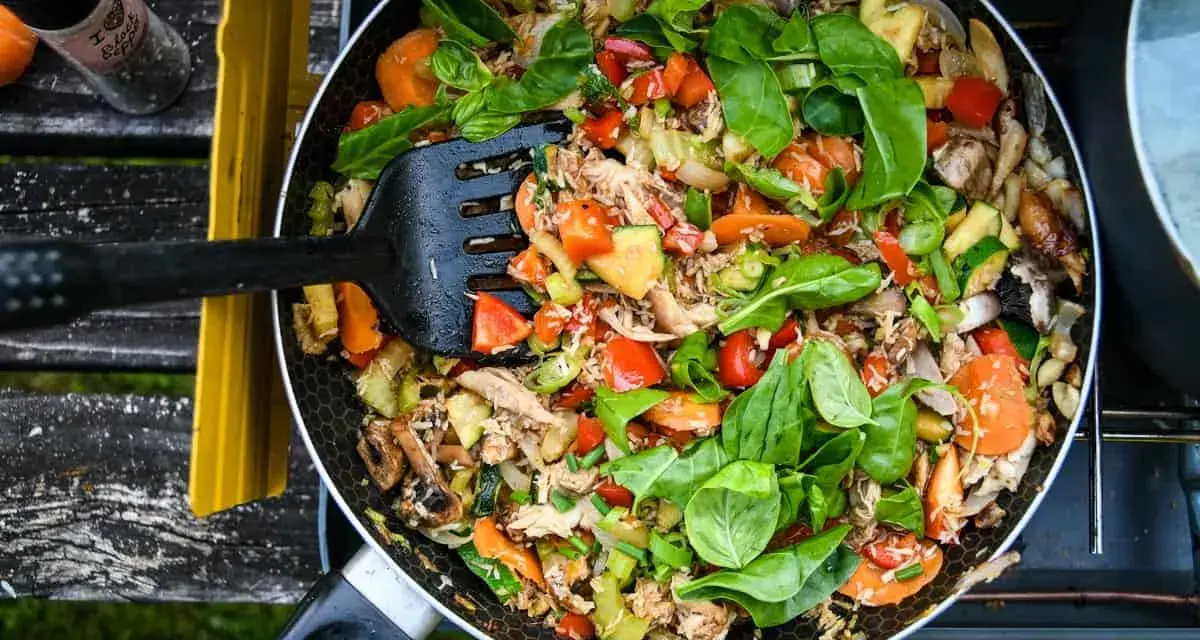
The best camp stove recipes are the ones that survive real campsite conditions: a small burner, a bit of wind, a hungry group, and not much appetite for washing up. In this guide I focus on meals that work on a portable stove, with practical ideas for breakfast, lunch and dinner, plus the gear, timing and ingredient choices that make the whole thing feel easy. I also keep the examples realistic for UK campsites, where a cool evening or a rainy forecast can change what is worth cooking.
What matters most before you light the burner
- Choose dishes that use one pot or one pan and finish in 20 to 30 minutes.
- Build around forgiving ingredients: eggs, pasta, rice, couscous, tinned beans, sausage, cheese and hardy vegetables.
- A lid, a spatula, a small knife and a stable wind shield do more for campsite cooking than fancy kit.
- Prepping onions, garlic and vegetables at home cuts campsite work and keeps the pitch cleaner.
- For family trips, meals with a sauce or broth usually beat dry, delicate recipes because they are easier to control over heat.
What a good campsite meal needs to do
I judge a campsite meal by three things: it must be forgiving, fast and easy to clean. If a recipe needs two people, three pans and constant timing, it belongs in the kitchen, not on a picnic table. On a portable stove, the best dishes are the ones that still taste good if the heat wanders a little or dinner lands ten minutes late.
| Test | What passes | Why it matters |
|---|---|---|
| Heat control | Stews, pasta, eggs, grains and skillet dishes | They tolerate a burner that is not perfectly even |
| Ingredient list | 6 to 10 ingredients, most of them shelf-stable | Shopping and packing stay manageable |
| Cook time | 20 to 30 minutes for most meals | Fuel use stays sensible and hunger does not drag the trip down |
| Wash-up | One pot, one pan, one spoon | Less water needed at the end of the day |
That simple filter saves me from overcomplicating camp food. Once a recipe passes it, I can start thinking about the kit and pantry that make the whole process smoother.
The kit and pantry that make everything easier
You do not need a large cooking setup to eat well outdoors, but you do need the right basics. I get the best results with one medium saucepan, one wide frying pan, a lid that actually fits, and a few ingredients that are hard to ruin. That combination covers most campsite meals without turning the pitch into a temporary kitchen warehouse.
- A 2 to 3 litre saucepan for pasta, rice, curry, porridge and soups.
- A 20 to 24 cm frying pan for eggs, sausages, flatbreads and quick skillet dinners.
- A lid to trap heat, speed up cooking and save fuel.
- Basic utensils such as a wooden spoon, spatula, tongs, a small knife and a can opener.
- Pantry staples like oil, salt, black pepper, stock cubes, tinned tomatoes, beans, pasta, couscous, oats, rice, dried herbs and UHT milk.
- Low-fuss flavour builders such as garlic, onions, lemons, cheddar, soft cheese, curry paste and mustard.
- Prepped vegetables like sliced mushrooms, chopped courgettes, onions and peppers packed in airtight containers.
If I am packing for a family trip, I also make room for a cool box that can handle cheese, eggs and a little fresh meat for the first day or two. That keeps the menu flexible without forcing me to buy every ingredient at the campsite shop, and it makes the recipes that follow much easier to trust.

Seven meals that work especially well on a portable stove
The strongest portable-stove meals are not complicated. They are the dishes that use one burner well, hold heat sensibly and still taste like proper food when cooked in a smaller pan. I usually keep a mix of breakfast, lunch and dinner ideas in mind so the menu can flex around weather, appetite and how much effort I want to spend.
| Meal | Time | Best for | Why it works |
|---|---|---|---|
| Mushroom, spinach and cheddar eggs | 10 minutes | Breakfast | One pan, high protein, easy to scale for a family |
| Tomato, bean and couscous pot | 15 minutes | Lunch | Fast, filling and mostly shelf-stable |
| Sausage, courgette and orzo | 25 minutes | Dinner | Hearty enough for cooler evenings |
| Chickpea coconut curry with rice | 20 minutes | Vegetarian dinner | Built from pantry staples and easy to season |
| Tuna, sweetcorn and lemon pasta | 15 minutes | Quick lunch | Cheap, fast and child-friendly |
| Skillet flatbread pizzas | 15 to 20 minutes | Family dinner | Everyone can top their own |
| Apple cinnamon porridge | 8 minutes | Cold mornings | Comforting and easy to scale up |
Mushroom, spinach and cheddar eggs
This is my default first-morning meal because it uses a single pan and forgives a weak burner.
- 2 tbsp butter or oil
- 100 g mushrooms, sliced
- 2 handfuls spinach
- 4 eggs, beaten
- 40 g grated cheddar
- Salt and black pepper
- Warm the fat in the pan and cook the mushrooms until they lose most of their moisture.
- Add the spinach and let it wilt, then pour in the eggs.
- Stir gently until just set, finish with cheddar and plenty of pepper.
If the pan runs hot, I pull it off the flame for 20 seconds before adding the eggs. That tiny pause stops the scramble from turning rubbery.
Tomato, bean and couscous pot
This is the meal I make when I want something filling without spending much time over the stove. It works well at lunch, but it is also the sort of thing I would serve on a wet evening when people arrive back tired and cold.
- 1 tbsp oil
- 1 small onion, finely chopped
- 1 tin chopped tomatoes
- 1 tin cannellini beans or chickpeas, drained
- 150 g couscous
- 250 ml boiling water or stock
- 1 tsp dried oregano
- Lemon juice, to finish
- Soften the onion in oil for 3 to 4 minutes.
- Add the tomatoes, beans and oregano, then simmer for 5 minutes.
- Tip in the couscous, pour over the boiling water or stock, cover and leave for 5 minutes.
- Fluff it with a fork, add lemon juice and serve.
Couscous is useful outdoors because it removes the long simmering stage that rice usually demands. That means fewer fuel worries and less chance of the meal stalling.
Sausage, courgette and orzo
Orzo is a small rice-shaped pasta, and it is one of the most practical things you can cook on a campsite stove. It behaves like a mix between pasta and risotto, which makes it ideal when I want a dinner that feels substantial without being fussy.
- 4 sausages
- 1 courgette, diced
- 1 small onion, chopped
- 180 g orzo
- 1 tbsp tomato purée
- 500 ml hot stock
- Parsley or thyme, if available
- Brown the sausages in the pan, then set them aside.
- Cook the onion and courgette in the same pan for 3 to 4 minutes.
- Stir in the orzo and tomato purée, then add the hot stock.
- Return the sausages and simmer for 10 to 12 minutes, stirring now and then until the pasta is tender.
This is the kind of dish that rewards patience more than precision. If the sauce looks tight, I add a splash of water rather than cranking up the heat.
Chickpea coconut curry with rice
For a vegetarian dinner, I like a curry that does not rely on a long list of fresh ingredients. This version uses rice in the same pot, which keeps the burner count down and makes washing up much easier.
- 1 tbsp oil
- 1 onion, sliced
- 1 garlic clove, crushed
- 1 to 2 tbsp curry paste or 2 tsp curry powder
- 150 g basmati rice, rinsed
- 1 tin chickpeas, drained
- 1 tin coconut milk
- 150 ml water
- 2 handfuls spinach
- Soften the onion in oil for 4 minutes, then add the garlic and curry paste or powder.
- Stir in the rice so it picks up the spices.
- Add the coconut milk, water and chickpeas, then bring to a gentle simmer.
- Cover and cook for 12 to 15 minutes, stirring once or twice.
- Fold in the spinach at the end and let it wilt before serving.
On a breezy pitch, I find curry is often more reliable than stir-fry because it is less sensitive to exact heat. It also scales well when more people turn up hungry than expected.
Tuna, sweetcorn and lemon pasta
This is a dependable lunch or early dinner when I want something quick, cheap and familiar. It uses ingredients that are easy to find in UK supermarkets and does not punish you if the timing is slightly off.
- 180 g pasta
- 1 tin tuna, drained
- 1 small tin sweetcorn, drained
- 2 tbsp soft cheese or crème fraîche
- Zest and juice of half a lemon
- Salt and black pepper
- Cook the pasta until just tender, reserving a few spoonfuls of the cooking water.
- Stir in the tuna, sweetcorn and soft cheese.
- Add lemon zest, a squeeze of juice and enough pasta water to loosen the sauce.
- Season well and serve immediately.
This recipe matters because it shows how far one small tin and one dairy ingredient can go. It tastes fresh without demanding fresh produce that may not travel well.
Skillet flatbread pizzas
When I am cooking for children or mixed appetites, this is the recipe that gets the best response. Everyone can build their own, and the whole thing works in a frying pan with a lid.
- 2 flatbreads or wraps
- 3 tbsp passata or tomato purée loosened with a little water
- 100 g mozzarella or grated cheese
- Peppers, mushrooms, olives, ham or cooked sausage, as available
- Dried oregano
- Warm the flatbread in a dry pan for 30 seconds on one side.
- Flip it, spread on the tomato base and add toppings.
- Cover with a lid and cook over low heat until the cheese melts and the base crisps slightly.
This is one of the few campsite meals that feels playful rather than merely practical. It also solves the problem of feeding people who do not all want the same thing.
Read Also: Camp Washing Made Easy - Your Guide to Clean Dishes
Apple cinnamon porridge
A cold morning changes the appetite quickly, and porridge is usually the easiest answer. It is cheap, filling and much better than trying to make an elaborate breakfast when everyone is still half asleep.
- 100 g porridge oats
- 300 ml milk, water or a mix of both
- 1 apple, grated or finely chopped
- 1 tsp cinnamon
- 1 tbsp raisins or chopped nuts
- Honey or maple syrup, to finish
- Combine the oats, liquid, apple and cinnamon in a saucepan.
- Cook over medium heat for 4 to 5 minutes, stirring often.
- Stir in raisins or nuts, then sweeten to taste.
Porridge is one of those recipes that tells you very quickly whether you have packed the right pan. If the pot is too small or the heat is too high, it will remind you immediately, so keep it calm and steady.
How to keep heat, timing and washing-up under control
The biggest mistake I see outdoors is treating a campsite stove like a full kitchen hob. It is not. The burner is smaller, the wind is less forgiving and the margin for error is thinner, so the method needs to be simpler. Once you accept that, the cooking becomes much less stressful.
- Start with the longest-cooking ingredient first. If the meal includes onions, sausage or grains, give those a head start before adding delicate ingredients.
- Use medium heat more often than high heat. A fierce flame scorches the outside of a dish before the inside catches up.
- Keep a splash of hot water nearby. It loosens sauces, rescues pasta and stops rice dishes from drying out.
- Cover the pan when you can. A lid saves fuel and helps the food cook evenly.
- Wash as you go. If you clean the chopping board, knife and spoon between steps, the end of the meal is much easier.
The other habit I rely on is mise en place, which simply means getting ingredients ready before the burner is lit. Outdoors, that matters even more than it does at home because the wind, the light and the available surface area all work against you. Once the meal is staged properly, the cooking itself is usually straightforward.
UK camping swaps that make these meals more realistic
Camping in the UK often means cooler evenings, occasional rain and a shop run that is not always convenient. That changes what I pack and which recipes I trust. I would rather rely on ingredients that keep well in a cool box or cupboard than plan around fragile produce that may be tired by the second day.
| When a recipe calls for | Use this instead on a campsite | Why it helps |
|---|---|---|
| Fresh cream | Crème fraîche or soft cheese | Less likely to split and easier to store |
| Long rice cooking | Couscous or quick-cook rice | Shorter cooking time on one burner |
| Delicate fresh herbs | Dried oregano, thyme or mixed herbs | More shelf-stable and less waste |
| Leafy salad | Spinach, cabbage or jarred peppers | Holds up better in a cool box |
| Complicated sauces | Tinned tomatoes plus stock cube and garlic | Easy flavour base with very little effort |
When the weather is damp, I lean towards saucy food rather than dry food because it tolerates uneven heat and keeps people warm. That is one reason pasta, curry, porridge and skillet meals show up so often in my own camp menus. Once those swaps are in place, packing for the next trip stops feeling like guesswork.
The menu and kit I would pack for the next trip
If I were cooking for a two-night family stay, I would not try to be clever. I would pack porridge for one breakfast, eggs for the other, one pasta dish, one curry or sausage skillet, and enough snacks to stop people from grazing through the ingredients. That is enough variety without creating waste or clutter.
- Breakfast 1: apple cinnamon porridge
- Breakfast 2: mushroom, spinach and cheddar eggs
- Lunch 1: tuna, sweetcorn and lemon pasta
- Dinner 1: sausage, courgette and orzo
- Dinner 2: chickpea coconut curry with rice or flatbread pizzas
The small kit that supports that menu is just as important as the food: one saucepan, one frying pan, a lid, a sharp knife, a spoon, a spatula, a can opener, a tea towel, washing-up gear and a decent cool box. With that setup, the whole trip feels calmer, and the meals stop being a chore. For me, that is the real point of good camp cooking: food that fits the place, the weather and the people around the table.
