
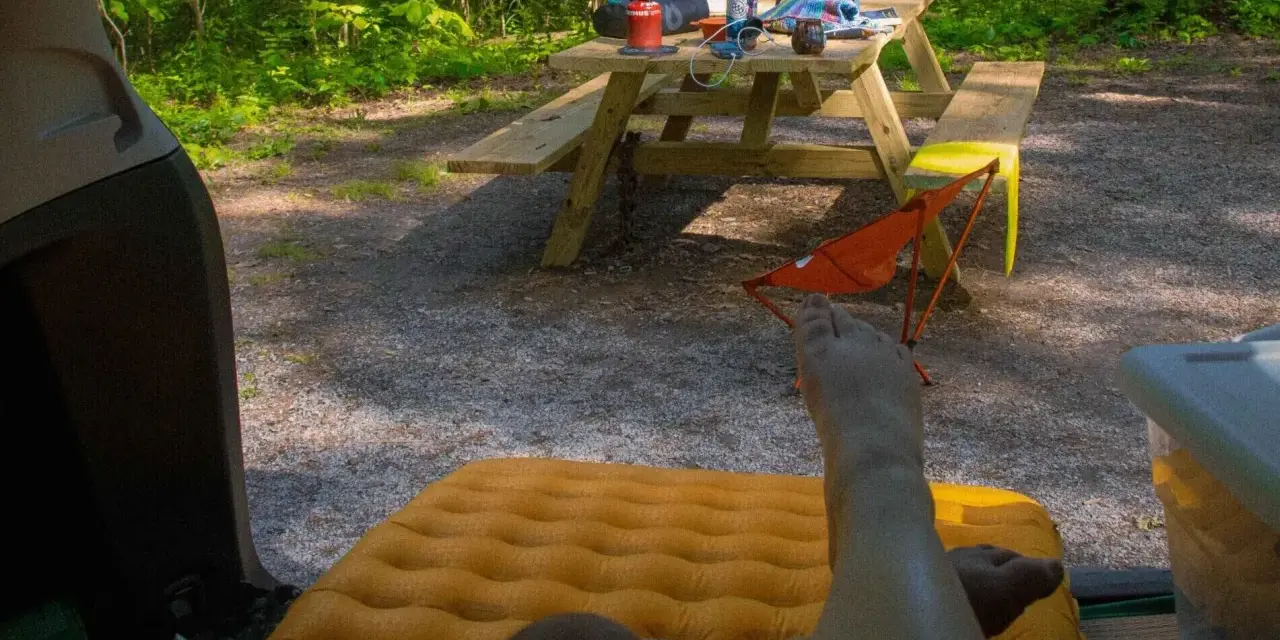
A good journey starts before the engine turns over. This road trip checklist pulls together the things I always want sorted before a long drive: the car, the paperwork, the snacks, the camping gear, and the small comfort items that stop a family trip from turning into a series of complaints. For a UK camping run, that usually means preparing for changing weather, limited storage, and a campsite arrival that should feel organised rather than chaotic.
The essentials to have ready before you leave
- Check tyres, oil, coolant, screen wash, lights, and wipers before any long drive.
- Keep driving documents, insurance details, and any Europe-specific equipment together in one folder.
- Pack the cabin with water, snacks, chargers, wipes, and a small first-aid kit.
- Load the boot in layers so the first night’s bag is easy to reach when you arrive.
- Plan stops in advance and build in a break every couple of hours, especially with children on board.
Start with the car, not the luggage
I always begin with the vehicle, because a tidy boot is useless if the car itself is not ready for distance. Before a long trip, I check fuel or battery range, oil, coolant, screen wash, lights, brakes, and wipers. Tyres matter most: if tread is close to the legal minimum of 1.6 mm, I would not leave it to chance, especially for a wet motorway run or a loaded camping drive.
If the car has a spare wheel, I check that too. If it uses a repair kit instead, I make sure the sealant and compressor are actually present and in date. I also look at tyre pressures with the car loaded, because soft tyres and a heavy boot are a poor combination on a long route. Once the mechanical side is sorted, the rest of the trip feels much easier to manage.
A quick pre-trip check is one of those jobs that sounds boring until it saves a holiday, and that leads straight into the paperwork and recovery kit.
Pack the paperwork and roadside kit together
I keep all the important documents in one slim folder so I am not digging through bags at a fuel station or ferry terminal. For a UK-only trip, that usually means the driving licence, insurance details, breakdown cover number, and any booking confirmations. If I am crossing into Europe, I add the vehicle logbook, passport, and any country-specific insurance or border documents.
For continental driving, I also pack the legal kit before I even think about camping gear. That usually includes a reflective jacket, warning triangle, and first-aid kit, plus anything the destination country requires. The rules are not identical everywhere, so I always check the route rather than assuming one country’s requirements will cover the whole journey.
- Documents - driving licence, insurance details, breakdown cover, booking confirmations, and passport if needed.
- Vehicle papers - keep the logbook or a copy of the details handy for travel abroad.
- Roadside kit - torch, warning triangle, hi-vis vest, first-aid kit, and a small blanket.
- Back-up items - spare key, card and cash, and a paper map if the signal drops.
That folder and kit should be easy to reach, because the next job is deciding what belongs in the boot, what stays in the cabin, and what should never be buried at the bottom of the pile.

Pack the boot for both the drive and the campsite
The best camping packing system is the one that lets you find things without emptying the entire car. I like to divide everything into three zones: the cabin for things we need during the drive, the boot for camping equipment, and one small top bag for the first night. That way, the kettle, tent pegs, and torches do not end up mixed together under someone’s sleeping bag.| Area | What goes there | Why it matters |
|---|---|---|
| Glovebox | Driving documents, route notes, small cash, parking cards | Easy to reach without opening the whole boot |
| Cabin | Water, snacks, wipes, tissues, chargers, medication, sunglasses | Keeps the drive calm and avoids constant stopping |
| Top of the boot | First-night bag, waterproofs, picnic kit, wash bag, spare layers | These are the things you will want first at the campsite |
| Bottom of the boot | Tent, groundsheet, sleeping bags, mats, camp chairs, stove, food crates | Heavy items sit low and travel more safely |
| Side pocket or organiser | Torch, batteries, tyre inflator, hi-vis vest, cable pack, rubbish bags | Small items stay visible instead of getting lost |
Once the boot is organised, the inside of the car deserves the same attention, because comfort is what keeps the trip pleasant rather than merely possible.
Build an in-car comfort kit that actually gets used
I do not pack for fantasy road trips; I pack for the moment someone is hungry, cold, bored, or slightly carsick. That means I keep the cabin stocked with simple things that are easy to grab without stopping. A reusable water bottle for each passenger is non-negotiable, and I prefer snacks that do not melt, crumble everywhere, or leave sticky hands on every surface.
- Drinks - water bottles for every passenger and a spare bottle in the boot.
- Snacks - fruit, crackers, nuts, cereal bars, or sandwiches that travel well.
- Clean-up - wipes, tissues, hand sanitiser, a microfibre cloth, and rubbish bags.
- Clothing - light layers, waterproofs, spare socks, and a warm layer even in summer.
- Entertainment - books, headphones, downloaded playlists, games, and a charger for each device.
If I am travelling with children, I keep one small activity pouch within arm’s reach rather than handing over the entire toy collection. That keeps the cabin less chaotic and makes each stop feel like a reset instead of a rescue mission. I also keep medication and motion-sickness help where I can reach them fast, not buried under camping gear.
With the comfort kit sorted, the last big task is planning the drive itself so the journey rhythm works with the camping rhythm.
Plan breaks, fuel stops, and campsite arrival times
I like to plan long drives in sections instead of thinking in total miles. A short break every two hours usually keeps the day manageable, especially if there are children, pets, or mountain roads involved. It also gives me a natural point to top up fuel, stretch, use the loos, and check whether anyone needs food before they become difficult to reason with.
On UK trips, I try not to arrive at a campsite late in the evening unless I have no choice. Pitching in daylight is simply easier. In wet weather, it is even more important, because dark, damp ground and a tired driver are a bad mix. If the route crosses into Europe, I also check tolls, service stations, and any local driving rules before setting off, because the first foreign roundabout is not the best place to discover you are missing something.
- Set a realistic daily driving distance, not an optimistic one.
- Choose stopping points before you leave home.
- Keep at least a little fuel or charge in reserve for rural stretches.
- Download maps offline in case mobile signal disappears.
- Check the weather the night before and again on the morning of departure.
That planning step is often the difference between a relaxed arrival and a frazzled one, which is why I treat it as part of the packing list rather than an afterthought.
What I never leave out on a camping road trip
The final layer is the one that makes the trip feel prepared rather than merely packed. I always carry a spare key with another adult if possible, a roll of bin bags, a small torch, and one backup phone charger. Those are not glamorous items, but they are the things that save time when the weather turns or the campsite is busier than expected.
If I am being strict with myself, the biggest mistakes are easy to spot: overpacking the boot so the important bag gets buried, forgetting to check tyres until the morning of departure, and assuming the weather will stay stable for the whole journey. A better approach is simple: keep the car healthy, keep the cabin calm, and keep the campsite gear easy to reach. That is the version of a road trip I actually enjoy, and it is the one I would use again for any family camping run in the UK.
When those basics are in place, the drive becomes part of the holiday instead of the stressful bit before the holiday begins.
