
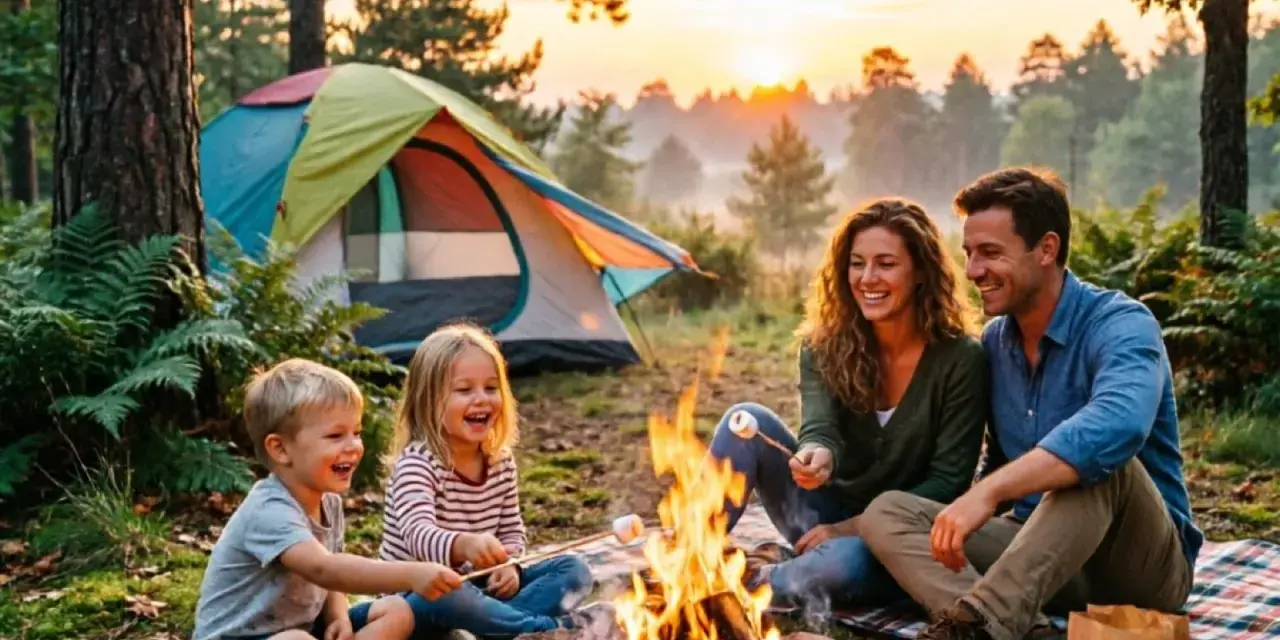
Family camping works best when the basics are boringly reliable: a sensible campsite, warm sleep, simple food, and a plan for rain, mud, and bedtime. Camping with kids is much less stressful when you stop treating every detail as optional and start building around how children actually behave after a long drive and an excited first evening. In this guide, I focus on the practical decisions that make the biggest difference on a UK trip, from picking the right pitch to handling meals, safety, and the moments when boredom starts to creep in.
The essentials for a calmer family camping trip
- Choose a campsite that matches your children’s age, sleep habits, and tolerance for walking to toilets in the dark.
- Pack for British weather first: waterproofs, warm layers, spare socks, good light, and a proper sleep kit.
- Keep meals simple and low-mess, with a cool box plan that works even if the weather changes.
- Build sun, water, and fire safety into the day so you are not trying to improvise once everyone is already outside.
- Give children small jobs and a few planned activities so the trip feels adventurous instead of chaotic.
Choose a campsite that fits your family, not the other way around
The campsite does more to shape the trip than most people expect. For younger children, I look first at the distance to toilets, showers, and washing-up points, because a pitch that is beautiful but awkward at 6 a.m. can drain everyone’s patience quickly. For a first family break, I usually prefer a site with a playground, open field, or simple safe space to run around, even if it is less dramatic than a remote hillside pitch.
| Site type | Best for | Why it helps | Watch-outs |
|---|---|---|---|
| Family campsite | Toddlers and school-age children | Close facilities, clearer rules, and less guesswork around routines | Can be busier and noisier at peak times |
| Farm site | Curious children who like animals and space | Often feels relaxed and gives kids something to look at and talk about | Ground can be muddy and facilities may be basic |
| Glamping | First-timers and families who want less setup stress | Sleeping is easier because the kit is already in place | Usually costs more and can feel less flexible |
| Basic tent field | Experienced families and older children | Simple, quiet, and often the most affordable option | You need to bring more of your own comfort and structure |
If you are camping in the UK, I also pay attention to shade, shelter from wind, and how quickly the pitch drains after rain. A flat-looking area can still become a puddle by evening, and that matters far more when you are dealing with sleeping children, wet clothes, and a very short tolerance for discomfort. Once the base is right, the rest of the packing list becomes much easier to trim.

Pack for comfort, weather, and small emergencies
In practice, the best packing list is not the longest one. It is the one that protects sleep, keeps children dry, and saves you from the sort of tiny problems that become major ones after dark. I always pack with the assumption that the forecast will be partly wrong, because that is usually the safest way to plan a British camping trip.
| What I pack | Why it matters | My rule of thumb |
|---|---|---|
| Waterproofs and spare layers | Weather can shift fast, especially in the evening | One full dry outfit per child in a separate bag |
| Sleep kit | Familiar bedding helps children settle faster | Bring the same blanket, pillow, or comfort toy they use at home |
| Light and power | Tent life gets awkward quickly without good lighting | Headtorches for adults, one lantern for the shared space, spare batteries |
| Health and hygiene | Small issues feel bigger outdoors | First aid kit, wet wipes, hand sanitiser, toilet paper, sun cream, insect repellent |
| Food and storage | Snacks prevent a lot of tears | Use a cool box, seal wet items separately, and keep rubbish bags handy |
I also keep one small overnight bag ready for the first 12 hours: pyjamas, toothbrushes, torch, snacks, and a change of clothes. That bag stays easy to reach because nobody wants to dig through stacked kit while a tired child is asking where their socks went. With the packing sorted, the next thing that tends to unravel is sleep, so that is where I pay attention next.
Make sleep easier before you leave home
A poor first night can make the whole trip feel harder than it is. The main mistake I see is assuming children will simply be tired enough to sleep anywhere. Some will. Many will not. The better approach is to make the tent feel as close to a normal bedtime as possible, then remove the small irritations that wake children up once they are finally asleep.
I like to test the sleep system before we leave home, even if that only means a trial run in the garden or living room. It shows you whether a sleeping mat is comfortable enough, whether a sleeping bag is too warm, and whether a child actually trusts the bedding they are about to use. If the setup feels odd at home, it usually feels worse in a tent.
- Keep bedtime familiar with the same pyjamas, story, and comfort item they use at home.
- Give children a little more time to wind down than usual, because excitement makes them cling to energy they do not really have.
- Use a dim lantern or torch light for night-time toilet trips instead of turning the whole tent into a bright room.
- Make sure sleeping mats are thick enough for the ground underneath them, especially on cooler nights.
- Put wet boots and damp coats outside the sleeping area so the tent does not feel cluttered and cold.
If you are camping with younger children, I also find that an earlier dinner and a calmer final hour help more than any fancy sleep hack. Once the tent is quiet and the routine is familiar, sleep becomes more likely. After that, food is the next part of the day that benefits from a little planning.
Keep meals simple and low-mess
Family camp cooking goes wrong when it tries to imitate home cooking too closely. Outdoors, the winning menu is usually simple, filling, and forgiving. I prefer meals that use one pan, one pot, or very little chopping, because the less time you spend washing up, the more time you have for actual family time.
A useful rule is to decide in advance which meals need a stove, which can be eaten cold, and which are just emergency food if the weather turns awkward. Frozen bottles of water can do double duty in a cool box: they help keep food cold, then later become drinkable water as they thaw. That small trick makes a noticeable difference on warm days.
- Breakfast: porridge, toast, yoghurt, fruit, cereal, or simple pastries.
- Lunch: wraps, sandwiches, cheese, crackers, and fruit that can be eaten without a full setup.
- Dinner: pasta, one-pot chilli, jacket potatoes, sausages, or a simple curry.
- Snacks: oat bars, bananas, apples, pretzels, and anything you can hand over quickly before hunger turns into chaos.
Treat sun, water, and fire as non-negotiables
This is the section I refuse to leave vague. The NHS advice I follow is straightforward: children need real sun protection, especially in the stronger months, and the safest habit is to plan shade rather than assume a cloudy sky means no risk. In practice, that means SPF 30 or higher, hats, sunglasses, and a habit of reapplying sunscreen every two hours and after swimming or heavy sweating.
I also treat the middle of the day differently. Between 11am and 3pm, I try to build in shade, breaks, or indoor time if the site offers it, because young skin burns faster than adults often expect. If your site has open ground, beach access, or reflective water nearby, the sun exposure can be stronger than the temperature suggests.
- Sun: keep children in shade where possible, use SPF 30+, and reapply regularly.
- Heat: offer water often and watch for flushed faces, unusual tiredness, or irritability that can point to dehydration.
- Fire: UK fire guidance is blunt for a reason, so keep tents and cars at least 6 metres apart, and never use candles or fuel-burning devices inside a tent.
- Water: set a clear boundary near lakes, rivers, or beaches before children start wandering on their own.
Those rules are not about making the trip cautious or dull. They are what allow you to relax later, because everyone knows the limits from the start. Once safety is built in, the last big job is keeping children interested enough that the trip feels like an adventure instead of a waiting game.
Give children a role in the trip
I do not believe in pretending that children should magically enjoy every part of the process. They do better when they have a role. Even a small job gives them ownership, and ownership reduces complaints. It also keeps them focused on what is happening instead of only asking when the next interesting thing is coming.
- Before the trip: let them help choose one snack, one game, or one activity.
- On arrival: give them a safe task such as carrying a torch, counting pegs, or laying out chairs.
- During the stay: ask them to collect litter, find dry kindling only where allowed, or pack their own small bag for the next day.
- For downtime: bring books, cards, colouring, a scavenger hunt list, or a simple travel journal.
For different ages, I keep the expectations realistic. Younger children need short bursts of activity and lots of repetition. School-age children can help more with setup and simple cooking jobs. Older children usually want more independence, but they still need a reason to stay involved. The key is to plan one main activity a day and leave plenty of empty time around it, because a packed schedule and a campsite do not mix well. Even with the right pace, families still trip themselves up in predictable ways, which is why I always check for those before leaving home.
The mistakes I see families make most often
Most rough camping trips are not ruined by one disaster. They are worn down by a handful of avoidable errors that add friction all day long. The good news is that almost all of them are easy to fix once you know what to look for.
- Packing for the fantasy version of the trip. People bring elaborate meals, too many outfits, and gear they never test.
- Arriving too late to set up in daylight. Putting up a tent when children are hungry and the light is fading is a bad trade.
- Choosing a pitch that is too far from toilets or washing facilities. That distance matters more when children are very young or half asleep at night.
- Planning a long walk or big outing on the first full day. Everyone is usually more tired than they admit.
- Expecting perfect sleep on night one. A slightly messy first night is normal; panic is the part that makes it worse.
- Forgetting a wet-weather plan. A rainy afternoon is fine if you have books, games, and a place to sit without feeling trapped.
What helps most is removing pressure. If you stop trying to make every moment impressive, the trip becomes easier to enjoy. That is exactly why I like to finish with a simple first-trip rhythm that families can actually use.
The first-trip rhythm that keeps everyone calmer
- Arrive in daylight, pitch first, and let the children explore only after the main setup is finished.
- Keep the first dinner simple and early, then move into quiet play and bedtime without stretching the evening too far.
- Plan one main activity for the next day, not three, and leave a long gap for snacks, rest, and unhurried wandering.
- Pack the last morning in two layers: dry items first, wet gear and muddy shoes in separate bags.
For camping with kids, the best trips are rarely the most ambitious ones. I get better results when I strip the plan back to the essentials, give children a few real jobs, and protect the parts of the day that go wrong fastest: sleep, food, warmth, and safety. If you start there, the rest of the experience has room to become fun instead of fragile.
