
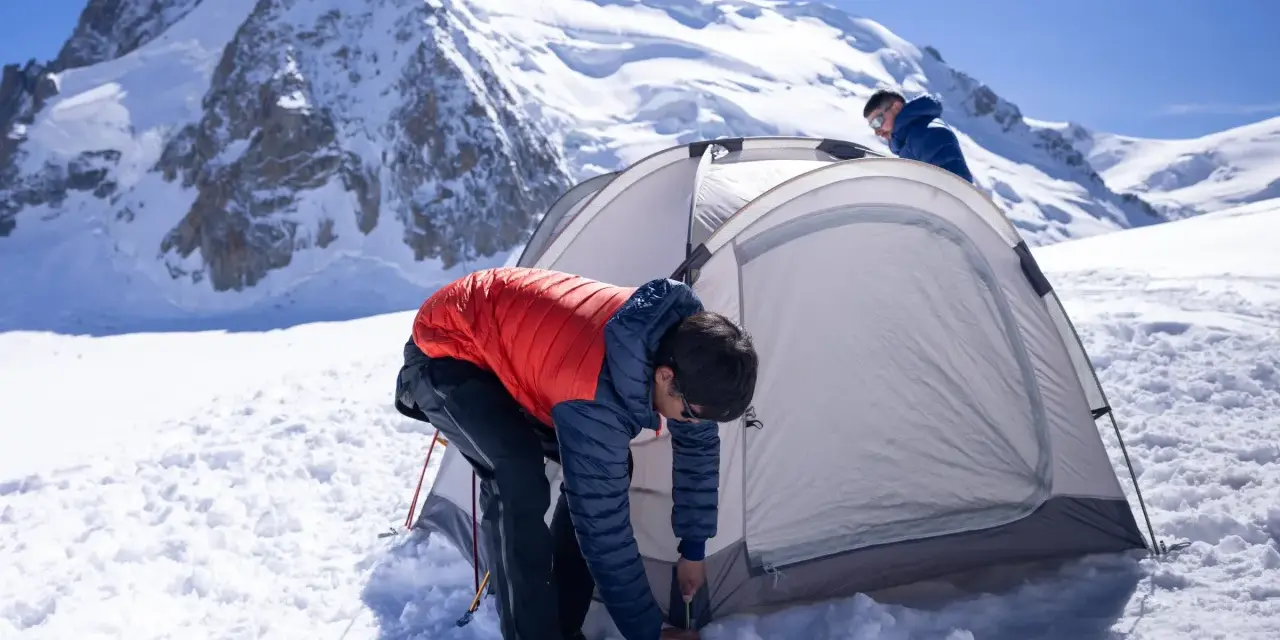
Cold-weather trips can be some of the best nights outdoors, but they reward careful planning. Winter camping in the UK is less about toughness and more about choosing the right pitch, a sleep system that keeps heat in, and routines that stop small problems from becoming miserable ones. In this guide, I focus on the practical decisions that matter most when the forecast is damp, windy, and dark by late afternoon.
The main things that decide whether a cold-night trip feels easy or exhausting
- Check the forecast, road access, and site opening times before you book, not after you arrive.
- Pick a sheltered pitch and a tent that can handle wind, rain, and condensation without turning clammy.
- Insulate from the ground with a high-R-value sleeping pad; the cold floor drains heat faster than most people expect.
- Keep clothes dry, limit sweat, and switch into warmer layers as soon as you stop moving.
- Eat early, drink regularly, and keep a simple backup plan if the weather turns.
Start with the forecast, because the campsite comes second
I always begin with weather and access, not kit. In the UK, a site that looks fine on a sunny map can become awkward fast if roads ice over, facilities close early, or the wind picks up across open ground.
I check official warnings first because they cover the kinds of problems that ruin a trip fastest: snow, wind, ice, fog, and heavy rain. That matters more than a generic app because a strong breeze on an exposed pitch can feel far colder than the air temperature suggests.
- Choose a year-round campsite if this is your first cold-season trip.
- Check whether the toilet block, washing-up area, and water points are open.
- Look for hardstanding if you are arriving by van, trailer, or car with a heavy load.
- Leave room in your plan for an earlier arrival, because setting up in daylight is much easier than doing it with numb hands.
I also decide in advance what conditions are a deal-breaker for me. If the route crosses high ground, if the campsite is badly sheltered, or if the forecast points to ice, I would rather move the trip than force it. That attitude is not cautious for the sake of it; it is what keeps the rest of the trip relaxed. Once that is settled, the next step is choosing a pitch that works with the weather rather than against it.
Choose a pitch that blocks wind and keeps water moving
Once you reach the site, the shape of the ground matters almost as much as the shelter itself. I look for a pitch that stays out of the wind, drains well, and does not sit in a hollow where cold air collects overnight. Frost often settles in those dips first, and runoff can turn them into a damp trap after rain or thaw.
In practical terms, I want a little natural shelter from hedges, trees, or a bank, but not dead branches overhead and not so much enclosure that moisture gets trapped. If the tent has a door or narrow end that can face away from the prevailing wind, that usually makes the first part of the night calmer.
For tent fabric, a hydrostatic head of at least 3000 mm is a sensible minimum for reliable wet-weather protection. Hydrostatic head is simply the measure of how much water pressure fabric can resist before it starts to leak, so a higher number gives you more margin when rain arrives sideways.
That said, waterproofing alone is not the answer. A pitch that sheds water, a flysheet with decent tension, and a bit of space around the tent usually matter more than a shiny specification sheet. When people say a trip was “cold and damp”, it is often the site choice, not the bag, that set the tone. From there, the sleeping setup becomes the next big lever.
Build a sleep system, not just a sleeping bag
The biggest mistake I see is treating the sleeping bag as the whole solution. Heat loss comes from the ground, from damp air, and from compressed insulation as much as from the night temperature itself. A proper sleep system fixes all three.
| Item | What I look for | Why it matters |
|---|---|---|
| Sleeping pad | R-value of 4 or more for cold nights, 5.5+ if frost or snow is likely | The ground steals body heat far faster than the air around you |
| Sleeping bag | A comfort rating below the expected low, not just a marketing label | The comfort figure is the one that helps you sleep, not just survive |
| Liner or extra quilt | Something that adds a small warmth buffer without much bulk | Useful when conditions are colder than planned or you sleep cold anyway |
| Dry base layers | Clean, moisture-wicking clothes kept only for sleeping | Even a good bag struggles if you go to bed damp |
For insulation, I prefer synthetic fill when the trip is short, wet, or likely to involve family chaos around camp. Down is excellent for warmth-to-weight, but it needs more discipline because moisture weakens it faster. On a dry, stable forecast, down is hard to beat; on a damp British night, synthetic often feels more forgiving.
The Camping and Caravanning Club also stresses ventilation because trapped breath turns into condensation, and in colder air that moisture can freeze and drip back onto your kit. A little airflow beats a clammy tent every time. Once the bed is sorted, clothing layers decide how comfortable everything feels outside the sleeping bag.
Dress for pauses, not for hiking pace
Cold weather exposes a simple truth: the clothes that feel perfect while walking can feel wrong the moment you stop. I dress for the least active part of the evening, because that is when heat loss becomes noticeable.
- Start with a base layer that wicks sweat away from skin.
- Add a mid-layer that traps warmth without compressing too much.
- Carry an outer shell for wind and rain, especially at the coast or on open moorland.
- Pack a spare hat and dry socks for sleeping.
- Keep gloves handy instead of buried deep in a bag.
The real trick is to stop sweating early. If I arrive at camp too hot, I unzip layers before I am soaked, because sweat that cools later will make me colder than a slightly under-dressed walk ever would. The same logic applies to children: keep them moving enough to stay warm, but not so active that they end up damp and irritable.
I also like to separate “walking clothes” from “camp clothes”. The first set can get muddy or damp during set-up; the second stays clean and dry for the evening. That one habit does more for comfort than most expensive gadgets. After that, food and water become the other half of staying warm.
Eat, drink, and run camp life more simply than in summer
Cold pulls energy out of you, and it also slows everything down. Cooking, washing up, and even pouring water take longer when your hands are stiff and your stove is less cooperative.
So I keep winter meals simple. One-pot dishes, noodles, porridge, soups, and anything that can be prepared with minimal chopping are easier to manage when daylight is fading. If you are camping with children, it helps to have one meal they already know and will actually eat, because a long argument over dinner is the quickest route to everyone getting cold.
Water deserves more attention than people give it. Bottles freeze more easily than most campers expect, especially overnight or in exposed porch space. I keep drinking water close to the sleeping area if the tent is secure enough, and I avoid leaving it where it can become useless by dawn.
If you cook with gas canisters, remember that cold air can reduce performance. A stove that works perfectly in summer may struggle in freezing conditions, so I test my setup before I trust it on a real trip. This is one of those areas where a little practice saves a lot of frustration. Once those routines are in place, the remaining problems are usually the avoidable ones.
The mistakes I see most often on cold nights
The same problems repeat themselves because they feel minor until the temperature drops. None of them are dramatic, but together they can turn a good trip into a long, uncomfortable night.
- Arriving too late - pitching in the dark is slower, colder, and more error-prone.
- Underestimating the ground - a warm bag on a weak pad still feels cold because heat is leaking away underneath you.
- Over-sealing the tent - less airflow sounds cosy, but it usually means more condensation.
- Going to bed slightly wet - damp socks, damp gloves, or a sweaty base layer can undo good gear fast.
- Waiting until you are already chilled - once hands and feet are cold, it takes far longer to recover than people expect.
- Building the trip around a fantasy forecast - in the UK, changeable weather is normal, so the backup plan matters.
My rule is simple: fix cold early, not late. If my hands are cooling down, I put on gloves. If my feet start to feel clammy, I change socks. If the tent is too sealed, I crack a vent. The people who enjoy cold nights most are usually the ones who respond early rather than bravely enduring the first warning sign. That is why I end the day with a short, repeatable routine instead of improvising.
The routine that makes a cold trip feel calm
By the end of the day, I want the campsite to feel orderly rather than heroic. That means pitching while there is still light, getting dry clothes ready before dinner, and setting out the torch, water, and extra layers before I need them. It also means accepting that a shorter, simpler trip is often the better choice for families or first-timers.
If I were planning a family weekend, I would choose a sheltered year-round site, keep the drive short, and make comfort the priority instead of the itinerary. One good pitch, one warm meal, one dry set of night clothes, and one realistic exit plan will do more for the experience than a van full of unnecessary gear.That is the real difference between a trip that feels punishing and one that feels memorable: not bravado, but a few disciplined habits that keep warmth, dryness, and daylight on your side.
