
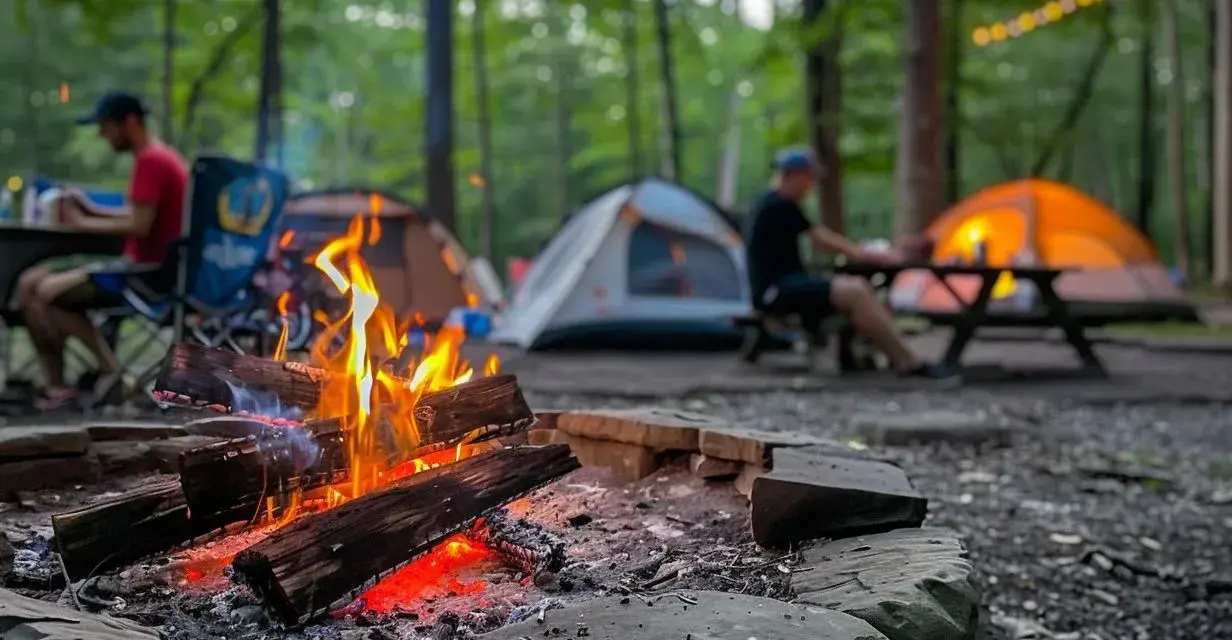
Organising a big camping trip is mostly about reducing friction: the right site, a clear booking system, sensible camp layout, and a food plan that does not collapse at mealtimes. Large group camping works best when you treat the campsite like a small temporary village, not a pile of separate tents. In this guide, I’ll walk through the practical decisions that matter most for UK trips, from booking and zoning to safety, weather, and the details that keep everyone comfortable.
The few decisions that matter most
- Choose a campsite that explicitly welcomes groups and has enough toilets, parking, and space for shared kit.
- Appoint one organiser, then split the work into booking, food, kit, and safety roles.
- Set up the camp in zones so tents, cooking, and social time do not clash.
- Plan meals around speed and simplicity, not ambition.
- Build in a weather plan, quiet hours, and a fire routine before the trip starts.

Choose a campsite that fits the group, not the other way around
The site choice decides whether the trip feels easy or exhausting. For a bigger party, I look first for places that clearly allow groups, then I check the details that actually affect day-to-day comfort: toilet capacity, parking, access roads, noise rules, and whether the owner expects exclusive hire or split pitches. A pretty field is useless if every car has to be moved twice a day or the toilets are too far away for children and older guests.
In the UK, I would prioritise three things before paying a deposit: group-friendly layout, clear rules, and enough infrastructure for the size of the party. If the site is vague about fire pits, music, arrivals, or how many tents can sit together, that usually means extra friction later. A campsite that publishes quiet hours, group-booking terms, and fire guidance is usually telling you it expects organised guests, which is exactly what you want.
| Site type | Best for | Watch-outs |
|---|---|---|
| Exclusive-hire field | Family reunions, birthdays, mixed-age groups | Higher upfront cost and possible minimum-night rules |
| Group-friendly family campsite | Smaller groups that want proper facilities | Noise limits, separate pitches, and stricter behaviour rules |
| Private field with basic facilities | Budget-conscious groups that can bring more of their own kit | You may need to supply more shelter, storage, and washing-up gear |
If you are deciding between two options, I usually ask one simple question: which site will make the organiser’s life easier at 7 a.m. and 10 p.m.? That answer is more revealing than any glossy description. Once the site is right, the next job is making sure the booking itself does not turn into a mess.
Lock the booking system down before anyone packs
Big group trips unravel when every person assumes someone else has handled the basics. I keep it simple: one lead organiser, one payment deadline, one arrival window, and a short list of named responsibilities. For groups of around 8 to 10 people, one organiser can usually keep things under control. Once you go larger than that, a second helper becomes useful, especially if the group includes children, multiple cars, or different arrival times.
- Confirm the exact dates and the final group size before sending money.
- Collect arrival times, vehicle counts, and any mobility needs.
- Agree on who pays what and when, including deposits and cancellation rules.
- Assign roles for booking, food, kit, and safety so nothing is duplicated.
- Share one contact sheet with phone numbers, emergency details, and the campsite address.
For summer bank holidays and school holiday weekends, I would treat 3 to 6 months ahead as a sensible booking window. For a midweek trip outside peak season, 4 to 8 weeks can be enough if the site is flexible. The key is not speed for its own sake; it is reducing the number of unknowns before you start packing. Once people know where they are sleeping and when they are arriving, the campsite itself becomes much easier to design.
Design the campsite like a small village
When many people share one pitch, layout matters more than equipment. I like to divide camp into zones so every function has a place and nobody has to step over guy lines to make tea. That approach lowers noise, prevents bottlenecks, and keeps the sleeping area calmer at night.
| Zone | What belongs there | Why it helps |
|---|---|---|
| Sleeping zone | Tents, lanterns kept low, quiet footpaths | Gives people a proper place to rest without late-night traffic |
| Social zone | Table, chairs, tarp or shelter, games | Keeps conversation and movement away from tents |
| Kitchen zone | Stoves, cool boxes, washing-up kit, water containers | Reduces congestion and keeps cooking safer |
| Storage zone | Crates, wet gear, rubbish bags, spare fuel | Stops the site from feeling cluttered and makes gear easier to find |
| Parking or unloading zone | Cars, trolleys, heavy bags, shared supplies | Prevents vehicles from cutting through the living space |
I also make guys and walkways visible from the start. A trip hazard at 11 p.m. becomes a real problem when several tents are clustered together. If you have children or late arrivals, a simple torch point, a clear route to the toilets, and one obvious communal area can make the whole camp feel calmer. Good layout is invisible when it works, and painfully obvious when it does not. From there, food is usually the next place where organisation either shines or falls apart.
Feed a crowd without turning the kitchen into a bottleneck
Food planning for a larger camping group should be boring in the best possible way. The menu does not need to be clever; it needs to be fast, repeatable, and easy to clean up. I prefer one-pot dinners, simple breakfasts, and lunch options that do not require a full cooking station. If everyone expects a made-to-order meal, the queue grows quickly and the mood drops just as fast.
A useful rule of thumb is to think in terms of two cooking surfaces for roughly 8 to 12 people, with a third only if you are serving a bigger group at the same time. For washing up and handwashing, two 10-litre water containers are far more practical than one small jug if tap access is uncertain. That sounds basic, but basic is exactly what keeps the kitchen moving.
- Plan one hot breakfast and one grab-and-go option.
- Use wraps, pasta, chilli, tray-bakes, or stews for dinner.
- Label allergen-safe food clearly and keep a separate utensil set if needed.
- Bring one cool box per food category if the group is staying more than one night.
- Assign a washing-up rota before the first meal, not after it.
If you are cooking with charcoal or a barbecue, follow the site rules rather than improvising. GOV.UK advises keeping a bucket of water nearby and never using a barbecue indoors, in a tent, under an awning, or in a caravan. It also recommends using only enough charcoal to cover the base of the barbecue, which is normally around 5 cm deep. Those are small details, but they prevent the kind of problem nobody wants on a shared campsite. A smooth food system makes it much easier to keep the camp safe and pleasant once the day winds down.
Keep the group safe, quiet and easy to live with
Group camping only feels relaxed when everyone understands the house rules. I would rather set expectations too early than explain them in the dark after someone has tripped over a guy line or fired up music too late. Quiet hours, rubbish handling, and fire safety are not red tape; they are the difference between being welcomed back and being remembered as the noisy booking.
- Agree quiet hours before the trip and stick to them, even if the evening is going well.
- Keep cooking and fire areas clear of tents, hedges, and children’s games.
- Use headlamps or low lanterns so people can move around without blinding each other.
- Set one visible meeting point in case anyone gets separated after dark.
- Keep rubbish, recycling, and used food waste in sealed bags so the site stays tidy.
I also like to do a short dusk check: extinguish flames, count the group, locate first-aid supplies, and make sure everyone knows where the toilets are in the dark. Many campsites expect low noise from around 10 p.m. onwards, and some are stricter, especially family-focused sites. That makes it worth planning your social time around the site’s rhythm instead of fighting it. Once the safety routine is clear, the last big variable is the weather, which in the UK always deserves its own plan.
Plan for British weather before it plans for you
Rain, wind, and damp ground are part of the experience in the UK, so I never treat weather as a minor detail. For a bigger group, the risk is not just that one tent gets wet. It is that wet gear spreads into the sleeping area, muddy shoes pile up by the entrance, and everyone ends up sharing the same cramped dry space when the forecast shifts.
The practical answer is to create a dry system before you arrive: one communal shelter, one boot area, and one obvious place to hang or store damp kit. Keep the tent entrance free from clutter, and make sure sleeping mats and bags stay away from tent walls so condensation does not soak through overnight. A spare tarp, a few extra pegs, and properly waterproof clothing matter more than most novelty gadgets.
- Pack layers and a proper waterproof, not just a light shell.
- Use a groundsheet that fits inside the tent footprint, not one that sticks out and collects water.
- Bring dry bags or bin liners for each tent so wet clothing stays separate.
- Choose a sheltered pitch when possible, but do not block ventilation completely.
- Keep a spare pair of socks and a dry top in an easy-to-reach bag.
The Camping and Caravanning Club’s checklist still gets this right: warm layers, waterproofs, a good sleeping bag, and practical tools matter more than clever extras. I agree with that approach. Once you stop pretending the weather will cooperate, the trip becomes easier to manage. The final step is checking the small details that make the whole setup feel finished rather than merely functional.
The last checks I would make before leaving home
Before I drive off, I want five things confirmed: who is arriving when, who has the food, who is carrying the shared kit, what the fire rules are, and where the group will meet if plans change. That sounds obvious, but those are the details that usually go missing when several households are involved. I would also keep one digital copy and one paper copy of the campsite booking, especially if the signal on arrival is poor.
- Test torches, lanterns, and power banks the night before.
- Pack a first-aid kit, medication, sunscreen, and insect repellent in a bag you can reach quickly.
- Bring extra bin bags, tea towels, washing-up liquid, and a cloth that can handle mud.
- Confirm vehicle access, parking instructions, and the arrival window with the campsite.
- Share one short message with the whole group that repeats the essentials: where to go, when to arrive, and who to contact.
When those basics are in place, a group trip stops feeling like a logistical gamble and starts feeling like a proper shared experience. That is the real goal: less scrambling, more time around the table, and a campsite that works for everyone rather than only for the most organised person in the group.
