
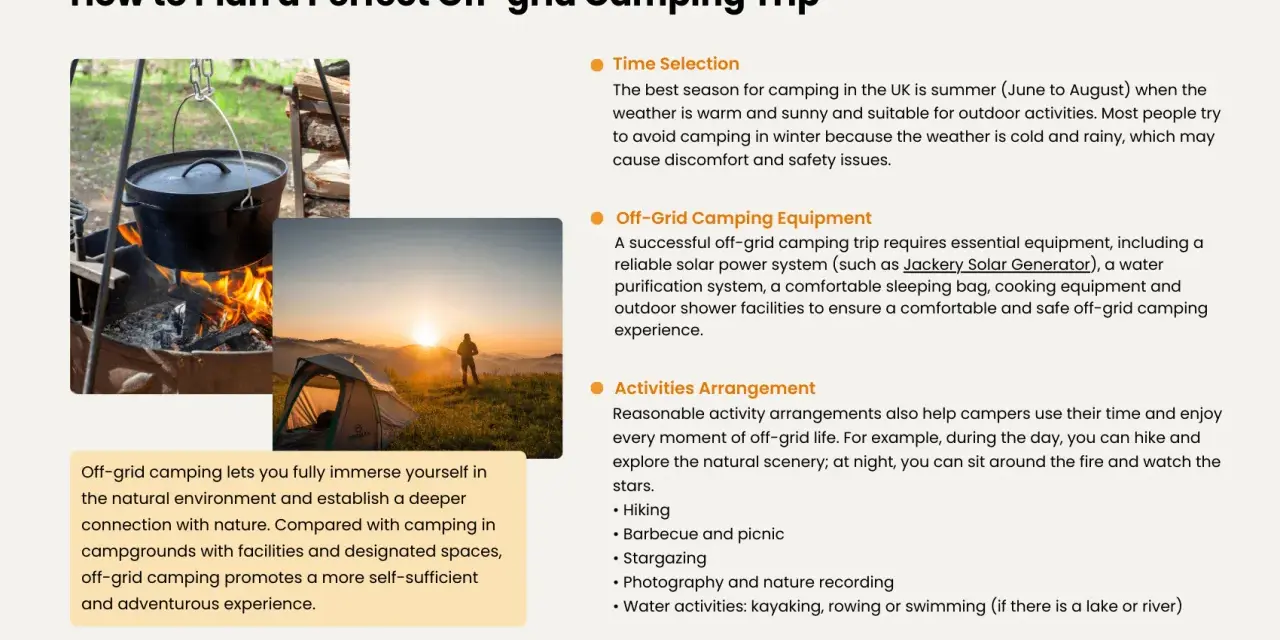
Knowing how to plan a camping trip properly saves money, reduces stress, and makes the weather far less of a gamble. The best trips usually start with a realistic campsite choice, a kit list that suits British conditions, and a food plan that does not rely on heroic levels of organisation. Here I focus on the practical decisions that matter most for a UK camping holiday, especially if you are travelling with family or want a smoother first experience.
The essentials to get right before you leave
- Choose the campsite type first, then shape the rest of the plan around it.
- Check weather, daylight, and travel time before you lock in dates.
- Budget for the pitch, food, fuel, and small extras, not just the booking fee.
- Pack for cold nights and wet grass even when the forecast looks kind.
- Keep meals simple and confirm the site rules on fires, dogs, and noise.
Choose the campsite that fits the trip you actually want
I always start with the campsite, because everything else depends on it. A quiet off-grid pitch, a family-friendly park with showers, and a glamping pod all create very different trips, even if they are only a few miles apart. For a first outing, I would usually choose comfort and convenience over “adventure” every time, because a warm shower and a sheltered pitch do more for morale than a dramatic view.
| Option | Best for | What it gives you | Trade-offs |
|---|---|---|---|
| Family campsite | Families, beginners, mixed-age groups | Toilets, showers, easier parking, predictable rules | More noise, less privacy, often busier in peak season |
| Well-run basic site | Couples, small groups, low-key weekends | Simple facilities, lower cost, calmer atmosphere | Fewer extras and less on-site entertainment |
| Off-grid or back-to-nature site | Experienced campers, people who want space and quiet | More privacy, usually fewer crowds, a stronger outdoor feel | Less comfort, more self-sufficiency, weather matters more |
| Glamping | Comfort-first breaks, special occasions, mixed abilities | Beds, heating, less gear to carry, easier arrival | Highest cost and less flexibility |
| Wild camping or backpack camping | Very experienced campers with permission or legal access | Low cost, solitude, a stripped-back experience | Few or no facilities, stricter rules, more weather exposure |
For a first trip, I prefer a site with clean facilities, a clear arrival process, and enough room to pitch without fighting the wind. One small but important detail is legality: wild camping in England and Wales usually needs landowner permission, while Scotland has broader access rights but still expects lightweight, low-impact camping. Once the campsite is chosen, the next job is making the dates and the weather work in your favour.
Build the trip around weather, season, and travel time
British camping is less about chasing perfect sunshine and more about planning for changeable conditions. I look at the forecast, the likely wind, and the time of sunset before I do anything else, because a campsite that looks perfect on a map can feel very different once rain starts blowing sideways. For that reason, I try to avoid arriving late in the day, and I treat long drives as part of the trip design rather than a separate issue.
- Check the forecast more than once. I look when I book, again 48 hours before departure, and once more on the morning I leave.
- Plan for wind, not just rain. A sheltered pitch matters if your tent is lightweight or if you are travelling with children.
- Arrive with daylight to spare. Setting up a tent in the dark is usually slower, colder, and more frustrating than people expect.
- Build in a weather backup. A museum, café, pub lunch, or indoor family activity can save the weekend if the sky turns stubborn.
The Met Office makes a sensible point that I would repeat in my own words: pitching a tent in wind and rain is awkward and can be risky, so if you can wait for better conditions, do it. I also like to think seasonally. Late spring and early autumn can be excellent for quieter sites and better prices, while school holidays and bank holiday weekends need earlier booking and more patience on the road. With the timing settled, the budget becomes much easier to pin down.
Book early and budget for the real cost
A campsite booking fee is only part of the cost, and this is where many first-timers underestimate the trip. In the UK, a basic tent pitch often lands around £10 to £30 per night, while busier sites, better locations, and pitches with electric hook-up can move into the £30 to £60+ range. If you are travelling in peak season, I would budget on the higher side and treat the lower end as a bonus, not a promise.
| Cost item | Typical range | What to watch for |
|---|---|---|
| Pitch | £10-£30 per night for basic sites | Location, season, facilities, and pitch size all affect the price |
| Electric hook-up | Often an extra £3-£8 per night | Useful for charging, lights, or a small heater fan, but not essential |
| Food | About £8-£15 per person per day | Simple meals keep this controlled very quickly |
| Fuel or firewood | About £5-£20 | Depends on whether the site allows fires or only stoves |
| Parking or extra car | Sometimes £0-£10+ | Some sites include it, some charge separately |
If the site asks for a deposit or full payment, read the cancellation terms before you commit. That matters more than people think, especially when the forecast changes and a non-refundable booking suddenly feels much less flexible. I also book earlier than I think I need to, because the sites that are genuinely family-friendly and well placed are usually the first to go. Once the booking is secure, it is time to pack with discipline rather than optimism.

Pack the kit that keeps the trip comfortable, dry, and organised
The gear list does not need to be huge, but it does need to be thoughtful. I start with sleep, shelter, and light before I even think about extras, because those are the items that decide whether the trip feels restful or merely survivable. The Camping and Caravanning Club gets this right in its checklist guidance: layers and proper waterproofs do most of the heavy lifting in British weather.
Sleep and shelter
- Tent with all poles, pegs, guy lines, and a mallet
- Groundsheet or footprint if your tent allows one
- Sleeping bag suited to the season
- Sleeping mat or air bed, plus pump if needed
- Pillow or a small stuff sack filled with clothes
- Repair tape or a basic tent repair kit
If you are wondering about comfort, R-value is the insulation rating of a sleeping mat. A higher number means better protection from cold ground, which matters far more than many new campers realise, especially in spring and autumn.
Clothing and light
- Waterproof jacket and, if possible, waterproof trousers
- Warm mid-layer or fleece
- Spare socks and underwear for each person
- Walking shoes or boots with a backup pair of casual shoes
- Headtorch for each person, plus spare batteries
- Power bank and charging cable
Read Also: Campfire Safety Guide - Build & Extinguish Safely
Useful extras that save time
- Dry bags, bin bags, or packing cubes to keep wet and dry items apart
- Small first-aid kit and personal medication
- Sunscreen and insect repellent
- Towels, tea towels, washing-up bowl, sponge, and dish soap
- Folding table and chairs if the site does not provide them
- One familiar comfort item for children, such as a book, toy, or blanket
One habit I strongly recommend is pitching the tent once at home if it is new, or if you have not used it for a while. That is when you discover missing poles, awkward clips, and the pegs that bent in storage rather than at the campsite. Once the kit is sorted, food planning becomes much simpler and far less wasteful.
Keep food, water, and meals simpler than you think
Camping food works best when it is boring in the right way. I would rather eat a very simple meal that takes ten minutes to cook than spend an hour improvising over a stove while everyone gets hungry and cold. That is why I keep the menu short, repeat ingredients across meals, and buy more shelf-stable food than I think I will need.
- Breakfasts: porridge, toast, cereal, eggs, fruit
- Lunches: wraps, cheese sandwiches, soup, pasta salad, fruit
- First-night dinners: pasta with sauce, chilli, curry, or pre-cooked rice dishes
- Snacks: flapjacks, biscuits, nuts, crisps, apples, cereal bars
For water, I plan at least 2 litres per adult per day for drinking, then add more for cooking, washing, and hot weather. If your site has no fridge, use a cool box with ice packs and keep raw meat to a minimum, because food safety gets harder in a tent very quickly. I also like to buy one or two fresh items on arrival instead of dragging the whole week’s shopping into the car. That keeps the cooler manageable and reduces waste.
I tend to build the menu around cupboard staples and quick meals rather than trying to “eat well” in some ambitious camping-chef sense. That is also the safest option if you are bringing children, because a predictable meal is easier to serve when everyone is tired and the weather turns. With food under control, the remaining risks are mostly about rules, safety, and leaving the place in good shape.
Check the rules, safety basics, and leave-no-trace habits
This is the part people skip, and it is usually the part that causes problems later. I always check the campsite rules on fires, BBQs, pets, quiet hours, parking, and waste disposal before I leave home. For wild camping, the rules are even more important: England and Wales usually require landowner permission, while Scotland allows broader access but still expects low-impact, considerate camping.
- Confirm whether campfires or raised fire pits are allowed.
- Avoid disposable BBQs unless the site explicitly permits them and provides a safe area.
- Take all rubbish home or use the site bins properly, including food scraps and wipes.
- Keep food sealed so it does not attract animals.
- Tell someone where you are staying and when you expect to return.
- Carry an offline map or printed directions in case signal drops.
- Pack a small first-aid kit, any medication, and a whistle if you are heading somewhere remote.
For family camping, I also make one simple rule non-negotiable: if water, cliffs, roads, or fire are involved, children stay close enough that I can reach them in seconds. That is not being cautious for the sake of it; it is just sensible outdoor management. Once those basics are in place, the trip feels far calmer because you are not constantly making decisions in the moment. The last job is to run a final check before the car leaves the driveway.
The last check I make before leaving the house
The night before departure, I run through the same short list every time: booking confirmation, arrival time, campsite rules, route, weather, fuel, lights, and food. If I am missing something, this is when I would rather discover it than in a field two hours from home.
- Booking details saved offline or printed
- Tent, poles, pegs, mallet, and repair kit packed
- Sleeping bags, mats, and warm layers loaded
- Headtorches, power bank, and spare batteries charged
- Food, water, stove, and fuel ready to go
- First-aid kit, toiletries, towels, and rubbish bags in the car
- Directions, cash or card, and campsite contact number accessible
If that list is complete, the rest of the trip usually works itself out. The real skill is not controlling every variable outdoors; it is removing the avoidable problems before you leave so the weather, the scenery, and the people you are with can do the rest.
