
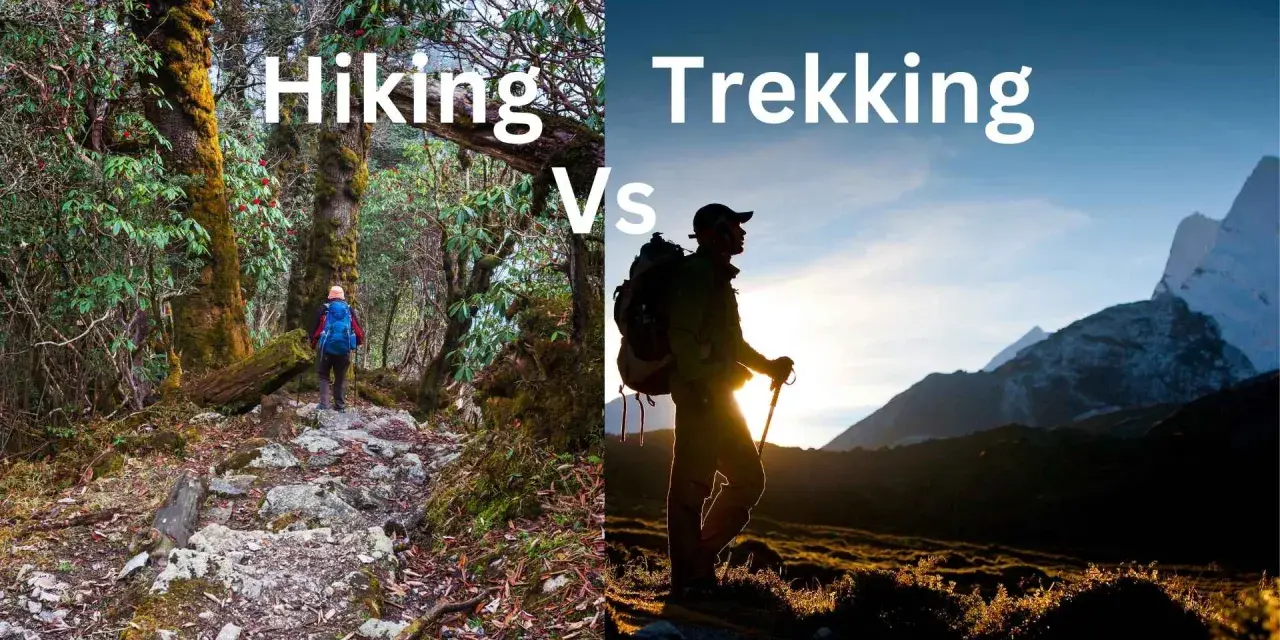
The real answer to what is the difference between hiking and trekking is mostly about commitment: how far you go, how rough the ground is, and how much you need to carry or plan for. Hiking usually fits into a day and stays on established trails, while trekking leans toward longer, more remote journeys with more moving parts. I’ll break down the practical differences, show where backpacking fits, and help you choose the right style for a UK route or a family-friendly outdoor trip.
The quickest way to tell them apart
- Hiking is usually a day activity on marked or familiar trails.
- Trekking usually means longer, tougher, and more self-sufficient walking, often over multiple days.
- Backpacking overlaps with trekking when you carry overnight kit and sleep on the route.
- In the UK, people often say walking, hillwalking, or rambling instead of trekking.
- If you need a navigation plan, food for more than one day, and a place to sleep, you are no longer doing a simple hike.
What is the difference between hiking and trekking
I usually draw the line like this: hiking is a walk in nature that you can often complete in a single day, while trekking is a longer journey that asks for more endurance, more gear, and more self-reliance. Cambridge Dictionary keeps the formal definitions fairly broad, which is exactly why the words get blurred in everyday use, but in real outdoor planning the gap is usually about commitment rather than vocabulary.
A short section of the South Downs Way feels like a hike; a multi-day stretch of the Pennine Way feels much closer to a trek. The route name matters less than the amount of time, elevation, weather exposure, and logistics you have to manage.
| Aspect | Hiking | Trekking | Why it matters |
|---|---|---|---|
| Duration | A few hours to one day | Usually 2 or more days | The moment you need overnight planning, the trip changes shape. |
| Terrain | Marked trails, paths, moderate hills | Rugged, remote, mountainous, or mixed terrain | Rough ground slows you down and increases fatigue. |
| Pack weight | Light to moderate day pack | Heavier pack with overnight kit | What you carry affects pace, comfort, and safety. |
| Planning | Route, weather, and return transport | Route, weather, resupply, and accommodation or campsites | More days mean more things can go wrong if you do not plan well. |
| Best fit | Day out, fitness, scenery, family trip | Bigger challenge, multi-day journey, expedition feel | The label should match the kind of experience you actually want. |
Once you see the difference this way, terrain and time become much easier to judge. That is where the experience shifts from a pleasant outing to something that starts to demand more from you.

How distance, terrain and time change the experience
Distance alone does not decide it. A 12-kilometre route on a dry, well-made path can feel like a comfortable hike, while the same distance on steep, boggy ground with poor visibility can feel like a trek by the end of the day.
In the UK, elevation and weather often do more to change the character of a route than raw mileage. A leisurely loop in the Cotswolds, a cliff-top section of the South West Coast Path, and a windy day in the Scottish Highlands can all sit in different parts of the spectrum even when the kilometres look similar on paper.
For me, the real test is how much margin remains if the weather turns or someone in the group slows down. If the answer is “not much”, I stop thinking about the route as a simple hike and start treating it like a more serious mountain day or a trek.
When that happens, the gear list starts to matter more than the name you give the outing.
What gear and planning each one needs
The gear gap is where the difference becomes impossible to ignore. For a hike, I want sturdy footwear, weather-appropriate layers, water, food, a map or offline navigation app, and a small first-aid kit. For a trek, I add the things that keep you moving and sleeping safely for more than one day: overnight shelter, sleep system, spare clothing, charging power, and a clear resupply plan.
- Hiking kit usually stays light enough to move quickly and comfortably.
- Trekking kit becomes a load you have to manage all day, not just carry.
- Trekking poles help on steep descents, wet ground, and long days with a pack, but they do not replace good pacing or route judgement.
- Navigation matters in both activities, yet it becomes critical once you leave obvious paths or commit to a long route.
If a route needs campsite bookings, transport coordination, or a food plan for the next morning, I stop thinking about it as a simple hike and start planning it as an overnight journey. That is the bridge into backpacking, which is where the terminology gets even more mixed.
Where backpacking fits in
Backpacking sits between the two terms and often overlaps with trekking. In outdoor travel, it usually means moving on foot with a pack that contains everything you need for the night, whether you are camping, staying in a hut, or using a simple hostel.
In the UK, the word can be confusing because it also means budget travel, so I usually say multi-day walking or overnight hiking when I want the meaning to stay clear. If you are carrying your sleeping gear, food, and clothing from one stop to the next, you are firmly beyond a day hike, even if the route still feels moderate.
For family adventures, a short first day, one campsite stop, and a second day that finishes back at a car park, village, or station can be a very practical introduction. It gives you the feel of trekking without forcing you straight into a high-pressure expedition.
Once the words blur, the planning mistakes become easier to spot too.
Common mistakes when people use the terms interchangeably
The biggest mistake is assuming that trekking simply means a longer hike. Sometimes it does, but in practice the longer route often changes the whole character of the trip: more food, more weather exposure, more navigation, more fatigue, and less room for error.
- Judging by distance only ignores ascent, terrain, and weather, which are often more important.
- Packing too lightly is fine for a short hike but risky once the route becomes remote or multi-day.
- Choosing a route by photos alone can hide steep climbs, boggy ground, or exposed ridge sections.
- Using a day-hike mindset on an overnight route leads to poor pacing and bad decisions late in the day.
I also see people underestimate how quickly conditions change on British hills. A route that looks friendly on a summer map can feel very different once wind, rain, and slippery ground arrive, so the label matters less than the actual risk profile.
That is why a simple rule beats a messy label when you are choosing your next route.
The simplest way to choose your next route
When I help someone decide between the two, I use one question: can you finish the outing comfortably in a day with a light pack? If the answer is yes, you are probably planning a hike. If the answer is no because you need overnight gear, multiple food stops, or a stronger safety buffer, you are planning a trek or a backpacking trip.
For most readers in the UK, that is the most useful distinction. Call the route what you like, but plan it honestly: check the ascent, the footing, the weather window, and how the route behaves when the light fades. That is the difference that really affects the quality of the day, and it is the detail that keeps a good walk from becoming a hard lesson.
