
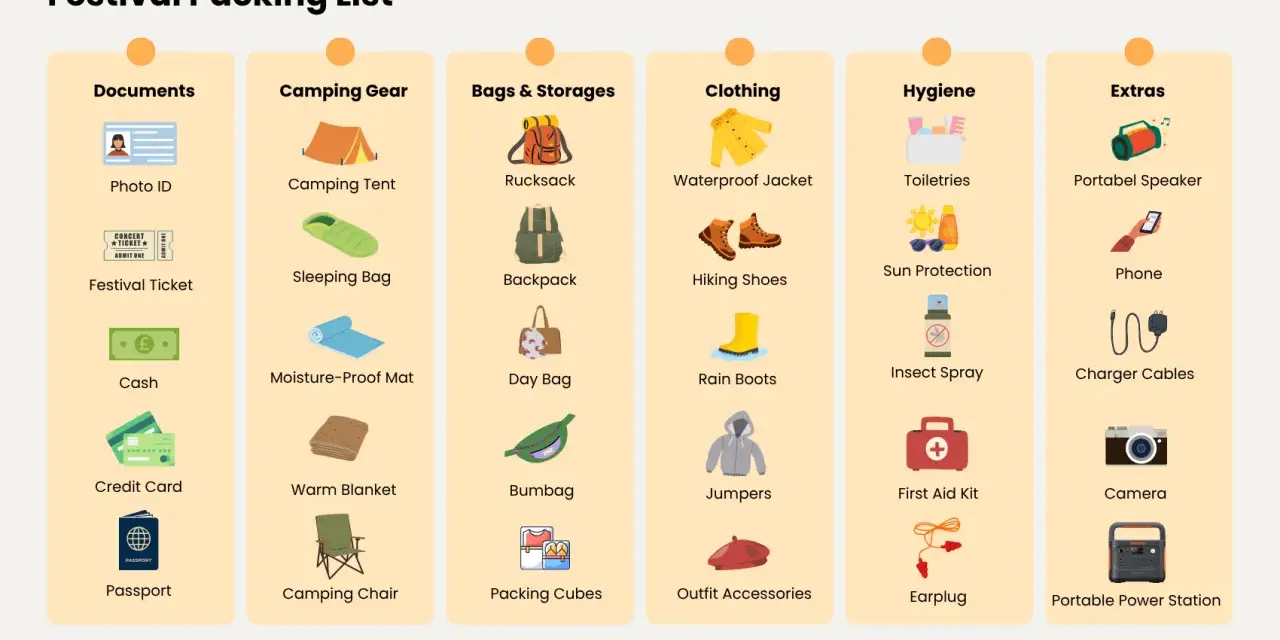
The essentials that keep a festival camp workable
- Put shelter and sleep first: a sturdy tent, insulation from the ground, and enough warmth for chilly nights.
- Pack for mixed UK weather with waterproof layers, spare socks, and footwear that can handle mud.
- Keep hygiene simple: wipes, toilet roll, hand sanitiser, sunscreen, and a basic first-aid kit.
- Bring enough power for the full stay; a 20,000mAh bank is a practical baseline for most phones.
- Carry water, snacks, ID, and tickets in a small bag you can trust when you leave camp.
- Check the event rules before you pack anything bulky, glass, sharp, or fuel-based.

Start with the camp setup that protects sleep
I start here because everything else becomes easier when your sleeping system works. A proper campsite kit should stop rain, cold ground, and early sunlight from ruining the one thing festival-goers always underestimate: sleep.
A double-skin tent is usually the smarter choice for a multi-day festival, because the extra layer helps with condensation and makes the shelter feel less flimsy when the weather turns. If rain is likely, a hydrostatic head of around 3,000mm or more is a useful benchmark; that figure measures how much water pressure the fabric can take before leaking. I also prefer a tent that is one size bigger than the label suggests, unless campsite pitches are very tight.
| Priority | What I would pack | Why it matters |
|---|---|---|
| Shelter | Double-skin tent, spare pegs, mallet, groundsheet or tarp | Keeps you dry and saves you from a broken pitch on a windy night |
| Sleep | Season-appropriate sleeping bag, sleeping mat or airbed, pillow | Insulation matters more than most people expect after midnight |
| Light | Head torch or torch, spare batteries | Hands-free light is safer in camp than a phone torch |
| Recovery | Eye mask and earplugs | Helps you sleep when neighbours, sunrise, or bassline noise keep going |
For bedding, I look for a sleeping bag rated for the temperatures I expect, not just the season on the label. A mat or airbed keeps you off the cold ground, and that insulation is often the difference between feeling human on day two or spending the weekend exhausted. Once the sleeping setup is sorted, clothing becomes the next thing that can quietly make or break the trip.
Dress for a British festival, not a perfect forecast
If there is one mistake I see repeatedly, it is overpacking outfits and underpacking weather protection. UK festival weather can move from bright to soaked with very little warning, so I build around layers: a breathable base layer, a warm mid-layer, and a waterproof outer shell.Footwear matters more than style. Wellies are useful in real mud, but they are heavy for long walks; waterproof trainers or hybrid hiking shoes are often the better all-round choice when the ground is only partly wet. I still pack a dry pair of socks for the tent, plus one sealed backup pair for the end of the weekend when everything else starts feeling damp.
- Waterproof jacket or poncho
- Warm jumper or fleece
- Spare socks and underwear for each day, plus one backup set
- Hat and sunglasses for exposed afternoons
- Slides or flip-flops for inside the tent
- Quick-dry trousers or leggings for cooler evenings
- A small waterproof bag for dry clothes
A poncho is light and easy to stash, but I trust a proper waterproof jacket more when the wind picks up. The goal is not to look perfect for every photo; it is to stay comfortable enough that rain does not decide your mood. With the clothes sorted, the next weak point is usually hygiene, because small discomforts become very noticeable once the weekend gets messy.
Keep hygiene and health simple enough to use every day
Festival hygiene does not need to be glamorous; it needs to be available when you are tired, dirty, and not in the mood to dig through a huge bag. I keep a small wash kit near the top of my pack so I can reach it in seconds rather than treating it like a luxury box I will never open.
The basics are boring for a reason: they work. Wet wipes, hand sanitiser, toilet roll, toothbrush, toothpaste, deodorant, soap, dry shampoo, sunscreen, aftersun, and a towel cover most situations. Add menstrual products, glasses or contact lens supplies if you use them, and any prescription medication you need for the full stay.
- Keep medication in original packaging if possible and pack enough for the whole trip.
- Bring a small first-aid kit with plasters, painkillers, and blister care.
- Keep earplugs with your sleep mask so you can find both quickly at night.
- Pack biodegradable wipes if the event asks for them.
- Do not assume campsite toilets will be stocked with paper or soap.
I also like to keep one small towel separate from the rest of my clothes so I always know where it is after a shower or an unexpectedly wet day. Once hygiene is under control, the next thing that tends to unravel a festival is running out of water, food, or battery at the wrong moment.
Handle water, food and charging before the queues start
I treat these three as the difference between a good weekend and a frustrating one. Water keeps you functioning, snacks stop you overspending on site food, and charging keeps you connected when you are meeting friends or finding your way back at night.
A reusable bottle is non-negotiable, and an insulated one is even better if you expect long days in sun. Many festival sites now have refill points, so I would rather carry a bottle that is easy to top up than rely on buying drinks every time I get thirsty.
| Charging option | Best for | Trade-off |
|---|---|---|
| 20,000mAh power bank | Most campers who want all-day reliability | Heavier, but usually enough for several phone top-ups |
| Smaller backup bank | Day bag or short arena trips | Lighter, but fewer full charges |
| Festival charging station | Emergency top-up | Can mean queues and often costs £15-20 per charge |
Decathlon uses the 20,000mAh benchmark for a reason: it is a practical starting point for a weekend when your phone gets used more than usual. I like carrying one larger bank for camp and a smaller one for the arena, because the phone you leave in the tent is not the one you need when you are trying to meet someone in a crowd.
For food, I pack snacks that survive heat and being crushed in a bag: bars, nuts, crisps, fruit that will not turn to mush, and a simple breakfast that still feels acceptable on day three. If the rules allow it, a small cooler bag helps, but it only works if you keep expectations realistic and avoid glass or anything the venue bans. With the basics covered, the final job is packing in a way that matches festival rules and the walk from the car park to the pitch.
Pack around the rules, the walk in and the walk back
This is where a lot of first-timers overcomplicate things. I would rather have a smaller pack that I can carry comfortably than a giant bag full of things I never use. A 75L backpack is usually more than enough for most multi-day campers, and if you are walking a long distance from parking or public transport, a trolley can be the smarter choice.
Before you leave, download tickets, save ID, and keep both digital and printed copies in an easy-to-reach pocket. Mobile data can fail when thousands of people hit the same field, so I never rely on signal alone. I also put cards, cash, phone, and keys together in a bum bag or crossbody pouch so I am not rummaging through the tent when I should be heading to the stage.
- Check the banned-items list for glass, fuel, sharp tools, and anything else the event flags.
- Use bin bags for rubbish, wet clothing, and anything you want to keep separate from dry kit.
- Pack the camp in two layers: one bag for the walk in and one smaller day bag for the arena.
- Keep a head torch or torch on top of the bag so you can find it after dark.
- Do not bring bulky gear unless you know you will actually use it.
Once you pack to the rules instead of to wishful thinking, the last step is adding the small items that make the whole trip feel less tiring.
The small extras that make the weekend easier to live with
If I have space after the true essentials, I still make room for gaffer tape, a folding chair if it is allowed, an eye mask, earplugs, a compact towel, and one spare charger cable. None of them sounds exciting, but they solve the problems that usually eat time and patience once you are already on site.
For a family trip or a calmer cultural festival, I would also add a familiar snack, a lightweight blanket, and a simple meeting point plan in case people split up. Those are small things, but they prevent the kind of low-level stress that spoils a relaxed afternoon.
My rule is simple: if an item will keep you dry, rested, fed, or easy to find, it belongs in the bag. If it only adds weight and you are not sure you will use it, leave it behind and protect the space for the gear that really earns its place.
