
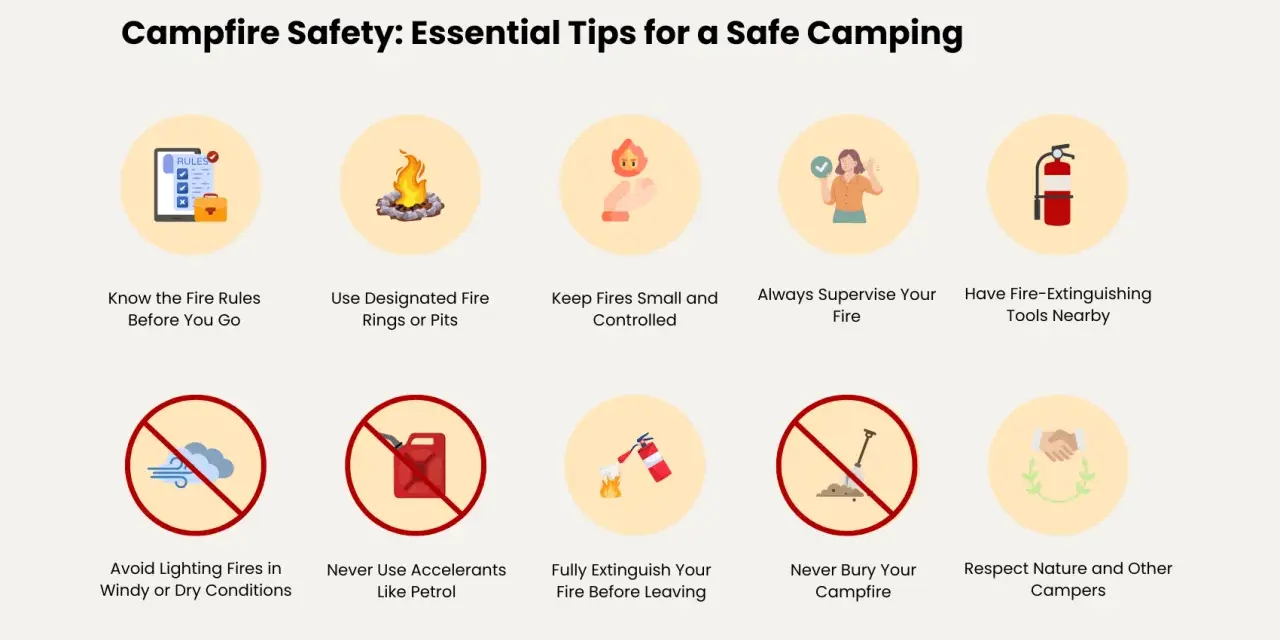
The safest version is small, dry, and easy to extinguish
- Use an existing fire ring or a designated fire pit whenever the site provides one.
- Check campsite rules, wind conditions, and any local fire restrictions before you light anything.
- Build with tinder, kindling, and fuel in that order, and keep the fire modest.
- Keep water and a shovel within arm's reach from the moment you start.
- Never leave the fire unattended, even for a short walk back to the tent.
- Douse, stir, and feel the ashes until everything is cold to the touch.
Check the site and the rules before you strike a match
The safest campfire starts before the first spark. I always check whether the campsite allows open fires at all, because many family sites in the UK limit them to fixed fire pits, communal braziers, or designated areas only. If the wind is strong enough to push smoke sideways, lift embers, or make you squint, that is usually a sign to skip the fire and use a stove instead.
It also pays to think about what is around you. GOV.UK and UK fire services routinely advise keeping tents and caravans at least 6 metres apart and away from parked cars, which gives you a sense of how quickly fire can spread in a crowded campsite. If you are cooking nearby, keep fuel, matches, and loose gear well away from the flame. Once those basics are in place, the next job is preparing a clean fire bed.
Prepare a clean fire bed
I prefer an existing fire ring every time, because it keeps the heat contained and removes most of the guesswork. If the site has no ring and allows a fire on bare ground, choose a patch with mineral soil, gravel, or another non-flammable surface. Avoid dry grass, peat, roots, leaf litter, and any place under low branches or a shelter line.
Clear a generous area around the fire so stray sparks have nowhere to land. A practical rule is to clear roughly 3 metres around the site, including dead grass, pine needles, twigs, and anything else that can catch quickly. Do not build a new ring from random stones unless the campsite says that is acceptable; on many sites, a proper fire pit is better than improvising with whatever is on the ground. Once the base is clean, the way you stack the wood decides whether the fire catches cleanly or smoulders for half an hour.
Build the fire in the right order
A reliable fire needs three layers: tinder, kindling, and fuel. Tinder is the tiny, fast-burning material that catches first. Kindling is the pencil-thick wood that takes the flame and spreads it. Fuel is the larger wood that keeps the fire going once it is established. Use dry, dead wood from the ground where it is allowed, and avoid wet, green, or resin-heavy pieces that smoke more than they burn.
| Fire lay | Best for | Why it works | My note |
|---|---|---|---|
| Teepee | Quick lighting | Air moves through the centre and helps the tinder catch fast | Good for a small evening fire when you want simple, quick heat |
| Log cabin | Longer burn and steadier coals | Wood is stacked in a square, which supports itself well as it burns | Best when you want a fire that is easy to control and cook over |
| Lean-to | Windy but manageable conditions | Kindling leans against a larger log and catches in a sheltered pocket | Useful when the breeze is light but you still need the flame protected |
For most campsite evenings, I keep the structure small and resist the urge to build a big stack. A fire that stays inside the ring is easier to manage, easier to feed, and much easier to put out. When the flame is alive, the main skill is not adding more wood too soon.
Keep the flames small and supervised
A campfire should never be treated like background ambience. Someone needs to stay with it the whole time, because wind, falling embers, and over-fed flames can change the situation quickly. That is especially true on family trips, where people drift off to fetch mugs, adjust sleeping bags, or help children settle in. The fire should still have an adult looking at it.
- Add wood gradually instead of feeding the fire in a rush.
- Keep a bucket of water and a shovel close enough to use immediately.
- Do not use petrol, lighter fluid, aerosol sprays, or other accelerants.
- Stop adding fuel if sparks start jumping out of the ring.
- Keep pets, loose clothing, and sleeping gear well back from the heat.
If I am cooking, I let the fire settle into hot embers first rather than trying to cook over big, lively flames. It gives more control and far less smoke. When the evening winds down, the real safety test begins: putting the fire out completely.
Put it out completely before you walk away
This is the step people rush, and it is the one that matters most. The safest method is to drown the fire with water, stir the embers, add more water, and repeat until there is no heat left. Do it slowly so you do not throw ash into the air or miss hidden coals under the top layer. The ashes should be cold enough to touch with the back of your hand before you leave them.
- Pour water over the embers until the hissing stops.
- Stir the ashes and coals so water reaches everything underneath.
- Pour on more water and stir again.
- Check for warmth with the back of your hand near the surface.
- Repeat until the fire bed is completely cold.
Do not bury a still-warm fire with soil or pile stones over it. That can trap heat and keep the embers alive longer than you expect. Once the site is cold, the UK rules become just as important as the fire routine itself.
What UK campsites usually expect from you
British campsites tend to be practical rather than romantic about campfires, and that is a good thing. Many will allow them only in a dedicated ring, will ask you to keep them low, or will ban them during dry spells. Fire services across the UK also repeat the same camping advice for good reason: keep clear spacing between tents and vehicles, never use fuel-burning devices inside a tent, and make sure you know the site’s fire arrangements before dark.
For a family trip, that usually means a few simple habits:
- Keep tents and caravans spaced well apart and away from parked cars.
- Store lighters and matches out of reach of children.
- Use torches rather than candles inside or near tents.
- Check whether the site wants a fire bowl, a fixed ring, or no fire at all.
- Switch to a stove or a barbecue alternative if the ground is dry or the wind picks up.
The best campsite fire is the one that fits the site rules without creating work for the next person. That idea leads neatly to the habits I never skip, even on very simple trips.
The habits I never skip around campfires
Small routines make the biggest difference. I keep all my fire kit together in one bag so I am not searching for water, a lighter, or gloves once the sun drops. I also split or prepare wood earlier in the day, because rushing around after dusk is where people make shortcuts. If the site allows only a tiny fire, I treat that as a feature, not a compromise.
- Pack a bucket, a shovel, waterproof matches, and a backup lighter.
- Burn only clean wood; never plastic, foil, food waste, or treated timber.
- Leave enough time to extinguish the fire properly before bed.
- Do one final check at standing height and one lower down near the ashes.
- Choose a stove instead of a fire when the weather makes open flames awkward.
For me, that is the real answer: a campfire should add warmth, light, and a bit of atmosphere without taking control of the evening. Keep it small, keep it watched, and put it out until it is genuinely cold, and the fire becomes part of the trip rather than a risk you carry home.
