
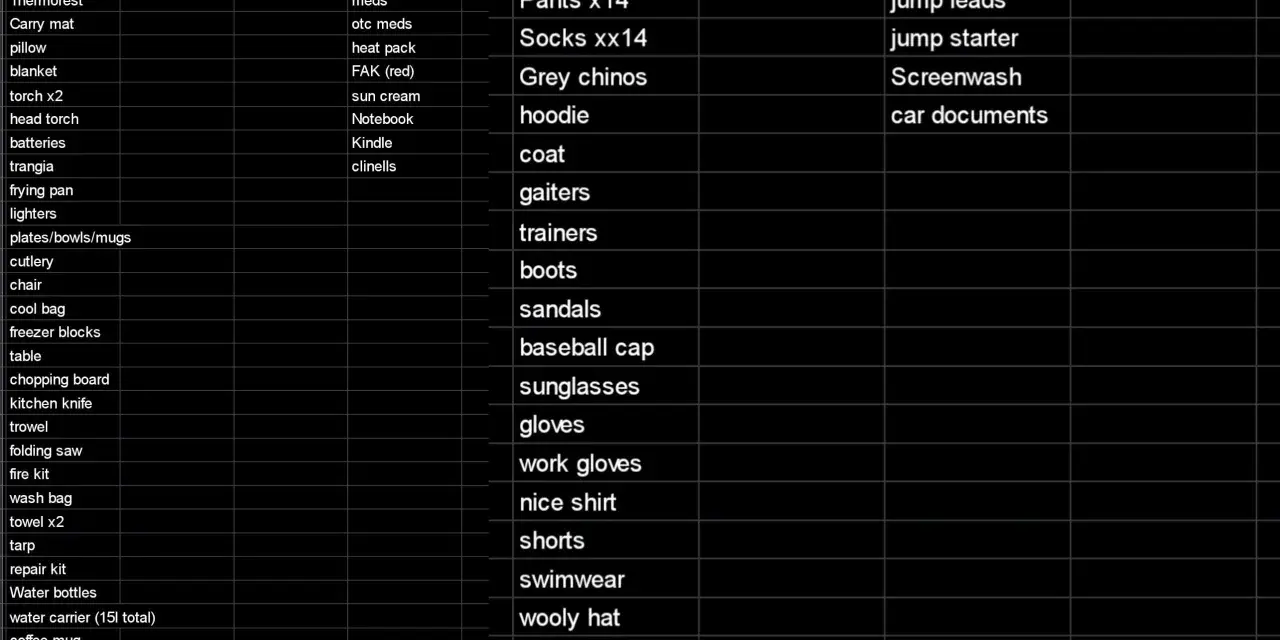
Car camping gives you more freedom than backpacking, but it also tempts you to overpack. The real job is to bring the right car camping essentials so the trip feels comfortable, safe, and easy once you reach the campsite. In this guide, I break down what actually matters for a UK-style vehicle camping trip: sleep, food, weather protection, organisation, and the small items that prevent a weekend from becoming messy.
The best kit covers sleep, weather, food, and safety before anything else
- Sleep first: a decent mattress or sleeping pad, warm bedding, and a pillow make the biggest difference to comfort.
- Keep cooking outside: a simple stove, fuel, utensils, and a cooler are usually enough for a relaxed weekend.
- Pack for UK weather: waterproofs, warm layers, and spare socks matter even in summer.
- Use storage wisely: clear bins and an accessible first-night bag save time at setup.
- Do not skip safety: headtorches, a power bank, a first aid kit, and car emergency basics belong in every setup.
Start with the pieces that make sleep work
If I strip a vehicle-based camping trip down to its core, sleep comes first. You can survive a boring meal or a slightly clumsy setup, but a bad night quickly ruins the whole weekend. For that reason, I think the sleep system deserves the biggest share of your attention and budget.
| Priority | What to pack | Why it matters |
|---|---|---|
| Sleep | Tent or sleep platform, sleeping mat or air mattress, sleeping bag or duvet, pillow, groundsheet | Gives you warmth, insulation, and a surface you can actually rest on |
| Kitchen | Stove, fuel, lighter, pan, kettle, mug, cooler, water container | Keeps meals simple and avoids needless trips to the shop |
| Weather | Waterproof jacket, warm layer, spare socks, hat, sun cream | UK conditions change fast, especially near coasts and open sites |
| Light and power | Headtorch, lantern, power bank, charging cable | Makes setup and late-night trips to the toilet block easier |
| Safety | First aid kit, map, car kit, cash or card, torch | Handles the small problems before they become annoying ones |
| Comfort | Camping chair, foldable table, earplugs, eye mask | Turns a bare pitch into a usable living space |
If you are buying from scratch, a workable basic setup in the UK usually starts around £250-£500 for one or two people. A more comfortable version with better bedding, storage, lighting, and seating often sits closer to £500-£900. Premium gear can cost far more, but I would rather see money spent on sleep quality and weather protection than on flashy extras.
For most people, the biggest upgrade is not the tent itself. It is the mattress, the insulation underneath it, and the bedding that keeps you warm when the temperature drops after dark. That leads neatly into the next question: how to build a sleep setup that feels good after a long drive.
Build a kitchen that lives outside the sleeping space
A car-camping kitchen does not need to be elaborate. In fact, the simpler it is, the better it usually works. I aim for a setup that can cook two or three easy meals, make hot drinks, and clean up without taking over the whole pitch.
Keep all cooking outside. The NHS is clear about not using a barbecue or camping stove inside a tent, and I extend that rule to a car cabin as well. Cook in open air, keep fuel away from heat, and treat any enclosed or semi-enclosed space as a place to sleep, not to cook. If your setup involves any fuel-burning appliance near a covered area, a battery-powered carbon monoxide alarm is a sensible extra.
- Portable stove or camping hob
- Fuel canister and a reliable lighter or matches in a dry pouch
- One pan, one pot, and a kettle if you like hot drinks
- Knife, chopping board, spoon, spatula, mug, and plate
- Cooler box or camping fridge, plus ice packs if needed
- Water carrier or large bottle for cooking and washing up
- Biodegradable soap, tea towel, sponge, and a small washing-up bowl
- Bin bags and food containers with tight lids
When I plan meals for a short trip, I keep the menu boring on purpose: pasta, wraps, eggs, porridge, soup, sausages, couscous, and snacks that do not need much prep. That approach saves space, reduces washing up, and leaves more room for enjoying the campsite. It also means your cooler works harder for the food you actually need, instead of being filled with random extras that never get eaten.
One practical note for UK trips: if you are staying on a site with electric hook-up, bring the charging leads and adapters you need, but do not assume hook-up replaces a proper kitchen plan. Power helps with lighting and devices; it does not remove the need for a stove, water, and a way to clean things properly. Once food is sorted, the next improvement is usually weather protection.Pack for British weather, not for the optimistic forecast
British camping is at its best when you prepare for the weather you may get, not the weather you hope for. I have seen bright mornings turn windy by lunch and mild evenings turn chilly the moment the sun drops. The answer is layers, waterproofs, and dry backup items that stay within easy reach.
- Waterproof jacket and, if space allows, waterproof trousers
- Mid-layer fleece or warm jumper
- Base layers that dry quickly
- Two spare pairs of socks at minimum
- Walking boots or sturdy trainers, plus dry camp shoes or sandals
- Hat and gloves for spring, autumn, or exposed sites
- Sun cream and sunglasses for open pitches and long summer evenings
- Quick-dry towel and basic wash kit
- Insect repellent, especially near water or in midge-prone areas
I would also pack one extra warm layer even if the forecast looks mild. That small decision often matters more than people expect. A campsite can feel pleasant in the afternoon and properly cold at 10 p.m., especially if wind picks up or you are pitched on a hill. If you are camping with children, this is where a spare set of clothes in an easy-to-grab bag pays for itself immediately.
Weather protection is not just about comfort. It also affects how quickly you can set up, cook, and get everyone settled without stress. Once you have the right layers, the last big improvement is organisation, because a tidy boot makes the whole trip feel calmer.
Keep the boot organised so setup takes minutes
A messy boot is the fastest way to make a car camping trip feel harder than it needs to be. I prefer a simple packing system: one place for sleep gear, one for cooking, one for wet or dirty items, and one small bag for the first night. That way I can reach what I need without unloading half the car.
- Put heavy items low and centred. Water, fuel, and storage boxes belong near the floor so the car stays stable.
- Use clear or labelled bins. If I can see the kettle, plates, or pegs at a glance, setup is faster and less frustrating.
- Keep the first-night bag separate. Torch, toiletries, charger, snacks, warm layer, and sleeping kit should not be buried under the stove.
- Separate wet and dry gear. A dry bag or waterproof tote stops damp chairs or muddy boots from soaking everything else.
- Pack by function, not by room. Tent pegs should not live with food, and towels should not be stuffed in with the stove.
For family trips, I like to add one extra bin for snacks, one for entertainment, and one for rain gear. That sounds minor, but it avoids the classic campsite scramble where everyone is hunting for a coat, a biscuit, or the one toy that keeps the afternoon manageable. A few cheap storage boxes often do more for the mood of a trip than a more expensive gadget would.
There is also a simple rule I use when packing the car: if the boot must be emptied completely before the tent can go up, the packing order is wrong. The items you need first should be the items you can reach first. That brings us to the things people often forget because they do not feel glamorous, but they are the ones that quietly prevent problems.
Do not leave safety and power to chance
Safety gear is easy to overlook because it is not exciting, but it is the kind of kit you notice the moment something goes wrong. I treat it as part of the trip, not as an optional add-on. The same applies to power: a dead phone is more than an inconvenience if you rely on offline maps, campsite confirmations, or emergency contact details.
| Item | Why I carry it |
|---|---|
| Headtorch | Hands-free light for cooking, reading, and late-night toilet trips |
| Lantern | Useful ambient light inside a tent or under an awning |
| Power bank | Charges a phone, GPS, or camera when mains power is not available |
| Charging cable | Cheap item, easy to forget, surprisingly disruptive to lose |
| First aid kit | Plasters, blister treatment, antiseptic wipes, and pain relief |
| Car emergency kit | Warning triangle, tyre inflator or repair kit, jump leads, hi-vis vest |
| Paper map or offline route | Signal can be patchy in remote parts of the UK |
| Carbon monoxide alarm | A sensible extra if any fuel-burning appliance is used near an enclosed space |
It also helps to keep a spare key somewhere sensible, not buried at the bottom of a storage box. If you are travelling in more remote parts of Scotland, Wales, or the Lake District, I would rather carry a small amount of cash, a paper backup route, and a charged power bank than trust a phone battery alone.
Power is one of those details that seems trivial until darkness, bad weather, or a forgotten cable makes it a real problem. Once that is covered, the remaining gear can focus on making the trip smoother rather than merely possible.
The extras that are worth their space
The last items I add are the ones that make the campsite feel organised rather than temporary. They are not the core of the setup, but they often decide whether a weekend feels relaxed or slightly chaotic. This is especially true on family trips, where one wet afternoon can test everyone’s patience.
- Toilet roll and wet wipes
- Rubbish bags and a small reusable bag for dirty clothes
- Earplugs and an eye mask for lighter sleepers
- Camp chair and foldable table if the site does not provide one
- Spare bin liner or dry bag for muddy shoes
- Books, cards, or a small game set
- Notebook and pen for campsite notes, route changes, or meal planning
- Dog kit, if you are bringing a pet, including bowls, lead, and towels
- One small snack box that stays easy to reach during the first evening
For families, I like to keep a dedicated “rain box” with colouring materials, one or two simple games, and snacks that do not melt or crumble everywhere. That kind of small planning makes a bigger difference than people expect, because it buys you calm when the weather turns or dinner runs late.
If I were packing for one UK weekend away, I would prioritise sleep, weather protection, and a clean cooking setup first, then organise the boot so the trip starts smoothly rather than in a rush. Once those pieces are in place, the rest of the kit becomes support, not stress, and that is exactly how a good camping trip should feel.
