
The quickest route to an easy camp dinner
- Choose sturdy dishes such as chilli, pulled pork, sausage casserole, lentil stew, or fajita-style chicken.
- Do as much prep as possible at home so the campsite job is mostly assembly.
- Use a stable surface and a reliable electric hook-up, not a tent setup.
- Keep raw ingredients cold, separate, and sealed until cooking begins.
- Cook meat and poultry to a safe core temperature, and check it with a thermometer when needed.
- Plan one meal that can become leftovers, because that is where slow cooking really saves time.
Why slow cooker dinners suit campsites so well
Slow cooking suits camping because it behaves like a braise, which is a long, gentle cook in a modest amount of liquid rather than a hard boil. That makes it forgiving. A shoulder of pork, a pot of beef, or a big pan of beans can soften and deepen over several hours while you are out at the beach, in a lake, or just enjoying a slow afternoon with the family. For a couple, I usually find a 3.5-litre slow cooker enough; for a family, 5.5 to 6.5 litres gives you more room without crowding the pot.
The method is not perfect for every campsite meal, though. It works best on a pitch with electric hook-up or in a caravan or motorhome with proper mains access, and it is a poor fit for wild camping or a basic tent pitch. I would also avoid recipes that need crisp skin, quick searing at the end, or delicate timing. If the dish is meant to stay soft, saucy, and steady, the slow cooker earns its place. Once you know that, the next step is choosing recipes that actually make use of it.
When I would not use one
- If the site power is uncertain or limited, I would choose a simpler one-pot meal instead.
- If the recipe depends on a crisp topping, al dente pasta, or fried texture, I would keep it for another setting.
- If the day is too short for a low-and-slow cook, the slow cooker stops being convenient and starts becoming a constraint.
That filter makes recipe choice much easier, which is exactly why the best camp dinners tend to be the ones that stay simple from the start.
The recipes that earn their place in your cool box
When I build a camping menu around a slow cooker, I look for dishes that use sturdy ingredients, can be served in more than one way, and do not fall apart if dinner is later than planned. The strongest options are usually dishes with sauce, beans, or shredded meat, because they reheat well and can be stretched into a second meal if needed.
| Dish | Why it works at camp | Approx. prep | Approx. cook | Best served with |
|---|---|---|---|---|
| Beef chilli | Cheap to bulk out, easy to season at home, and still good if it sits for a while. | 10 to 15 minutes | 6 to 8 hours on low | Rice, jacket potatoes, or crusty bread |
| Pulled pork with apple and cider | Shreds easily and can be turned into rolls, wraps, or tacos without extra effort. | 10 minutes | 7 to 8 hours on low | Buns, slaw, or tortillas |
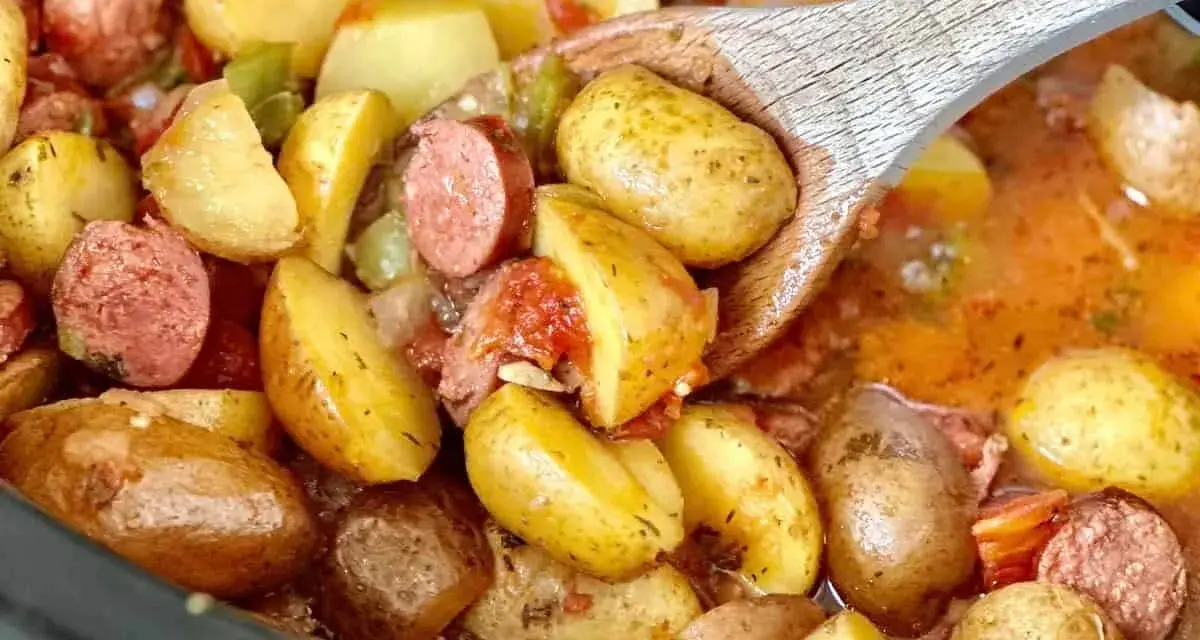
| Sausage, bean, and tomato casserole | Family-friendly, filling, and forgiving if the timings drift a little. | 15 minutes | 6 to 7 hours on low | Bread, mash, or buttery potatoes |
| Lentil and vegetable stew | One of the cheapest ways to feed a group without making the meal feel thin. | 10 minutes | 6 to 7 hours on low | Bread, couscous, or rice |
| Chicken fajita filling | Works well as wraps, bowls, or baked potato topping, which keeps the menu flexible. | 15 minutes | 4 to 6 hours on low | Tortillas, salsa, and grated cheese |
| Apple and cinnamon porridge | A useful breakfast option if you want something warm without standing over a stove. | 5 minutes | 2 to 3 hours on low | Yoghurt, berries, or honey |
If I had to narrow that list to three starting points, I would pick chilli, pulled pork, and sausage casserole. They are the least fussy, they scale well for a family, and they all taste better once the day has calmed down. I would leave anything that depends on a crisp finish or very quick pasta cooking for home, because the campsite version usually disappoints. From there, the job becomes less about inspiration and more about preparation.
How I prep everything before I leave
The cleanest campsite dinner is usually the one that was mostly assembled before the journey started. I treat slow cooker prep like a small production line: chop once, measure once, label once. That approach saves space in the cool box and removes the temptation to improvise when you are tired after the drive.
Freeze-ahead bags
For many dishes, I combine the meat, chopped onions, garlic, spices, and sauce in a freezer bag the night before departure, then freeze it flat. It travels well, keeps the rest of the cool box colder for longer, and turns into a tidy, low-mess start to the cook. For a family of four, 750g of meat or two tins of beans is usually a solid base, and I would add vegetables only if they can hold their shape.
Keep the flavour boosters separate
Small flavour additions make slow-cooked food taste less heavy. I pack smoked paprika, cumin, dried oregano, stock cubes, and a little acidity such as cider vinegar, lemon juice, or tomato passata. Dairy is different: I keep cream, yoghurt, and cheese back until the end so they do not split or disappear into the sauce. If a recipe needs herbs, I add those at the table rather than during the long cook.
Pack for serving, not just cooking
I also think about the finish, not just the pot. A tub of grated cheese, a bag of salad leaves, a jar of pickled onions, or a wedge of lemon can change a heavy stew into something much fresher. Bread, couscous, rice, and jacket potatoes are the quiet heroes here because they give you a fast way to plate up without extra washing up. Once the bags are labelled and packed, the last job is making sure the cooker itself is used in the right place.
How to run a slow cooker safely on a British campsite
On a UK campsite, I only use a slow cooker on a proper electric hook-up pitch or in a caravan or motorhome with safe mains access. I would not run one inside a tent, near bedding, or anywhere that feels cramped. The appliance should sit on a flat, heat-resistant surface with the cable routed away from traffic, water, and anything that could tip it.
- Use an outdoor-rated extension lead where needed, and keep it fully unwound.
- Do not overload the socket with kettles, heaters, and a slow cooker at the same time.
- Keep the lid closed as much as possible so the cooker stays at a steady temperature.
- Use a food thermometer for meat and poultry; the Food Standards Agency benchmark is 70°C for 2 minutes in the centre of the food, or an equivalent time and temperature combination.
- Keep raw meat sealed and separate from ready-to-eat food in the cool box.
- Refrigerate leftovers promptly rather than leaving them out while everyone drifts off to the shower block or the beach.
If the site power feels flaky or the pitch is crowded, I would scale the menu down instead of forcing it. That is the point where a simpler one-pot meal is the smarter choice, and it keeps the holiday feeling relaxed.
How to keep the menu family-friendly and budget-friendly
The easiest camp food is not the fanciest food. It is the food people actually eat happily after a long day outdoors. I try to build every slow cooker menu around a soft centre of choice: one mild base, one or two toppings, and a side that people can customise. That keeps the adults interested and the children calm.
| Goal | What I would do | Good examples | Why it helps |
|---|---|---|---|
| Feed a family with mixed tastes | Keep the base mild and put the heat on the table. | Chilli, pulled pork, sausage casserole | Everyone can season their own bowl without making a second meal. |
| Keep costs down | Use cheaper cuts, beans, and lentils to stretch the pot. | Pork shoulder, beef chuck, lentil stew | Slow cooking softens tougher cuts and makes the meal feel richer. |
| Feed vegetarians well | Rely on beans, pulses, and root vegetables rather than trying to mimic meat. | Bean chilli, lentil casserole | The dish stays sturdy and filling, which matters on a campsite. |
| Make leftovers useful | Choose meals that become wraps, baked potatoes, or lunch the next day. | Pulled pork, chilli, chicken filling | You cook once but get more than one serving style. |
I also like a final lift of freshness at the end, because slow-cooked food can start to feel heavy if every meal is soft and rich. A bit of yoghurt, chopped parsley, lemon, or pickled onion does more than people expect. That small finishing step is one of the easiest ways to make camp dinners feel deliberate instead of repetitive.
The mistakes that usually spoil easy camp cooking
Most problems with slow cooker camping meals come from trying to make them too clever. The method works best when it is allowed to be simple. If I see a recipe with lots of frying, a long list of finishing steps, or ingredients that need sharp heat at the end, I usually leave it for home.- Using the wrong dish: pasta bakes, crisp toppings, and delicate fish rarely suit this setup.
- Overfilling or underfilling the pot: I keep mine between half and two-thirds full for the best texture.
- Adding too much liquid: the slow cooker holds moisture, so the sauce should start thicker than you think.
- Putting dairy in too early: cream, yoghurt, and cheese are better added near the end.
- Lifting the lid too often: every glance slows the cook and makes timing less predictable.
- Forgetting to correct the seasoning: a pinch of salt, a little acid, or some fresh herbs can change the whole dish.
If the sauce looks thin at the end, I would thicken it with a cornstarch slurry, which is just cornstarch mixed with cold water, rather than leaving it watery. I would also resist the temptation to cook everything until it is falling apart unless that texture is actually the point. Once you avoid those traps, the menu becomes much easier to trust from one trip to the next.
A simple weekend menu that keeps supper easy
For a short family break, I like to think in terms of one strong base and one useful leftover rather than three separate dinners. That keeps the shopping list short and stops the cool box from becoming cluttered with half-used ingredients. A simple rotation like this usually works well:
- Friday night: beef chilli with rice and grated cheese.
- Saturday lunch or dinner: pulled pork rolls with slaw or tortillas.
- Sunday night: sausage and bean casserole with bread or mash.
If I want an even easier version, I make chilli first and then turn the leftovers into jacket potatoes or wraps the next day. That is the kind of small planning move that makes camp cooking feel generous instead of repetitive. The real value of camping crockpot meals is that they let you arrive at supper with the hardest part already done, so the evening can stay focused on the site, the weather, and the people at the table.
