
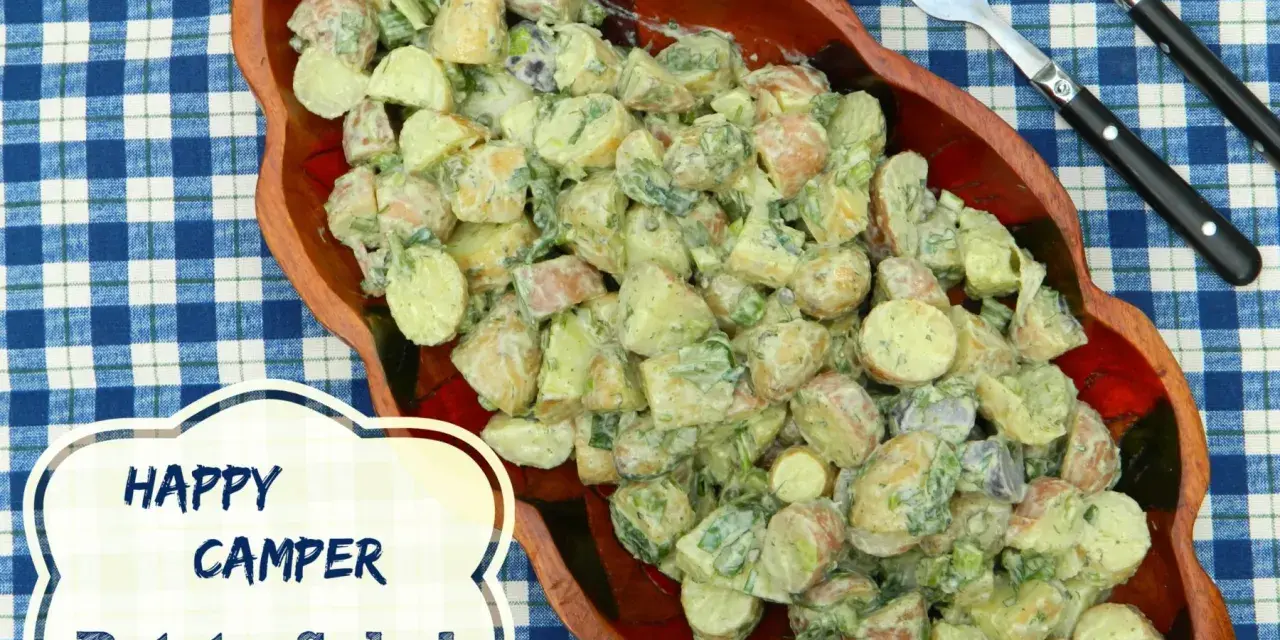
Good camping salads solve a very specific problem: they need to travel well, taste fresh after a few hours in a cool box, and still feel satisfying when you are cooking with one pan and limited prep space. I focus on sturdy ingredients, sensible packing, and flavour combinations that hold up rather than wilt. That means you get real camp food, not a bowl of damp leaves.
The rules that keep camp food crisp, safe, and easy to serve
- Choose sturdy bases such as couscous, pasta, potatoes, beans, cabbage, or whole grains.
- Keep dressing separate and add delicate leaves, herbs, and seeds at the last minute.
- For a UK campsite, a cool box with ice packs matters more than fancy gear.
- The Food Standards Agency advises discarding chilled food if it has been at 8C or above for 4 hours, or 2 hours in extreme heat.
- Make at least one salad that improves after sitting for an hour, because camp lunches are rarely served instantly.
What makes a salad work at camp
When I build a salad for camping, I start with texture. Anything soft, watery, or fragile loses its appeal quickly once it has sat in a box, been carried across a field, and waited for everyone else to set up the stove. That is why I lean on ingredients with structure, like couscous, new potatoes, chickpeas, pasta, cabbage, roasted vegetables, and a little cheese for richness.
My simplest formula is base + something savoury + something fresh + something sharp + something crunchy. For example, new potatoes give body, spring onions add bite, lemon or vinegar wakes the whole bowl up, and seeds or herbs keep it lively. I also prefer vinaigrettes to creamy dressings unless I know the food will stay properly chilled, because oil and acid hold up far better in a warm campsite rhythm. Once that structure is in place, the next question is which combinations actually survive the journey.

Five salad styles that travel well
When I plan camp meals, I keep coming back to a few formats because they are reliable, filling, and easy to scale for a family. The details change, but the logic stays the same: use ingredients that taste better after a short rest, then add the fragile bits only when you are ready to eat.
| Style | What I use | Why it works | What I watch |
|---|---|---|---|
| Grain salads | Couscous, bulgur, quinoa, roasted peppers, courgette, herbs, lemon | They are filling, easy to batch, and still taste good at room temperature | They can dry out if you underdress them |
| Pasta salads | Short pasta, pesto, peas, tomatoes, mozzarella, olives | Child-friendly, familiar, and ideal for a relaxed lunch | Overcooked pasta turns soft fast |
| Potato salads | New potatoes, dill, spring onions, mustard, olive oil, vinegar | Substantial enough to stand in for a meal | Heavy mayo needs stricter chilling |
| Bean salads | Chickpeas, cannellini beans, red onion, parsley, cucumber, lemon | Protein-rich, affordable, and very forgiving | Drain and rinse well so the bowl does not turn watery |
| Slaw-based salads | Cabbage, carrot, apple, seeds, herbs, a light dressing | Best texture on day two and still crisp after travel | Dress lightly or the crunch disappears |
If I had to choose only two, I would pack a grain salad and a bean salad, because one can carry the meal while the other becomes a side or a second lunch. That balance is useful when the weather changes or the barbecue plan falls through, which leads neatly into how I prep everything before I leave home.
How I prep and pack them before leaving
Most campsite salad problems are solved before you ever set off. I do as much as possible at home, because the campsite is rarely the right place for long chopping sessions, juggling bowls, or trying to wash sticky boards in a shared sink.
- Cook the sturdy base first. Couscous, pasta, rice, potatoes, and grains all hold their shape better if they are cooked a little ahead of time and cooled properly.
- Dry everything well. Excess water is the enemy of texture, especially with lettuce, cucumber, tomatoes, and fresh herbs.
- Pack the dressing separately. I usually make a simple 3:1 oil-to-acid dressing, then add mustard, lemon zest, garlic, or herbs for more depth.
- Use smaller containers rather than one huge bowl. That keeps the food colder for longer and lets you open only what you need.
- Keep crunchy toppings back. Seeds, croutons, nuts, and fried onions go in a separate bag until the last minute.
- Bring a spare spoon or tongs for each dish. It sounds minor, but it cuts down on cross-contamination and stops one salad from tasting like another.
I also pack food in meal-size portions rather than one oversized tub, because it reduces waste and makes serving easier when people arrive at different times. Once the prep is done properly, the next challenge is keeping the food safe long enough to enjoy it.
Food safety rules that actually matter in a cool box
Salads only feel effortless if the storage is disciplined. The Food Standards Agency is clear that chilled food left at 8C or above for 4 hours should be discarded, and in extreme heat that window drops to 2 hours. That matters on a campsite, where the lid is opened repeatedly and the cool box often sits in brighter, warmer conditions than you intended.
My practical rules are simple. I keep the cool box in shade, use enough ice packs to chill the whole load rather than just the top layer, and avoid opening it unless I am actually serving. I wash salad leaves, fruit, and vegetables under running water before packing them, then dry them well so they do not break down early. I also keep raw meat, raw poultry, and ready-to-eat salad in separate containers, with separate boards and knives if I am cooking a barbecue alongside the salads.
If I am feeding children, older relatives, or anyone who is pregnant or immunocompromised, I am stricter still. I avoid creamy dressings unless I know I can keep them properly cold, and I treat any warm leftovers as a new decision, not an automatic second serving. Once those rules are in place, you can choose recipes for taste instead of worrying about whether they will last the afternoon.
Four campsite recipes I keep coming back to
These are the dishes I would actually take on a UK camping trip because they are practical, flavourful, and easy to scale for two people or a family of four. Each one uses supermarket ingredients, and each one gets easier if you prep the base at home.
Lemony couscous with roasted peppers and feta
This is the fastest reliable option I know. It works as a lunch on arrival, a side for grilled halloumi, or a light dinner when the rest of the campsite is still unpacking.
- 200 g couscous
- 250 ml boiling water or light stock
- 2 tbsp olive oil
- Juice of 1 lemon
- 1 jar roasted red peppers, drained and chopped
- 1 small courgette, quickly grilled or roasted and diced
- 100 g feta, crumbled
- Small handful of parsley or mint
- Salt and black pepper
- Put the couscous in a bowl, pour over the boiling water or stock, cover, and leave for 5 minutes.
- Fluff with a fork, then stir through the olive oil and lemon juice.
- Fold in the peppers, courgette, feta, and herbs, then season to taste.
If I want more crunch, I add pumpkin seeds just before serving. That tiny final step keeps the texture alive and makes the bowl feel more complete.
New potato, green bean, and dill salad
This is the one I make when I want something more substantial than a leafy side. It feels like proper camp food, and it still tastes good at room temperature if you keep the dressing light.
- 800 g new potatoes, halved if large
- 150 g green beans, trimmed
- 2 spring onions, finely sliced
- 2 tbsp chopped dill
- 1 tsp Dijon mustard
- 3 tbsp olive oil
- 1 tbsp white wine vinegar
- Salt and pepper
- Boil the potatoes until just tender, then add the green beans for the last 2 to 3 minutes.
- Drain well and let them cool enough to handle.
- Whisk the mustard, olive oil, vinegar, salt, and pepper, then toss through the potatoes, beans, spring onions, and dill.
I like this one with sausages or grilled fish, but it is good enough to stand on its own if the weather turns and the meal needs to stay simple.
Chickpea, cucumber, and tomato salad with herbs
This is the salad I reach for when I want something fresh, fast, and forgiving. It is also the easiest to assemble from pantry ingredients if the campsite shop is limited.
- 2 x 400 g tins chickpeas, drained and rinsed
- 1 cucumber, diced
- 250 g cherry tomatoes, halved
- 1 small red onion, finely sliced
- Small handful of parsley
- Small handful of mint
- 3 tbsp olive oil
- 1.5 tbsp lemon juice
- 1 small garlic clove, grated or crushed
- Salt and pepper
- Combine the chickpeas, cucumber, tomatoes, onion, and herbs in a bowl.
- Whisk the oil, lemon juice, garlic, salt, and pepper, then pour it over the salad.
- Toss gently and leave it for 10 to 15 minutes before serving so the flavour settles.
If I have feta on hand, I add a little, but it is not essential. The bowl already has enough structure to work on a warm day without becoming heavy.
Read Also: Campfire Peaches - Perfect Dessert, No Burnt Fruit!
Pasta salad with pesto, peas, and mozzarella
This is the most family-friendly option in the group. It travels well, it is easy to portion, and it usually disappears first when everyone comes back hungry from a walk or a beach trip.
- 300 g short pasta
- 150 g frozen peas
- 2 tbsp pesto
- 1 tbsp olive oil
- 150 g mozzarella, torn or chopped
- Handful of cherry tomatoes, halved
- Small handful of basil leaves, if available
- Black pepper
- Cook the pasta until just al dente, then drain and cool it quickly.
- Stir through the pesto and olive oil while the pasta is still slightly warm.
- Add the peas, mozzarella, tomatoes, basil, and pepper, then chill until needed.
I keep the pesto light rather than drowning the pasta in it, because a restrained dressing tastes fresher after travel. Once you know which recipes you trust, the final step is learning how to keep them lively for the second serving as well as the first.
The small adjustments that keep them fresh on day two
The difference between a decent camp salad and a genuinely useful one is often made by tiny decisions. I hold back the herbs, seeds, nuts, and crispy toppings until the moment of serving, because they are the first things to soften or lose their punch. I also keep a lemon, a small jar of vinegar, and a pinch of salt handy, since a quick re-seasoning often revives a bowl that has sat for a while.
- Use sturdy leaves like little gem or shredded cabbage if you want crunch to last.
- Pack delicate herbs separately and tear them in at the table.
- Add creamy ingredients only if you can keep the cool box properly cold.
- Choose one salad that can become lunch on day two without any fuss.
If I were packing for a long weekend, I would take one grain salad, one potato or bean salad, a jar of dressing, a handful of herbs, and enough ice packs to keep everything properly chilled. That combination is simple, flexible, and far more useful than trying to make a delicate bowl of leaves work at the edge of a campsite.
