
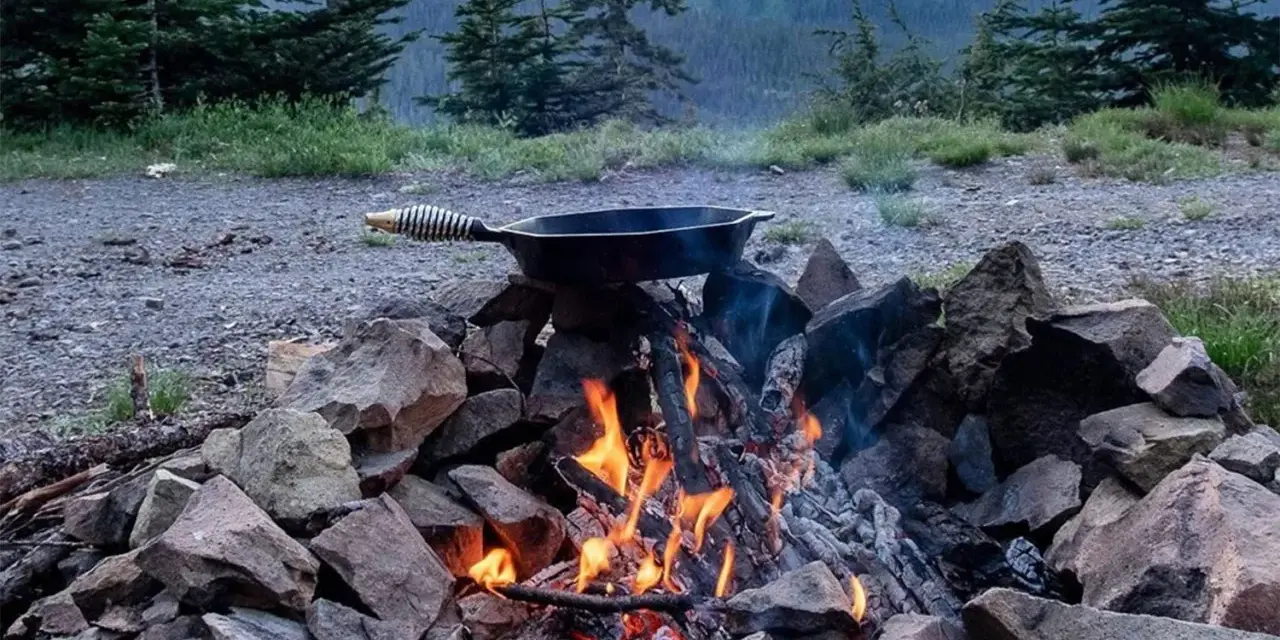
Cast iron camping works best when the cookware fits the trip, not the other way around. The right pan makes breakfast easier, dinner more reliable, and cleanup less annoying, even when the weather turns damp or windy. In this guide, I’m focusing on the decisions that matter on a real trip: which pieces to bring, how to manage heat, what to cook first, and how to keep the pan ready for the next weekend.
The essentials before you pack
- A 26-30 cm skillet is the most useful single piece for two to four people.
- A 5-6 litre Dutch oven is the best all-rounder for stews, bakes, and desserts.
- Medium heat beats high heat almost every time; cast iron warms slowly and stays hot.
- For a Dutch oven, a rough starting point is coals or briquettes equal to about twice the oven diameter in inches, then adjust for wind and recipe.
- Wash, dry, and oil the pan as soon as it is cool enough to handle.
- For a first trip, pack one pan, a lid or gloves, a scraper, oil, and a cloth.
Why cast iron earns its place at camp
I keep coming back to cast iron because it solves three campsite problems at once: heat control, durability, and versatility. It holds heat well enough to sear sausages, keep beans warm, or finish a cobbler without constant babysitting, and it is tough enough to survive knocks in the boot of the car or a damp storage box back home.
That matters in the UK, where a cool evening, a bit of wind, or a soggy pitch can make lightweight cookware feel fussy. Cast iron is slower than aluminium, but it is far less demanding once it gets hot. It also moves cleanly between a gas stove, a barbecue, and a fire ring if the campsite allows it, which is why it works so well for simple family meals outdoors.
I would still be selective about the finish. Bare seasoned cast iron is my first choice for rough camping because it is forgiving and easy to refresh, while enamelled pieces are lovely for gentler use but less happy being bounced around. Once that trade-off is clear, choosing the right shape becomes much easier.
That brings me to the more useful question: which piece actually deserves space in your kit?
The pieces I would actually pack
If I had to keep the kit lean, I would choose based on the kind of meals I want to make, not on how impressive the cookware looks. One pan can do a lot, but the best setup depends on whether you want fast breakfasts, one-pot dinners, or proper baked dishes.
| Cookware | Best for | Why it works | Main limitation |
|---|---|---|---|
| 26 cm skillet | 1-2 people, eggs, bacon, toasties, quick suppers | Heats quickly enough for short cooks and is easy to carry | Small for family meals |
| 30 cm skillet | 3-4 people, breakfast hash, burgers, one-pan dinners | Large enough for a family but still manageable on a campsite stove | Heavier and needs a stable heat source |
| 5-6 litre Dutch oven | Stews, casseroles, bread, fruit crumbles | Deep, lidded, and excellent at holding steady heat | Bulky and heavier than a skillet |
| Cast-iron griddle | Pancakes, halloumi, sandwiches, vegetables | Great for low-fuss cooking on a flat stove or fire-safe grill | Less useful if your cooking surface is uneven |
| Combo cooker | Travelling light, one-pan meals, covered cooks | Works like a skillet and a covered pot in one piece | Not as roomy as a full Dutch oven |
For most families, I think a 30 cm skillet plus a lid is the sweet spot. If you cook more stews, breads, or camp desserts, the Dutch oven wins. If you only want one piece and very little fuss, I would still lean toward the skillet because it is the easiest pan to use well on a campsite.
Once you know the shape you need, the next issue is heat, because cast iron rewards patience more than raw power.
How to cook with steady heat outside
The biggest mistake I see is pushing cast iron too hard at the start. High heat does not make it better faster; it usually just creates hot spots and scorched oil. I preheat slowly on medium or medium-low and give the pan time to come up evenly, especially on a camping stove where the flame pattern is often less tidy than at home.For a griddle, I usually allow about 5 minutes before adding food. For a skillet or Dutch oven, 5-10 minutes is a sensible window, depending on the burner, the wind, and the thickness of the pan. If the surface is smoking before the food goes in, the heat is already too aggressive.
There are three common setups, and each behaves a little differently:
- Gas stove - the easiest to control, especially on windy UK pitches.
- Charcoal or briquettes - slower, but excellent for Dutch ovens and steady heat.
- Campfire - flavourful and traditional, but the least predictable and the most weather-dependent.
When I use a Dutch oven over coals, I start with a balanced top-and-bottom setup rather than trying to brute-force the heat from below. A useful rule of thumb is to begin with briquettes roughly equal to twice the diameter of the oven in inches, then adjust for wind, altitude, and the recipe. For example, a 12-inch oven starts around 24 briquettes, split between the lid and the base.
There is one safety point I never skip: keep the cooking setup outside and well away from tent fabric or awnings. The Camping and Caravanning Club is very clear about that, and it is one of those rules that only feels obvious after something has gone wrong. Good heat control is partly about cooking and partly about staying organised, which leads straight into the meals that reward this kind of setup.
Meals that make the extra weight worthwhile
I think cast iron is at its best when the food is simple, filling, and forgiving. Campsite meals do not need to be clever; they need to be reliable. That is why I prefer dishes that use cupboard staples, tolerate a bit of uneven heat, and can be stretched if another hungry person turns up at the table.
| Meal | Why it works in cast iron | Typical time |
|---|---|---|
| Breakfast hash with sausages, potatoes, onions, and eggs | One pan, easy to scale, and ideal for using leftovers | 15-20 minutes |
| Sausage and bean skillet | Cheap ingredients, good heat retention, and very family friendly | 20-25 minutes |
| Beef, lentil, or vegetable stew in a Dutch oven | Needs steady simmering, which cast iron handles well | 45-90 minutes |
| Apple crumble or berry cobbler | The lid and retained heat give you a proper dessert without much effort | 20-30 minutes |
| Toasties or flatbreads on a griddle | Quick lunch, minimal washing up, and easy to cook in batches | 5-10 minutes |
The Camping and Caravanning Club often pushes campers toward cupboard staples and quick recipes, and that is the right instinct here. Bacon, sausages, eggs, potatoes, beans, onions, cheese, and tinned tomatoes all behave well in cast iron and travel without drama. I also like adding one sweet option, because a fruit crumble cooked in a Dutch oven feels far more impressive than the work it actually takes.
If you are cooking for children, keep one plain dish in the rotation. A skillet of potatoes, sausages, and scrambled eggs usually disappears faster than the more adventurous option beside it. The common thread is that cast iron rewards recipes that are generous and forgiving, which is exactly why the next step is learning how to keep the pan in good shape after the meal.
Cleaning and seasoning when you are far from home
My routine is simple: wash, dry, oil. That is enough for most trips, and it keeps the pan healthy without turning camp cleanup into a project. The key is to deal with the pan while it is still warm, not after food has glued itself on overnight.
- Let the cookware cool enough to handle safely.
- Scrape out food residue with a spatula or scraper.
- Wash by hand with warm water; a small amount of mild washing-up liquid is fine if needed.
- Dry the pan completely, ideally on low heat for a minute or two.
- Wipe on a very thin layer of oil, inside and out.
- Store it with a paper towel inside the pan if you will not use it again immediately.
That last point matters more than people think. Most rust problems start with lingering moisture, not with the pan being "bad" cast iron. If a light orange patch appears, I scrub it off, oil the area, and cook with it again. If the seasoning has really taken a beating, I deal with it at home rather than trying to repair it in the middle of a trip.
I also like the idea that cooking itself maintains the seasoning. Every time you cook with oil, fat, or butter, you are helping build that protective surface back up. That is one reason camp breakfasts are such a good fit for cast iron: bacon, sausages, and fried potatoes do useful work beyond feeding everyone. With care sorted, the last thing to avoid is the handful of mistakes that make the whole setup feel heavier than it should.
Mistakes that turn dinner into a chore
Most cast iron problems in camp are not mysterious. They come from rushing, overpacking, or using the wrong heat source for the meal. I try to avoid these habits because they waste time and usually make the food worse as well.
| Mistake | Why it hurts | Better move |
|---|---|---|
| Heating the pan too fast | Creates hot spots and scorches seasoning | Preheat gradually on medium or medium-low |
| Bringing too many pieces | Weight adds up and the kit becomes awkward | Pack one main pan and choose recipes around it |
| Leaving the pan wet | Moisture leads to rust | Dry fully and add a thin oil film before storing |
| Cooking too close to fabric or walls | Risk of heat damage and fire | Keep the setup outside, clear, and stable |
| Choosing very acidic dishes for long cooks in a lightly seasoned pan | Can stress the seasoning and dull the surface | Use enamelled cookware for long tomato-heavy braises, or keep acidic cooks short |
One small rule I trust: if the pan starts smoking before the food lands, I back off and wait. Cast iron is patient; it does not need to be bullied into doing its job. Once you stop treating it like a race, it becomes one of the easiest things to cook with outdoors. That is why I would rather pack a tight, well-planned kit than a pile of gear that looks impressive but slows everything down.
What I would pack for a simple UK camping weekend
For a straightforward family trip, I would keep the setup lean and practical. A 30 cm skillet is my first pick for breakfasts and quick dinners. If I know I want stews, bakes, or dessert, I would swap that for a 5-6 litre Dutch oven or add it as the second piece.
- One seasoned skillet or Dutch oven with a matching lid
- Heatproof gloves or a lid lifter
- Metal spatula, scraper, and wooden spoon
- Small bottle of oil in a leakproof container
- Tea towels or microfibre cloths
- Salt, pepper, and one all-purpose seasoning blend
- Chopping board and a sharp knife
- A meal plan built around three easy dishes, not six ambitious ones
