
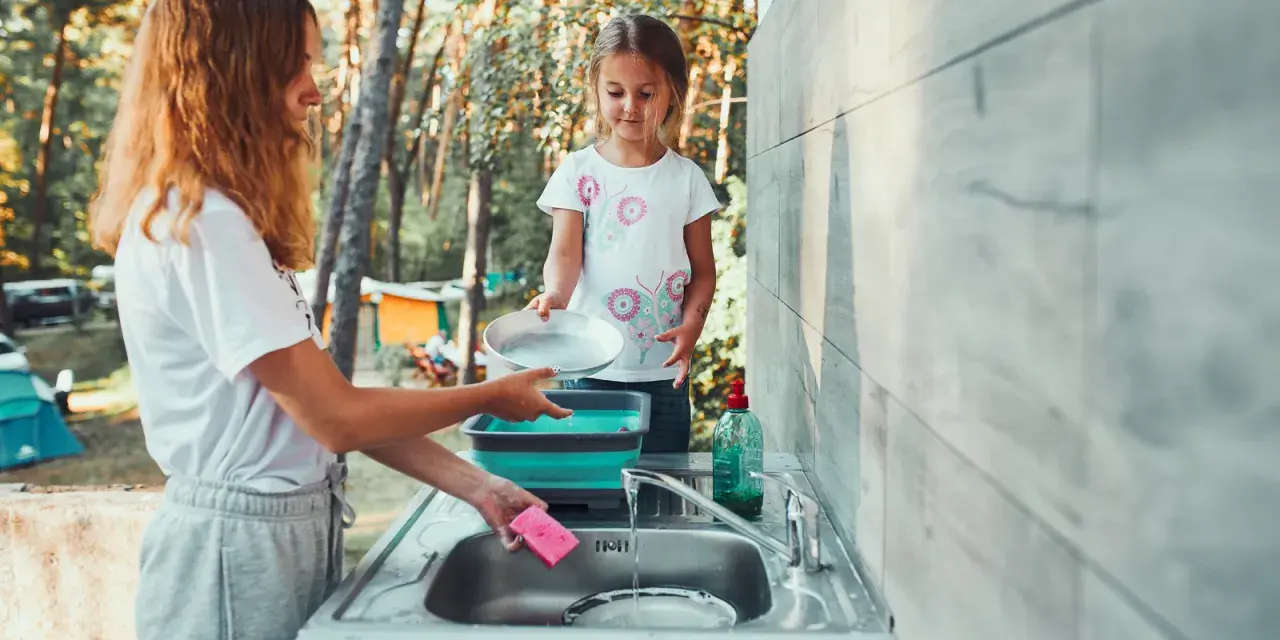
What matters most when you wash up at camp
- Scrape first, wash second, dry last to cut water use and speed everything up.
- A two-bowl system is usually the easiest balance between cleanliness and simplicity.
- If you are near lakes or streams, keep dishwater well away from them; Leave No Trace recommends about 200 feet, or roughly 60 metres.
- Use a campsite wash-up area or greywater point whenever one is available.
- For family camping, split the job into scrape, wash, rinse, and dry so the routine feels much lighter.
The quickest camp washing routine
The fastest way to stay on top of camp dishes is to stop food from hardening in the first place. I always scrape plates and pans as soon as we finish eating, because dried pasta sauce, cheese, and porridge can turn a five-minute job into a slow, frustrating one. The goal is not showroom shine; it is clean, safe cookware and a campsite that still feels pleasant after dinner.
- Scrape leftovers off immediately. Put scraps into a bin bag or a sealable food-waste bag before you add water.
- Wipe greasy pans first. A bit of paper towel or a used napkin removes the worst residue and keeps your wash water cleaner for longer.
- Wash in the right order. Start with cups and glasses, then plates, then cutlery, and leave greasy pans for last.
- Use the least water that does the job. A shallow bowl of hot water is often enough if you have already scraped properly.
- Dry straight away. Air-drying works, but a clean tea towel is faster when you need to pack up in poor weather.
This routine works because it removes the two things that waste time at camp: stuck-on food and unnecessary re-washing. Once that is in place, the next gain comes from packing a setup that makes the job almost automatic.

The smallest camp wash-up kit that still works
I prefer a kit that fits inside one nesting bowl or a small crate. That keeps it easy to reach, easy to rinse, and easy to put away when the weather turns or midges appear. On some National Trust campsites, the wash-up area already gives you a proper sink or bowl, which is useful if you are travelling light, but I still like carrying the basics so I am not dependent on facilities.
- One collapsible bowl, around 5 to 10 litres for washing.
- One small scraper or silicone spatula for plates and pans.
- One sponge or scrub pad for normal food residue.
- One microfibre cloth or tea towel for drying.
- A small bottle of washing-up liquid, ideally decanted so you do not carry more than you need.
- One mesh strainer if you are camping where scraps must be separated from greywater.
- A rubbish bag or sealable food bag for scraps, packaging, and greasy paper.
- Optional gloves if you camp in cold weather or dislike handling hot water by hand.
The point of the kit is not to be fancy. It is to make the process predictable, especially when the campsite kitchen is busy or the family is already tired. From there, the real decision is which washing method suits the kind of trip you are on.
Which washing method fits your setup
Different camps call for different levels of effort. A family holiday on a serviced site does not need the same approach as a quiet wild-camping night with a single stove and one pan. I use the table below as a quick reality check before I decide how much gear to carry and how much water to heat.
| Method | Best for | What works well | Trade-offs |
|---|---|---|---|
| Two-bowl wash | Family camps, longer stays, shared cooking | Cleaner results, simple to understand, easy to teach children | Uses a little more water and takes more space |
| One-bowl wash | Short trips, backpacking-style camps, smaller setups | Lightweight, quick to pack, very little kit needed | Water gets dirty quickly, so pans need more attention |
| Wipe-and-wash | Low-water trips, simple meals, minimal cookware | Fast and efficient when food is not heavily baked on | Not ideal for greasy pots or sticky sauces |
| Campsite sink or wash-up area | Serviced sites and touring camps | Most comfortable option, especially in bad weather | You are limited by opening times, queues, and site rules |
If I know water will be tight, I quietly change the cooking plan as well. One-pot meals, fewer serving bowls, and reusable containers often save more effort than any bottle of soap ever will. That leads straight into the part many campers get wrong: what to do with the water afterwards.
How to handle water, soap, and greywater responsibly
This is the part that matters most if you are camping near rivers, lakes, or sensitive grassland. Dishwater is not just water once you have added grease, crumbs, and soap, so I treat it as something to manage deliberately rather than something to pour anywhere convenient. Leave No Trace recommends washing at least 200 feet, or about 60 metres, from water sources, using only a small amount of soap, and scattering strained wastewater rather than dumping it in one place.
- Use a designated wash-up area or greywater point if the campsite provides one. That is the cleanest option and usually the simplest one too.
- Strain out food scraps before you wash. A mesh strainer, sieve, or even a careful wipe with a paper towel keeps the liquid cleaner.
- Keep the soap use modest. Biodegradable soap is still soap; using more of it does not make the water safer.
- Wash away from streams, lakes, and paths. I do not want dishwater where people walk, where dogs sniff, or where runoff can gather.
- Scatter the strained wastewater broadly. That reduces puddling, smell, and the chance of attracting wildlife.
- Pack out scraps when the site asks for that. In some areas, especially where wildlife pressure is high, that is the right call.
Greywater is usually less dramatic than people imagine, but it still needs respect. The safest habit is simple: treat washing water as waste unless you are using a proper sink or disposal point. Once that becomes automatic, the rest of the routine depends on the kind of camping you are doing.
How I adjust the routine for family camping, wild camping, and campervans
I do not use the same wash-up method on every trip, because the space, the water, and the rules change. A family pitch with a proper block, a quiet wild-camping night, and a campervan stop all need slightly different habits if you want the kitchen to stay under control.
Family camping
On family trips, the win is usually organisation, not speed. I like to assign simple jobs: one person scrapes, one washes, one dries, and one clears the table. That keeps children involved without putting them near sharp or very hot items, and it stops the kitchen from becoming one adult’s second dinner shift.
Wild camping
For minimalist camping, I cut the washing down as much as possible. One-pot meals, fewer plates, and a careful wipe before water touches anything make the biggest difference. If I am far from facilities, I keep the wash water small, strain it properly, and stay well away from natural water sources.
Campervans and motorhomes
In a van, the biggest mistake is assuming the ground is a greywater tank. It is not. Use the site’s disposal point whenever one is available, and only empty waste where the site specifically allows it. That keeps the pitch cleaner, reduces odour, and avoids awkward problems with campsite rules.
Once the trip style is matched to the method, the remaining problems are usually self-inflicted, which is good news because they are easy to fix.
The mistakes that make camp washing harder than it needs to be
Most bad wash-up experiences come from a handful of avoidable habits. I see the same ones repeated over and over, and nearly all of them are fixable without buying better gear.
- Waiting too long to scrape plates. Dried food is the main reason camp washing feels miserable.
- Using too much washing-up liquid. More soap usually means more rinsing, not cleaner dishes.
- Pouring water beside the tent or van. It creates smell, mud, and a mess that attracts insects.
- Washing greasy pans first. That turns the water dirty before the easy items are done.
- Skipping the drying step. Wet pans take up space, drip into storage, and feel dirtier than they are.
- Bringing too much cookware for a simple meal. The best cleanup hack is often not using the extra bowl in the first place.
These mistakes matter more than the brand of sponge or the type of bowl. If you remove them, camp washing becomes a short reset rather than an ongoing chore. The last piece is deciding what small extras are worth carrying when the trip is longer or the weather is less forgiving.
A few extras that make the whole job smoother
For weekend camping, I keep the kit lean. For longer trips, or whenever I am cooking properly every night, I add a few items that save time in small but noticeable ways. None of them is glamorous, but each one removes friction.
- A headtorch or lantern near the wash area so you are not scrubbing by guesswork after dark.
- A second drying cloth so one can be left to dry while the other is in use.
- A bottle brush for mugs, bottles, and narrow containers.
- A peg or small line if you want to hang cloths where they will dry faster.
- A spare scraper if children are helping and you do not want the only one lost in the grass.
I also like to keep the wash-up kit in one fixed place, so I never have to rummage for the sponge after dinner. That small habit means breakfast starts cleaner, the tent smells better, and the next meal feels easier before it has even begun.
The small habits that make tomorrow morning easier
The best camp kitchens are not the ones with the most equipment. They are the ones where everyone knows the routine, the mess gets handled early, and the greywater ends up where it should. If you keep the wash-up setup simple, cook with fewer pieces, and treat the water properly, camp dishes stop feeling like a burden and start feeling like part of a well-run evening.
My own rule is to leave the cooking area ready for the next meal before I sit down to relax. That usually means one final rinse, one dry cloth, and one quick check for scraps near the stove. It is a small finish, but it changes the whole rhythm of camp cooking.
