
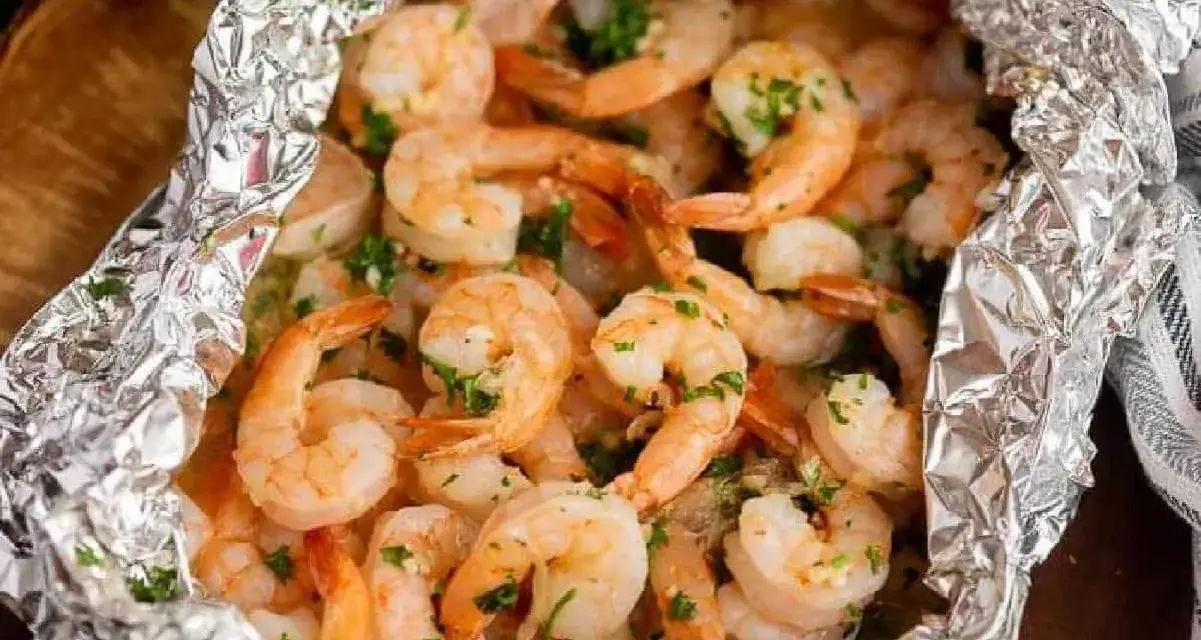
Foil packets are one of the most useful camp-style dinners when you want something warm, filling, and low-fuss. With the right timing, you get tender potatoes, juicy prawns, and a buttery lemon finish in a single parcel, with almost no washing up. This guide shows how I build the packets, which potatoes work best, how long they need in the oven, and the small details that keep the prawns from turning tough.
The quick version before you heat the oven
- Use raw prawns, not pre-cooked ones, so they stay tender.
- Choose small waxy potatoes, or parboil larger pieces first so they finish on time.
- Set the oven to 220C (200C fan) / 425F for a hot, short bake.
- Keep the packets loosely sealed so steam can move, but do not pack them too tightly.
- Finish with lemon and parsley for a cleaner, brighter flavour.
- If you are cooking in a caravan or small camper oven, start checking early because many of them run hotter or cooler than the dial suggests.
Why this works so well in the oven
I like foil packets for camp cooking because they behave like a tiny steamer and a tiny roasting tin at the same time. The foil traps heat and moisture, which helps the potatoes soften, while the short, hot bake protects the prawns from drying out. That balance matters more than fancy seasoning. If the potatoes are too large, they lag behind the seafood; if the packet is too wet, everything tastes steamed rather than bright and savoury.
The other advantage is practicality. You can assemble the packets ahead of time, slide them onto a tray, and serve straight from the foil. In a caravan kitchen or a holiday rental, that is the difference between cooking and wrestling with dishes. I still keep one rule front and centre: the potatoes must have a head start, because prawns cook fast and they do not forgive extra minutes. Once that timing is clear, the ingredient list becomes simple.
Ingredients that keep the timing right
This version serves 4 and is built for a balanced packet, not a huge seafood boil. I use waxy potatoes because they hold their shape better than floury ones, and I prefer raw king prawns or large shrimp that have already been peeled and deveined.
| Ingredient | Amount | Why I use it |
|---|---|---|
| Baby new potatoes or Charlotte potatoes | 600 g, halved if small, quartered if larger | Waxy potatoes cook evenly and stay intact in the foil. |
| Raw king prawns or large shrimp | 400 g, peeled and deveined | Raw seafood stays juicy; pre-cooked prawns tend to go rubbery. |
| Olive oil | 2 tbsp | Helps the seasoning cling and keeps the packet from tasting dry. |
| Butter | 30 g, cut into small cubes | Melts into the juices and gives the dish a richer finish. |
| Garlic | 2 cloves, minced | Gives the packet a strong base flavour without much effort. |
| Smoked paprika | 1 tsp | Adds warmth and colour without overpowering the seafood. |
| Dried oregano or thyme | 1 tsp | Bridges the potatoes and prawns with a simple herbal note. |
| Lemon | 1, zested and juiced | Brings the whole packet into focus at the end. |
| Red onion | 1 small, thinly sliced | Optional, but it softens nicely and adds sweetness. |
| Parsley | 2 tbsp, chopped | A fresh finish that keeps the dish from feeling heavy. |
| Salt and black pepper | To taste | Essential, but keep the seasoning clean rather than aggressive. |
If you want a more Mediterranean feel, add a few cherry tomatoes or a small handful of sliced courgette. I would avoid chunky carrots or large mushrooms unless you pre-cook them, because they slow the packet down and steal time from the prawns. If you only have larger potatoes, that is fine too, but they need to be parboiled first. Parboiling means boiling just until the outside starts to soften, not cooking them through.

How to assemble the packets without losing tenderness
- Heat the oven to 220C (200C fan) / 425F and line a baking tray so the packets are easy to move.
- Parboil the potatoes in salted water for 6 to 8 minutes, then drain well and let them steam dry for a minute. If your potatoes are very small, you can skip this step, but expect a longer bake.
- Toss the potatoes with olive oil, garlic, paprika, oregano, half the lemon zest, salt, and black pepper.
- Lay out 4 large sheets of foil. Divide the potatoes between them in an even layer so they are not stacked too deeply.
- Add the sliced onion, then nestle the prawns on top. I keep the seafood on top because it cooks faster than the potatoes.
- Dot each packet with butter and spoon over a little lemon juice. Do not drown it; too much liquid pushes the flavour toward steaming instead of roasting.
- Fold the foil over the filling and crimp the edges to seal, but leave a little air inside. A packet that is crushed flat cooks less evenly.
- Put the packets on the tray and bake straight away.
I aim for a packet that is sealed but not airless. Steam needs somewhere to circulate, and that small pocket of air helps the potatoes finish without turning the prawns overcooked. If you are using thin supermarket foil, double-layer it; that saves you from leaks and makes the packet easier to lift. The method is simple, but the timing still matters, so the next step is knowing exactly when to pull them from the oven.
How long to bake them and how to know they are done
The bake time depends mostly on the potatoes. If they have been parboiled, the packets are usually ready in 12 to 15 minutes. If you are using very small raw potato pieces and skipping the parboil, expect more like 20 to 25 minutes. I would not push past that unless the potatoes are still firm, because the prawns will overcook before the potatoes fully catch up.
| Packet setup | Oven time | What I look for |
|---|---|---|
| Parboiled potatoes with raw prawns | 12 to 15 minutes | Prawns are pink and opaque, potatoes are tender to the fork. |
| Very small raw potatoes with raw prawns | 20 to 25 minutes | Potatoes are fully soft and the seafood is just cooked through. |
| Uneven camp oven or caravan oven | Check at 10 minutes, then every 3 to 4 minutes | Rotate the tray if one side of the oven runs hot. |
There are three signs I trust. First, the prawns should be pink, opaque, and curled into a loose C rather than a tight O. Second, the potatoes should give way easily to a fork. Third, the packet should be gently bubbling, not violently boiling in liquid. If you want a single safety check, the UK benchmark for cooked food is 70C for 2 minutes in the centre, and that is a sensible backstop for a mixed seafood packet. I still rely on the texture check as well, because prawns can move from perfect to overdone very quickly.
One useful detail here is carryover cooking, which means food keeps cooking from its own residual heat after it leaves the oven. With prawns, that means I pull the packets as soon as they look ready and let them rest for 2 minutes before opening. That short rest is enough to settle the juices without pushing them past the line.
Easy ways to turn the same packet into a different dinner
Once you know the base formula, it is easy to steer the flavour in a few directions. I like keeping the cooking method the same and changing only the seasoning or the last-minute garnish. That keeps the recipe dependable, which matters when you are cooking in a small kitchen or at a campsite with limited kit.
| Variation | What to add | Why I would choose it |
|---|---|---|
| Lemon-herb | Extra parsley, dill, and a little more lemon zest | Light, fresh, and easy for family meals. |
| Mediterranean | Cherry tomatoes, olives, oregano, and feta after baking | Brighter and more savoury, especially with bread. |
| Smoky camp version | More paprika, sliced onion, and a pinch of chilli flakes | Better on cooler evenings when you want a deeper flavour. |
| Bigger appetite version | Serve with crusty bread or couscous | Stretches the meal without making the packets messy. |
I would not add lots of raw root vegetables to the same packet unless I planned to pre-cook them. They make the dish feel heavier and they take the spotlight away from the prawns. For a camp dinner, I prefer to keep the packet clean and let the side dish do the extra work. That is especially useful if you are feeding children, because the flavour stays familiar even when the garnish changes.
The small fixes I would make before serving the next batch
After making this a few times, the same handful of adjustments keeps showing up. I cut the potatoes smaller than I think I need, because that is what protects the prawns from overcooking. I pat the prawns dry before seasoning, because excess water blunts the flavour. And I keep the lemon in two parts: a little at the start for depth, then the rest at the end for brightness.
- Use raw prawns only. Pre-cooked prawns usually turn dry in a hot packet.
- Keep the layers shallow. A deep mound traps too much steam and delays the potatoes.
- Open the packets carefully. The steam that escapes can burn faster than you expect.
- Do not leave leftovers wrapped in foil. Cool them, then move them to a container and get them into the fridge within 2 hours.
- Reheat gently once. Seafood is at its best when it is warmed just enough, not blasted again.
That is why this dish earns a place in my camp-cooking rotation: it is simple enough for a weeknight, but it still feels intentional at the table. If you keep the potatoes small, the prawns raw, and the oven hot, the result is a clean, satisfying packet dinner that works just as well in a caravan kitchen as it does at home.
