
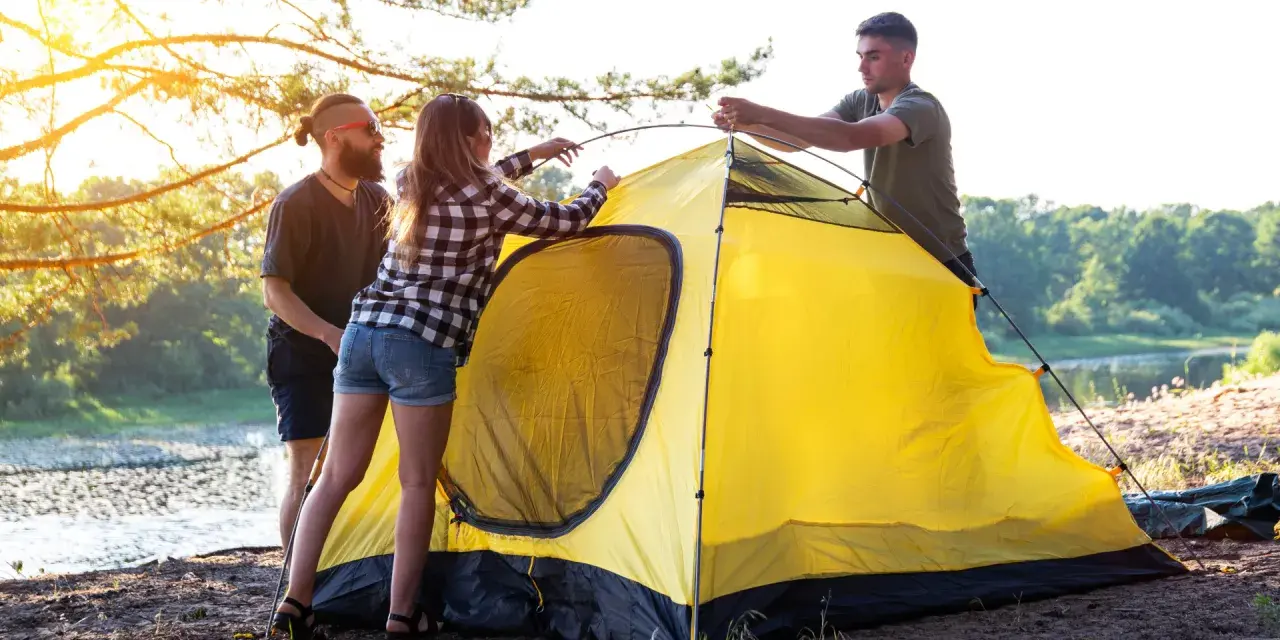
Choosing the right campsite is usually less about chasing the prettiest view and more about matching the place to the trip. When I think about how to choose a campsite, I start with the people travelling, the weather I’m likely to meet in the UK, and the kind of daily routine we want once we arrive. That quickly shows whether a site should feel simple and quiet, family-friendly, or more set up for vans, longer stays, and extra comfort.
The main checks that separate a good campsite from a frustrating one
- Start with the shape of the trip: family break, walking base, coastal stay, or quick stopover.
- Match the pitch to your gear and the weather, not just to the view.
- Check what is genuinely nearby, including access to beaches, trails, shops, and public transport.
- Choose facilities that fit your group, especially toilets, showers, and accessibility.
- Read the small print on arrival times, dogs, fires, generators, and vehicle length before booking.
Start with the trip you actually want
I always begin with the purpose of the trip. A campsite that feels ideal for a one-night stop can feel awkward on a wet four-night family break, and the reverse is just as true. If you choose the trip first, the campsite becomes easier to judge.
- Family weekend: look for short travel times, safe open space, clean toilets, and a site that stays calm after dark.
- Walking or cycling break: prioritise direct trail access, drying space, secure storage, and easy links to buses or trains.
- Coastal holiday: check whether the beach is genuinely walkable and whether parking near the shore is practical.
- Simple overnight stop: favour easy road access, quick check-in, and a pitch that is close enough to the facilities without being noisy.
- Longer, more relaxed stay: pay more attention to comfort details such as showers, washing-up areas, and the amount of shade or shelter.
If the campsite matches the shape of the trip, the rest of the decision gets easier: pitch, location, and facilities all fall into place. That leads straight into the part many people get wrong first, which is the pitch itself.
Pick the right pitch before you think about the view
The pitch is the real foundation of the stay: the marked space for your tent, caravan, or motorhome. A great view does not help if the ground is uneven, the space is too tight, or a sudden downpour turns the grass into a problem.
Two details matter more than most beginners expect. First, measure your total footprint, including awning, guy lines, and the tow vehicle if you are travelling with a caravan. Second, check whether the site offers a standard pitch or something larger; on some UK club sites, standard pitches are around 8m x 5m, while jumbo pitches suit units over 5m x 9m.
Electric hook-up means an on-site power connection for charging, lighting, heating, and small appliances. Hardstanding is a firm surface, usually gravel or paved, that holds up better when the weather turns wet.
| Pitch type | Best for | Watch out for |
|---|---|---|
| Grass, no electric hook-up | Light tents, dry weather, and campers who want the simplest and usually cheapest setup | Can become soft or muddy after rain, and you will need to manage power without a hook-up |
| Grass with electric hook-up | Families, longer stays, and anyone who wants charging and lighting without overcomplicating the trip | Usually costs more, and you still need to think about drainage after wet weather |
| Hardstanding with electric hook-up | Caravans, campervans, motorhomes, and shoulder-season trips when the ground is less reliable | Less of the classic field feel, but often the most practical choice in the UK |
| Super service hardstanding | Longer stays and larger units that benefit from fresh water and waste drainage on the pitch | Typically more expensive and not always necessary for a short break |
In British weather, I tend to value a dry, level pitch more than a postcard setting. If the pitch is right, the rest of the site becomes a lot more forgiving, especially when the rain arrives.
Let location work for the trip, not against it
Location is more than a postcode. I want to know what the site is close to, how easy it is to reach, and whether the nearby area matches the reason we booked at all. The Camping and Caravanning Club is right to push campers to check nearby amenities such as a supermarket, pub, café, or beach access, because that often decides how easy the holiday feels once you arrive.
- Beach trips: check the actual walking route, not just the phrase “near the coast”. A site can be close on a map and still awkward on foot.
- Walking holidays: look for direct access to trails, a safe place to leave the car, and public transport if you want a one-way route.
- City or town breaks: test the train or bus connection and make sure the return journey is just as simple as the outward one.
- Family stays: keep supermarkets, cafés, and rainy-day attractions within a reasonable drive so the trip still works if the weather turns.
- Quiet escapes: scan for roads, railway lines, event venues, and popular pubs nearby, because these matter more than the brochure copy suggests.
In the UK, a campsite that looks close on paper can still be exposed, noisy, or awkward to access, so I always read the map before I fall in love with the scenery. Once the location feels realistic, the facilities are what make or break comfort.
Match the facilities to the people travelling with you
Not every campsite needs to be packed with extras, but the basics have to fit the group. VisitBritain notes that shared bathroom facilities are the minimum on many sites, while some add shops, cafés, playgrounds, or swimming pools.
- Families with young children: clean toilets, hot showers, washing-up sinks, and a playground tend to matter more than decorative extras.
- First-time campers: electric hook-up, an easy parking layout, and a simple on-site shop can make the whole stay feel less stressful.
- Walkers and cyclists: drying space, laundry, and a quiet evening environment often matter more than entertainment.
- Campers with mobility needs: ask about level paths, accessible bathrooms, and the slope of the pitch itself, not just the site entrance.
- Dog owners: confirm pet rules, exercise areas, and whether dogs are allowed everywhere or only in certain parts of the site.
I do not pay extra for facilities I will not use, but I also do not save a few pounds by skipping the things that keep everyone comfortable. The right balance here makes a campsite feel easy rather than merely acceptable.
Once comfort is sorted, the small print tells you whether the booking will actually behave the way you expect.
Read the rules before they read you
This is the section that prevents most frustration. Many campsite problems start long before arrival: wrong pitch size, missed check-in window, pets not allowed, fires banned, or a strict limit on vehicle length.
- Check arrival and departure windows so you are not forced into a rushed drive.
- Confirm cancellation terms, especially for bank holidays and school-holiday bookings.
- Look at noise rules, generator limits, and quiet hours if you want a restful stay.
- Verify fire pit or barbecue rules, because not every site allows open flames.
- For caravans and motorhomes, check the total length with the tow vehicle or accessories included.
- Look for any extra charges for additional adults, children, cars, or electric hook-up.
These are not boring details; they shape the trip. A campsite can look ideal in photos and still be a poor fit if the booking rules clash with the way you travel.
After that, I use reviews and recent photos to see how the place behaves in real life, not just in the listing.
Use reviews to test the reality behind the description
I trust recent reviews more than polished photos, because the photos usually show the best pitch on the best day. What I want to know is how the site performs when it rains, when it is busy, and when a family has actually tried to sleep there.
- Repeated complaints about flooding, muddy access, or sloping ground are more useful than a single glowing review.
- Noise comments matter more than star ratings if you care about sleep.
- Bathroom cleanliness and shower pressure tell you a lot about upkeep.
- Recent mentions of friendly staff, clear signage, and tidy shared areas usually point to a campsite that is managed well.
If two sites look similar on paper, I choose the one with the more believable feedback and the fewer surprises. That is usually the safer bet for families, especially on shorter trips where one bad night matters a lot.
The last check is the one I use to decide whether I would actually book it.
The three questions I ask before I click book
Before I commit, I run every campsite through the same simple test. It keeps me from being distracted by pools, views, or clever branding when the basics are not right.
- Will we sleep well there? I look for level ground, shelter from the wind, sensible spacing, and no obvious source of night-time noise.
- Will daily life be easy? I check toilets, water, washing-up space, parking, and how much walking is involved from the pitch to the facilities.
- Will the arrival feel smooth? I confirm the road access, pitch size, check-in time, and any restrictions that could cause stress at the gate.
When those three answers are solid, I usually know I have the right place. When one of them is weak, I keep looking, because the best campsite is the one that makes the whole trip feel simple from the moment you arrive.
