
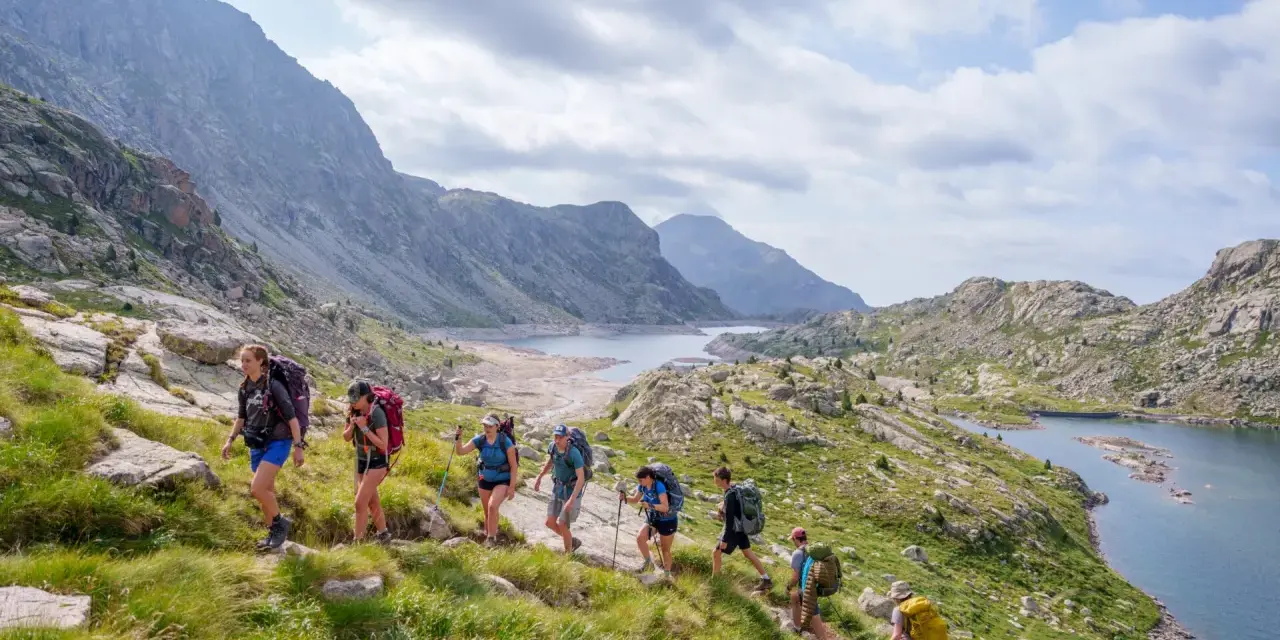
Hiking in the Spanish Pyrenees works best when you treat it as a camping trip first and a single hike second. The valleys around Ordesa, Aigüestortes, Benasque and Val d'Aran reward slow travel: pick the right base, match the route to your ability, and the mountains do the rest. In this guide I focus on the decisions that actually shape the experience - where to camp, which hikes justify the detour, what the park rules mean in practice, and how to plan a short trip without overloading it.
What matters most before you go
- Spring and autumn are the best all-round seasons; summer still works well in the higher mountains, but early starts matter.
- Aigüestortes does not allow wild camping or bivouacking inside the park and its protection zone, so plan around official campsites or refuges.
- Ordesa’s Cola de Caballo route is 17.5 km return, which makes it a full-day walk rather than a casual stroll.
- GR11 is a long-distance trail of roughly 840 km, so most visitors should think in terms of section hikes, not the whole crossing.
- The most useful bases are Torla, Espot, Boí, Benasque and Vielha, because they keep you close to the trails while leaving room for weather changes.
- For families and mixed-ability groups, valley camping beats summit chasing; the best trips usually have one big hike and one easier day built in.
Why the Spanish Pyrenees work so well for a camping trip
The Pyrenees in Spain are not just a mountain range to pass through on the way to somewhere else. They are a complete camping landscape: glacial valleys, lake-filled national parks, Romanesque villages, refuge networks and enough marked trails to suit everyone from confident walkers to families with younger children. Spain has more than 60,000 kilometres of official footpaths, and in the Pyrenees the quality of the walking is matched by the variety of places you can actually stay.That variety is the real advantage. One valley might give you a classic waterfall-and-lake hike, another a harder high-mountain day, and another a quieter base with easier access to food, fuel and shelter. I always think the first decision should be the base, not the summit. If you get the camp right, the rest of the trip becomes much easier to enjoy.
It also helps that the region is more forgiving when you plan it properly. The best seasons are usually spring and autumn, while summer is still pleasant in the higher mountains if you start early and respect the heat. That means the Pyrenees work well for a long weekend, a family camping holiday or a more ambitious walking trip. The next question is which valley deserves your first pitch.
The best camping bases for different hiking styles
If I were choosing camping destinations in the Spanish Pyrenees, I would not try to sleep in a new place every night. I would pick a base that matches the type of hiking I want, then use that camp as a launch point. That keeps the trip calmer, gives you more flexibility in bad weather and avoids turning a mountain holiday into a logistics exercise.
| Base | Why it works | Best for | Watch-outs |
|---|---|---|---|
| Torla-Ordesa | Gateway to Ordesa y Monte Perdido National Park and the classic Cola de Caballo walk. | First-time visitors, active families and anyone who wants one iconic full-day hike. | Access to Pradera de Ordesa is regulated in Easter and summer, so plan around the shuttle. |
| Espot and the Valls d'Àneu | Strong access point for Aigüestortes, with lakes, refuges and multiple trail options. | Mixed-ability groups, lake lovers and travellers who want more than one route choice. | Private vehicles are not allowed inside the park, so upper trailheads depend on authorised transport. |
| Boí and the Vall de Boí | Good for the western side of Aigüestortes and for combining walking with Romanesque villages. | Quieter camping trips, shorter hikes and culture-plus-nature itineraries. | The park rules are still strict, even if the village feels relaxed. |
| Benasque | Excellent base for the Posets-Maladeta area and more serious high-mountain days. | Experienced hikers who want bigger climbs and a stronger alpine feel. | Altitude and weather change faster here, so this is not the place to improvise. |
| Vielha and Val d'Aran | Good all-round base with access to varied valleys and refuge-based hiking. | Longer stays, weather-sensitive trips and groups that want backup options. | Some trailheads are a drive away, so choose your campsite carefully. |
For most travellers, the smartest move is simple: camp in the valley, hike up from there and leave the high ground for the day. That approach gives you better sleep, easier meals and less pressure if the forecast turns. From there, the next step is choosing the walks that justify the journey.
The hikes worth building your stay around
Not every trail in the Pyrenees needs the same level of commitment. Some are ideal as a relaxed family day, while others are the kind of route that should anchor a whole trip. The key is to pick a few good hikes rather than trying to fill every day with mileage.
| Route | Why it matters | Who it suits |
|---|---|---|
| Cola de Caballo via Gradas de Soaso | A 17.5 km return walk that gives you the Ordesa Valley at its best, with waterfalls, broad views and a proper full-day feel. | Fit families, day hikers and anyone wanting a classic Pyrenean route without technical ground. |
| Sant Maurici to Amitges | A strong lake-and-ridge day, with around 3 hours one way and about 750 metres of ascent from the park guide. | Walkers who are comfortable with a bigger mountain day and want a more dramatic Aigüestortes outing. |
| Carros de Foc | A 55 km high-mountain circuit linking nine refuges in Aigüestortes. It is one of the region’s best-known multi-day routes. | Experienced walkers planning a hut-to-hut trip, ideally in summer when conditions are safer. |
| GR11 section hiking | The Spanish side of the Pyrenees long-distance trail runs for roughly 840 km and is split into many sections. | Serious long-distance hikers who want to turn the range into a section-by-section project. |
Once you start looking at route types, the landscape becomes easier to read. GR trails are the long-distance backbone, PR routes are the middle ground, and SL paths are the short local walks, which is useful if you are travelling with children or just want a lighter day. In practice, that means one campsite can support several different levels of effort without changing your whole plan.
My rule of thumb is this: if a route sounds famous, assume it deserves a full day unless the trail page clearly says otherwise. The mountains here are generous, but they are not casual. That leads straight into the other part of the equation, which is knowing what the parks will and will not let you do.
What the parks allow and what they do not
This is the section that prevents most avoidable mistakes. In Aigüestortes i Estany de Sant Maurici National Park, overnight stays outside mountain refuges, as well as camping and bivouacking, are not permitted throughout the park and its peripheral protection zone. In plain English, that means you should not plan to sleep wherever the view looks good. Use official campsites in the surrounding villages, or book refuges when your route requires an overnight stay.
Access rules also matter. Inside Aigüestortes, private vehicles are restricted; you enter on foot or via authorised transport. In Ordesa, the Pradera de Ordesa access is controlled in peak periods, so the valley is reached by shuttle from Torla during Easter and summer rather than by casual parking. Those two rules alone shape the whole trip, because they determine when you start, how far you can go and whether you need to book ahead.
I also treat mountain weather as part of the rulebook. Fires are out of the question in protected areas, water from streams should not be assumed safe without treatment, and a sunny morning can become a cold, windy afternoon with very little warning. The practical response is straightforward: start early, stay on marked paths, carry waterproofs and do not build a day around optimism. Once you accept that, planning becomes much cleaner.
A realistic four-day plan from one campsite
If you only have a few nights, I would resist the temptation to cover too many valleys. A compact plan gives you better hiking and a better holiday. For most visitors from the UK, the sweet spot is one big walk, one easier day and one travel buffer for weather or tired legs.
Option 1 for a first trip
Stay two nights near Torla and two nights near Espot. Day one is for arrival, shopping and a short village walk. Day two is your Ordesa day, ideally the Cola de Caballo route. Day three is a transfer day, with a lighter afternoon around Espot or the lower approaches to Aigüestortes. Day four is for a lake walk or a refuge-linked outing if the legs still feel good.
Option 2 for stronger hikers
Split the trip between Benasque and the Vall de Boí. That gives you a more alpine feel, more demanding climbs and a better chance of seeing two different sides of the range without rushing. I would use this version only if everyone in the group is comfortable with altitude, heat management and a long descent at the end of the day.
Option 3 for families and mixed groups
Use a single base, ideally Torla or Espot, and keep the second and third days shorter than the first. That way the trip still feels active, but nobody is forced into back-to-back monster hikes. In family travel, that usually matters more than squeezing in one extra viewpoint.
The common thread is restraint. A good Pyrenean camping trip leaves room for one weather change, one lazy breakfast and one unexpected detour into a village bakery. That is usually what makes the mountains memorable rather than exhausting.
What I would pack and when I would go
For most campers, late spring, early summer and September are the best months. Those periods give you a better balance of temperature, daylight and trail conditions. Summer can be excellent in the high country, but I would start early, especially on exposed routes, because afternoon heat and afternoon storms can both change the shape of the day. Winter is a different project altogether and only makes sense if you already understand snow, ice and avalanche risk.My packing list would be practical rather than fancy: broken-in walking boots, a waterproof shell, a warm mid-layer, a hat, sun cream, a map or offline GPX file, 2 litres of water per person for a normal day, snacks, a head torch, a basic first-aid kit and a power bank. If you are camping higher up or in shoulder season, I would also bring extra insulation for the evenings, because mountain nights feel colder than the forecast suggests.
For the campsite itself, I would add a few small things that make the trip smoother: a quick-dry towel, a headlamp that works inside the tent, dry bags for electronics and a simple food plan for the first night so you are not shopping while tired. From the UK, it is easy to underestimate how much better the trip feels when the first evening is calm and organised. That calm is what lets the hiking day start properly.
The Pyrenean camping trip I would book first
If I were planning this for the first time, I would keep it deliberately simple: Torla for Ordesa first, Espot for Aigüestortes second, and only then consider Benasque or Val d'Aran for a longer return trip. That order gives you a classic valley walk, a lake-rich national park day and enough contrast to understand what kind of Pyrenean camping you actually enjoy.
The strongest trips here are rarely the most ambitious ones. They are the ones with a sensible base, one standout hike, one easier day and enough slack to handle weather without frustration. If you build the holiday that way, the Spanish Pyrenees give back far more than distance alone ever could.
