
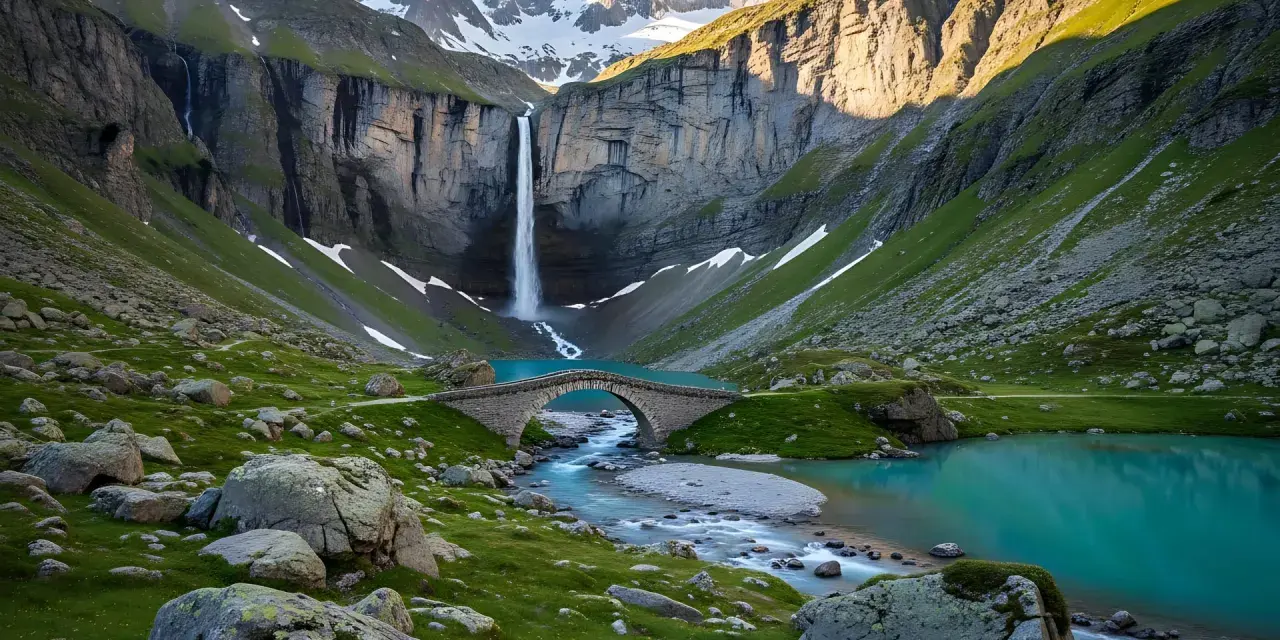
The French Pyrenees are at their best when you plan the campsite and the trail together. The right valley can turn a decent holiday into a very good one: shorter drives to trailheads, better access to lakes and waterfalls, and a route choice that actually fits the people you are travelling with. This guide focuses on the most practical places to stay, the hikes that make sense from each base, and the rules that matter once you move into mountain territory.
The quickest way to choose the right base for a Pyrenees hiking trip
- Cauterets is the strongest all-round base if you want a first trip that balances scenery, access, and family-friendly walks.
- Gavarnie and Gèdre suit hikers who want dramatic cirques, quieter evenings, and a more remote mountain feel.
- Vallée d’Ossau is the best choice for classic high-mountain days, lake hikes, and more ambitious itineraries.
- Regulated bivouac is allowed in the national park core only under specific conditions; free camping and campfires are not a safe assumption.
- June to September is the main hiking window, with September often giving the best mix of stable weather and fewer crowds.
- Families usually get more out of lake walks, waterfall trails, and valley loops than out of early summit pushes.
The French Pyrenees work so well because the landscape is broken into distinct valleys, each with its own rhythm. That means you can choose a campsite based on the kind of hiking you actually want, not just on price or star rating. For me, that is the real trick here: the valley you sleep in should make the next day easier, not harder.

Why the French Pyrenees work so well for campers who hike
This region gives you a rare combination: serious mountain scenery and a camping-friendly structure around it. You can stay low and keep the holiday relaxed, or move closer to the high valleys and build each day around a specific hike. That flexibility is what makes hiking in the French Pyrenees so appealing for people who want nature without committing to a hardcore trek every single day.
Another reason the area works is variety. One valley might give you waterfalls and pine forest, another broad glacial bowls and lakes, and another steeper alpine terrain with a more rugged feel. I often think that first-time visitors underestimate how different these areas feel from one another. If you stay in the wrong place, even a great route can become a lot of driving and a lot of frustration.
The hiking itself also covers a wide range. Easy family walks, half-day scenic outings, full-day mountain hikes, and multi-day routes all exist here, often within the same district. That makes the French Pyrenees a strong camping destination for mixed groups, because you do not have to choose between comfort and ambition. Once you see how the valleys break down, choosing a base becomes much easier.
Where I would base a camping trip
If I were planning a trip around hiking and camping, I would choose the base before I choose the hardest walk. That sounds backwards, but it saves time and keeps the trip calmer. The right base shortens the gap between tent and trail and gives you a better shot at starting early, which matters more than people admit in mountain country.
| Base area | Best for | Trail character | Why it works as a camping destination |
|---|---|---|---|
| Cauterets and Pont d’Espagne | First-time visitors, lake walks, waterfall scenery | Easy to moderate with strong day-hike options | It gives you a very balanced mix of comfort and iconic mountain scenery, which is ideal if you want one campsite to cover several styles of walk. |
| Gavarnie and Gèdre | Big scenery, quieter nights, dramatic landscape | Mostly moderate hikes with serious visual payoff | This is where I would go for a more remote feel without losing access to memorable routes such as cirques and high viewpoints. |
| Vallée d’Ossau and Laruns | Classic alpine hiking, lake circuits, stronger hikers | Moderate to hard with a more mountainous profile | If you want the feeling of being in a true high-mountain valley, this is one of the best camping bases in the French Pyrenees. |
| Val d’Azun and Argelès-Gazost | Families, gentler walks, flexible day planning | Easy valley loops and shorter climbs | This is the smartest choice when you want a lower-stress holiday with enough variety to keep everyone interested. |
| Vallée d’Aure and Saint-Lary | Longer stays, mixed ability groups, varied terrain | A mix of easier trails, lake hikes, and bigger mountain days | It works well if you want one base that can handle several different hiking moods without feeling repetitive. |
If you want my blunt opinion, Cauterets is the easiest all-round pick for a first camping trip, while Ossau is the stronger choice if you already know you want something more alpine. Gavarnie is the one I would pick when scenery matters more than convenience. That trade-off is worth making if the whole point of the trip is to wake up under genuinely impressive mountain walls.
Once you have the base, the next question is what kind of hikes you should actually prioritise from there.
The hikes I would prioritise on a first trip
I would not build a first Pyrenees holiday around the hardest route in the area. That is how people end up tired, rushed, and oddly disappointed. A better approach is to mix one iconic hike, one easier scenic day, and one flexible backup option in case the weather changes.
For easy scenic days
Start with a route that gets you into the landscape without emptying your legs. Walks around Cauterets, Pont d’Espagne, or the lower valley floors are ideal for that. The path to Lac de Gaube, for example, is a classic because it gives you a proper mountain setting without asking for a full expedition mindset. It is the kind of outing that works well on day one, especially if you are travelling with children or arriving after a long drive.
Val d’Azun and the lower approaches around Argelès-Gazost are also good for gentle starts. They are not as dramatic as the high cirques, but that is the point. Easy days give you space to settle in, check the weather, and see how everyone is handling the altitude. In mountain travel, the unglamorous first day often makes the rest of the trip better.
For classic full-day walks
Once your legs are awake, move up to the routes that define the region. Cirque de Gavarnie is one of the most obvious choices because the setting does most of the work for you. You do not need to be chasing a summit to feel rewarded here; the landscape itself is the event. That makes it especially strong for campers who want a major mountain experience without technical terrain.
In Ossau, the lake country around the valley gives you a different kind of day: more sustained climbing, more alpine mood, and a stronger sense that you are spending time in a serious mountain basin. The reward is a better feeling of scale. I like this style of hike for adults who want a proper day on the hill, but still want to sleep in a campsite rather than commit to a hut-to-hut route.
Read Also: Sainte-Baume Camping - Plan Your Perfect Provence Escape
For longer or multi-day hikers
If you want to turn the trip into something more ambitious, the GR10 is the backbone route on the French side. It is not a single experience but a thread that links valleys, refuges, and long mountain sections. That makes it a good option if you like moving through the range rather than staying parked in one place.
For multi-day plans, I would still keep the campsite strategy simple: one base for the easier warm-up days, then a second base if you want to switch valleys and avoid wasting time on transfers. The French Pyrenees are large enough to reward that approach. They are also varied enough that your second valley can feel like a completely different trip.
For families, I would strongly favour one lake day, one waterfall day, and one gentle loop over a single heroic push. That rhythm keeps morale high and makes the holiday feel adventurous without becoming punishing. Next comes the part that many first-time visitors get wrong: the rules around camping itself.
How camping works in the national park
Do not assume that wild camping in the French Pyrenees works the way it might in a less protected area. In the heart of Pyrenees National Park, regulated bivouac is allowed only under specific conditions, and those conditions matter. The usual rule is that you must be more than an hour’s walk from a road access point or the park boundary, and you can only bivouac between 19:00 and 09:00.
That means the park is not a place for casual roadside camping or improvised overnights in the core zone. Fires are not allowed, dogs are not allowed in the core zone even on a lead, and overnight camping or campervan parking in the protected heart of the park is not permitted. If your trip depends on sleeping high, the right answer is usually an authorised bivouac spot or a refuge, not a last-minute improvisation.
- Plan on using proper campsites in the valleys if you want a relaxed holiday base.
- Carry out all rubbish, because waste points are not guaranteed near trailheads.
- Bring water treatment if you plan to rely on mountain sources.
- Check whether your chosen trail crosses the park core before you assume overnight options.
- Treat weather and access rules as part of the route plan, not as details to sort out later.
In practice, the valley campsites are the easiest and often the smartest option for most visitors. They let you sleep comfortably, keep your luggage light, and still reach major trailheads early. That balance is especially useful if you are travelling with family or you want to avoid the stress that comes with carrying everything uphill.
When to go and what to pack
The main hiking window is generally from June to September, with early autumn often offering the best compromise between stable weather and manageable crowds. Summer gives you the broadest access, but it also brings the busiest campsites and the warmest afternoons at lower altitude. If you are planning a holiday around hiking and camping, I would usually aim for June or September first.
| Season | What to expect | What it means for campers |
|---|---|---|
| Late spring | Greener valleys, strong waterfalls, snow still possible higher up | Good for lower-level walks and easier campsite stays, but not the best time for ambitious high passes. |
| Summer | Longest days, widest trail access, busier valleys, warmer afternoons | Best all-round access, but book early and start hikes in the morning if you want cooler conditions. |
| September | Often calmer, cooler, and more settled | My favourite window for most hikers because the balance between comfort and access is usually excellent. |
| Early October | Lower crowds, sharper weather swings, shorter days | Still possible for experienced hikers, but you need to be more flexible and better prepared. |
On the packing side, I would keep it boring and practical. Bring layers, a waterproof shell, a warm mid-layer, sun protection, a map or offline navigation app, and enough water capacity for a long day. Mountain weather can turn quickly, and the emotional cost of being underdressed is always higher than the weight cost of carrying one extra layer.
A few items matter more than people expect: good footwear with real grip, a headtorch, a power bank, and a small first-aid kit. If you are camping in a family group, I would also bring a spare dry set of clothes for the end of the day. It sounds simple, but nothing improves morale after a wet descent like dry socks and something warm to put on at the campsite.
The first itinerary I would choose for a short stay
If you want the most sensible first trip, I would split it into three simple phases. Start with one base in a valley like Cauterets or Val d’Azun, spend the first day on an easier scenic walk, then save the iconic route for day two or three. That gives your body time to adjust and gives you a weather buffer if one day turns poor.
- For a 3-night stay, choose one strong base and one flagship hike, then keep the remaining days lighter.
- For a 5-night stay, add a second valley if you want more variety, especially if you are mixing family walking with one harder day.
- For a 7-night stay, I would split the holiday between two campsites rather than staying put the whole time, because the Pyrenees reward shorter transfers and focused hiking days.
The pattern I trust most is simple: one campsite, one main scenic hike, one easier recovery day, and one fallback route for bad weather. That is enough structure to keep the trip efficient without making it feel rigid. If I were booking a first mountain camping holiday in this region, I would not chase the cheapest pitch; I would choose the base that gives me the best trail access and the least driving, because that is what usually makes the holiday feel smooth.
Used well, the French Pyrenees give you a trip that feels both restful and genuinely adventurous. Sleep low in a good campsite, walk high when the weather cooperates, and keep the plan flexible enough to enjoy the scenery instead of fighting the logistics. That is the version of the mountains that most visitors remember for the right reasons.
