
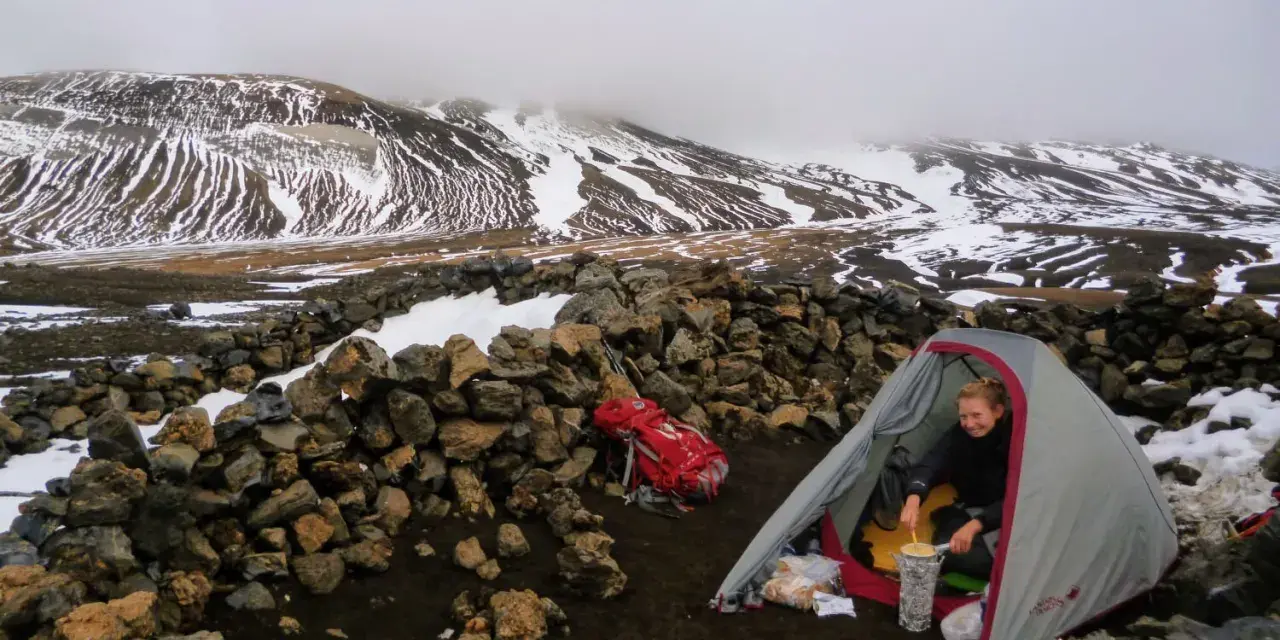
What matters most before you book a bed or pitch a tent
- The standard crossing is about 56 km, and the overnight pattern matters as much as the mileage.
- Most hikers should decide first between a hut package and a camping package, then build the rest of the plan around that choice.
- Huts are basic, shared mountain accommodation with kitchens and bathrooms; some stops also have showers for a fee.
- Camping is possible by every hut, but you need your own tent, sleeping gear, and cooking kit.
- Booking early is not a nice-to-have on this trail. Beds sell fast, and the next alternative may be many hours away.
- Summer road access, especially to Landmannalaugar, can shape your arrival plans just as much as the hike itself.
How the hut chain breaks the trail into realistic stages
I see this route as a sequence of sleep decisions, not just a long walk across Iceland. The official trail is usually broken into 3-, 4-, or 5-night patterns, and that choice changes everything from your daily load to how much time you have to recover when the weather turns.
The most common itineraries are straightforward: a fast 3-night crossing, a balanced 4-night version, or a slower 5-night plan with an extra stop in the middle. If I were planning for a first crossing, I would usually steer toward the 4-night version because it spreads the effort without turning the hike into a race.
| Pattern | Typical nights | How it feels | Who it suits |
|---|---|---|---|
| 3 nights | Landmannalaugar, Álftavatn, Emstrur, Þórsmörk | Longer first day, fewer stops, more momentum | Fit hikers who are comfortable with bigger daily distances |
| 4 nights | Landmannalaugar, Hrafntinnusker, Álftavatn, Emstrur, Þórsmörk | The most even balance between effort and recovery | Most first-timers and anyone who wants a steadier pace |
| 5 nights | Landmannalaugar, Hrafntinnusker, Hvanngil, Emstrur, Þórsmörk | More breathing room in the middle of the trail | Hikers who prefer shorter walking days or extra buffer time |
The reason this matters is simple: the shelter you book determines how hard the route feels. A 24 km push on day one may be fine for one person and punishing for another, so the accommodation pattern should match your pace, not your ego. Once that is clear, the next question is whether you want a bed, a tent, or a mix of both.
Choosing between a hut, a campsite, or a mixed package
My rule is blunt. If you hate being cold, book the hut. If you want to save money and do not mind carrying more gear, camp. If you want a compromise, look at the mixed option with a rented tent night in Emstrur.
| Option | What you actually get | 2026 cost signal | Main trade-off |
|---|---|---|---|
| Hut bed | Dorm-style sleeping, shared kitchen, shared bathrooms, warden support | FÍ’s published package pricing shows 3 nights at 51,000 kr, 4 nights at 68,000 kr, and 5 nights at 85,000 kr | Comfort is higher, but so is the price and the pressure to book early |
| Campsite | Designated tent pitch, access to water and bathrooms, some outdoor cooking shelters | Camping packages show 2 nights at 6,800 kr, 3 nights at 10,200 kr, 4 nights at 13,600 kr, and 5 nights at 17,000 kr | You save a lot, but you carry a full camping setup and accept more weather exposure |
| Mixed stay | Hut nights plus a pre-pitched tent in Emstrur on selected packages | Availability-based rather than a standalone convenience buy | Useful middle ground, but less flexible if you want to customise every night |
What camping does not mean on this trail is free use of hut kitchens. Campers can use the bathrooms and drinking water, and in some places the outdoor shelters for eating or cooking, but they cannot use the indoor kitchen or other hut facilities. That is an important distinction, because it changes both what you pack and how you plan meals.
I also would not romanticise the tent option. It is cheaper, yes, but the savings only feel smart if you are happy with wind, cold starts, and a more deliberate campsite routine. If that sounds fine, the route becomes very affordable. If not, the hut fee is often the price of a much easier trip. That difference makes the individual stops worth looking at closely.
What each stop offers in practice
Not every overnight point feels the same, and that is where a lot of first-time planning goes wrong. Some stops are genuinely comfortable mountain bases; others are more like practical refuges that happen to have beds.
| Stop | Capacity | What stands out | Camping note | My take |
|---|---|---|---|---|
| Landmannalaugar | 78 | Largest and most familiar starting point, with a well-equipped kitchen, water, bathrooms, and showers nearby | Designated camping area on gravel; pitching can be awkward in wind | The easiest place to begin and the most comfortable place to build in an extra night |
| Hrafntinnusker | 52 | The most exposed and basic stop, with a kitchen, cold running water, and a latrine rather than full toilet convenience | You may camp on snow or sand and gravel; there is a shelter for cooking and eating | Useful as a strategic break in the hardest terrain, but not a place I would choose for comfort |
| Álftavatn | 72 | Two huts, good kitchen facilities, showers, and a very scenic lakeside setting | One of the best campsites on the trail, with water and wash-up sinks close by | Probably the most attractive mid-route overnight if you want one stop to feel genuinely restful |
| Hvanngil | 60 | Smaller and useful as an alternate midpoint, with kitchens, bathrooms, and showers | Two tent areas, one with better wind shelter in the lava field and another grassy option a short distance away | A smart choice when I want to split the trail more evenly or avoid a longer push to the next major stop |
| Emstrur / Botnar | 60 | Three compact huts, each with a simple open layout, plus a shared shower setup and communal cooking shelter for campers | Campgrounds sit around and below the huts; water is available in the bathroom building | Functional rather than luxurious, but very well placed before the final descent to Þórsmörk |
| Þórsmörk / Langidalur | 73 | The biggest finish point, with two kitchens, a dining hall, showers, and a small shop | Grassy forest campsite with shared bathroom access | The best place to end the crossing if you want to linger, recover, or add another night before moving on |
Two stops stand out to me for different reasons. Álftavatn is the one I would call genuinely pleasant, especially if you are camping. Hrafntinnusker is the one I would treat as a high-altitude refuge rather than a comfort stop. That contrast is exactly why it pays to choose your overnight pattern carefully.
Booking rules that matter more than most people expect
Ferðafélag Íslands runs the huts and campsite system, and the official booking setup for 2026 is built around set packages first, not casual last-minute flexibility. That alone tells you something important: this is not a trail where I would book flights and hope the bed works out later.
- Advance booking and payment are required. Reservations are only confirmed after payment is completed.
- Book early. The trail is popular, hut capacity is limited, and the next available accommodation may be many hours away.
- Cancellation terms are strict. Hut bookings cancelled 56 days or more before arrival get 75% back, 55-21 days get 50% back, and 20 days or fewer get no refund.
- Camping has better refund terms. Tent bookings cancelled 2 days or more before the first booked date get a full refund.
- Weather does not protect your booking. No refund is issued for weather, delays, natural events, or a no-show.
- Shoulder season is more demanding. Before 20 June or after 15 September, running water may not be available and dry toilets may be in place.
- Landmannalaugar access can require parking reservations. In summer 2026, private or rental cars arriving in the daytime need a reserved space and service fee.
I would also budget for the fact that showers are extra at several stops, and I would not rely on buying proper meals on the trail. The huts do sell some supplies, but that is a convenience, not a full resupply strategy. Put simply: the small print is not administrative noise here; it is part of the route design. Once you accept that, the right accommodation pattern becomes much easier to choose.
How I would choose the right overnight pattern
If I were planning the crossing with normal fitness and no desire to carry a heavy tent, I would choose the 4-night hut pattern. It is the least dramatic option on paper, but it usually produces the best experience in reality because it gives you shorter opening days, reasonable recovery time, and a better chance of enjoying the landscape instead of just surviving it.
| Situation | I would choose | Why |
|---|---|---|
| First crossing or mixed ability group | 4-night hut plan | It spreads the effort well and keeps the trail manageable if the weather turns rough |
| Very confident hikers on a tighter schedule | 3-night hut plan | It gets the job done faster, but the first day is long and you need to be comfortable moving efficiently |
| Budget-first hikers who are happy carrying full camping kit | Camping package | The savings are substantial, and the trail is still fully doable if you are self-sufficient |
| People who want a compromise | Mixed hut-and-tent option | You keep some comfort without paying for a bed every night |
For hikers coming from the UK, the simplest logistics usually come from a hut package plus bus transfers, especially if this is your first time in the Icelandic highlands. If I had to prioritise one thing over every other detail, it would be this: choose the night pattern first, then build travel, food, and gear around it.
The small decisions that make a remote night feel manageable
Remote accommodation is rarely ruined by one dramatic mistake. It is usually a string of small ones: the wrong layers, a weak sleep setup, too much faith in the weather, or assuming the next stop will be easier than the last. I would plan against those mistakes before I left Reykjavík.
- Pack proper waterproof layers and avoid cotton next to the skin.
- Bring earplugs and a small towel if you plan to shower or sleep in shared rooms.
- Use a dry bag for anything you cannot afford to soak, especially sleeping clothes and electronics.
- Carry your own food and treat hut supplies as a bonus, not your baseline plan.
- Ask the warden before pitching a tent.
- Assume the weather will change, even if the morning starts clear.
If you want one practical rule to keep in mind, it is this: book early, keep your sleep plan simple, and do not underestimate how much easier the trail feels when you are not arguing with your accommodation every evening. For most hikers, the sweet spot is a 4-night hut itinerary, with camping as the lower-cost alternative and a mixed setup as the compromise when you want a bit of both.
