
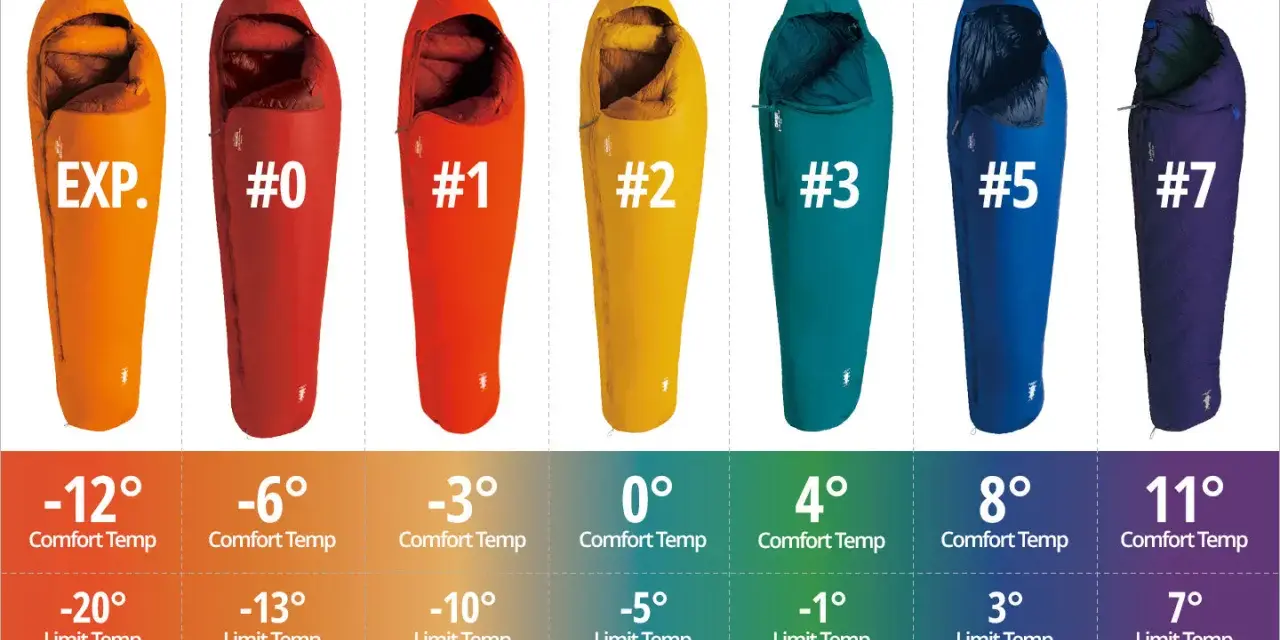
Getting the right bag is less about chasing the coldest number on the tag and more about understanding how sleeping bag temperature ratings are tested, what they assume, and how they behave on a damp, windy night in the UK. In this guide, I break down the rating labels, show how to choose a realistic comfort level for different seasons, and explain the sleep-system details that make a bag feel warmer or colder in the field.
What matters most when you read the label
- Comfort is the number I would use first because it is the most practical clue to real-world warmth.
- Lower limit is useful for comparing colder-night performance, but it assumes a warmer sleeper and a solid setup.
- Extreme is an emergency figure, not a camping target.
- A good sleeping pad, dry base layers, and the right fit can change how warm the same bag feels by a noticeable margin.
- For UK trips, the right comfort number depends more on season and exposure than on the marketing category printed on the sack.

How sleeping bag temperature ratings work
In Europe, the current benchmark is ISO 23537-1:2022, which gives manufacturers a shared testing method for adult leisure bags. That matters because a rating only becomes useful when two different bags are measured the same way; otherwise, the label is just a marketing claim.
The test uses a heated mannequin in a cold chamber, with standard base layers and a sleeping pad, then translates the heat loss into publishable ranges. In practice, I read those ranges like this:
| Rating | What it tells you | How I use it |
|---|---|---|
| Comfort | The point where a standard sleeper is expected to rest without feeling cold | The main number I compare first |
| Lower limit | A colder benchmark for a warm sleeper in a curled, efficient posture | Useful if you sleep hot or want to judge colder-weather headroom |
| Upper limit | A warmer point some labels show for sleep without overheating | Helpful for summer use, but secondary for most buyers |
| Extreme | An emergency figure with serious cold-stress risk | I ignore it when choosing a bag for normal camping |
The important part is not that the numbers look scientific; it is that they are comparable. A 2°C comfort rating from one reputable brand and a 2°C comfort rating from another should be in roughly the same ballpark, which is far more useful than comparing a vague “3-season” label.
I usually start with comfort and only look at lower limit if I am comparing two close options. Once you know what the numbers mean, the next question is how they translate to a damp weekend in the UK.
Which rating makes sense for UK trips
The UK is not one climate. A sheltered summer pitch in Kent, a windy coastal site in Cornwall, and a damp weekend in the Lake District can demand very different warmth. For that reason, I prefer to choose a bag from the coldest realistic night I expect to sleep through, not the mildest evening on the forecast.
| Trip type | A sensible comfort target | Why it works |
|---|---|---|
| Summer family camping on sheltered lowland sites | 5°C to 10°C | Light, easy to vent, and less likely to feel stuffy on warmer nights |
| Spring and autumn camping in most lowland areas | 0°C to 5°C | Covers cool nights without pushing you into heavy winter bulk |
| Exposed coast, moorland, or variable shoulder-season weather | 0°C to -5°C | Gives a margin when wind, damp and clear skies pull temperatures down |
| Colder-weather or alpine-style trips in Europe | -5°C or colder | For people who knowingly camp in near-freezing conditions |
These are working ranges, not rules carved into stone. If you sleep cold, I would move one step warmer. If you sleep hot and you camp mainly in summer, I would not pay extra for a winter-rated bag that you will spend half the night unzipping.
For children, I am even more conservative. Adult-style standards do not apply cleanly to kids’ bags, so I look at the actual fit, the shape of the bag, and the quality of the sleep system rather than trusting a single number on the label. The next piece of the puzzle is why the field often feels different from the box.
Why the field feels different from the label
Once the temperature drops, the bag is only one part of the system. A warm bag on a cold mat can still feel disappointing, and a modest bag on a good pad with dry layers can feel better than the label suggests.
- Sleeping pad matters more than many beginners expect. If the pad is too thin for the conditions, the ground pulls heat away faster than the bag can replace it.
- Moisture changes everything. Damp clothes, tent condensation, and humid coastal air all make warmth harder to hold.
- Fit affects efficiency. Too much empty space wastes heat, while too little room compresses loft and creates cold spots.
- Clothing helps only when it stays light and dry. A proper base layer and socks can improve comfort, but bulky layers that squeeze the insulation can make the bag colder.
- Food and hydration are underrated. If I go to bed under-fuelled or dehydrated, I almost always feel colder by midnight.
The practical lesson is simple: do not judge the bag in isolation. The same rating can feel generous on a calm July night and marginal on a windy April campsite. Once you accept that, choosing between down, synthetic, and different shapes becomes much easier.
That brings me to the part I care about most when I help people buy gear for real use, not showroom use.
Fill, shape and season change the warmth you feel
Temperature numbers are only part of the story. The fill and cut determine how efficiently that warmth is delivered, and that is why two bags with similar ratings can feel very different in camp.
| Option | Best for | Strengths | Trade-offs |
|---|---|---|---|
| Down mummy bag | Backpacking, dry conditions, people prioritising weight | Excellent warmth-to-weight ratio, packs small, very efficient when cared for properly | More expensive, slower to dry, less forgiving if it gets wet |
| Synthetic mummy bag | UK family camping, damp weather, budget-conscious buyers | Retains insulation better when damp, simpler to care for, usually cheaper | Bulkier and heavier for the same warmth |
| Rectangular or roomy bag | Car camping, relaxed sleepers, people who dislike confinement | Easy to vent, comfortable to move in, less restrictive around the shoulders | More air to heat, so it often feels colder at the same rating |
I reach for down when I want the lightest warm option, but for a lot of UK camping I still think a good synthetic bag is the safer bet because damp nights are common and car-camping bulk matters less than dependable comfort. Whatever you pick, a snugger mummy shape will usually feel warmer than a loose rectangular cut at the same number.
Once you know the construction, the last step is comparing models without getting distracted by the marketing copy.
How to compare two bags without getting misled
This is where I slow down and read the spec sheet line by line. A bag that looks lighter or more premium on paper is not automatically the better choice for your nights outdoors.
| What to check | What it means | My rule of thumb |
|---|---|---|
| Comfort rating | The most useful indicator of practical warmth | Compare this first |
| Standard stated on the label | Tells you whether the number comes from a recognised test method | If the standard is missing, treat the claim cautiously |
| Bag fit and cut | Influences how much empty space you have to heat | Choose the smallest size that still lets you move comfortably |
| Sleeping pad assumptions | Shows the setup behind the rating | Pair the bag with a properly insulating mat |
| Ventilation features | Zips, baffles and hoods help control heat | More useful than chasing the coldest headline number |
I also avoid comparing only grams or packed size. A lighter bag can be colder, and a smaller packed bag can be less versatile for family camping. For most trips, I would rather have a slightly warmer bag that I can vent than a marginally lighter one that only works on perfect nights.
That leaves the simplest buying rule I use when the forecast is still uncertain.
The buying rule I use when the forecast is messy
For UK camping, I usually work backwards from the coldest night I am genuinely willing to sleep through. If I expect 4°C to 6°C and I sleep warm, I might look for a comfort rating near 5°C. If I sleep cold, camp exposed, or know the site can turn damp and breezy, I move one step warmer and keep the bag’s zipper and hood as a release valve for milder nights.- Choose for the coldest realistic night, not the average forecast.
- Add margin if you are a cold sleeper, a light sleeper, or camping with children.
- Expect a warmer feel with a strong pad and dry layers, but never rely on layers to rescue a marginal rating.
- Vent the bag on mild nights; overheating can make you wake up colder later.
- Prefer a bag you can live with for more than one season if you camp only a few times a year.
If I had to reduce the whole subject to one sentence, it would be this: buy for the night you do not want to be surprised by, then make the bag easier to vent when the weather turns kind. That is usually the cleanest way to turn a label into a good night’s sleep.
