
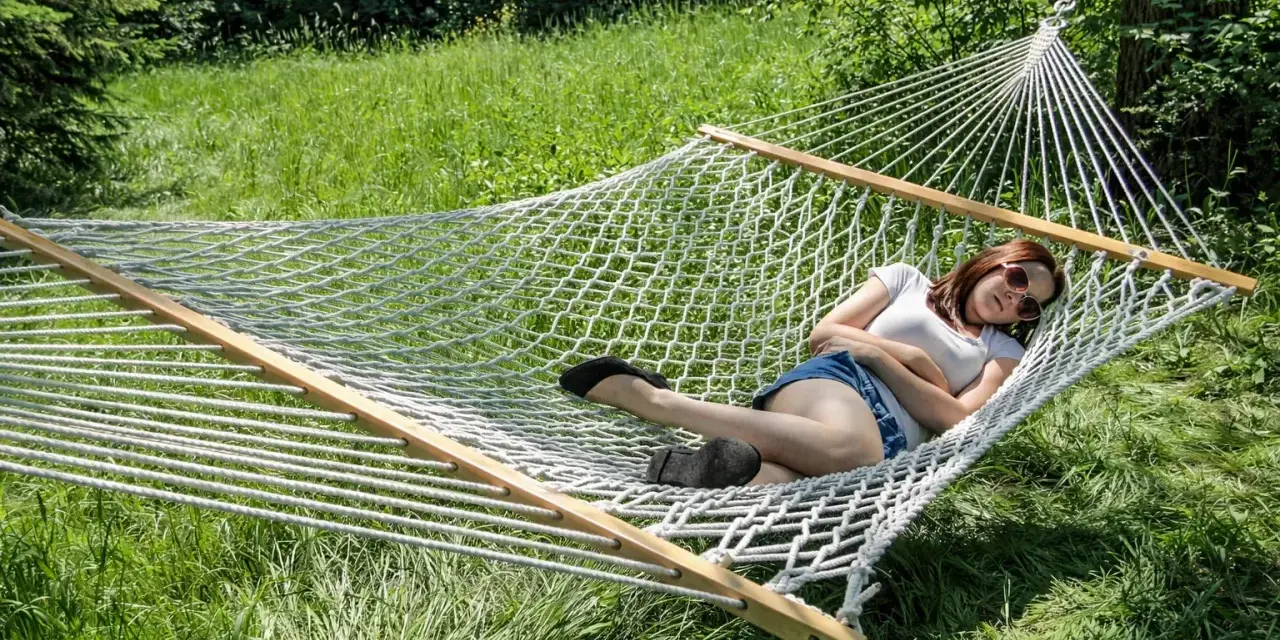
A double hammock is a wider, roomier hammock built for extra comfort, whether you want to stretch out alone or relax with another person. This guide answers what a double hammock is, what actually matters when choosing one, and how to tell whether it suits camping, garden use, or a weekend away in the UK.
What matters most at a glance
- A double hammock is usually wider than a single, so it feels less restrictive and allows a flatter diagonal lay.
- Many models sit around 1.5-1.8 m wide and are rated roughly 180-227 kg, but the maker’s spec matters more than the label.
- For overnight camping, a double is often more comfortable for one person than for two people sleeping side by side.
- In the UK, quick-drying fabrics, a good tarp, and reliable tree straps matter more than a fancy-looking design.
- The best choice depends on whether you want shared lounging, solo sleeping comfort, or a compact backcountry setup.
What a double hammock really is
A double hammock is simply a larger hammock designed with extra width and, usually, a higher load rating than a standard single. In practice, the extra fabric gives you more space to lie diagonally, which is why many people find a double more comfortable even when they are sleeping alone.
The label can be a little misleading. On many brands, “double” describes the size rather than a promise that two adults will sleep comfortably in it for the night. REI, for example, notes that many double hammocks fall in the 5- to 6-foot width range and are typically rated around 400 to 500 pounds, so the format is really about space and capacity, not just two-person use.
That distinction matters because once you understand it, the rest of the buying decision becomes much clearer. Next, it helps to separate what the label suggests from how these hammocks actually behave in real use.
Why the label can be misleading
People often hear “double hammock” and assume it means a cosy sleeping setup for two. Sometimes that is true for short lounging sessions, but for overnight use the reality is more nuanced. Two adults in one hammock can feel cramped, shift the balance unexpectedly, and end up fighting for the flattest part of the fabric.
In my experience, the wider shape is usually the real benefit. It gives one person more room to spread out, especially if they like a diagonal lay, and that can feel far better than a narrow single. DD Hammocks even sells a king-size model at 3.2 m by 1.7 m that is still designed for one person only, which is a good reminder that size and sleeping capacity are not the same thing.
When two people share it
Sharing works best for relaxing, reading, or short rests rather than full nights. If both people are light, careful, and happy to stay fairly still, it can be perfectly pleasant. Once one person starts turning, the centre of the hammock shifts and comfort drops quickly.
When one person uses it
For sleeping, many campers prefer a double precisely because it gives one person more usable space. The extra width helps you sit a little off-centre, lie flatter, and reduce the squeezed feeling that narrower hammocks can create. That is the use case I would prioritise first if the hammock is going into a campsite rather than a back garden.
Once you know how the label behaves in practice, the next step is choosing the right features for the way you actually camp in the UK.

What to look for before buying one in the UK
For UK use, I would focus on weather resistance, pack size, and comfort before I get distracted by accessories. A hammock that sounds generous on paper can still be awkward if it holds moisture, comes without decent suspension, or needs a perfect tree gap that you rarely find on real campsites.
| Feature | What to look for | Why it matters |
|---|---|---|
| Width | About 1.5-1.8 m for most doubles | More width usually means a flatter, less cramped lay |
| Length | Roughly 2.8-3.2 m for many camping models | Longer fabric often improves comfort and diagonal positioning |
| Weight capacity | Around 180-227 kg is common, with some lower or higher | Always check the manufacturer’s rating instead of assuming |
| Fabric | Nylon or polyester for camping; cotton for garden lounging | Camping fabric should dry quickly and handle damp weather better |
| Suspension | Tree straps, carabiners, and adjustable webbing | Good suspension is easier to set up and kinder to trees |
| Protection | Bug net and tarp compatibility | Useful for midges, rain, and unpredictable British weather |
I would also pay attention to pack size. A roomy hammock is only genuinely practical if it still fits easily in your rucksack or boot. If it turns into a bulky bundle that only gets used twice a year, the comfort advantage starts to look less impressive.
After the buying criteria, the next thing that usually decides comfort is not the brand at all, but how the hammock is hung.
How to hang it safely and get a better lay
A double hammock can feel luxurious when it is hung properly and awkward when it is pulled too tight. The goal is a relaxed curve, not a banjo-string setup. REI recommends aiming for about a 30-degree strap angle, and that is a practical rule of thumb whether you are in a forest pitch or hanging between two garden posts.
- Choose two healthy anchor points with enough spacing for the hammock length and straps.
- Use wide tree straps instead of thin cord so the load is spread properly.
- Hang the hammock so the lowest point sits roughly 45 cm off the ground before you climb in.
- Sit down slowly and settle in before shifting your weight, especially if two people are sharing it.
- Lounge or sleep slightly diagonally rather than straight down the centreline.
The diagonal position is one of the small details that makes a big difference. It helps the fabric flatten out and reduces pressure across the back. If you are trying to use the hammock for two, keep movement slow and deliberate, because sudden shifting is what usually ruins the balance.
That brings me to the real decision point: whether a double hammock is actually the best choice, or whether two separate setups would serve you better.
Double hammock, two singles, or a hammock tent
This is the comparison I wish more buyers saw before they spent money. A double hammock is not automatically the best answer just because it sounds bigger or more premium. The right choice depends on how you camp, how much privacy you want, and whether you care more about shared space or personal comfort.
| Option | Best for | Strengths | Trade-offs |
|---|---|---|---|
| Double hammock | One person wanting more room, or couples lounging together | Roomy, comfortable diagonal lay, simple setup | Two-person sleeping can still feel tight and unstable |
| Two single hammocks | Couples or friends who want individual sleep setups | Better sleep comfort, less movement transfer, easier personal tuning | Needs more space and usually more kit |
| Hammock tent | Campers who want bug protection and more shelter structure | More enclosed, often better for wet or buggy conditions | Heavier, bulkier, and slower to pitch |
If I were choosing for a weekend in the UK, I would usually pick a double hammock for solo comfort or shared lounging, and two singles for actual overnight sleeping as a couple. That is the honest trade-off: the “bigger” option is not always the more comfortable one.
There is one last layer of practical detail that matters more than most people expect, especially on damp, changeable trips.
The details I would check before taking one into camp
For me, the final check is not the hammock itself but the full system around it. A good double hammock still needs the right straps, enough tarp coverage, and a fabric that behaves well when the weather turns. In the UK, that matters a lot more than people admit, because a warm evening can turn wet and breezy quickly.
- Tree straps: I would not skip these, because they protect trees and make setup easier.
- Rain cover: A tarp sized to cover the whole hammock and suspension is worth having, even in summer.
- Bug net: Useful in midsummer and in sheltered lowland spots where insects are active.
- Fabric choice: Quick-drying synthetic fabrics make far more sense for camping than cotton.
- Packed weight: If the whole system is too heavy, it stops being a true outdoor convenience.
