
Sleeping bag choice gets much easier once you reduce it to three decisions: shape, insulation and temperature rating. The different types of sleeping bags each solve a different problem, whether you need something roomy for family campsite nights, compact for a backpack, or dependable in damp British weather. In this guide I’ll break down the main options, show where each one works best, and help you match a bag to the way you actually camp.
What matters most before you buy
- Shape controls roominess, weight and how efficiently the bag traps warmth.
- Down is lighter and packs smaller; synthetic is more forgiving in damp conditions.
- Comfort and lower-limit ratings are more useful than the number in the model name.
- For many UK and European trips, a 3-season bag around 0°C to -6°C is the sweet spot.
- Your sleeping mat matters too, because bag ratings assume decent ground insulation.

The main shapes and what they change
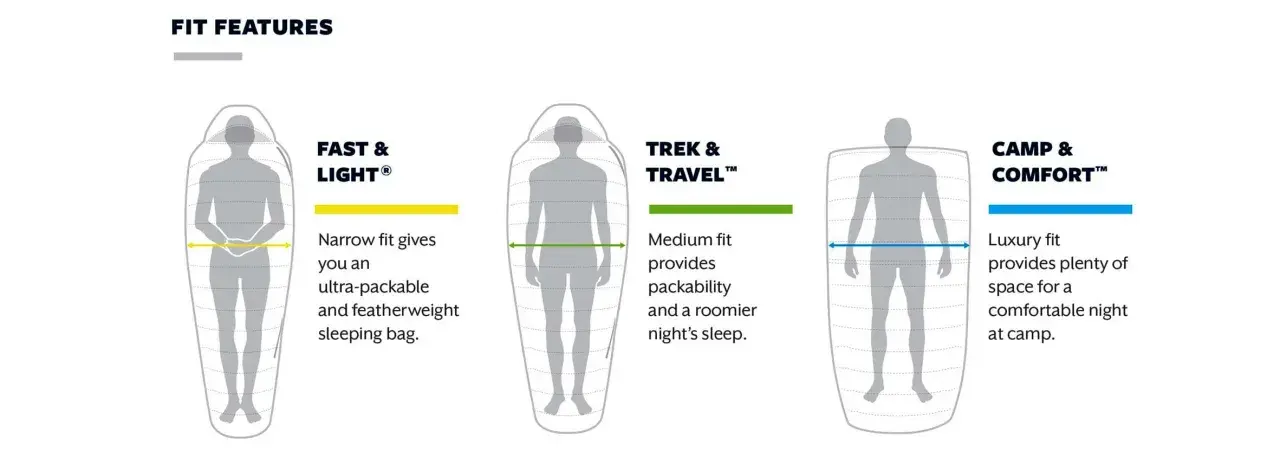
I usually start with shape, because it affects comfort more than many people expect. A bag can have excellent insulation on paper, but if it feels too tight for your sleeping style, you will notice it by midnight. Here is the simplest way to think about the common options.
| Shape | Best for | Main advantage | Trade-off |
|---|---|---|---|
| Mummy | Backpacking, colder nights, people who sleep on their back | Most heat-efficient; hood and tapered footbox reduce empty air | Least roomy, so some sleepers feel restricted |
| Semi-rectangular | Mixed-use camping, side sleepers, people who toss and turn | Good compromise between space and warmth | Usually heavier and bulkier than a mummy bag |
| Rectangular | Car camping, festivals, warm nights, family tents | Most spacious and easiest to vent | More air to heat, so it is usually less efficient |
| Double | Couples or parents sharing a base-camp setup | Shared warmth and a more relaxed sleep setup | Heavy, less flexible, and movement from one sleeper affects the other |
For children, I prefer a properly sized kids’ bag rather than a loose adult model. A smaller interior is easier to warm, feels less draughty, and tends to be less awkward for family camping. Once shape is settled, insulation is the next lever that changes warmth, weight and price.
Down, synthetic and hybrid fills
Down is the best warmth-to-weight option in dry conditions, which is why it dominates lightweight backpacking bags. Higher fill power means the down lofts better for its weight, so a good 700-fill or 800-fill bag can be impressively warm without feeling bulky. In simple terms, less material can do the same job.
That advantage comes with a catch: once down gets properly wet, loft collapses and warmth drops fast. Synthetic fills are the opposite. They are usually heavier and bulkier, but they dry faster and keep insulating better if the weather turns damp, which is useful on wet UK weekends, coastal trips, and family camps where gear gets used hard rather than babied.
| Insulation | Strengths | Weaknesses | Best use |
|---|---|---|---|
| Down | Light, very compressible, durable with proper care | More expensive, slower to dry, poor performance when soaked | Dry backpacking, colder trips, anyone counting grams |
| Synthetic | Cheaper, quick-drying, keeps insulating better when damp | Heavier and bulkier, less compressible than down | Wet climates, budget buyers, family camping |
| Hybrid | Balances moisture resistance with better packability | Usually not the cheapest or lightest option | Mixed-weather trips where you want a practical middle ground |
If I were choosing for a European camping trip with uncertain weather, I would usually trust synthetic first, then down if weight and pack size matter more than moisture tolerance. After insulation, the temperature label is the part that stops people making the wrong purchase.
How to read temperature ratings without getting tricked
Sleeping bag ratings are only useful if you read them the right way. Most modern bags are tested in a standard lab setup, and the two numbers that matter most are comfort and lower limit. Comfort is the figure I pay attention to for colder sleepers; lower limit is the one more relevant if you run warm and only need a bag to keep you comfortable rather than cosy.
| Rating | What it means | How I use it |
|---|---|---|
| Comfort | The temperature at which a colder sleeper should still feel comfortable | Best starting point if you sleep cold or want a safety margin |
| Lower limit | The temperature at which a warmer sleeper might still be comfortable | Useful if you naturally sleep warm and want to save weight |
There are two practical mistakes here. First, people trust the number in the model name instead of the tested rating, which is not always the same. Second, they ignore the sleeping mat. Bag ratings assume a mat with roughly an R-value of 4, so if you are lying on cold ground with a thin mat, even a good bag can feel underpowered. For a normal three-season setup, I see 0°C to -6°C as a realistic starting range; for winter use, you need colder than that and a sleep system built for it. Once you can read the label, the last question is what kind of trips you actually take.
Which bag fits your camping style
A sleeping bag should match the way you camp, not the abstract idea of camping. The bag that feels perfect on a dry backpacking weekend can be the wrong call for a family pitch with car access and extra bedding. I use trip style, not brand marketing, to narrow the field.
| Trip style | Best bag type | What to prioritise | Typical UK price band |
|---|---|---|---|
| Family campsite or car camping | Rectangular or roomy semi-rectangular, usually synthetic | Comfort, easy venting, simple zip, decent room for shifting around | Roughly £25 to £100 |
| Backpacking or hiking | Mummy or tapered semi-rectangular, often down | Low weight, small packed size, efficient warmth | Roughly £120 to £300+ |
| Damp shoulder-season UK trips | Synthetic or hybrid | Moisture handling, draft control, usable comfort around 0°C to -5°C | Roughly £60 to £180 |
| Couples sharing a tent | Double bag or two compatible singles | Zip compatibility, shared warmth, flexibility in hot weather | Roughly £50 to £180 |
If you only buy one bag, I would bias toward a versatile 3-season model with enough room to sleep naturally. Most people regret buying too tight or too cold before they regret carrying a little extra weight. That leads straight into the mistakes that quietly ruin an otherwise good purchase.
The mistakes that quietly ruin a good purchase
- Buying by the model name instead of the tested rating. A bag called “20” is not automatically a true 20-degree comfort bag.
- Choosing too much space. Extra air around your body takes longer to warm, and too much length can create cold spots at the feet.
- Ignoring the mat. A warm bag on a weak mat still feels cold from below, especially on spring ground.
- Picking winter insulation for summer use. An oversized cold-weather bag is bulky, expensive and uncomfortable when the nights are mild.
- Forgetting about moisture. Condensation, damp grass and wet kit all matter more in the UK than people expect on first purchase.
- Overlooking small fit details. Zip direction, hood shape, shoulder room and draft collars all affect how the bag feels in real use.
I also like to leave a small amount of breathing room in the fit, not a lot. If a bag is several centimetres shorter than you need, or so wide that your body is heating a lot of dead space, it will feel colder than the spec sheet suggests. If you avoid those mistakes, the final decision becomes much simpler: buy for the trips you repeat most often.
What I would choose for a typical UK or European trip
If I were building a practical sleep setup for mixed UK and European camping, I would start with a 3-season bag, aim for a comfort rating around 0°C to -5°C, and pick synthetic if the trip is likely to be wet or family-led. For drier, lighter backpacking, I would move toward a tapered down bag, because the lower packed size is genuinely useful once every gram sits on your back.
- Backpacking: mummy, down, compact pack size, and a mat that insulates well enough for shoulder-season ground temperatures.
- Family campsite: rectangular or semi-rectangular, synthetic, easier venting, and enough room to sleep without feeling trapped.
- Damp shoulder seasons: synthetic or hybrid with a hood, draft collar and sensible moisture resistance.
- Couples: a double bag only if you really want to share warmth; otherwise, two singles are usually more flexible.
That combination covers most camping in Britain without forcing you into an over-specialised purchase. The best sleeping bag is the one that matches your actual nights outdoors, gives you a little margin for weather, and still feels comfortable enough that you sleep properly and wake up ready for the next day.
