
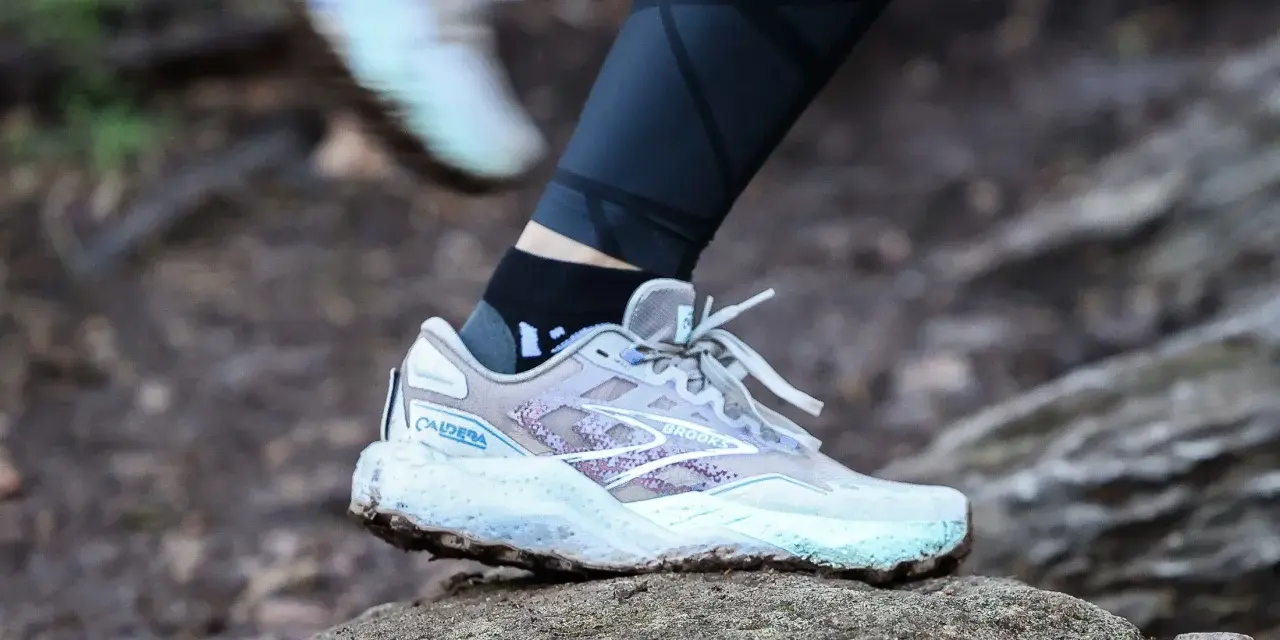
Heel drop is one of those shoe specs that looks technical until you connect it to real trail use. With heel drop explained in plain language, you can judge whether a shoe will help on muddy climbs, long forest walks, or a full day under a pack. In this guide, I break down what the number means, why it matters, and how to choose a sensible drop for hiking, trail running, and mixed outdoor use.
The drop number matters most when it changes how a shoe feels under load
- Heel drop is the height difference between the heel and forefoot, measured in millimetres.
- Higher drop usually feels friendlier for heel strikers and can reduce demand on the calves and Achilles.
- Lower drop often feels more natural on the forefoot, but it asks more from the lower leg during transition.
- For hiking and trail use, fit, grip and stability still matter more than the number alone.
- Moderate drops around 5 to 8 mm are a sensible starting point for many outdoor shoes.
What heel drop measures and what it does not
Heel drop, sometimes called heel-to-toe drop or offset, is simply the difference in height between the heel and the forefoot inside the shoe. If the heel sits at 28 mm and the forefoot sits at 20 mm, the shoe has an 8 mm drop. That number tells you something useful about stance and feel, but it does not tell you how soft, protective or bulky the shoe is.
That last point matters because people mix up drop with cushioning all the time. ASICS makes the same distinction: drop is the height difference, while stack height is the amount of material between your foot and the ground. You can have a plush shoe with a low drop, a slim shoe with a high drop, or anything in between. Once you separate those two ideas, the rest becomes much easier to read.
In practice, I treat drop as a geometry question, not a comfort guarantee. The geometry can influence how you stand, step and roll through the gait cycle, which is why the next question is how that shape changes the feel of a walk or run outdoors.
How heel drop changes the feel of a hike or trail run
A higher drop tends to shift the body slightly forward over the shoe and makes heel-first landings feel more natural. That can be useful if you usually strike with your heel, if you are carrying a daypack, or if you want a shoe that feels familiar straight away. A lower drop does the opposite: it tends to encourage a flatter, more midfoot-driven step and can make the shoe feel more connected to the ground.
On uneven ground, that difference is not just academic. A lower drop can make it easier to adapt to rocks, roots and cambers because your stance feels flatter and closer to the trail. The trade-off is that your calves, ankles and Achilles tendon often have to do more work, especially if you are not used to it. Higher drop shoes can feel kinder to the lower leg, but they may place relatively more demand higher up the chain, especially at the knees and hips.
For UK conditions, that balance is easy to feel on steep bridleways, wet hillside paths and long descents off moorland. In my experience, the shoe’s drop starts to matter most when the ground is changing constantly and your stride has to keep adjusting. That is why the next step is choosing a range that matches the way you actually move.
How to choose a drop for hiking, trail running and mixed outdoor use
REI’s practical split is a useful starting map: 0 to 4 mm is low drop, 5 to 8 mm is moderate, and anything above 8 mm is high. I would treat that as a guide rather than a rulebook, because comfort still depends on fit, foam, pack weight and the type of terrain you spend time on.
| Drop range | What it usually feels like | Best for | Main trade-off |
|---|---|---|---|
| 0 mm | Level underfoot, very direct ground feel | Experienced low-drop users, minimalist hikers, people already adapted | Transition can be demanding on calves and Achilles |
| 1 to 4 mm | Still low, but a little less abrupt than zero drop | Light trail shoes, fast walking, hikers who want a natural stance | Can feel harsh if you are used to traditional boots |
| 5 to 8 mm | Balanced, versatile and easy to live with | Most hikers, mixed terrain, all-day use, one-shoe outdoor wardrobes | Less minimalist feel than some people want |
| 8+ mm | More heel lift and a more traditional feel | Heel strikers, walkers who like familiar support, some heavier-load days | May feel less natural on technical ground and can shift load higher in the leg |
If I were narrowing a buying decision for a camper or hill walker, I would usually start in the middle. A moderate drop gives you enough stability for long days, enough comfort for repeated use, and enough flexibility to handle different surfaces without forcing a dramatic change in stride. That said, if you already run or walk in low-drop footwear without issues, there is no reason to pretend a mid-drop shoe is automatically better. The right answer is the one your body tolerates consistently.
Once you have a range in mind, the next trap is assuming drop and cushioning are the same thing, because they are not.
Heel drop versus stack height and cushioning
This is the point where a lot of shoe shopping goes sideways. Heel drop tells you the difference between the heel and forefoot. Stack height tells you how much foam and material sit under your foot overall. A shoe can have a low drop and still feel heavily cushioned, or a high drop and still feel fairly slim.
That distinction matters because different outdoor days ask for different things. A max-cushion trail shoe can feel excellent on long, rough paths while still being low drop. A traditional walking boot can have a noticeable heel lift without feeling especially soft. If you only look at the number on the spec sheet, you miss the part that usually decides comfort on the hill: how the platform behaves when you are tired, descending or carrying weight.
So when someone says a shoe feels “too aggressive” or “too flat”, they may be talking about drop, cushioning, or both. Understanding the split saves you from blaming the wrong feature and helps you compare shoes more honestly.
Common mistakes that lead to sore calves, unhappy knees or both
The biggest mistake is changing too much too quickly. Moving from a traditional 10 to 12 mm shoe to a zero-drop model can feel fine for the first walk and then catch up with you two hours later. If your calves, plantar fascia or Achilles are not conditioned for the new geometry, they will let you know.
- Switching abruptly from high drop to low or zero drop without a transition period.
- Choosing by spec alone and ignoring toe box shape, fit, outsole grip and overall stability.
- Assuming low drop means minimalist; low-drop shoes can still be heavily cushioned.
- Ignoring your terrain; steep, wet, uneven ground can change what feels sensible.
- Testing only indoors; a carpet test tells you almost nothing about downhill control or forefoot pressure.
There is also a common myth that one drop is “correct” and everything else is inferior. I do not buy that. A shoe with the right drop for one person can be a poor match for another, especially if there is a history of Achilles irritation, calf tightness, knee pain or a strong preference for a certain strike pattern. The safer approach is to think in terms of tolerance and use case, not ideology.
That is why the best next step is to test the shoe the way you will actually use it.
A simple field test before you commit to a pair
When I help people think through footwear, I usually suggest a short real-world test rather than a long debate over numbers. A shoe can look perfect on paper and still fail once you climb, descend and carry a bit of kit.
- Wear the socks and insoles you actually use on the trail.
- Walk for 10 to 15 minutes on a slope, not just on a flat shop floor.
- Check for heel lift, toe bang, pressure on the forefoot and any tugging in the calves.
- Try a few stairs or a short downhill section to see how the shoe behaves under braking.
- Give the pair two or three short outings before judging whether the drop suits you.
If a shoe feels odd in the first 20 minutes and the sensation is clearly in the calves or Achilles, do not assume it will magically disappear on a long day. Sometimes it does settle, but not always. A small discomfort in the shop can become a much larger problem by the time you are halfway through a wet loop around a campsite or a long ridge walk.
Once those checks line up, the number stops being a spec and starts becoming a practical fit decision.
What I would prioritise for UK walks, campgrounds and hill days
For the kind of mixed outdoor use most readers actually have in mind, I would rank the decision like this: fit first, grip second, drop third, cushioning fourth. On muddy British footpaths, wet grass and rocky descents, outsole design and overall stability often make more difference than a few millimetres of heel rise. If the shoe does not hold your foot securely, the best drop in the world will not save it.
For campsite use, family walks and easy day hikes, a moderate drop in the 5 to 8 mm range is often the least complicated place to start. It usually gives enough support to feel familiar without locking you into a very traditional boot feel. If you already prefer low-drop footwear and know your lower legs tolerate it, 0 to 4 mm can work well too, but it deserves a slower transition.
My practical view is simple: do not chase the smallest number just because it sounds more natural, and do not default to a high drop just because it feels familiar. Pick the drop that fits your movement, your terrain and your tolerance, then let the rest of the shoe do its job. That is the version of this decision that actually holds up on the hill.
