
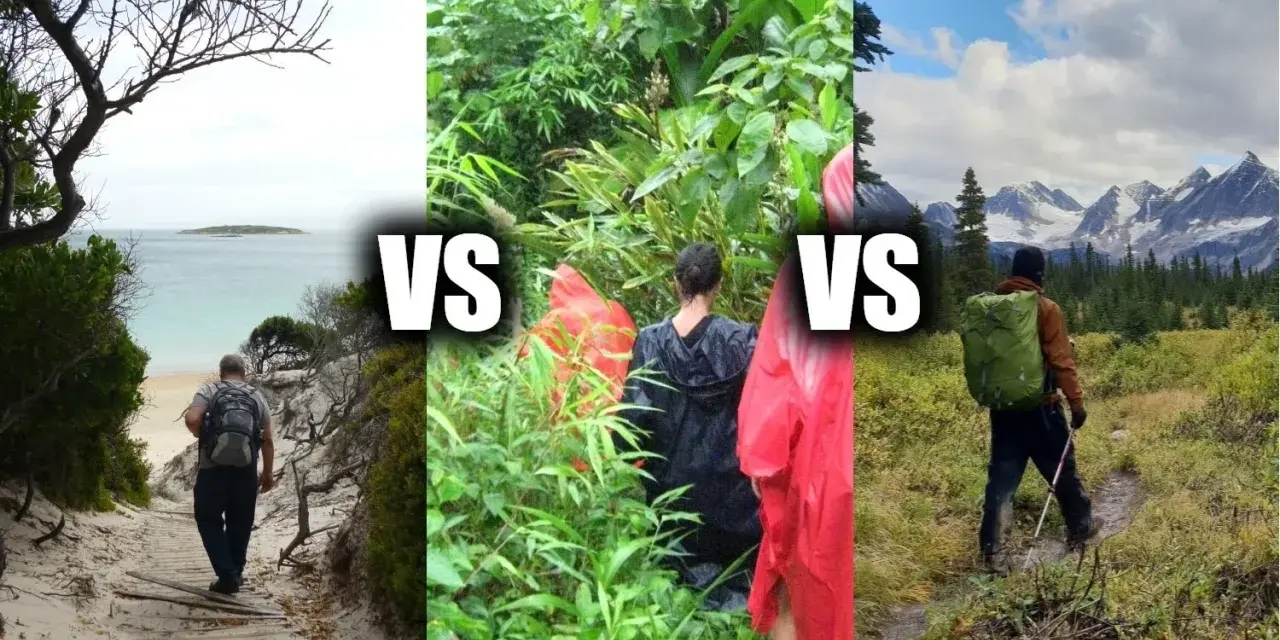
The key difference is continuity, not just distance
- Thru-hiking is a continuous journey on one long trail, usually completed in one sustained push.
- Backpacking is the wider term for multi-day walking with a full pack, from one night to a week or more.
- The biggest practical differences are route structure, resupply, pack weight, and mental load.
- On British trails, weather and access to villages often matter as much as mileage.
- If you are unsure, start with a short point-to-point or loop trip before committing to a major end-to-end route.
How I separate the two on the trail
I use a simple rule. If the trip is built around finishing one continuous route from start to finish, it belongs in the thru-hiking camp. If the trip is built around getting out with a pack for a few nights, choosing campsites or huts, and returning when the schedule runs out, it is backpacking. That sounds tidy, but it matters because the mindset changes the entire pace of the journey.
| Feature | Thru-hiking | Backpacking |
|---|---|---|
| Route structure | One continuous end-to-end trail | Loop, out-and-back, or point-to-point trip |
| Typical duration | Weeks to months | One night to several nights, sometimes a week or more |
| Main focus | Covering miles and completing the route | Enjoying the outing, the landscape, and the experience |
| Planning style | Resupply, pacing, and weather windows | Campsites, transport, and a shorter packing list |
| Pack strategy | Light, efficient, repetitive, low-fuss | Still practical, but comfort can play a bigger role |
| Mental load | High, because every day affects the finish | Lower, because you can adapt or stop more easily |
I also think of it this way: backpacking is the umbrella term, and thru-hiking is a specific kind of backpacking with a much stricter finish line. Once that is clear, the next question is not how far you can walk in theory, but how the daily rhythm changes when the miles keep stacking up.
The daily rhythm is what really changes
On a short backpacking trip, I can afford to linger at a viewpoint, change camp plans, or take a slower morning. On a long end-to-end walk, those choices add up fast. One missed resupply point, one wet night, or one extra ten kilometres can ripple into the rest of the week.
- Daily mileage becomes a discipline, not a guess.
- Resupply turns into a schedule of villages, shops, post offices, and opening hours.
- A zero day, which is a full day off trail, becomes a tactical reset rather than a casual indulgence.
- Weather windows start to shape start dates, clothing choices, and even the trail itself.
That rhythm is why many thru-hikers care less about where they camp each night and more about whether they can keep moving tomorrow. Backpackers usually have more room to enjoy a slower pace, which is often exactly what makes the trip feel restorative. Once daily rhythm changes, gear stops being a side issue and becomes part of the whole strategy.
Gear and pack weight should match the mission
On either kind of trip, I want the same core systems: shelter, sleep, clothing, food, and navigation. The difference is how stripped down I am willing to be. A backpacking setup can carry a little more comfort. A thru-hike rewards a boring, efficient kit that dries quickly, pitches fast, and asks very little of me at the end of a long day.
Base weight, which is the weight of the pack without food, water, or fuel, is the number I watch first. As a rough rule, many walkers try to keep a loaded pack around 20 percent of body weight or less, because once you go beyond that, hills feel steeper and recovery slows. For many weekend walkers, a total load in the 10 to 15 kg range is manageable, but lighter is usually better on wet British ground.
- Shelter should be quick to pitch and reliable in wind, not just comfortable on a dry forecast.
- Sleep system should suit real UK conditions; a true 3-season setup is usually more useful than a summer-only bag.
- Clothing works best when it dries quickly and layers cleanly, especially once rain becomes part of the routine.
- Food and fuel need to be simple on long routes, because calorie-dense meals and easy preparation save both time and energy.
- Extras matter less the longer the trip goes on; chairs, duplicate clothing, and bulky comfort items become harder to justify.
The biggest mistake I see is confusing comfort with usefulness. A heavy pack can feel fine on the first hill and miserable on day four. That is why the gear conversation always feeds back into the choice of trip format, and it leads naturally to the practical question of which style actually fits your goal.
How I choose between them for a real trip
When I am choosing, I ask three questions: how much time do I have, how much discomfort am I willing to accept, and do I want the trip to be the main event or just a good way to spend a few days outdoors? Those answers usually point me in the right direction faster than any gear list.
| If you want... | Better fit | Why |
|---|---|---|
| To finish one famous route end to end | Thru-hiking | The route itself is the goal, so continuity matters more than convenience. |
| A flexible weekend with scenic camps | Backpacking | You can shorten the day, reroute, or stop early if the weather turns. |
| To test kit before a bigger challenge | Backpacking | A shorter trip lowers the risk and reveals weak gear quickly. |
| To cover serious mileage with a clear finish line | Thru-hiking | The long-term structure keeps motivation high when fatigue sets in. |
| A family-friendly outdoor break | Backpacking or a short section walk | Mixed abilities are easier to manage when the trip is shorter and more flexible. |
I would also add one blunt rule: if your main joy comes from camping itself, backpacking usually gives you more room to enjoy the experience. If your main joy comes from momentum, distance, and the discipline of completing one route, thru-hiking starts to make sense. That distinction becomes even clearer on Britain’s longer paths.

UK routes that make the difference obvious
British long-distance paths are useful because they show the full spectrum. Some are long enough to feel like a serious commitment without becoming a season-long project; others are full-on tests of stamina, logistics, and weather tolerance. When I look at UK routes, I think less about labels and more about how the trail will feel after several days of repetition.
| Route | Approx. length | Why it matters |
|---|---|---|
| West Highland Way | 96 miles | A strong introduction to continuous walking in Scotland and a realistic first big multi-day challenge. |
| Coast to Coast Path | Just over 190 miles | Long enough to feel like a genuine end-to-end trail journey without becoming a full-season project. |
| Pennine Way | 268 miles | A classic long-distance route where pacing, resupply, and weather quickly become part of the story. |
| South West Coast Path | 630 miles | This is closer to the mental and physical reality of a classic thru-hike than to a normal backpacking weekend. |
These trails also show how local conditions shape the decision. On some Scottish routes, bothies or frequent villages can soften the logistics, while exposed coastal or upland sections still demand a proper sleep system and weather-ready kit. The label matters less than the fact that you are committing to repeated days with everything on your back, which is why the best way to grow into a longer route is to build up gradually.
How I would build from a weekend pack to a longer journey
If I were starting from scratch, I would not jump straight to a major end-to-end route. I would build the habit in layers, because that gives me better data than any gear review ever will.
- Start with a one- or two-night loop close to home so you can test sleep, food, and comfort without pressure.
- Keep the pack honest and remove anything that only feels useful in theory.
- Walk in wet weather at least once, because British rain exposes weak kit faster than distance does.
- Add a second or third consecutive night before attempting a major long-distance route.
- Only then decide whether you want a genuine end-to-end hike or simply a strong multi-day backpacking trip.
For me, that is the cleanest way to separate the two styles without forcing a dramatic choice too early. If the trip feels like a route with a finish line, I plan it like a thru-hike. If it feels like a good way to spend a few nights outdoors, I treat it as backpacking. That small distinction leads to better gear, better pacing, and far fewer regrets once the pack is on your shoulders and the trail starts climbing.
