
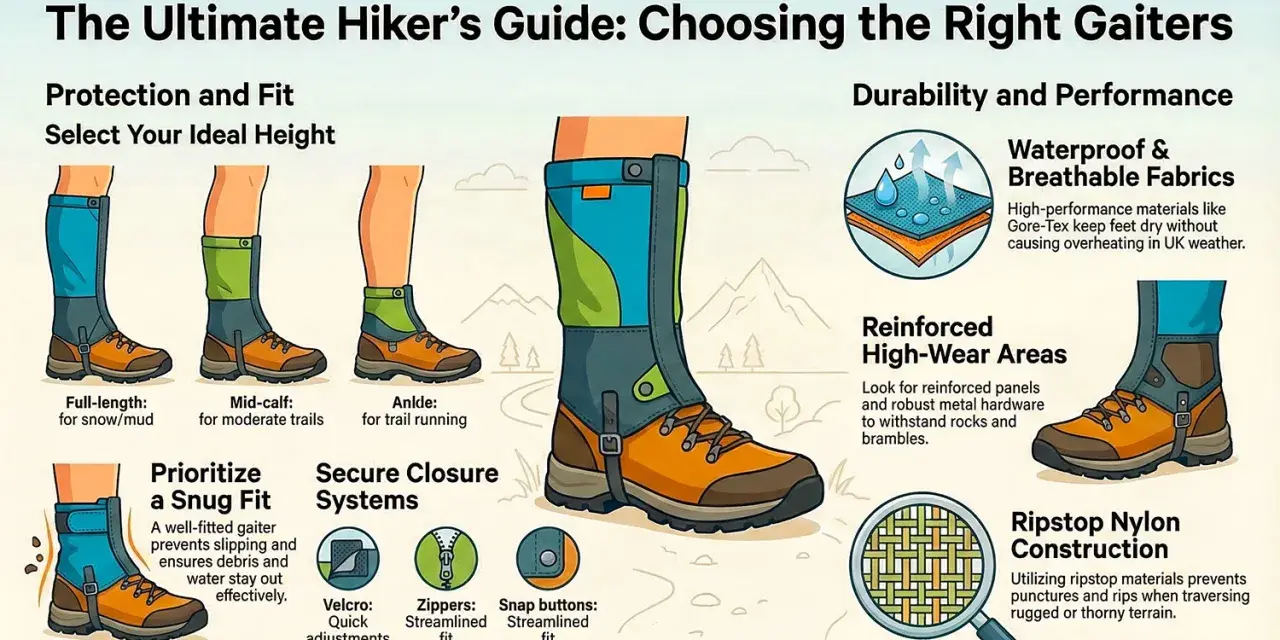
Gaiters are one of those pieces of outdoor kit that seem unremarkable until the ground turns wet, rough, or ankle-deep in mud. If the question is what are gaiters, the short answer is simple: they are protective covers that close the gap between your trousers and boots. They keep out debris, reduce splashes, and make cold, sloppy conditions far easier to deal with. I think of them as a practical layer for British hill walks, campsite chores, and shoulder-season rambles rather than a specialist luxury.
Gaiters are a simple fix for wet, muddy, and gritty ground
- They cover the lower leg and the top of the boot to block mud, snow, stones, and spray.
- Trail, mid-height, and high waterproof models suit very different conditions.
- They are most useful on wet grass, boggy tracks, scree, bracken, and winter paths.
- They help more than waterproof trousers when the main problem is splash and debris, but they do not stop deep water from entering a boot.
- Fit matters more than branding: the boot hook, underfoot strap, and calf closure do the real work.
What gaiters do in practice
In outdoor gear, gaiters are protective covers worn over the lower leg and the top of a boot or shoe. Their job is simple: seal the gap where wet grass, mud, grit, snow, and twiggy debris usually find their way in. I also like them because they reduce wear on trouser hems, which is a small thing until you have ruined a decent pair of walking trousers on a single filthy weekend.
The outdoor version is not the same as a neck gaiter or a fashion accessory. Here, the aim is protection, not style. A good pair does three things well: it keeps the inside of the boot cleaner, it keeps your lower legs drier, and it stops fine debris from turning a pleasant walk into a series of annoying little stops to empty your shoes.
- On wet grass, they stop the splash line from creeping straight into your socks.
- On muddy paths, they reduce how much muck cakes around the boot collar and laces.
- On winter hills, they help keep snow out of the boot opening.
- On rough, overgrown trails, they add a layer against brambles, sticks, and sharp stones.
That said, they are not magic. If you are wading through deep water, the top of the gaiter can still get flooded. If your route is mostly dry, they may be unnecessary. The useful question is not whether they look technical, but what kind of mess you actually meet on the trail.

The main types and how they differ
Once you start comparing models, the differences are less about fashion and more about coverage, weight, and how much weather you expect to meet. For most walkers, the choice comes down to how high the gaiter rises and how much weather resistance you need.
| Type | Best for | Main strengths | Trade-offs | Typical UK price |
|---|---|---|---|---|
| Trail or ankle gaiters | Dry grit, light mud, gravel paths, trail running, summer walks | Light, breathable, quick to put on, low bulk | Limited protection in deep mud, snow, or heavy rain | £15-£35 |
| Mid-height walking gaiters | Wet grass, mixed hill walks, boggy lanes, camping in damp weather | Good balance of protection and comfort | Warmer and slightly bulkier than trail models | £25-£60 |
| High waterproof gaiters | Winter hills, snow, scree, rough brush, longer mountain days | Best seal against weather and debris, strongest coverage | Heavier, warmer, and usually more expensive | £50-£130 |
For UK walking, I usually find mid-height gaiters the sweet spot if you spend time on wet moorland, boggy fields, or long grassy descents. Trail versions make sense for fair-weather walking and trail running, while high waterproof pairs are the right call when snow, rough brush, or truly miserable weather are part of the plan. The trick is to match the gaiter to the worst ground you expect, not the weather you hope for.
How to choose a pair for UK walks
The best pair is the one that suits your route first and your kit second. I would start with three questions: how wet is the ground, how cold is the season, and how much abrasion will the gaiters take from heather, bracken, rock, or pack straps?
- Choose height by terrain. Low gaiters are fine for dust and light splash. Mid-height gaiters are more versatile for British walking. High gaiters make sense when snow and brush are part of the day.
- Choose material by exposure. Ripstop fabric is woven to resist small tears spreading, which matters when you brush against branches or rock. Waterproof-breathable membranes help keep rain out, but they are only as good as the fit and the quality of the seams.
- Choose closure by convenience. Zip-and-hook-and-loop models are quick to use. Plain hook-and-loop closures are simpler. Either way, the fastening should feel secure without being fussy.
- Choose fit by boot shape. A gaiter should sit snugly around the calf and ankle without pinching. If it floats around the leg, mud will find its way in and the underfoot strap will do too much work.
- Choose price by use, not by habit. A decent lightweight pair often starts around £15-£30. Dependable waterproof walking gaiters usually sit around £30-£70. Tough winter or mountaineering models often reach £70-£130.
There is one detail many buyers overlook: the underfoot strap. That strap takes the strain of keeping everything in place, so if it looks flimsy or cheap, the whole gaiter tends to feel flimsy or cheap in use. I also pay attention to the boot hook at the front, because that tiny hook is often what stops the gaiter from creeping upward on long walks.
If you mostly walk on dry footpaths, do not overbuy. If you regularly cross long wet grass, muddy approaches, or winter slopes, spend a little more and get a pair that will stay comfortable after a few hours of movement.
How to fit and wear them properly
A gaiter only works if it stays anchored, so fit matters as much as the material. The process is simple, but the order matters.
- Open the gaiter fully and place it around your lower leg so the front seam lines up with your boot laces.
- Clip the front hook to the laces if the model has one. This keeps the gaiter from riding up.
- Pull the top closure snug around your calf, but do not squeeze so hard that it cuts off movement or makes the fabric strain.
- Fasten the underfoot strap beneath the boot. It should be firm, not brutally tight.
- Walk a few minutes, then check for slack at the ankle, calf, and instep. Small adjustments now save a lot of irritation later.
For camping trips, I would also check them after a muddy walk back to the site. If the strap is clogged with grit or the hook has loosened, the next outing starts badly before you have even left the tent field.
When they are worth packing and when they are not
Gaiters earn their place when they solve a specific problem. If your route is dry and compact, they can stay in the pack. If your route is wet, grassy, muddy, or snowy, they often pay for themselves on the first miserable mile.
| Situation | Are gaiters useful | Why |
|---|---|---|
| Long wet grass on a British footpath | Yes | They keep the splash from soaking the top of your boots and lower trousers. |
| Muddy approach to a campsite | Yes | They stop mud from packing into boot collars and save trouser hems. |
| Snowy winter walk | Very much so | They help prevent snow from entering the boot opening and freezing around the ankle. |
| Dry summer trail | Usually no | The extra weight and warmth can be pointless when the ground is benign. |
| Deep stream crossing | Only partly | They can reduce splash, but they do not make a boot watertight from above. |
Compared with waterproof trousers, gaiters are more focused. Trousers are better when rain is falling hard or the whole lower body is getting soaked. Gaiters are better when the main issue is splash, grit, snow, and debris. In real life, the two often work well together on cold, wet days, but they solve slightly different problems.
That is the practical answer I come back to most often: if your routes regularly punish your ankles and boot tops, gaiters are worth carrying. If not, they can wait for the next wet season.
The small details that make them earn their place
Good gaiters are not complicated, but they do reward a bit of care. After a muddy day, I rinse the lower section, let them dry fully, and check the strap before I pack them away. It sounds minor, but grit and damp storage shorten the life of cheap hardware faster than most people expect.
- Clean them early. Dried mud is abrasive and eventually works into seams and straps.
- Dry them completely. Storing them wet encourages smells and weakens materials over time.
- Watch the water beading. If water stops rolling off the fabric, the durable water repellent finish may need refreshing.
- Inspect the underfoot strap. That is usually the first part to wear out.
- Replace worn parts before a trip. A tired strap or loose hook is a small failure that becomes a big annoyance in bad weather.
For me, that is the real value of gaiters: they are a simple bit of kit that quietly improves comfort when the ground is trying to make the day harder than it needs to be. On the right route, they keep the walk cleaner, warmer, and less fiddly, which is exactly what good outdoor gear should do.
