
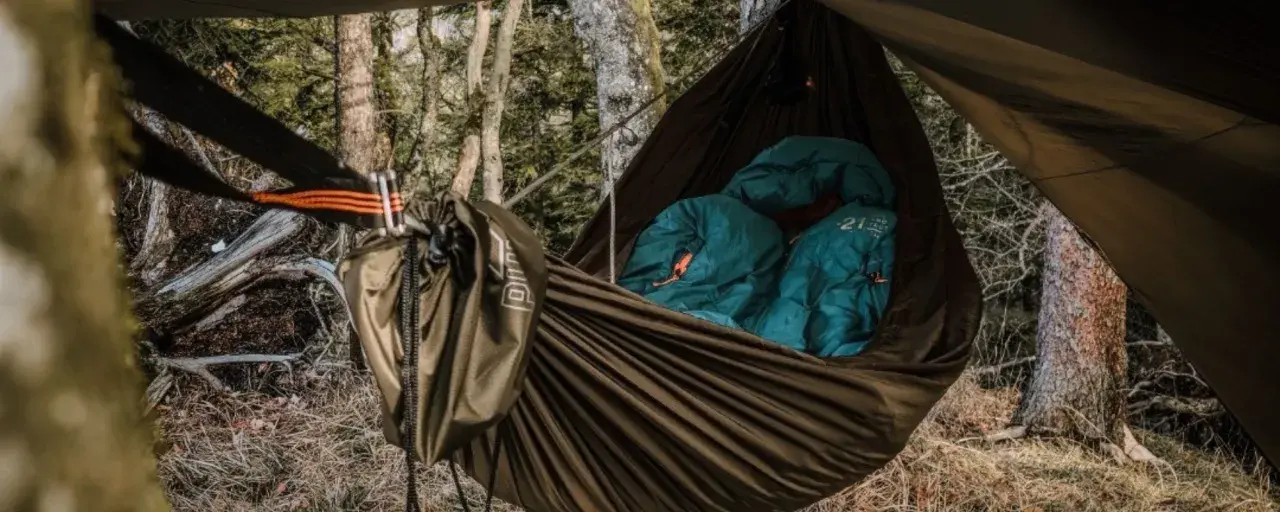
A good hammock setup can be lighter than a tent, easier on uneven ground, and far more comfortable than many people expect, but it only works well when the suspension, insulation, and weather cover are chosen as a system. This article looks at hammock camping as a full system, not just a sling: what to pack, how to pitch it safely, what matters in UK weather, and where the setup beats a tent or falls short. I’m keeping it practical because the difference between a great night and a miserable one usually comes down to a few details.
The practical basics that matter most
- Wide tree straps, a solid tarp, and proper under-insulation are non-negotiable in damp British conditions.
- Hang low and with slack: a relaxed pitch is more comfortable and safer than a tight line.
- Woodland campsites suit a hammock far better than exposed moorland or open beaches.
- In Scotland, access rules are broader, but some areas still need permits, including camping management zones in Loch Lomond & The Trossachs during the season.
- A realistic first setup usually costs around £150 to £300 once you include shelter and insulation.
What a hammock setup gets right that a tent often does not
I like hammocks for one simple reason: they solve the ground problem. If the pitch is lumpy, muddy, sloped, or full of roots, you can still sleep well because the bed is suspended above it. That makes this style especially appealing for woodland camps, small clearings, and back-to-basics family trips where comfort matters as much as simplicity.
| Factor | Hammock setup | Tent |
|---|---|---|
| Sleeping comfort | Excellent on uneven ground; feels cradled when set up correctly | More dependent on flat, well-drained ground |
| Weather exposure | Needs a good tarp and insulation to stay comfortable | Usually easier to seal against wind and rain |
| Pitching speed | Fast once you know the system | Also fast, but ground conditions can slow you down |
| Best terrain | Woodland, sheltered valleys, tree-lined campsites | Open ground, beaches, moorland, treeless sites |
| Family use | Great for older children and relaxed camps; less practical for very young kids | Usually easier for mixed-age family setups |
That is the core tradeoff I always come back to: a hammock is brilliant when trees are available and the weather protection is right, but it is less forgiving if you treat it like a summer-only toy. Once you understand that, the gear choices start to make sense.
The gear that matters most in British conditions

For UK trips, I would think of the system in layers rather than individual bits of kit. The hammock body is only the starting point; the comfort comes from what hangs around it and underneath it.
| Item | What to look for | Typical UK budget | Why it matters |
|---|---|---|---|
| Hammock body | Enough length for a flat lay; strong stitching; comfortable fabric | £40-£90 | Short, bargain models can feel cramped overnight |
| Suspension straps | At least 1 inch wide, tree-friendly webbing, easy adjustment | £15-£35 | Protects bark and makes setup much easier |
| Tarp or rainfly | Enough coverage for wind and sideways rain; side coverage helps in exposed spots | £40-£120 | The tarp is what keeps a hammock usable when the sky turns British |
| Underquilt or pad | Underquilt for comfort; foam or inflatable pad if budget is tight | £25-£180 | Prevents the cold underside problem |
| Bug net | Full coverage if possible, especially for summer and midge-prone areas | £25-£70 | Stops evenings in woodland from becoming a swatting contest |
| Sleep insulation | Three-season sleeping bag or quilt with enough loft | £60-£200 | Your bag loses a lot of underside insulation once compressed |
If I were building a first setup from scratch, I would budget around £150 to £300 for something genuinely usable across spring, summer, and early autumn. Cheaper systems exist, but once you add a proper tarp and warmth underneath, the total climbs quickly. That is why the under-insulation decision matters so much, which is where most beginners get caught out.
How to hang it correctly the first time
With hammocks, comfort is mostly geometry. A tight line feels logical to beginners, but it is usually the wrong answer. The best setup is relaxed, low, and stable.
- Choose two healthy trees or other safe anchor points. I avoid dead wood, damaged trunks, and anything that looks thin or unstable.
- Wrap the straps around the thickest solid part of the trunk and keep them flat against the bark.
- Aim for a gentle hang, not a straight line. A rough 30-degree angle between the straps and the ground is a good working target.
- Keep the lowest point of the hammock no more than about 18 inches off the ground. That reduces fall risk and makes entry easier.
- Pitch the tarp early if rain is coming, then check that it blocks the wind you expect rather than just the rain you hope for.
- Sit down slowly and test the setup before committing to the night. If it feels too tight or too shallow, adjust before you unzip your bag.
Leave No Trace guidance is blunt for good reason: use live, sturdy trees, keep straps wide, and avoid damaging bark. I would add one practical rule of my own for UK trips: if you are unsure whether a pitch is worth using, it usually is not. A slightly less scenic spot that is safe, level enough underfoot, and sheltered from the wind is a much better choice than the prettiest tree pair in the clearing.
How to stay warm and dry when the weather turns damp
Cold from below is the real problem in a hammock. Your sleeping bag works by trapping air, but once your body weight compresses the underside, that insulation loses a lot of value. That is why a hammock can feel brilliant in the evening and unexpectedly cold at 3 a.m. if the bottom insulation is weak.
I usually think about warmth in this order:
- Underquilt first: best comfort and the least fuss once it is fitted properly.
- Sleeping pad second: cheaper and multi-use, but often less comfortable because it can shift.
- Tarp coverage: the bigger the weather swing, the more I value side protection and a lower pitch.
- Dry sleep clothing: socks, base layer, and a warm hat are small items that change the whole night.
In a damp UK climate, I would rather carry a slightly larger tarp than gamble on a minimal one. A tarp with good side coverage matters when rain blows sideways, and it matters even more when the wind drops body heat from the underside of the shelter. If you camp in summer woodland or in Scotland, a bug net is another comfort item that quickly becomes essential.
One practical note from UK conditions: midge-heavy evenings and still, humid air can make a perfect-looking pitch miserable if your netting is weak or absent. That is not a reason to avoid hammocks; it is a reason to treat the weather as part of the system rather than background detail.
Where it works best on a UK trip
The best hammock nights in the UK usually happen in woodland camps, sheltered valleys, mixed forests, and established sites with enough tree spacing. That is where the setup feels effortless and the sleeping position starts to do its real job: reducing pressure points and keeping the ground out of the equation.
The weak spots are equally clear. Open moorland, windy ridgelines, treeless beaches, dunes, and many exposed family campsites are poor matches because you either cannot anchor safely or you end up fighting wind all night. I would also be cautious on sites with young trees, fragile bark, or rules against hanging equipment from trunks.
For access, Scotland is the easiest part of the UK to use a lightweight wild-camping style, but it still has rules. The Scottish Outdoor Access Code supports responsible access, and Loch Lomond & The Trossachs National Park has camping management zones that require a permit or a campsite stay between 1 March and 30 September. In England and Wales, permission from the landowner or campsite operator matters much more, so I always check before I pack the straps.
For family trips, I prefer an established woodland campsite over a truly wild spot. It gives you toilets, easier parking, a lower-stress first night, and a much better chance of finding the right trees without turning setup into a hunt.
The mistakes I would avoid on a first trip
Most bad hammock nights come from a few predictable mistakes, and I see the same ones repeated over and over.
- Buying the hammock before the tarp and insulation. That is backwards; warmth and weather protection matter more than the sling itself.
- Using rope or narrow cord on trees. Wide straps protect bark and usually make setup easier too.
- Hanging it too tight. A flat-looking setup is often uncomfortable and can feel unstable.
- Pitching too high. If you have to climb into it, you have probably gone too far.
- Ignoring the underside chill. A good sleeping bag alone is not enough once the temperature drops.
- Choosing a windy, open clearing just because it looks pretty. Shelter matters more than views once darkness arrives.
The best way to avoid these mistakes is to do a dry run before the real trip. Even an afternoon test in a garden or a local wooded area can show you whether the straps, tarp, and bug net work together. I always learn more from one quick practice pitch than from reading five product pages.
The upgrades that pay off most on a cold British night
If I had to prioritise spending, I would put money into insulation first, then weather coverage, then the hammock body itself. That order is not glamorous, but it is the one that keeps people warm, dry, and willing to use the setup again.
The most worthwhile upgrades are usually simple:
- A better underquilt if you plan to camp outside peak summer.
- A tarp with more coverage if you camp in exposed woodland or on changeable coastal trips.
- Tree-friendly straps with fast adjustment if you move sites often.
- A bug net that zips cleanly if you camp in summer or near still water.
- A top quilt or roomy sleeping bag if you want better movement inside the hammock.
My rule of thumb is simple: if the pitch is dry, warm, and low, the whole system feels easy; if any one of those pieces is missing, the night becomes work. Build the setup around the weather you actually get in the UK, not the weather you hope for, and the hammock stops being a niche piece of gear and becomes one of the most comfortable ways to sleep outdoors.
