
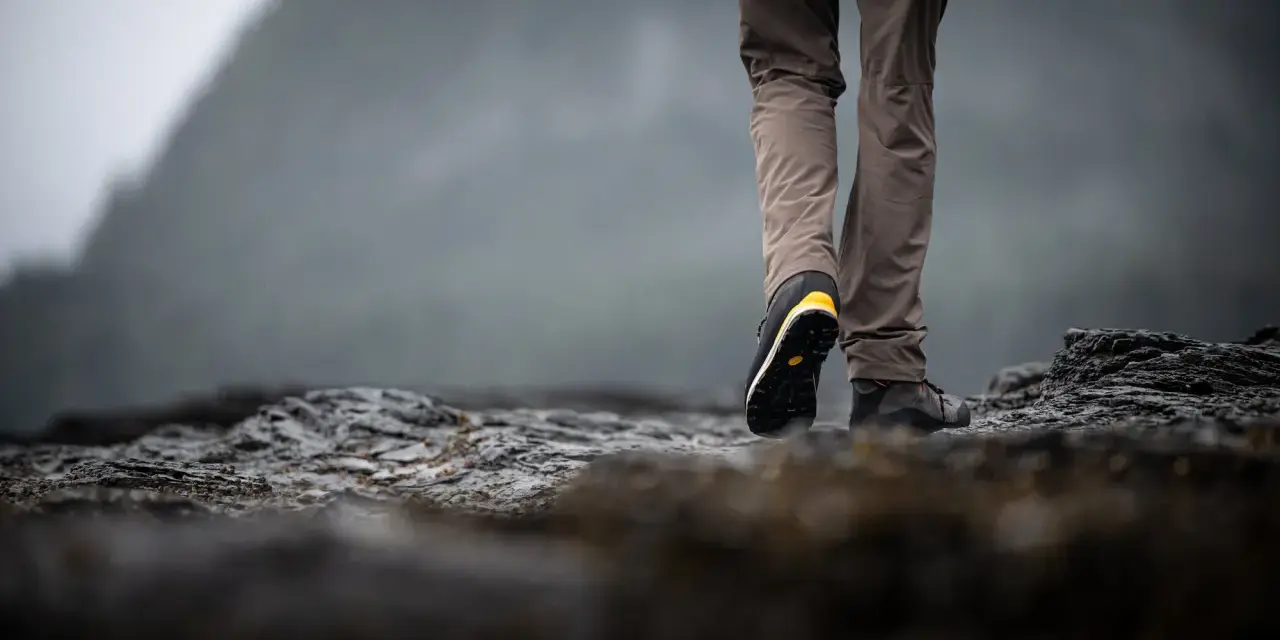
Choosing hiking boots is much easier once you stop shopping by appearance and start shopping by trail. The practical answer to how to choose hiking boots is to match the boot to the ground you actually walk on, the load you carry, and the kind of weather you face on UK hikes. I would look first at fit, then support, then waterproofing, because those three things decide comfort long after the box is opened.
The essentials at a glance
- Start with terrain. Flat, well-kept paths call for less boot than rocky, muddy, or steep ground.
- Fit comes before features. Your heel should stay locked down and your toes need room to move.
- Mid-cut boots suit many UK walks. They balance support, protection, and weight better than most extremes.
- Waterproofing helps in British weather. Just remember it can reduce breathability and slow drying.
- Try boots on with hiking socks. Test them later in the day and walk on an incline if you can.
- The lightest boot that still does the job is usually the right one.
Start with the trail you actually walk
Before I look at brands or materials, I ask a simpler question: what kind of walking will these boots really do? A boot that feels perfect on a shop floor can feel wrong on a muddy footpath, and a boot built for steep ground can be overkill for a Sunday loop with the family. In the UK, that distinction matters because conditions change quickly: wet grass, loose stones, clay mud, and long stretches of gentle trail are all common.
If most of your walking is on well-kept paths, canal towpaths, or easy countryside routes, you do not need the heaviest, stiffest boot on the shelf. If you regularly cross rough moorland, rocky hillsides, or steep descents, then I would lean toward a more supportive boot with a stronger sole and better foot protection. Pack weight matters too. A light day pack does not demand the same boot as a loaded overnight rucksack.
That is why I always start with use case rather than marketing language. Once the ground is clear, the right boot style becomes much easier to narrow down.
Pick the boot height and stiffness that fit your plans
Boot height is not just about looks. It affects ankle coverage, flexibility, weight, and how much structure you feel underfoot. I would treat it as a trade-off, not a status symbol.
| Boot type | Best for | What you gain | What you give up |
|---|---|---|---|
| Low-cut hiking shoe or low boot | Easy paths, dry weather, light day walks | Less weight, more flexibility, faster break-in | Less ankle coverage and less protection on rough ground |
| Mid-cut boot | Mixed terrain, hill walks, family hikes, variable UK weather | A strong balance of support, protection, and comfort | Heavier and less airy than a low-cut option |
| High-cut boot | Steeper hills, looser ground, heavier loads | More stability and better protection around the ankle | More weight, more stiffness, and often a longer break-in period |
| Mountain boot | Technical terrain, snow, scrambling, serious load carrying | Maximum support and control | Heavy, rigid, and unnecessary for ordinary walking |
For most UK walkers, a mid-cut boot is the sweet spot. It gives enough structure for uneven ground without feeling like a work boot on every outing. Some European brands also use stiffness ratings from B0 to B3; the higher the number, the stiffer and more supportive the boot tends to be. I treat that scale as a useful shorthand, not a universal rule, because brands do not all label their footwear the same way.
Once you know the boot family, the next decision is not the outsole or the membrane. It is fit.

Fit is the detail that decides comfort
No feature matters more than fit. A boot can have excellent grip and all the right technical claims, but if it rubs, pinches, or lifts at the heel, you will notice it within the first hour on the trail. I would rather wear a simpler boot that fits properly than a premium model that fights my foot every step of the way.
Here is the fitting checklist I use:
- Wear the socks you actually hike in, not thin everyday socks.
- Try boots later in the day, when your feet are slightly more swollen.
- Leave about a thumb’s width of space in front of your longest toe.
- Make sure your heel feels secure, with only minimal lift.
- Check the widest part of the foot for pressure points or pinching.
- Walk on an incline or stairs if possible, because downhill is where poor fit shows up fastest.
- If you use orthotics, make sure the insole is removable and the boot still feels stable with your inserts.
I pay close attention to toe room because downhill walking exposes a bad fit very quickly. If your toes touch the front on descent, the boot is too short, too shallow, or both. The same goes for heel slip: a small amount can be normal in a new boot, but persistent movement usually means the shape is wrong for your foot.
If a boot already feels wrong in the shop, I do not expect it to improve magically on the hill. That leads directly into the next filter, which is weather protection.
Waterproofing works only when it stays breathable
British weather makes this section more important than many people expect. In the UK, I would usually want some level of waterproof protection because damp grass, drizzle, and wet ground are part of normal walking, not a rare exception. A waterproof membrane helps keep rain and splash out while still allowing some moisture vapour to escape.
The catch is simple: waterproofing and breathability are always in tension. A boot that keeps water out very well may also run warmer and dry more slowly if moisture gets inside from the top. That is why I would not choose waterproofing on its own as the deciding factor.
Leather boots often feel durable and supportive, and many walkers like how they soften over time. Synthetic boots are often lighter and can feel less bulky, which is useful for mixed-use trips or easier walks. If your routes are mostly dry and warm, a more breathable boot may make more sense than a fully lined waterproof model. If you regularly walk in wet fields, autumn mud, or spring showers, waterproofing becomes the safer bet.
For especially wet conditions, gaiters can help by keeping water and debris from entering from above. That matters on boggy ground and long stretches of wet grass, where the problem is often not the membrane but what gets over the top of the boot.
Once the weather question is answered, I look at the sole and the stiffness underfoot, because that is where support really shows up.
Check the sole, midsole, and grip before you buy
The bottom half of the boot tells you a lot about how it will behave on the trail. The outsole is the rubber layer that touches the ground, and the lugs are the raised bumps that bite into mud or loose soil. Deeper lugs usually help more on soft, wet ground; shallower patterns can feel better on firmer surfaces.
The midsole sits above the outsole and controls flex. A stiffer midsole is useful on rough terrain, steep descents, and rocky ground because it spreads pressure more evenly underfoot. A softer midsole bends more naturally and is usually more comfortable on easy paths. A shank is a stiff insert in the sole that reduces twisting; that matters if you scramble, carry a heavier pack, or step on sharp, uneven rock. The heel counter is the reinforced part at the back of the boot that holds the heel in place and helps stop the rear of the boot collapsing.
My practical rule is straightforward: more technical terrain justifies more stiffness. If the sole is too soft, you may feel every stone on a long walk and tire earlier. If it is too stiff, the boot can feel clumsy on gentle routes. The best boot is the one that gives you enough structure without making easy ground feel like punishment.
That balance is easier to judge when you test the boots properly, not just stand in them for thirty seconds in a shop.
Test them like you mean to hike in them
I never trust a boot until I have moved in it. Standing still hides too much. A boot needs to feel good when the foot bends, when the heel lifts slightly, and when the body weight shifts forward on a slope.
- Put them on with your hiking socks and lace them as you would for a walk.
- Stand up, then walk around for several minutes.
- Try stairs or an incline if the shop allows it.
- Notice whether your toes slide forward on the descent.
- Check for rubbing around the ankle collar, tongue, and forefoot.
- Take them home and wear them indoors or on short local walks before committing to a full day out.
Break-in time depends on the boot. Some lighter pairs are comfortable quickly, while heavier leather boots may need a gradual break-in period. I would never go straight from box to long hike with a stiff boot. That is how hot spots, blisters, and regret show up early. A few short walks are enough to reveal whether the fit is improving or whether the boot is fundamentally wrong.
If you want a simple rule, it is this: the boot should work with your feet, not against them. That brings us to the mistakes I see most often.
Avoid the mistakes that waste a good pair of boots
The wrong boot is usually the result of one of a few predictable errors, and they are easy to avoid once you know what to look for.
- Buying for looks or brand name. A stylish boot that suits the wrong terrain is still the wrong boot.
- Ignoring foot shape. Narrow heels, wide forefeet, and high insteps all change what “good fit” means.
- Assuming the boot will stretch enough. Some materials soften, but a bad fit rarely becomes a good fit.
- Choosing too much boot for simple walks. Extra height and stiffness can make easy routes feel tiring.
- Forgetting the socks. Thin everyday socks often make the boot feel looser or harsher than it should.
- Overvaluing waterproofing. In warm weather, poor breathability can be more uncomfortable than a little dampness.
- Keeping worn-out boots too long. If the outsole is smooth or the midsole feels flat, the boot has reached the end of its useful life, often somewhere around 500 to 1,000 miles.
I would add one more mistake: not matching the boot to the kind of walking you do most often. If your calendar is full of Lake District ridge walks, muddy family rambles, and wet weekend camps, choose for that reality. Do not buy for the once-a-year trip you imagine doing someday.
That is why the final choice is usually simpler than people think, and the best shortlist starts with the trails you actually use.
A practical shortlist for most UK walkers
- Easy paths and short summer walks: a lighter low-cut boot or hiking shoe can be enough if you do not need much ankle support.
- General countryside walking: a mid-cut waterproof boot is the most versatile choice for many people in the UK.
- Muddy hills and mixed terrain: choose a boot with a firmer midsole, deeper lugs, and a secure heel hold.
- Heavy packs or technical ground: move toward a stiffer, more protective boot with more structure and better torsional support.
If I had to condense the whole process into one line, I would say this: start with the terrain, then choose the lightest boot that still gives you the fit, grip, and weather protection you need. That is the shortest version of how to choose hiking boots, and it works far better than chasing the most rugged-looking pair on the shelf.
