
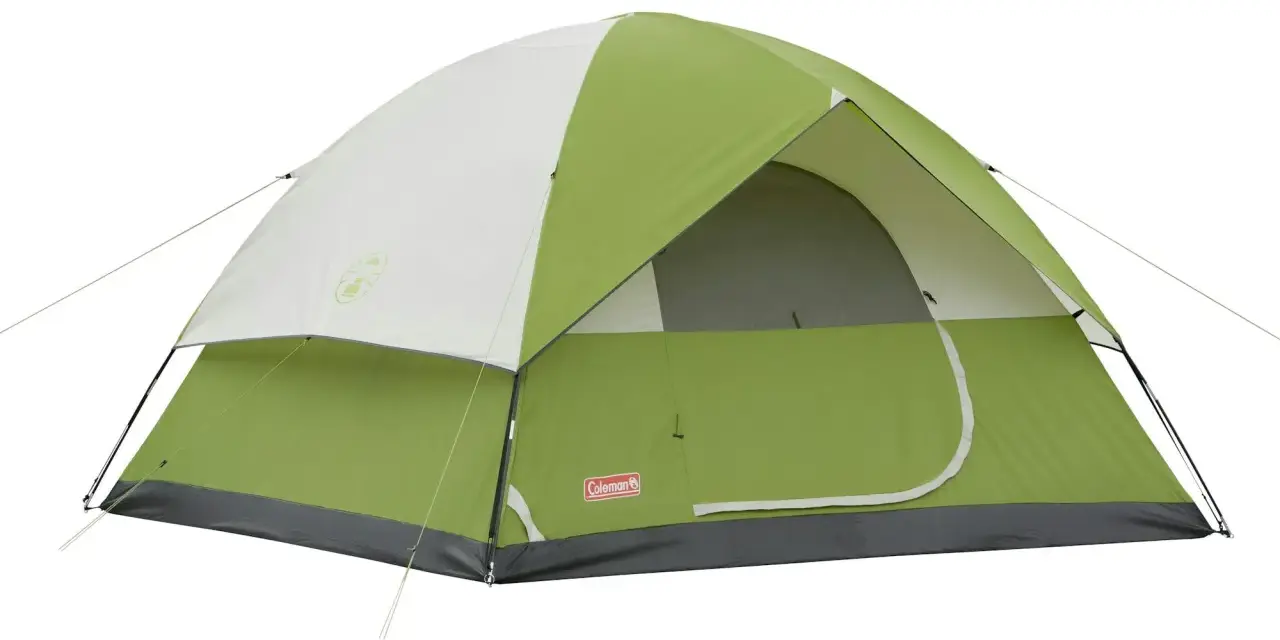
The Coleman Sundome 4-person tent dimensions are simple on paper, but the real question is how much usable space they give you on a campsite. I look at this kind of tent in three layers: footprint, headroom, and packed size, because that is what decides whether it feels roomy, merely workable, or cramped once mattresses and kit are inside. In this guide I break down the measurements, what they mean in practice, and how the 4-person model compares with the smaller and larger Sundome versions.
The essentials at a glance
- Floor size: 9 x 7 ft, or about 2.74 x 2.13 m.
- Peak height: 4 ft 11 in, or about 1.50 m.
- Floor area: 63 sq ft, which is enough for one queen airbed but not generous for four adults.
- Packed size: about 23 x 6 x 6 in, roughly 58 x 15 x 15 cm.
- Weight: 9.1 lb, about 4.1 kg, so it suits car camping rather than long carries.

The size figures that matter most
Coleman lists the 4-person model at 9 x 7 ft with a 4 ft 11 in centre height. That gives you 63 sq ft of floor space, which is enough for a queen airbed and a little gear, but not much spare room once people are lying down. The packed bag is about 23 x 6 x 6 in, so it is compact enough for a boot, but the tent itself is clearly aimed at car campers rather than backpackers.
| Measurement | Imperial | Metric | What it means in real use |
|---|---|---|---|
| Floor footprint | 9 x 7 ft | 2.74 x 2.13 m | Enough base space for a queen airbed or two single sleep mats |
| Centre height | 4 ft 11 in | 1.50 m | Sit-up height only, not standing room |
| Floor area | 63 sq ft | 5.85 m² | Comfortable for 2 adults, tight for 3, very tight for 4 |
| Packed size | 23 x 6 x 6 in | 58 x 15 x 15 cm | Easy to store in a car boot or campsite locker |
| Weight | 9.1 lb | 4.1 kg | Fine for car camping, not something I would carry far by hand |
Those are the hard numbers; the next question is whether that space is enough once mattresses and bags are inside.
What fits inside without feeling cramped
I would treat the Sundome 4 as a comfortable shelter for two adults with bags, or a tight fit for three people who pack light. A queen airbed fits because Coleman says so, but it uses most of the floor, and the sloping walls eat into the corners faster than people expect. In practice, that means the tent can feel bigger than the rating suggests when it is empty, then noticeably smaller as soon as sleeping gear goes in.
- Best-case comfort: 2 adults with a queen airbed or two single mats, plus a small amount of gear.
- Reasonable family use: 2 adults and 1 child, or 3 children on simple sleep mats.
- Borderline use: 3 adults, if most storage stays outside.
- Not realistic for comfort: 4 adults with luggage, unless you are only using it as an overnight shelter.
The important point is that a 4-person tent rating counts sleeping bodies, not elbow room. If you want space for wet boots, packs, and a bit of changing room, the usable capacity drops quickly. That is why the floor plan matters more than the number printed on the label.
That is why pitch allowance matters just as much as the floor plan.
How much space to leave on the pitch
The bare footprint is 2.74 x 2.13 m, but I would not plan to use the tent on exactly that rectangle. Guy lines, door access, and the slope of the dome all need breathing room, especially on smaller UK pitches where the pegged-out area can feel tighter than the listing suggests. If the ground is soft or uneven, the tent also performs better when you are not forcing the corners right to the edge of the pitch.
| Clear area | What it gives you | When I would use it |
|---|---|---|
| About 2.8 x 2.2 m | Just enough for the footprint | Only if space is extremely limited and the ground is flat |
| About 3.0 x 2.5 m | A workable setup | Basic car camping with minimal door clearance |
| About 3.5 x 3.0 m or more | Comfortable pitch space | What I would choose for most campsites |
If you are camping in wet weather, a little extra room is not a luxury. It helps the flysheet shed water properly, gives you space to unzip the door without bumping into mud, and makes it easier to keep bags under cover. The next step is seeing whether the 4-person model is the right middle ground compared with the other Sundome sizes.
How it compares with the smaller and larger Sundome sizes
Coleman’s own lineup shows the size jump clearly: the 2-person version is a compact solo or couple tent, the 4-person is the middle option, and the 6-person is the one that starts to feel genuinely roomy. Once you compare the numbers side by side, the choice becomes less about capacity claims and more about how much comfort you want to buy with a little extra weight.
| Model | Floor size | Centre height | Weight | Packed size | My read |
|---|---|---|---|---|---|
| 2-person | 7 x 5 ft (2.13 x 1.52 m) | 4 ft (1.22 m) | 6.82 lb (3.09 kg) | 23.23 x 5.75 x 5.75 in (59 x 14.6 x 14.6 cm) | Solo camper or a couple who can live light |
| 4-person | 9 x 7 ft (2.74 x 2.13 m) | 4 ft 11 in (1.50 m) | 9.1 lb (4.13 kg) | 23 x 6 x 6 in (58 x 15 x 15 cm) | Best balance of size and packability |
| 6-person | 10 x 10 ft (3.05 x 3.05 m) | 6 ft (1.83 m) | 15.18 lb (6.88 kg) | 26.38 x 7.87 x 7.87 in (67 x 20 x 20 cm) | Family camping if you want to sit up and spread out |
The 6-person version is the one that changes the feel of the tent most sharply. You are not just buying two extra places to sleep; you are buying enough height to sit more comfortably and enough floor area to keep kit away from your face. The last question is whether the 4-person size suits the kind of trips you actually take in the UK.
When this size makes sense on UK trips
For UK weekend trips, the 4-person Sundome makes sense when I want a compact car-camping tent that goes up fast, stays manageable in the boot, and can handle a couple plus gear without turning the campsite into a warehouse. It is also a sensible choice for festival weekends, short family breaks, and shoulder-season trips where you care more about efficiency than standing room.
Where it falls down is the same place many dome tents do: it feels smaller in bad weather. At 4 ft 11 in peak height, you can sit up, change clothes, and move around, but you cannot stand comfortably, and that matters more when rain keeps you inside for hours. If you know you will spend a lot of time under canvas, I would step up to the 6-person version rather than hope the smaller tent will feel bigger in practice.
For solo campers, the 4-person model is generous. For two adults, it is usually the sweet spot. For a young family, it works best when the sleeping plan is simple and the gear load is light. That brings me to the rule I use before I choose any dome tent at all.
The rule I use before I choose a dome tent
Whenever I look at a tent like this, I ignore the label first and ask two questions: how many people will really sleep here, and where will the bags go. If the answer is “two people and not much luggage”, the 4-person Sundome is a sensible buy. If the answer is “four people and a rainy evening indoors”, the 6-person model is the safer call. The dimensions are useful because they turn vague capacity claims into something you can picture before you get to the campsite.
That is the simplest way to avoid disappointment: compare the floor size, the height, and the packed bag, then choose for the way you actually camp rather than the number on the box.
