
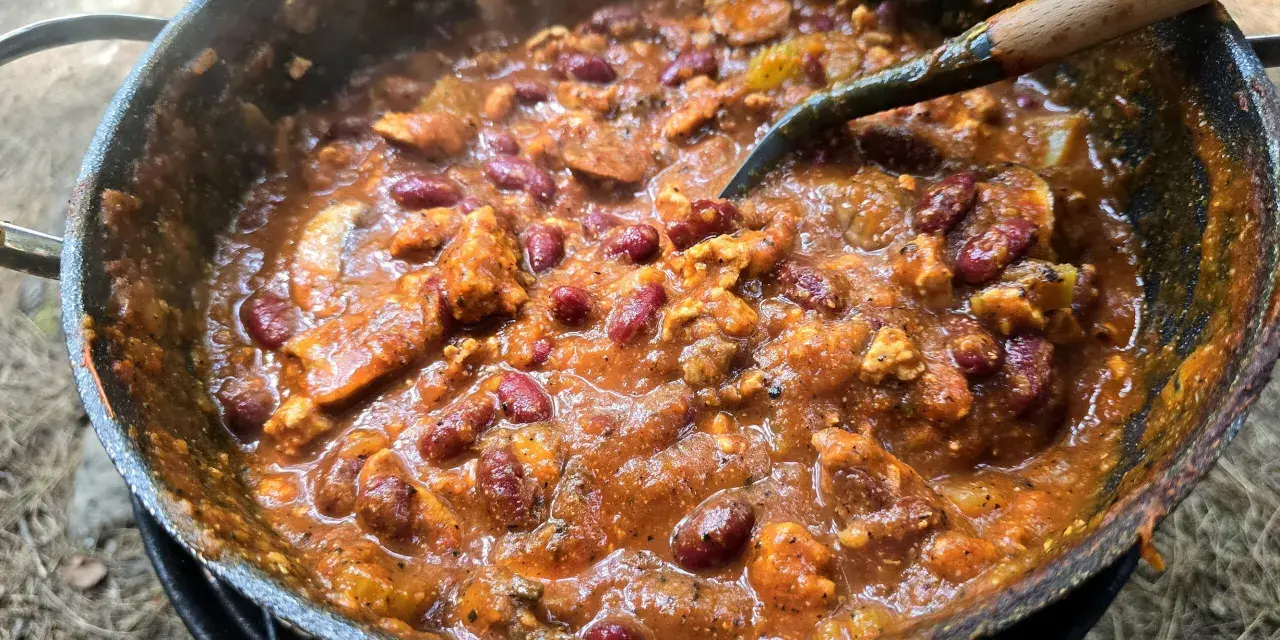
For camp cooking, a good Dutch oven chilli is one of those meals that feels larger than the effort behind it. The heavy pot gives you steady heat, the ingredients are easy to transport, and the flavour improves when the fire does not behave perfectly. In this guide, I focus on the practical parts that matter most: what to pack, how to build flavour, how to control the heat, and how to serve it well for family camping.
The practical version at a glance
- Use a 4.5 to 5.5 litre Dutch oven for a family of 4 to 6.
- Brown the mince first, then soften the onion and bloom the spices before adding liquid.
- Plan on 45 to 60 minutes of gentle simmering for a fuller, rounder flavour.
- For charcoal, a 12-inch pot starts at about 24 briquettes, with most heat underneath for simmering.
- Beans go in near the end if you want them to keep their shape.
- Serve it with bread, rice, jacket potatoes, or tortilla chips for an easy campsite meal.
Why a Dutch oven suits camp chilli so well
A Dutch oven is one of the few campsite tools that genuinely earns its space in the boot. Its thick walls hold heat evenly, the lid traps moisture without making the food watery, and you can cook it over embers, charcoal, or a low gas flame without losing control of the pot. That matters with chilli, because the best flavour comes from layering, not rushing.
Lodge Cast Iron’s recipe structure follows the same logic I use outdoors: brown the meat, soften the aromatics, bloom the spices, then simmer everything until the sauce settles into itself. The pot does the patient work for you, which is exactly what you want when the campsite is busy, the weather changes, or the family keeps wandering off for one more look at the lake.
That is also why this dish works better than many people expect in a camping setting. You are not relying on fancy timing or delicate technique. You are relying on steady heat, a bit of stirring, and a pot that can forgive small mistakes. From there, the ingredient list does most of the heavy lifting.
The ingredient list I would pack for the campsite
I like to keep the base familiar and the seasoning bold. The recipe below serves 4 to 6 people, depending on whether it is the main event or part of a wider camp meal.
| Ingredient | Amount | Why it is there |
|---|---|---|
| Beef mince | 750 g | Rich, sturdy base that holds up well over a long simmer. |
| Onion | 1 large, finely chopped | Adds sweetness and body once it softens. |
| Garlic | 3 cloves, minced | Sharpens the flavour and keeps the pot from tasting flat. |
| Red pepper | 1, diced | Brings a little freshness and colour. |
| Chilli powder | 2 tbsp | Main seasoning. Use less if yours is a strong blend. |
| Ground cumin | 2 tsp | Gives the dish warmth and depth. |
| Smoked paprika | 2 tsp | Helps the chilli taste more like camp cooking without needing extra smoke. |
| Dried oregano | 1 tsp | Keeps the seasoning rounded. |
| Tomato purée | 1 tbsp | Deepens the base before the tins go in. |
| Chopped tomatoes | 2 x 400 g tins | Provides the sauce and enough liquid for the simmer. |
| Kidney beans | 1 x 400 g tin, drained and rinsed | Classic texture and a little extra bulk for hungry campers. |
| Beef stock | 250 to 300 ml | Loosens the sauce without making it thin. |
| Cocoa powder or dark chocolate | 1 tsp cocoa or 20 g chocolate | Rounds off the acidity and adds a subtle richness. |
| Salt and black pepper | To taste | Needed at the end, not just at the beginning. |
If you want a lighter version, swap the beef for turkey mince or use half mince and half beans. If you want a more robust pot for a colder evening, add a second red pepper or a handful of sweetcorn near the end. I would keep the base simple, though. Camp food works best when the flavour is clear rather than crowded.
How I cook it over coals or a camp stove

This is the part that scares people less once they have done it once. The order matters more than the exact equipment, and the aim is the same whether you are over charcoal or on a gas stove: build flavour first, then hold a steady simmer.
- Heat the oil in the Dutch oven and brown the mince in batches. Do not crowd the pan, or the meat will steam instead of sear.
- Remove the mince if needed, then cook the onion and red pepper for 5 to 7 minutes until softened.
- Stir in the garlic, chilli powder, cumin, smoked paprika, and oregano. Cook for 30 to 60 seconds. This is the bloom stage, which means briefly toasting the spices in fat so they taste fuller.
- Add the tomato purée and cook for another minute, then return the beef to the pot.
- Pour in the tomatoes and stock. Scrape the bottom of the pot well, because those browned bits carry a lot of flavour.
- Bring the pot to a gentle simmer, not a hard boil, then cook for 45 to 60 minutes with the lid slightly ajar.
- Stir in the kidney beans for the last 15 minutes so they stay intact.
- Finish with cocoa powder or dark chocolate, then taste and adjust salt, pepper, or a splash more stock if needed.
I keep a little stock back until the end because camp heat is rarely as tidy as kitchen heat. If the sauce tightens too quickly, a small splash saves it. If it seems loose, just remove the lid for the final 10 to 15 minutes and let it reduce naturally.
Heat control that keeps the pot steady
Campfire cooking usually goes wrong for one of two reasons: too much heat or too little patience. Camp Chef suggests a useful starting rule for charcoal, which is to take the size of the oven in inches and multiply it by two to estimate the briquette count. For a 12-inch oven, that gives about 24 briquettes. For simmering, most of that heat should sit underneath the pot rather than on top.| Dutch oven size | Starting briquettes | Practical use |
|---|---|---|
| 10-inch | 20 | Small family batch or side meal. |
| 12-inch | 24 | Best all-round size for 4 to 6 people. |
| 14-inch | 28 | Useful for a bigger group or a longer simmer. |
Those numbers are a starting point, not a law. Wind, cold air, damp ground, and altitude all change the result. If the campsite is wet, do not put the pot directly on the ground, because you lose heat fast. If the flame or coals are too aggressive, move a few briquettes away or lower the gas slightly until you get a lazy bubble rather than a rolling boil.
When I cook outdoors, I also rotate the pot every 10 to 15 minutes if the heat source is uneven. That small habit prevents one side from scorching while the other side barely moves. It is the kind of unglamorous detail that makes the final bowl taste intentional instead of accidental.
Serving ideas and easy variations for families
At camp, the best serving plan is the one that keeps everyone fed without creating extra washing up. I usually serve chilli with crusty bread, rice, or jacket potatoes. Tortilla chips work well too, especially if the group includes children who prefer a crunchier meal.
- For a classic topping set, use grated cheddar, sour cream, chopped spring onions, and a few jalapeños on the side.
- For younger eaters, keep the pot mild and let adults add hot sauce at the table.
- For a smokier version, add extra smoked paprika or a teaspoon of chipotle paste.
- For a meat-free pot, swap the mince for mushrooms, sweet potato, and two tins of mixed beans.
- For a shorter campsite cook, make the base at home and finish the last 20 minutes over the fire.
That last option is especially useful on a family trip, because it turns the evening into a relaxed finish rather than a full cooking session. You get the smell, the atmosphere, and the final texture from the campfire without spending the whole evening tending the pot.
What I would pack differently on a windy British pitch
If I were cooking this on a typical British campsite, I would prepare a few things before leaving home. I would pre-measure the spices into a small jar, drain the beans before packing them, and carry an extra 250 ml of stock because weather often demands a little more liquid than expected. I would also bring heatproof gloves, a long spoon, and a trivet or stand so the pot sits securely on a dry surface.
I would not overcomplicate the recipe. A dependable camp chilli should taste like proper food, not a stunt. The goal is a deep, savoury bowl that can survive a breezy evening, feed a mixed-age group, and still taste better when someone asks for seconds. That is the version of Dutch oven chilli I trust when the timetable slips, the fire changes shape, and dinner still needs to land well.
If you remember just one thing, make it this: build flavour in stages, then let the pot simmer gently until the sauce tastes unified rather than separate. That small discipline is what turns a basic campsite meal into something people actually talk about on the walk back to the tent.
