
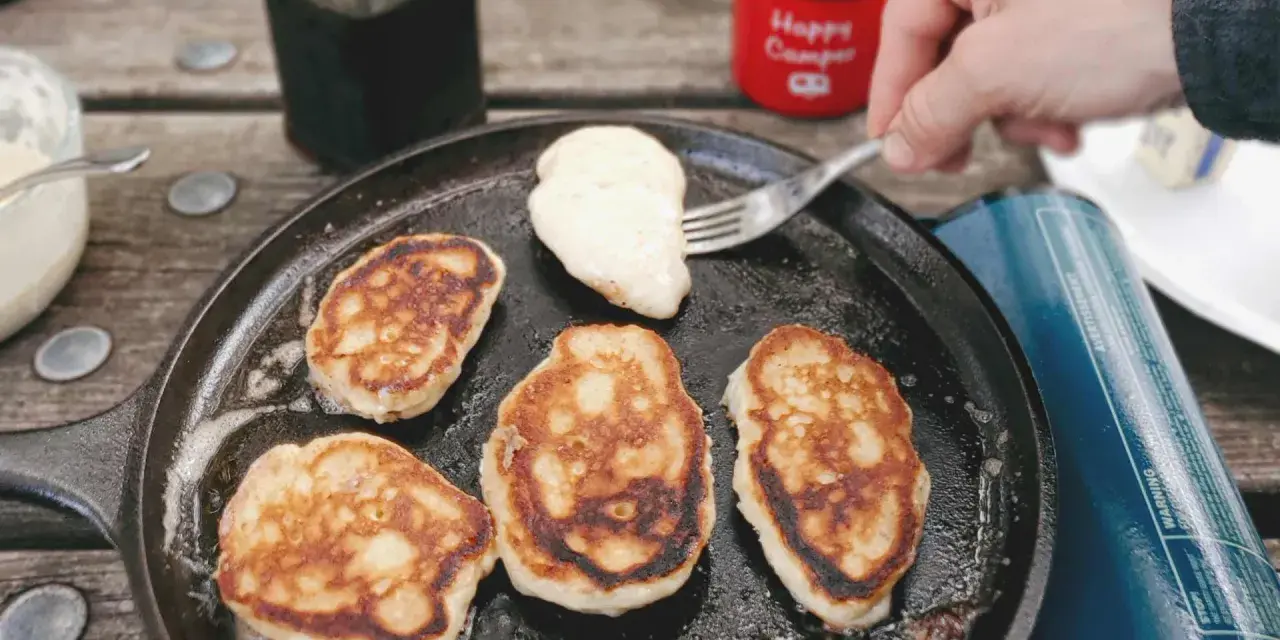
Deciding what to eat when camping is mostly about protecting your energy, your cooler space, and your patience. I like to build every menu around three things: food that survives the journey, food that cooks fast on a stove or fire, and one or two meals that can rescue the trip if the weather turns. That approach works especially well for British weekends, where you may have sunshine at breakfast, drizzle by lunch, and a damp fire pit by dinner.
The best camping menu is simple, sturdy, and easy to cook outdoors
- Pack a mix of shelf-stable food, chilled basics, and fresh items that can be eaten early.
- Choose meals that need one pan or one pot, not a full kitchen.
- Use a cool box for short trips, but do not treat it like a long-term fridge.
- Keep at least one no-cook meal in reserve for wet weather or a late arrival.
- Plan around low washing-up, because campsite cleanup always takes longer than people expect.
How I decide what belongs on a campsite menu
A good campsite menu has less to do with fancy recipes and more to do with logistics. I ask four questions before anything goes in the basket: will it survive the drive, can I cook it in 15 minutes or less, will it feed everyone without creating a sink full of dishes, and can I store the leftovers safely?
That is why camping food usually falls into a few clear groups. The table below is how I sort it when I want meals to stay practical rather than aspirational.
| Food group | Why it works at camp | Good examples | Best timing |
|---|---|---|---|
| Shelf-stable staples | They travel well, store easily, and can save a meal if plans change. | Pasta, couscous, rice pouches, oats, crackers, tins of beans, chickpeas, tuna, peanut butter | Any day, especially the first night or a rainy one |
| Chilled basics | They add protein and freshness, but only if you keep them properly cold. | Cheddar, butter, eggs, yoghurt, sausages, halloumi, cooked meat, milk | Early in the trip or when you have a good cooler |
| Fresh produce that travels well | It gives you colour, crunch, and something light between heavier meals. | Apples, oranges, carrots, peppers, cucumbers, cherry tomatoes, bananas | Breakfast, lunch, or the first two days |
| Treats and morale food | They make the trip feel fun without adding much work. | Biscuits, flapjacks, chocolate, marshmallows, trail mix, jam tarts | After a walk, around the fire, or when the kids get restless |
My rule is simple: the best camping food is the food that disappears into the trip instead of dominating it. Once that is clear, the next question is which actual foods deserve space in the bag and which can stay at home.

The best foods to pack for camping
When I pack for a campsite in the UK, I lean toward food that can handle a bit of movement, a bit of heat, and a bit of rain. I also try to choose ingredients that can play more than one role, because the best camping cupboard is the one that does not force every meal into a separate shopping trip.
Breakfasts that work without fuss
- Porridge oats are cheap, compact, and good in cold weather. Add dried fruit, honey, or a spoon of peanut butter and breakfast is done.
- Beans on toast is still one of the strongest campsite breakfasts because it is warm, filling, and difficult to mess up.
- Granola or muesli is ideal if you want a no-cook option with UHT milk or yoghurt.
- Eggs and bacon make sense when you have a proper cooler and want a bigger breakfast on day one or two.
Lunches and snacks that travel well
- Wraps beat sandwiches in bad weather because they pack tighter and do not fall apart as quickly.
- Cheddar, hummus, and sliced vegetables give you a lunch that feels fresh without requiring much prep.
- Oatcakes, crackers, and breadsticks are useful because they survive transport better than soft bread.
- Apples, carrots, nuts, and dried fruit are the snacks I reach for when I want something easy between activities.
Dinners worth cooking after a long day
- One-pot pasta is hard to beat: quick, cheap, and easy to scale up for a family.
- Couscous with vegetables and halloumi is one of the best low-effort meals because couscous only needs hot water and a few minutes to swell.
- Chilli with rice gives you a proper evening meal with very little technical skill.
- Sausages with beans or lentils work well when you want something hearty but not complicated.
Treats that lift the whole trip
- Marshmallows are the obvious fire-side option, and they still earn their place because children never get bored of them.
- Flapjacks and biscuits are better than fragile bakery cakes because they survive packing far more easily.
- Chocolate is fine if you store it sensibly, but I would not leave it sitting in a hot tent all afternoon.
If you are camping with children, I would favour finger foods, wrap-based meals, and ingredients that can be eaten in stages. That keeps mess low and avoids the common problem of preparing a beautiful meal that nobody wants to sit still long enough to finish.
Simple meals that work at breakfast, lunch, and dinner
The easiest camping menus are the ones built from a few reliable templates. I want meals that can be assembled fast, eaten outside without a lot of ceremony, and repeated without anyone feeling short-changed. In practice, that usually means a mix of warm breakfasts, packable lunches, and one-pan dinners.
Breakfast ideas that start the day properly
- Porridge with dried fruit and nuts is my first choice for chilly mornings because it is hot, filling, and ready in minutes.
- Beans on toast with grated cheddar is a classic for a reason: it uses cheap ingredients and gives you enough energy for a walk or a beach day.
- Eggs with mushrooms and toast are worth doing if you have a pan and do not mind washing it straight after.
Lunch ideas that do not collapse in a backpack
- Cheddar and chutney wraps are simple, tidy, and easy to eat with one hand.
- Tuna, sweetcorn, and cucumber sandwiches work best when you make them shortly before eating, not the night before.
- Soup in a flask with bread rolls is underrated in British weather because it gives you a warm lunch without setting up a full cooking station.
Read Also: Dutch Oven Pizza Camping - Perfect Pizza, Every Time
Dinner ideas that stay realistic after a long day
- One-pot sausage and bean stew is heavy enough for colder evenings and flexible enough to absorb whatever vegetables you have left.
- Tomato pasta with onions and peppers is the kind of meal I would cook on night one because it uses ingredients that are easy to pack and easy to finish.
- Chilli with rice or jacket potatoes is my favourite family option when I want one pot to feed everyone without too much ceremony.
- Couscous with roasted vegetables and feta is lighter but still satisfying, which makes it a good choice after a long walk.
Most of these meals can be ready in 10 to 20 minutes, and that matters more than people think. Once hunger meets poor weather, the simplest dinner usually becomes the best one.
Foods I would skip on most camping trips
Some foods look fine on paper but become annoying the moment you leave the kitchen. I am much more selective on camp trips than I am at home, because a bad ingredient choice can waste cooler space, create extra washing up, or spoil before you need it.
- Cream-heavy dishes are risky unless you have proper refrigeration and a short trip.
- Very delicate salads tend to wilt, bruise, or turn soggy before you get to them.
- Recipes with long ingredient lists are usually not worth the effort when the weather is moving and the light is fading.
- Loose berries and soft fruit are better for day one than day three, unless you pack them carefully.
- Anything that needs several pans is usually more trouble than reward on a basic stove.
There are exceptions, of course. If you are staying somewhere with electric hook-up, a camping fridge, and a proper table, you can stretch the menu further. I still would not overcomplicate it, because campsite cooking is better when it feels relaxed rather than chore-like.
How to keep camping food safe in UK conditions
Food safety is the part of camp cooking that people underestimate most often. The Food Standards Agency advises keeping chilled food below 5°C, and in practice that means a cool box is useful for short trips but not a true substitute for a fridge if you are away for longer.
- Keep raw and ready-to-eat food separate so juices from meat do not get onto bread, salad, or cheese.
- Store raw meat at the bottom of the cool box in sealed containers so leaks cannot spread.
- Use ice packs or frozen bottles to hold temperature and reduce wasted space.
- Open the cool box less often than you think you need to, because every quick peek lets warm air in.
- Bring wipes, hand soap, and a clean board so you can keep surfaces safer without much effort.
- Cook leftovers thoroughly or avoid them if you cannot keep them properly chilled after the meal.
I also prefer food that can survive a little flexibility. If the sun comes out, the tent warms up faster than you expect. If the meal has been sitting around longer than it should, I do not try to rescue it with optimism. That is not being fussy; it is just good campsite discipline.
The two-night menu I would pack without overthinking it
If I were planning a straightforward family trip, this is the kind of menu I would use. It keeps shopping simple, uses the same ingredients more than once, and leaves room for weather changes without turning the whole trip into a cooking project.
| Time | Meal | Why it works |
|---|---|---|
| Friday arrival | Wraps, fruit, crisps, and a hot drink | No real cooking, so you can settle in quickly |
| Saturday breakfast | Porridge or beans on toast | Warm, filling, and easy to scale for a family |
| Saturday lunch | Cheese and hummus wraps with carrots and apples | Portable enough for a day out and simple to prep |
| Saturday dinner | Chilli with rice or a one-pot pasta | One pan, few ingredients, low stress |
| Sunday breakfast | Eggs, toast, or granola with fruit | Uses whatever is left without forcing a full shop |
| Sunday lunch | Leftovers, soup, or sandwiches | Clears the cool box and reduces waste before heading home |
That is the model I keep coming back to because it balances comfort, speed, and safety. For me, good camping food is not about making the campsite feel like a restaurant; it is about making every meal easy enough that people actually enjoy being outside together.
