
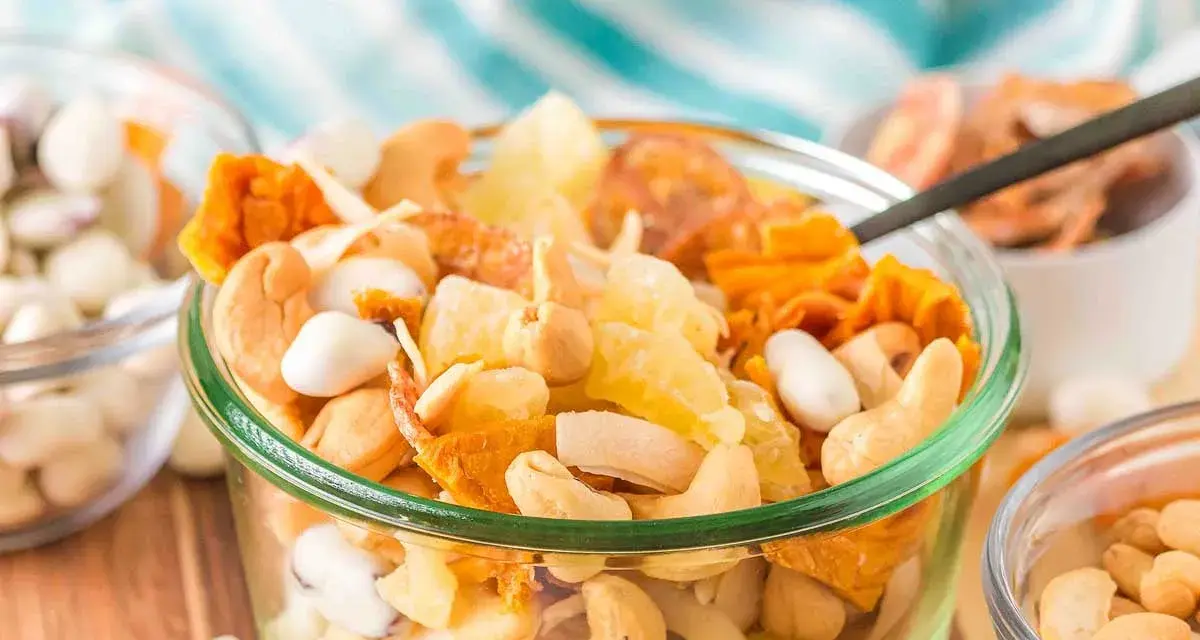
A good campsite snack should be bright, filling, and easy to carry, and this tropical trail mix recipe does exactly that. I like it because it brings together dried mango, pineapple, banana chips, coconut, and roasted nuts without turning sticky or heavy in a rucksack. In the sections below, I’ll show you how to balance the ingredients, make it in minutes, pack it for a weekend away, and adapt it for different tastes and diets.
The easiest way to make it work is to keep the fruit in check and the texture varied
- Start with roughly 2 parts nuts to 1 part dried fruit so the mix stays filling and not overly sweet.
- Use chopped dried mango, pineapple, and banana chips for tropical flavour without oversized bits.
- Unsweetened coconut chips give flavour fast, but they also keep the mix from tasting like sweets.
- For warm-weather camping, skip large amounts of chocolate because it softens quickly.
- Pre-portion the mix into small bags or tubs if you want cleaner packing and fewer crushed pieces.
What makes a good campsite snack with tropical flavour
For camp cooking, I want snacks that do three things at once: travel well, deliver quick energy, and still taste good after an hour in a backpack. Trail mix is ideal for that, but not every version is equal. If you load it with too much fruit, it becomes sticky and sweet. If you overdo the nuts, it can feel dry and a bit monotonous. The sweet spot is a mix that gives you crunch first, then chew, then a little salt to pull everything together.
I usually treat a serving as 50 to 60 g for an adult, which is enough to take the edge off hunger without replacing a proper meal. That matters on a camping trip, where snacks often bridge the gap between breakfast, a long walk, and a late dinner. The point is not to build a dessert in a bag. The point is to make something you will actually reach for when you are tired, slightly hungry, and away from the fridge. That balance starts with choosing the right ingredients.

Ingredients that keep the mix bright and portable
I build the mix around ingredients that taste vivid but still behave well outdoors. The batch below makes about 10 small portions, which is handy if you are feeding a family or want to pack a few days at a time.
| Ingredient | Amount | Why I use it | Easy swap |
|---|---|---|---|
| Roasted salted cashews | 120 g | Creamy crunch and a salty base that keeps the fruit from tasting flat | Almonds or peanuts |
| Macadamias | 100 g | Rich flavour and a softer bite that feels more luxurious | Extra cashews or almonds |
| Dried mango, chopped | 80 g | Sweet, chewy tropical flavour | Dried apricots or papaya |
| Dried pineapple, chopped | 80 g | Bright acidity that wakes up the whole mix | Freeze-dried pineapple |
| Banana chips | 50 g | Classic trail mix texture with a familiar flavour | Plantain chips or toasted oats |
| Unsweetened coconut chips | 40 g | Strong tropical aroma without making the mix sugary | Lightly toasted shredded coconut |
| Yoghurt-coated raisins or dark chocolate chips, optional | 20 g | A small treat element for variety | Leave them out in hot weather |
If you want the mix to feel more substantial, add 30 to 40 g of roasted pumpkin seeds and reduce the fruit a little. That keeps the texture interesting and adds a bit more staying power, which is useful on longer walking days. Once the ingredients are balanced on paper, the real difference comes from how you combine them.
How I make the mix in under 10 minutes
I keep the method simple because trail mix should never feel fussy. The only detail that really matters is dryness. Warm ingredients or damp fruit will shorten the life of the mix, so I let anything toasted cool fully before I combine it.
- Chop large dried fruit into bite-size pieces. If the mango or pineapple comes in thick strips, I cut it down so every handful feels balanced.
- If the nuts are plain, I toast them lightly in a dry pan or in the oven at 160°C for about 6 to 8 minutes, just until fragrant. This step is optional, but it deepens the flavour.
- Let the nuts cool completely before mixing. That is the part people skip, and it is the part that stops the fruit from softening too early.
- Combine the nuts, fruit, banana chips, and coconut chips in a large bowl.
- Add yoghurt-coated pieces or chocolate last, if you are using them, so they do not break up as much.
- Taste a small handful and decide whether you want a pinch of salt. If the nuts were unsalted, I usually add it.
- Portion the mix into small tubs or reusable bags, then seal them well.
That is the whole job. The value is not in technique, it is in restraint. A good trail mix should feel assembled, not overloaded. From there, the useful question is how to adapt it without losing the character of the mix.
Smart swaps for different campers
Every group camps differently, so I do not treat the ingredients as fixed. The right version depends on who is eating it, how warm the weather is, and whether you want something lighter, richer, or more filling. Some swaps make sense immediately. Others sound good but change the texture too much.
| Goal | What to change | Why it helps |
|---|---|---|
| Lower sugar | Use more nuts and seeds, and swap some dried fruit for freeze-dried fruit | It keeps the tropical flavour but reduces stickiness and sweetness |
| Nut-free | Use roasted pumpkin seeds, sunflower seeds, and more coconut chips | It keeps the crunch while removing nuts completely |
| More filling | Add roasted soy nuts, granola clusters, or toasted oats | It makes the mix feel more like a real snack between meals |
| Heat-proof | Leave out yoghurt pieces and chocolate | It stops the mix from melting or clumping in warm kit |
| More premium | Use macadamias, freeze-dried pineapple, and unsweetened coconut chips | It gives the mix a cleaner, brighter tropical finish |
For families, I would also chop larger nuts if younger children are eating the mix, simply because smaller pieces are easier to handle in the car, at the tent, or on a picnic blanket. I also prefer seed-heavy versions when I know the snack will sit in a warm bag all afternoon. Once the mix is built to suit the group, the next question is how to keep it in good shape outdoors.
How to pack and store it on a campsite
The biggest enemy of trail mix is moisture, followed closely by heat. If you keep it dry, it stays crisp. If you pack it badly, the fruit softens, the coconut loses its aroma, and the nuts stop tasting fresh. That is why I like to portion the mix before I leave home rather than trying to scoop it from a big jar at the campsite.
- Use airtight containers or zip bags with as much air pressed out as possible.
- Pack 40 to 50 g portions for easy snacking and less waste.
- Keep the mix away from damp towels, hot pans, and open kettles.
- If you are taking it on a warm day, leave chocolate and yoghurt pieces out until the last minute, or keep them in a separate bag.
- Store it in the driest part of your rucksack rather than in a cooler box that may be opened often.
In a cool, sealed container, I am happy to keep a dry batch for a couple of weeks, but I make it sooner for trips that involve heat, humidity, or lots of opening and closing. The texture tells you everything. If the fruit starts to feel tacky, or the coconut stops smelling fresh, it is time to make a new batch. Once it is packed properly, the final decision is when to use it and what to pair it with.
When I reach for it and what it pairs well with
I do not use trail mix as a meal replacement, and I would not recommend pretending it is one. What it does well is fill the gap between meals. It is useful on a morning walk, after setting up the tent, or during the slow stretch before dinner when everyone is getting hungry but the stove is not ready yet.
My favourite moments for this mix are the ones where speed matters more than ceremony. A small handful with a flask of tea works after a chilly coastal walk. A portion in a lunchbox is better than most packet snacks if you are heading out for the day. If you are using it at breakfast, I like it sprinkled over porridge or yoghurt when refrigeration is available, because the tropical fruit gives simple oats more life without much effort.
It also pairs well with plain foods. An apple, a biscuit, or a boiled egg can round out the snack without making it heavy. That is why I think the simplest version is often the best one for a weekend away.
The version I would pack for a family weekend away
If I were packing for a family trip, I would make the 490 g base batch, split it into ten small portions, and keep one plain bag aside for anyone who wants less sweetness. That gives me a snack that survives transport, works after a long walk, and still tastes like something I actually want to eat.
The version that disappears first is usually the one with unsweetened coconut, chopped mango, pineapple, cashews, and just a small handful of yoghurt pieces or dark chocolate. That combination keeps the tropical flavour front and centre, while the salt and nuts stop it from feeling like dessert. For the neatest results, make the mix the day before you leave, let it rest overnight in a sealed container, and pack a second empty bag for leftover crumbs or refills.
That tiny bit of planning makes a surprising difference when you are cooking outdoors and want snacks that stay tidy, fresh, and easy to share.
