
Sleeping in or next to a vehicle can turn a short break into something surprisingly flexible, and car camping is one of the easiest ways to travel light without giving up a proper night’s rest. The trick is not buying more gear than you need; it is choosing the right place, controlling moisture and temperature, and building a sleep setup that works in a British climate. In this guide I cover the practical decisions that matter most, from legality and comfort to food, water, and the mistakes that ruin a first night.
The practical basics at a glance
- Start with a legal overnight spot, ideally a formal campsite or somewhere with clear permission.
- Comfort comes from a flat sleep surface, decent bedding, and a small amount of ventilation.
- In the UK, rain, condensation, and damp kit are more likely to spoil the trip than cold alone.
- Pack light, but do not skip water, a head torch, window covers, and a simple food plan.
- For a first outing, keep the route short and the setup simple so you can focus on what actually works.

Where I would stay in the UK
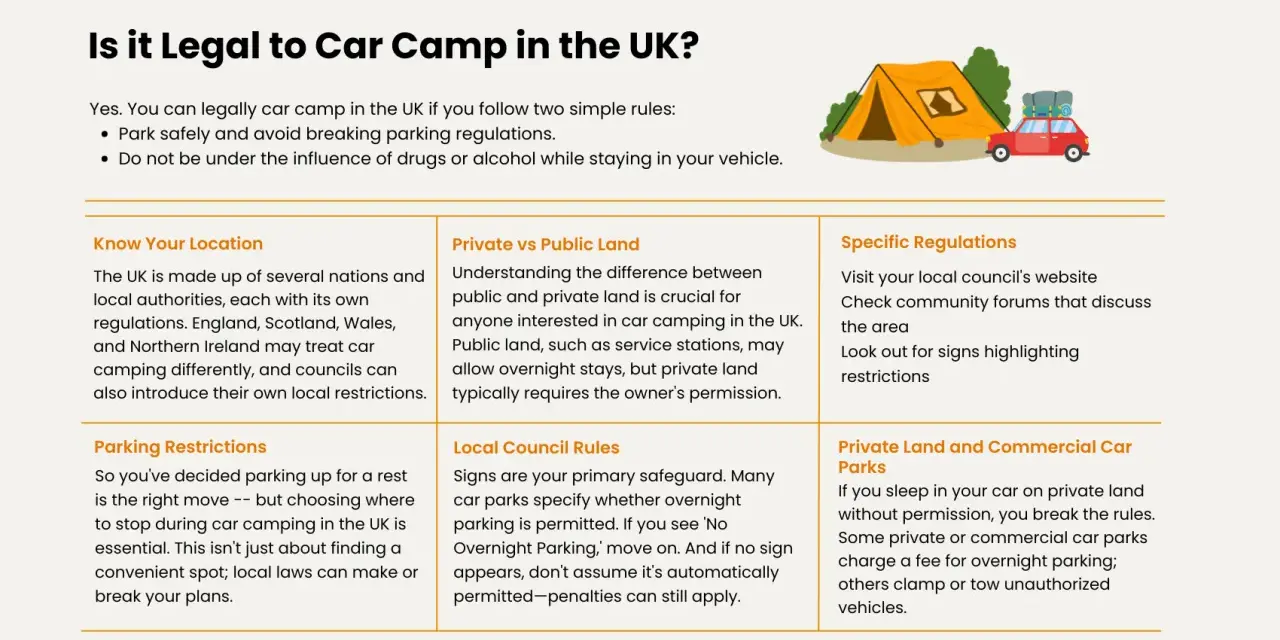
The first decision I make is not about bedding or gadgets. It is about where I am actually allowed to sleep. In the UK, I would default to a proper campsite, a landowner-approved spot, or another location with overnight permission before I trust a lay-by, roadside verge, or random car park. Lake District National Park is explicit that car parks and roadside verges are not overnight spots, and Dartmoor National Park still restricts sleeping in vehicles even where some forms of backpack camping are allowed.
That matters because the safest, calmest trip is usually the one that begins with a clear overnight arrangement. If I am travelling with family, I find that a campsite with toilets, level ground, and a bit of space for a small table or awning makes the evening feel easy instead of improvised. For a solo night, a simple pitch with basic facilities is often enough. I do not need luxury; I need certainty.
| Option | Best for | Why I use it | Watch-outs |
|---|---|---|---|
| Formal campsite | First trips, families, bad weather | Clear rules, level pitches, showers, and toilets | Costs more and books up quickly on bank holidays |
| Private land with permission | Quiet rural overnights | More privacy and less pressure | Get permission before you arrive and leave no trace |
| Vehicle-friendly stopover | Short one-night stays | Convenient for routes and attractions | Check that sleeping in the vehicle is actually allowed |
| Car park or verge | Usually none | Only if the site specifically says overnight stays are permitted | Often restricted, noisy, and a poor bet for a peaceful night |
If I am unsure, I choose the more boring option. That usually saves time, avoids a conversation with a ranger or warden, and makes the rest of the trip more relaxed. Once the place is sorted, the next question is how to make the sleeping space actually work.
How I make the sleeping space comfortable enough for a full night
I am pretty strict about this part, because comfort in a small vehicle comes from removing friction, not from piling on random extras. A flat surface, sensible bedding, and a little planning do far more than a pile of soft-looking kit that shifts around all night.
Start with a flat base
My preference is a surface that is as level as possible. Folded seats can work for one night, but they rarely feel good for a whole weekend. An inflatable mattress, boot platform, or simple foam layer that bridges the seat gaps usually makes a much bigger difference than a fancy pillow. If the ground or parking area slopes, I aim to keep my upper body slightly higher rather than sliding into an awkward position during the night.
Control ventilation and privacy
Ventilation is not optional. A car full of people, breathing, damp clothes, and wet air will fog up quickly. I like window covers because they solve two problems at once: they cut light and help with privacy. A small protected gap for airflow is still useful, especially in mild weather, but I never leave the car open enough to invite rain or insects inside.
Read Also: Camping Packing Hacks - Pack Smarter, Stress Less
Choose bedding for the real forecast
For most of the year in the UK, a three-season sleeping bag or quilt is the safer bet than a summer-only setup. I also keep a dry base layer just for sleeping. That sounds minor, but it is one of the easiest ways to stay warm without overheating. If I expect a cool night, I would rather add a thin blanket or extra layer than try to sleep in fully padded outdoor clothing.
Little details matter here too: earplugs help near roads or popular sites, a sleep mask is useful in longer summer daylight, and a microfibre cloth is worth keeping close because condensation always shows up at the least convenient time. Once the bed is sorted, packing becomes easier because you know what the trip actually needs.
What I pack for a simple but workable setup
The smartest packing list is usually the one that solves the most annoying problems first. I do not try to bring everything; I bring the items that protect sleep, food, and basic comfort. That keeps the boot usable and stops the trip from feeling like a moving storage unit.
For a basic overnight budget, I would allow roughly £80 to £200 if I already owned a few essentials, and more if I needed to buy sleep gear from scratch. A more comfortable setup can push beyond £300 once you add a mattress, storage, covers, power, and cooler space. Those numbers move around with season and quality, so I treat them as planning ranges rather than fixed prices.
- Sleeping gear - mattress or foam base, sleeping bag or quilt, pillow, and a dry layer for bed.
- Privacy and light control - window covers, eye mask, and a head torch with a red light mode if possible.
- Power - a 10,000 to 20,000 mAh power bank is a sensible baseline for phones and small devices.
- Water - I budget at least 2 litres per person per day for drinking, and closer to 3 litres if the weather is warm or I plan to cook.
- Food storage - a cooler bag or small cool box for anything that needs to stay cold overnight.
- Organisation - soft storage boxes, rubbish bags, and a simple wash kit keep the interior tidy.
- Safety and comfort extras - a first aid kit, charged torch, spare socks, and weather-appropriate outer layers.
If I am travelling as a pair or with children, I add one more item: a small folding chair or two. It sounds trivial, but it creates a clean, dry place to sit while the car stays organised. That extra bit of order makes a wet evening far less irritating. From there, the biggest remaining problem is usually the weather itself.
Why rain and condensation matter more than people expect
British weather does not need to be dramatic to be inconvenient. A damp jacket thrown over a seat, wet boots in the footwell, or a closed cabin full of breath will quickly create condensation. By morning, that moisture can make bedding clammy, windows cloudy, and everything feel colder than the forecast suggested.
The fix is mostly disciplined habits. I put wet gear in a separate bag, I keep a cloth handy for the windows, and I avoid sleeping with soaked outer layers inside the main sleeping area. If I arrive in rain, I dry what I can before bed instead of letting the car become a storage locker for damp fabric.
I also avoid shortcuts that sound clever but are not worth the risk. I do not run a fuel-burning stove or heater inside the vehicle, and I do not leave the engine idling just to warm the cabin. If I need warmth, I use insulation, dry layers, and a proper sleep system instead. That approach is calmer, safer, and usually better for sleep anyway.
For trips longer than one night, I like to air the car out early in the morning, wipe the most obvious moisture from the glass, and let the bedding breathe before it goes back into storage. The result is a space that stays usable instead of slowly turning musty. Once that habit is in place, food and washing up become the next big quality-of-life issue.
Food, water, and cleanliness without turning the car into a mess
I keep meals simple because complicated cooking inside a small vehicle becomes clutter fast. One easy hot meal, one cold meal, and a straightforward breakfast are usually enough for an overnight or weekend stay. That is especially true if I am trying to move between different parts of the country rather than setting up a full base camp.The simplest system is often the best one:
- Bring water in clearly labelled bottles or a small container.
- Pack foods that do not need lots of prep, such as wraps, fruit, oats, soup, pasta, or simple one-pan meals.
- Keep strong-smelling food sealed so the car does not feel like a pantry by morning.
- Use one bag for waste and empty it before it becomes a habit.
- Keep washing-up kit separate from sleeping kit so everything stays dry.
If I know I will be away from taps for a while, I plan water more carefully than beginners usually do. Two litres per person per day is the minimum I would be comfortable with for drinking in mild weather, and a bit more gives me room for cooking and cleaning without rationing too hard. Clean hands, clean cups, and a tidy food area all make the trip feel more settled.
Once the food and water routine is under control, the remaining mistakes are usually avoidable ones, which is why I always check the basics before I leave home.The mistakes that ruin a first night out
Most bad first nights are not caused by bad luck. They come from a few predictable errors that are easy to avoid once you know them.
- Choosing the wrong place - if overnight parking is unclear, I do not gamble on it.
- Overpacking - too much gear eats space and makes setup slower than it needs to be.
- Ignoring airflow - a sealed car gets damp and stuffy very quickly.
- Bringing wet kit inside - one soggy jacket can raise the humidity for the whole night.
- Cooking too ambitiously - one-pot meals are usually enough for a short stay.
- Forgetting the morning reset - if I do not dry and repack things early, the next night starts messy.
The error I see most often is people treating the trip like a moving version of home instead of a temporary system. A vehicle overnight works best when it stays minimal. The fewer moving parts there are, the easier it is to sleep well and enjoy the place you are in. That brings me to the routine I would use for a first trip.
The first-trip routine I would follow
If I were planning a first overnight, I would keep it deliberately simple. I would choose a legal spot within a short drive, arrive before dark, set up the sleep area while I still had daylight, and cook the easiest meal possible. I would check that the windows had enough airflow, keep wet things outside the sleeping area, and make sure my water, torch, and phone charger were within reach.
In the morning, I would spend ten minutes drying the car, repacking the bedding, and emptying the rubbish before I moved on. That small reset makes the next stop cleaner and the whole trip feel more professional. After one smooth night, it becomes obvious which comforts matter and which items just take up boot space, and that is when this style of travel starts to feel genuinely useful.
