
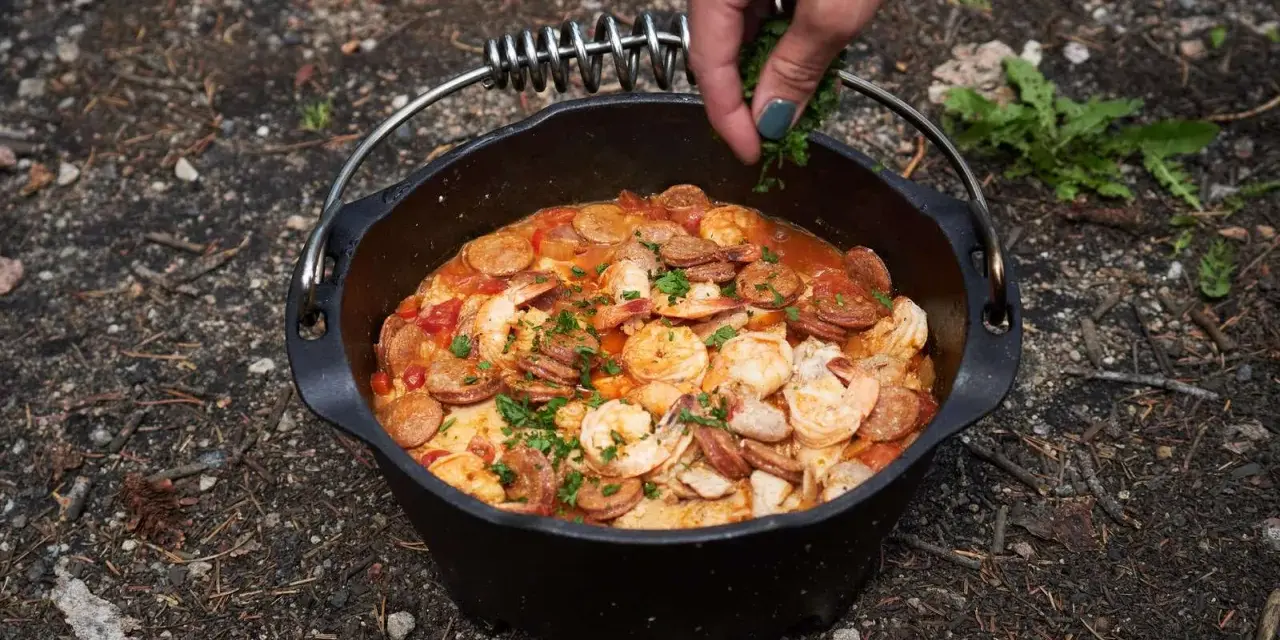
This Dutch oven paella recipe is built for campers who want a proper one-pot dinner without hauling specialist gear. I focus on the parts that matter outdoors: the right rice, steady heat, and a layered base that tastes like more than just stock and grain. The dish is forgiving enough for a campsite, but it still rewards restraint, especially once the rice goes in.
The few details that decide whether the rice works
- Use a wide Dutch oven if you can; a deep one traps more steam and gives a softer finish.
- Short-grain rice is the right choice because it absorbs flavour without turning soupy.
- Brown the meat and cook the vegetables first, then add the rice and stop stirring.
- Keep 100 to 150 ml of hot stock nearby in case the fire runs hotter than expected.
- Let the dish rest for 5 to 10 minutes before serving so the grains settle properly.
- Expect a light toasted base, not a textbook crust from a shallow paella pan.
Why a Dutch oven works outdoors
I like a Dutch oven for camp cooking because it gives me more control than a thin pan and more flavour development than a plain saucepan. It lets the chicken brown properly, gives the sofrito room to cook down, and holds heat well when the wind picks up or the burner is uneven. That said, it is not a perfect substitute for a paella pan, and I think it helps to be honest about that from the start.
| Cookware | Best use | What it gives you | What it gives up |
|---|---|---|---|
| Paella pan | Traditional rice with a wide, shallow base | Best chance of a crisp bottom and even evaporation | Less forgiving, awkward to carry, harder to manage on a campsite |
| Wide Dutch oven | Camp paella and family dinners | Better heat retention, easier transport, more forgiving browning | A slightly thicker rice layer and a softer crust |
| Deep Dutch oven | Hearty one-pot meals | Very stable on a stove or fire | More steam, less paella-like texture, lower chance of a toasted base |
If your pot is deep rather than wide, treat the dish as a paella-style rice supper rather than a strict replica. That mindset makes the result better, because you stop fighting the vessel and start cooking to its strengths. With that decision made, the ingredient list becomes much easier to keep lean and effective.
Ingredients and kit for a camp-friendly version
For four people, I keep the list short enough to pack easily but broad enough to build real flavour. In the UK, the ingredients below are usually straightforward to source, and most supermarkets will cover the basics.
| Ingredient | Amount | Why it matters |
|---|---|---|
| Olive oil | 2 tbsp | For browning and carrying the spices |
| Boneless chicken thighs | 700 g | They stay juicy and cook at a campsite-friendly pace |
| Spanish chorizo | 120 g, sliced | Adds smoke, salt, and a deeper red colour |
| Onion | 1 medium, finely chopped | Starts the sofrito base |
| Red pepper | 1, diced | Brings sweetness and a bit of freshness |
| Garlic | 2 cloves, minced | Gives the dish its savoury backbone |
| Tomato purée | 1 tbsp | Helps the base taste rounded rather than flat |
| Smoked paprika | 1 tsp | Useful camp flavour without extra fuss |
| Saffron | A good pinch | Gives the classic aroma and colour |
| Paella rice or another short-grain rice | 300 g | It absorbs stock without collapsing into porridge |
| Hot chicken stock | 850 ml, plus a little extra if needed | Enough liquid for a shallow, even cook |
| Frozen peas | 100 g | Simple, practical, and easy on a campsite |
| Raw prawns or mussels | 150 g, optional | Add near the end if you want a seafood finish |
| Lemon and parsley | For serving | Brighten the finished dish |
I prefer paella rice when I can get it, but another short-grain rice is better than a long-grain one in this setup. I also keep the seafood optional, because camp refrigeration is not the place to make life difficult. With the kit sorted, the method is mostly about order and restraint.
How I cook it in the Dutch oven
For this method, I assume a wide Dutch oven and a steady medium heat. If you are cooking over coals or a gas stove, the sequence stays the same even if the flame behaves differently.
- Heat the oil in the Dutch oven over medium-high heat. Brown the chicken thighs well on both sides, then add the chorizo and cook for another 1 to 2 minutes. The goal here is colour, not speed.
- Add the onion and red pepper, then cook for about 5 minutes until softened. Stir in the garlic, tomato purée, smoked paprika, and saffron. Let that cook for 1 to 2 minutes so the base turns glossy and fragrant.
- Add the rice and stir for 1 minute so every grain is coated in oil and spice. Pour in the hot stock, bring it up to a lively simmer, and spread the rice into an even layer.
- From this point on, do not stir. Reduce the heat to low or medium-low and cook uncovered for 18 to 22 minutes. If the pot is heating unevenly, rotate it every 5 minutes rather than disturbing the rice itself.
- If the top looks dry but the grains are still firm, add a small splash of hot stock around the edge of the pot. That is safer than pouring a lot into the centre.
- Add the peas in the last 3 minutes. If you are using prawns or mussels, add them near the end so they just cook through without turning rubbery.
- When the rice is tender and most of the liquid has gone, take the pot off the heat and rest it for 5 to 10 minutes with the lid on or loosely covered. Finish with lemon wedges and parsley.
I do not promise a perfect socarrat in a Dutch oven, and I think that is fine. What I look for instead is a lightly toasted base and separate grains on top. That balance is realistic outdoors, and it tastes excellent when the heat has been managed properly. The next challenge is keeping that heat steady in the first place.
Keeping the heat steady on a campfire, barbecue or gas stove
Heat control is where most campsite rice dishes fail. The pot is rarely the same distance from the flame for long, the wind shifts, and people keep opening the lid to check progress. I get better results when I treat the heat source as part of the recipe rather than an afterthought.
| Heat source | What to do | What to watch |
|---|---|---|
| Campfire coals | Use a bed of medium-hot embers, not open flames, and rotate the pot every few minutes | Flare-ups, scorched edges, and heat that is too aggressive in one spot |
| Gas stove | Boil briefly, then reduce to a low steady heat; a heat diffuser helps if the burner is small | Burning in the centre while the sides stay undercooked |
| Barbecue | Cook over indirect heat if possible and keep the lid off until the end | Rapid moisture loss and uneven browning |
Watch the sound, not just the clock. When the liquid drops to the right level, the rice starts to make a quiet crackling sound rather than a bubbling one. If the smell shifts from savoury to slightly burnt, you have waited too long. Once the heat is under control, the dish becomes much more adaptable, which is where the variations start to earn their place.
Variations that still work for family camping
I like recipes that can bend without breaking. On a family trip, that usually means keeping one reliable base and changing only the finishing details. Here are the versions I would actually cook again.
Chicken and chorizo
This is the safest and richest version for cool evenings. The chorizo gives the dish a smoky depth, while the chicken keeps it substantial enough to stand on its own. If I were feeding a mixed crowd with different appetites, this is the one I would make first.
Seafood at the end
If you want prawns or mussels, add them near the end rather than cooking them from the start. That keeps the texture clean and avoids the chewy, overdone result that spoils a good pan of rice. I treat seafood as the final flourish, not the main structure.
Read Also: Foil Packet Cooking - Perfect Camp Meals Every Time
Vegetarian camp version
Leave out the meat and build flavour with extra smoked paprika, mushrooms, peppers, courgette, and butter beans. Use vegetable stock and finish with lemon. It will not taste like a meat-heavy version, but it can still feel generous and complete, which matters on a campsite when everyone wants something warm and satisfying.
For serving, I usually keep it simple: a green salad, crusty bread, lemon wedges, and maybe a spoonful of aioli if I have it. The dish already carries enough flavour, so the side job is to add freshness rather than compete with it. Once the variations are clear, the last thing worth fixing is the set of mistakes that derail the whole pan.
The small fixes that make this dish reliable every time
Most problems with camp paella are not dramatic. They are small, cumulative mistakes that leave the rice heavy, wet, or bland. I watch for these in particular.
- Using too deep a pot. If the rice sits in a thick layer, it steams instead of cooking evenly. A wider vessel gives you a better result.
- Adding too much stock at once. It is easier to add a little more hot liquid than to rescue a flooded pot.
- Stirring after the rice goes in. That breaks the surface and makes the texture creamy instead of distinct.
- Putting delicate seafood in too early. Prawns and mussels only need the final minutes.
- Skipping the rest. Five to ten minutes off the heat helps the grains settle and finish properly.
- Seasoning too late. The stock, tomato, and chorizo carry salt, but the finished dish still needs a final taste check with lemon and a pinch of salt if needed.
My rule is simple: aim for a rice dish that tastes balanced, looks generous, and can still be served straight from the pot without fuss. If the grains are tender, the base is lightly toasted, and the lemon brings the whole thing back into focus, the campsite version has done its job well.
