
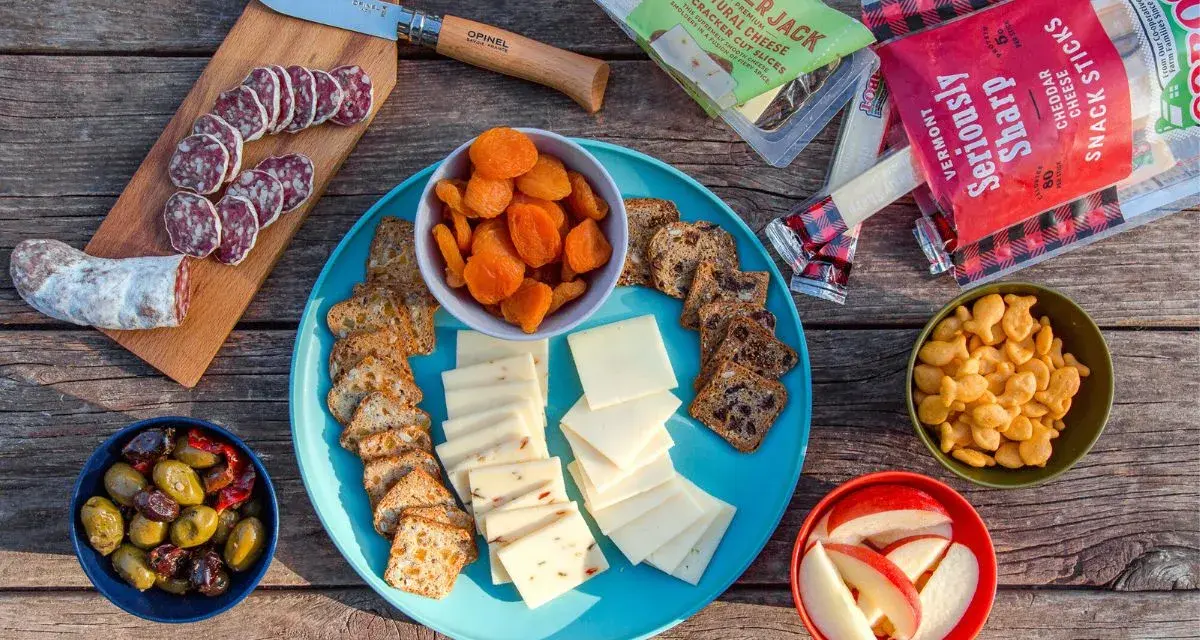
The best camping snacks are the ones that survive a bumpy drive, stay useful after a long walk, and still feel worth eating when the weather turns damp. For a British campsite, that usually means a mix of shelf-stable bites, a few cooler-box favourites, and at least one treat that makes the evening feel like a holiday rather than a logistics exercise. In this guide, I’m focusing on what actually works, what I would skip, and how I pack food so it stays easy from arrival to the last cup of tea.
What makes a snack worth packing
- Choose foods that are portable, filling, and low-mess rather than flashy.
- Split your food into three groups: dry snacks, chilled snacks, and backup treats.
- The Food Standards Agency recommends keeping chilled food below 5°C, so a cool box is a short-trip tool, not a miracle cure.
- For family trips, pre-portioning matters more than fancy recipes because it reduces waste and keeps hands cleaner.
- If the campsite shop is expensive or limited, pack a few items that can become both snacks and light meals.
What matters most when food has to travel
When I plan campsite food, I start with a simple test: will this still be good after a few hours in a bag, a warm afternoon in the tent, and one more round of people opening the box for “just a little bite”? That rules out anything delicate, drippy, or overcomplicated. It also explains why the best camp snacks are rarely the most exciting ones on paper.
In practice, I look for three things. First, the food should be stable enough that it does not depend on perfect refrigeration. Second, it should be easy to eat with minimal kit, because a knife, board, and washing-up point are not always nearby. Third, it should actually satisfy hunger. A sweet biscuit has its place, but a proper snack for a walk or a rainy afternoon usually needs some protein, fibre, or slow-release carbs.
This is where a lot of people go wrong: they pack too many “fun” treats and not enough practical food. Crisps disappear fast, sugary bars can leave everyone hungry again in an hour, and anything messy becomes annoying in a tent. I prefer food that feels calm and dependable, because that is what keeps a trip running smoothly when the weather or the schedule changes. Once that standard is clear, choosing the right snack types gets much easier.

Shelf-stable options that earn their place
For dry storage, I like foods that can take a little heat, survive being shifted around, and still taste good without much effort. The best options are the ones you can eat straight from the packet or assemble in under a minute. BBC Good Food highlights halloumi, flatbreads and chorizo as campsite-friendly ingredients, and that basic idea is sound: choose items that travel well and can be used in more than one way.
| Snack | Why it works | Best use | Watch out for |
|---|---|---|---|
| Trail mix | Compact, energy-dense, and easy to portion into small bags | Walks, car journeys, and late-afternoon hunger | Too much chocolate can melt in warm weather |
| Flapjacks or oat bars | Classic UK-friendly fuel with enough bulk to keep people going | Breakfast backup or mid-morning snack | Can crumble if packed loosely |
| Oatcakes with nut butter sachets | Sturdy, filling, and not overly sweet | Travel day, site-day snack, or light lunch | Oatcakes break if they are squeezed at the bottom of a bag |
| Roasted chickpeas | Crunchy, savoury, and better than crisps for staying power | Shared snacking around the tent or table | They go stale faster if left open in damp air |
| Jerky or meat sticks | High-protein and very portable | Long walks, adult snacks, or emergency hunger fixes | Very salty, so I would not make them the only option |
| Crackers with tuna or sardine pouches | Feels like a proper bite rather than a tiny nibble | Late lunch or a quick savoury snack | Needs a spoon or a clean corner to assemble neatly |
If I were packing for one adult on a two-night trip, I would usually bring 2 to 3 snack portions per day plus one emergency bar or biscuit packet. For a family, I would scale that up more generously than people expect, because campsite appetites tend to run larger after fresh air and walking. A good rule is to keep one savoury bag, one sweet bag, and one “we are glad we packed this” bag.
The real advantage of shelf-stable food is not just convenience. It gives you a cushion when the site shop is overpriced, the weather cuts a walk short, or everyone wants something to eat before the stove is ready. From there, the only question is which chilled items are worth carrying in a cooler box.
Cooler-box snacks that feel worth the effort
Chilled snacks take more planning, but they can make the trip feel much better if you do them properly. I keep this category tight and practical. The Food Standards Agency recommends keeping chilled food below 5°C, so I treat a cool box as a short-trip solution and not something to rely on for several warm days without a proper system.
My shortlist is fairly simple: cheese, fruit, vegetables, eggs, yoghurt, and a few ingredients that can become more than one snack. Halloumi is useful because it holds its shape and works in wraps, on skewers, or sliced into a quick bite. Grapes, apples, and mandarins are easy for children to grab. Cut carrots, cucumber, and pepper strips add crunch and help balance the more savoury items. If I have space, I add boiled eggs for protein and a tub of hummus for dipping.
There is one important limitation here: cooler-friendly snacks are only good if the cool box is managed properly. I keep it shaded, open it as little as possible, and separate the things I will need first from the items that can wait. On serviced pitches with electricity, a small campsite fridge changes the game, but I still pack as if the cold storage could become unreliable. That habit keeps the whole menu safer and more flexible.
For a more substantial snack, I like flatbreads with hummus and halloumi, or flatbreads with cheese and sliced veg. They are not fussy, and they feel better than another round of biscuits. Once the chilled items are sorted, the next problem is turning all of this into a system rather than a loose pile of food.
How I pack food so it stays usable for days
The difference between a good campsite food setup and a frustrating one is usually organisation, not ambition. I pack by occasion: arrival snacks, walking snacks, tent snacks, and backup food for bad weather. That stops everything from being eaten on day one and makes it much easier to see what is left.
- Separate dry and chilled food. Dry snacks go in one tote or rucksack pocket, while cooler items stay in a cold bag or box.
- Pre-portion anything loose. Trail mix, nuts, crisps, dried fruit, and biscuits are much easier to manage once they are split into small containers or bags.
- Pack one savoury option for every sweet one. That balance matters after a long walk, because sugar alone does not keep people comfortable for long.
- Use containers that survive campsite life. Hard tubs beat flimsy packaging when food is being passed around a table or shoved into a tent porch.
- Keep a clean-up kit with the snacks. Wet wipes, a small bin bag, and a spoon or two save far more trouble than people expect.
I also like to think in terms of “first-day” and “later-day” food. Anything fragile, especially chilled food, should be eaten early. Dry snacks, tins, and sealed packets can wait. That one decision prevents waste and means the last morning is not a scramble for scraps. It also makes it easier to plan around bad weather, because you always know what can be eaten without cooking.
Once the food is packed properly, it becomes much easier to build snack combinations for different kinds of campers, which is where the menu starts to feel personal instead of generic.
A simple mix for families, walkers, and rainy afternoons
Different trips need different snack styles, and I would not pack the same way for a family basecamp as I would for a long walking weekend. For children, I lean on clear, familiar food: fruit, oat bars, crackers, cheese cubes, and a small sweet treat. Kids usually do better when the snack is easy to see and easy to hold, so I avoid overcomplicating it.
For walkers or anyone spending most of the day away from the tent, I would pack food that feels sturdier: trail mix, jerky, oatcakes, nut butter sachets, and a couple of bars that do not crumble too badly. That mix gives you quick energy without forcing you to stop for a full meal every time hunger rises. If I know I will be out longer, I add a piece of fruit and a savoury backup so the day does not run entirely on sugar.
For a rainy campsite afternoon, the best snacks are the ones that make everyone settle in rather than raid the cupboard every ten minutes. This is where the slightly more satisfying items earn their keep: flatbreads, cheese, hummus, tinned fruit, and even a small plate of chorizo or sardines with bread if the group likes savoury food. Those ingredients are less about “snacking” in the narrow sense and more about keeping the mood steady when nobody wants to stand around cooking.
If I had to reduce the whole subject to one practical rule, it would be this: pack for the moment, not just the ingredient. A snack for arrival should be immediate, a snack for a walk should be compact, and a snack for a wet evening should feel comforting. When those three jobs are covered, the rest of the menu becomes much easier to enjoy.
The snack setup I trust most on a British campsite
For most trips, I rely on a simple formula: one dry bag of shelf-stable food, one cooler box of chilled food, and one small bag of treats that no one is supposed to touch until evening. That setup works because it mirrors how people actually eat on site, not how a neat menu looks on paper.
The strongest mix usually includes trail mix, oatcakes, flapjacks, a savoury protein option, fruit, and one or two chilled items that feel special enough to be worth the space. It is not glamorous, but it is dependable, and on a campsite that matters more than novelty. If there is one thing I would spend a little extra on, it is a good cool bag or cool box, because the right storage gives you far more food options without making the packing frantic.
What I would avoid is overpacking expensive perishable food that has no second use. The best campsite snacks are flexible: they can be eaten alone, shared, turned into a quick lunch, or saved for a day when plans change. That flexibility is what keeps the trip relaxed, and it is usually what people remember most when they get home.
