
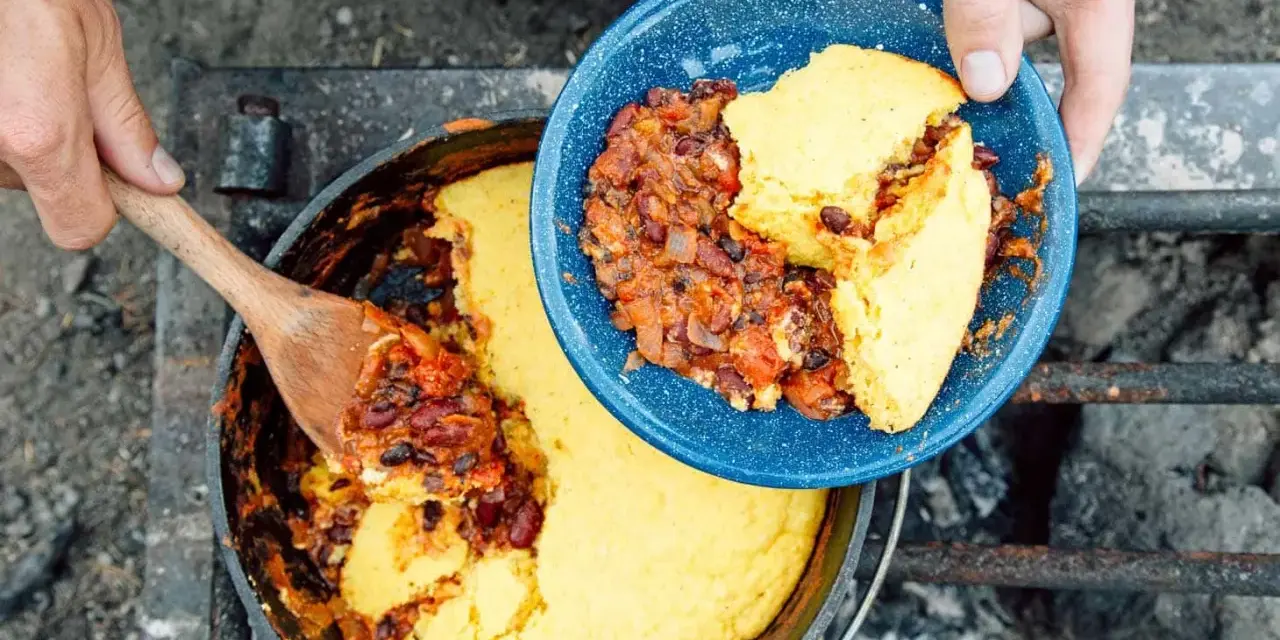
Easy camp food is less about fancy recipes and more about building meals that survive limited kit, changing weather, and a hungry crowd after a day outdoors. In this guide, I focus on the ingredients, simple meal ideas, food safety habits, and packing decisions that make camp cooking feel organised instead of improvised. I’ve written it for UK camping trips, where fridge space, wind, rain, and family appetites can all change the plan fast.
The quickest route to low-fuss campsite meals
- Keep the menu short: two breakfasts, two lunches, and two dinners are enough for a weekend.
- Build around reliable staples such as oats, wraps, pasta, rice, beans, eggs, and fruit.
- Use one or two flavour boosters, like pesto, salsa, curry paste, or stock cubes, to make plain ingredients work harder.
- Treat chilled food as time-sensitive, especially when the weather turns warm.
- Prep at home whenever it saves time, mess, or stress at the campsite.
What easy camp food really looks like on a UK campsite
When I plan camp meals, I look for three things first: speed, flexibility, and very little washing up. A good campsite meal should usually come together in about 15 to 20 minutes of active cooking, use ingredients that can handle a bit of transport, and still taste like a proper meal rather than a compromise.
That does not mean plain food. It means low-friction food. Wraps can become breakfast, lunch, or a late snack. Pasta can be hot on the first night and cold the next day. Oats, eggs, beans, halloumi, rice pouches, and tinned fish all earn their place because they are forgiving when campsite life is not.
In the UK, that matters more than people think. A campsite may have electricity but no fridge space, a shared washing-up area but not much counter space, or a dry afternoon that turns into a damp evening in ten minutes. The meals that work best are the ones that still make sense when the conditions change halfway through the day. Once that shape is clear, choosing the actual ingredients becomes much easier.
The ingredients that earn their place in the food box
I usually split camp groceries into four jobs: carbs, protein, fresh extras, and flavour. That keeps the shop list tight and stops me from bringing a bag full of random bits that never become a real meal.
| Category | Examples | Why I pack it | Best use |
|---|---|---|---|
| Carbs | Oats, wraps, pasta, couscous, rice pouches | Cheap, filling, and fast to cook | Breakfast bowls, wraps, one-pot dinners |
| Protein | Eggs, beans, lentils, tuna sachets, halloumi | Keeps meals satisfying without much prep | Scrambles, salads, pasta, toasties |
| Fresh extras | Apples, bananas, peppers, cherry tomatoes, cucumber | Light, flexible, and easy to snack on | Lunches, sides, and quick bites between activities |
| Flavour makers | Pesto, curry paste, stock cubes, olive oil, salsa | Turn simple ingredients into something you actually want to eat | Fast sauces, pan meals, and quick seasoning |
I like this split because it works for most camping styles, from family pitches to smaller European sites with very basic kitchen facilities. If you buy food in those four buckets, you can mix and match without overthinking every meal. That makes the menu much easier to write, which is exactly what the next section is for.

A simple weekend menu that keeps cooking easy
I rarely plan more than two proper cooked dinners for a short camping trip. Breakfast should be quick, lunch should be flexible, and dinner should feel satisfying without becoming a project. For a family of four, I also prefer one meal that can be repeated or repurposed, because the second day of camping is usually when appetite and energy start to drift.
| Meal slot | What I would cook | Why it works |
|---|---|---|
| Day 1 dinner | Pasta with pesto, cherry tomatoes, and halloumi | Fast, comforting, and easy to scale up for children or adults |
| Day 2 breakfast | Porridge with banana, nuts, and honey | Cheap, filling, and simple to make even if the morning is cold |
| Day 2 lunch | Wraps with hummus, cucumber, cheese, and leftover veg | No heavy cooking, no fuss, and easy to eat outside |
| Day 2 dinner | Chickpeas, rice, and a mild curry paste or tomato sauce | One-pan cooking with ingredients that keep well |
| Day 3 breakfast | Eggs on toast or scrambled eggs with beans | Uses up leftovers and feels like a proper finish to the trip |
For children, I keep the first night most familiar and save the slightly more adaptable meals for later. For adults, I usually double the lunch ingredients rather than the dinner ingredients, because snacks and simple midday food disappear faster than people expect. That approach keeps the box lighter and the cooking easier, but it only works well if storage is handled properly.
How to keep food safe when the weather changes fast
Food safety is the part people underestimate, especially when a cool morning turns into a warm afternoon. The Food Standards Agency recommends keeping chilled food at 5°C or below, so I treat a cool box with ice packs as a short-term buffer, not a replacement for a fridge. That means packing raw meat separately, keeping ready-to-eat food above it, and opening the box only when I need something.
- Cook chilled meat and fish on the first day rather than leaving them until the end of the trip.
- Keep raw and ready-to-eat foods separate so juices do not spread across bread, salad, or cheese.
- Choose shelf-stable ingredients when fridge space is tight, such as oats, tins, rice pouches, beans, and long-life milk.
- Use a cool box and ice packs as seriously as you would use a fridge door at home.
- Never assume a shaded tent or awning is cold enough for dairy, cooked leftovers, or meat-based fillings.
I also keep one rule that saves a lot of bad decisions: if I am unsure whether food has stayed cold enough, I do not keep pushing my luck with it. That sounds obvious, but on a campsite people often try to stretch ingredients further than they would at home. Once the food side is under control, the kit only needs to help the plan, not rescue it.
The kit that saves time, space, and washing up
Camp cooking gets easier when the equipment matches the meal. I do not want a giant selection of pans and gadgets; I want a small set of tools that makes simple food feel straightforward.
- A cool box with two to four ice packs.
- A sharp knife and a small chopping board.
- One saucepan and one frying pan, or one deep pan if space is limited.
- A tin opener, bottle opener, spoon, spatula, and lighter or matches.
- Reusable containers, foil, and zip bags for leftovers and snacks.
- A tea towel, sponge, washing-up liquid, and a small basin or washing-up bowl.
I prep anything awkward at home if it saves time later: onions get chopped, spice mixes get portioned, oats get measured, and sauces get decanted into small containers. That turns the campsite into a finishing station rather than a full kitchen, which is usually the right level of ambition. It also keeps the washing-up stack smaller, and that matters more than people admit.
What I would pack for a British camping weekend
If I were loading the car for two nights in the UK, I would keep it brutally simple: porridge oats, bread or wraps, pasta, rice pouches, eggs, beans, one protein such as halloumi or tuna, fruit that travels well, a few vegetables that will not wilt instantly, and two sauces that make everything taste deliberate.
- Oats, bread, wraps, or cereal.
- Pasta or rice, plus a quick sauce.
- Eggs, beans, tuna, halloumi, or cheddar.
- Apples, bananas, cherry tomatoes, cucumber, peppers.
- Pesto, salsa, curry paste, olive oil, and seasoning.
- Tea, coffee, long-life milk, water, and a few snacks.
My rule is simple: if a meal needs more than two pans, more than about 20 minutes of active cooking, or ingredients that only work when perfectly chilled, I leave it at home. That is usually the difference between a campsite kitchen that feels calm and one that eats into the best part of the trip. Keep the menu small, cook the fragile items first, and leave room for the part of camping people actually remember: the walk, the firelight, and the easy second cup of tea.
