
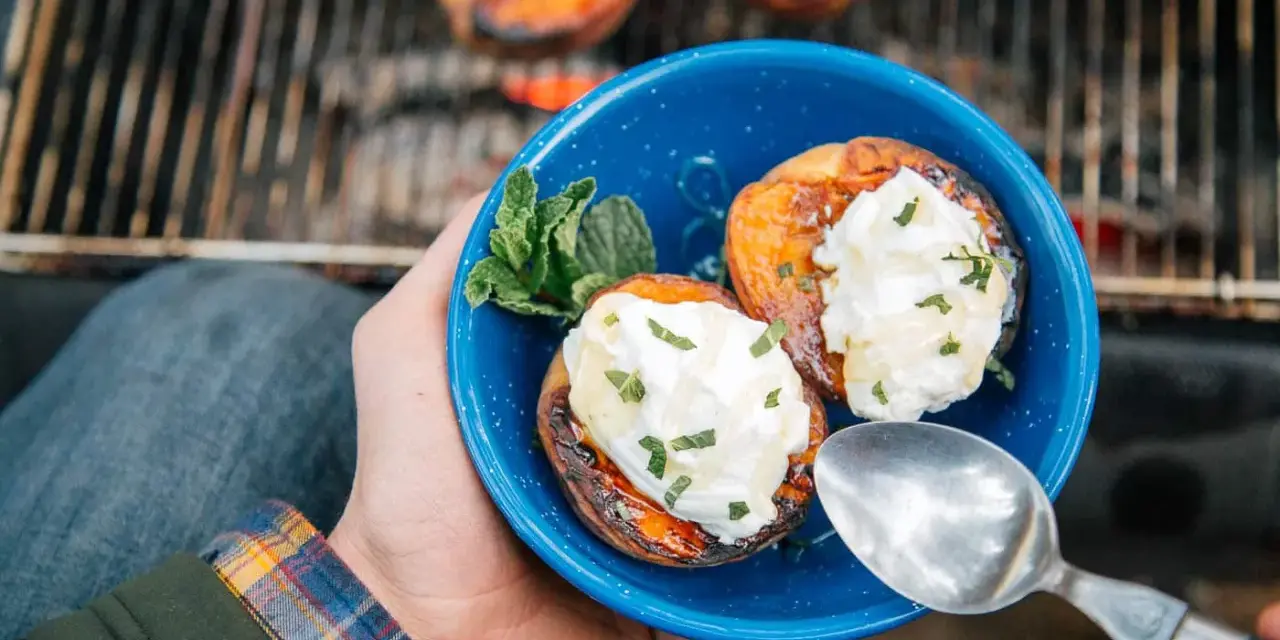
Campfire peaches are one of those campsite desserts that look simple and still feel a bit special. The trick is not just tossing fruit into the flames; it is choosing the right peaches, controlling the heat, and deciding whether you want them soft and syrupy, lightly caramelised, or turned into a richer foil-packet pudding. I focus here on the methods that actually work at a British campsite, with sensible timings, topping ideas, and the mistakes that most often waste good fruit.
What matters most before you light the fire
- Use ripe but still firm peaches so they hold their shape instead of collapsing into jam.
- Cook over glowing embers or medium heat, not active flames, or the sugar will burn before the fruit softens.
- Foil packets are the easiest low-mess method, while a cast-iron skillet gives the deepest caramel flavour.
- Plan on 10 to 15 minutes for foil packets, 8 to 12 minutes for a skillet, and 6 to 8 minutes for halved peaches on a grate.
- Finish with one creamy topping and one crunchy topping if you want better texture, not a heavier dessert.
Why this dessert earns a place in the camp kit
I keep this kind of dessert in rotation because it delivers more than it asks for. You only need a few ingredients, a small amount of preparation, and a bit of patience while the fire settles down, which is exactly the sort of practical cooking that suits a campsite evening.
It also works across different camp setups. On a quiet family pitch, I might use foil packets tucked into embers. On a busier trip with a barbecue or a portable stove, I would switch to a skillet without changing the basic recipe. That flexibility matters more than most people expect, especially when weather, fire bans, or tired children make the plan less tidy than you hoped. Once you have that structure, the next question is simple: which fruit will actually cook well?

Choose fruit that can take the heat
The best peaches for fire cooking are ripe but still firm. They should smell fragrant and give slightly when pressed near the stem, but they should not feel soft enough to split in your hand. If they are too ripe, they turn to mush before the sugar has a chance to caramelise. If they are too hard, they stay dull and chalky even after a long cook.
I also prefer freestone peaches when I can get them, because they are easier to halve and pit cleanly. In the UK, that can be a real convenience when you are cooking at a picnic table with limited kit. If fresh peaches are expensive or only average quality, tinned peaches are a perfectly decent fallback. Drain them well, cut back the extra sugar, and they will still give you a warm, comforting dessert with very little fuss.
- For 2 people, use 2 medium peaches.
- For 4 people, use 4 to 5 medium peaches.
- For 6 people, use 6 to 8 medium peaches.
- For a tinned version, allow about 1 standard tin for 2 people once you add topping.
A basic four-person batch usually needs about 4 peaches, 30 g of butter, 3 tablespoons of soft brown sugar, and a pinch of cinnamon. If I am buying everything fresh at a UK supermarket, that often lands somewhere around £5 to £9, depending on the season and what I already have in the food box. The fruit matters most, but the cooking method decides whether those peaches end up silky or burned.
The easiest ways to cook them over a fire
I use three methods, and I choose between them based on the fire, the time available, and how many people I am feeding. The table below is the quick version of what tends to work best.
| Method | Best for | Timing | Result | Main caution |
|---|---|---|---|---|
| Foil packets | Families, uneven heat, minimal washing up | 10 to 15 minutes | Juicy fruit with its own syrup | Use two layers of foil and leave a little headroom |
| Cast-iron skillet | Bigger groups and deeper flavour | 8 to 12 minutes | More caramelised, more pudding-like | Keep the pan on embers; sugar scorches on strong flame |
| Halved peaches on a grate | Quick dessert with a neater finish | 6 to 8 minutes | Smoky edges and a light char | Use firmer fruit and do not leave it unattended |
If I am cooking for children or for a mixed-age group, I almost always start with foil packets because they forgive uneven heat. I wrap each portion tightly, add the fruit and flavourings, and place the packet near hot embers rather than directly in a flame. For a slightly more polished result, a cast-iron skillet wins every time because the fruit sits in its own syrup and picks up a deeper colour. Either way, the rule is the same: steady heat beats dramatic heat.
For foil packets, I usually cut the peaches into wedges, add a small knob of butter, sprinkle over brown sugar, and seal the parcel well. For skillets, I keep the sugar lighter at the start and let the fruit do most of the work. If you are using halved peaches on a grate, place them cut-side down first and give them a single turn only when the surface has softened and taken on a little colour. That small bit of patience makes the whole dessert feel more intentional.
Build flavour without making the dessert heavy
Outdoor desserts often fail for one of two reasons: they are too plain, or they are overloaded with sugar and toppings. I aim for the middle ground. A good peach already has sweetness and aroma, so it only needs enough support to taste fuller, not enough extras to hide the fruit.
Keep the sugar modest
For each peach half, I usually add 1 to 2 teaspoons of soft brown sugar. That is enough to pull out the juices without turning the dish into syrup soup. If the peaches are very sweet already, I drop the sugar slightly and lean on butter, vanilla, or a touch of cinnamon instead.
Add one bright note
A tiny squeeze of lemon juice, a pinch of salt, or a bit of orange zest does more work than most people expect. That bright edge keeps the flavour from becoming flat. I often think of it as the difference between a warm fruit dessert and a genuinely memorable one.
Read Also: Camp Washing Made Easy - Your Guide to Clean Dishes
Use one topping with texture
Once the peaches are cooked, I want one soft topping and one crunchy element. In practice, that could be custard with toasted almonds, yoghurt with granola, or clotted cream with crushed ginger biscuits. Too many toppings blur the fruit. One clean pairing usually tastes better and looks tidier at the table.
That balance also helps when the fire is unpredictable, because the dessert still feels composed even if the cooking is rustic. The next step is avoiding the mistakes that undo all that good work.
What usually goes wrong and how to avoid it
The biggest problem is assuming that more heat means faster success. It usually means burnt sugar, dry fruit, and a smoky smell that does not belong in dessert.
- Using overripe peaches turns the fruit into a soft mash. Choose firmer peaches if you want slices that keep their shape.
- Cooking over open flames scorches the outside before the inside softens. Move the packets or skillet to glowing embers instead.
- Adding too much liquid makes the result thin and watery. You want a small amount of syrup, not a bowl of sauce.
- Opening foil too early releases a lot of steam and can make the fruit seem undercooked. Give it a minute or two before unwrapping.
- Serving dairy too late makes the dessert feel flat. Keep custard, cream, or ice cream ready before the fruit comes off the fire.
I also watch the packet closely in the final few minutes. If the foil starts to puff aggressively or the smell turns sharply bitter, the heat is too strong. At that point, I move the parcel further from the flames rather than trying to rescue it with more sugar. That is a small adjustment, but it protects the flavour. Once those basics are under control, you can start thinking about how to serve it well for a family camp meal.
Serve them in ways that fit a family camp meal
In the UK, I think this dessert works best when it feels relaxed and practical rather than fussy. If the weather is warm, keep any dairy in a cool box and bring it out only when the peaches are ready. If the weather turns damp, the same fruit works fine on a portable stove or barbecue, which is useful on sites where open fire use is limited.
- Serve warm peaches with thick custard for a classic, comforting finish.
- Add clotted cream and toasted almonds if you want something richer and more elegant.
- Spoon them over yoghurt and granola in the morning for a breakfast that does not feel like leftovers.
- Use vanilla ice cream for the most obvious crowd-pleaser after dinner.
- Layer them over porridge or toast the next day if you made too much on purpose, which I often do.
For bigger groups, I prefer a skillet or a shallow foil tray because it keeps serving simple. For smaller family camps, individual packets are easier to hand out and easier to finish while the fire is still hot. The point is not to chase restaurant polish; it is to serve warm fruit at the moment it tastes best. A few well-chosen ingredients make that happen more reliably than any fancy garnish.
Small details that make the dessert worth packing
If I know I am making this on a trip, I pre-mix the dry flavourings at home: sugar, cinnamon, and a pinch of salt in one small jar. That tiny bit of prep saves time at the campsite and reduces the chance of forgetting an ingredient when the light is fading and everyone is hungry.
I also pack with the weather in mind. Butter is ideal, but a neutral oil can stand in if refrigeration is awkward. Heavy-duty aluminium foil is worth carrying because it handles embers better than thin kitchen foil, and a small pair of tongs makes the whole process safer. In practice, the difference between an average batch and a very good one often comes down to that sort of unglamorous detail: steady heat, simple ingredients, and a topping that respects the fruit. When those pieces line up, the dessert feels easy, generous, and exactly right for a campsite evening.
