
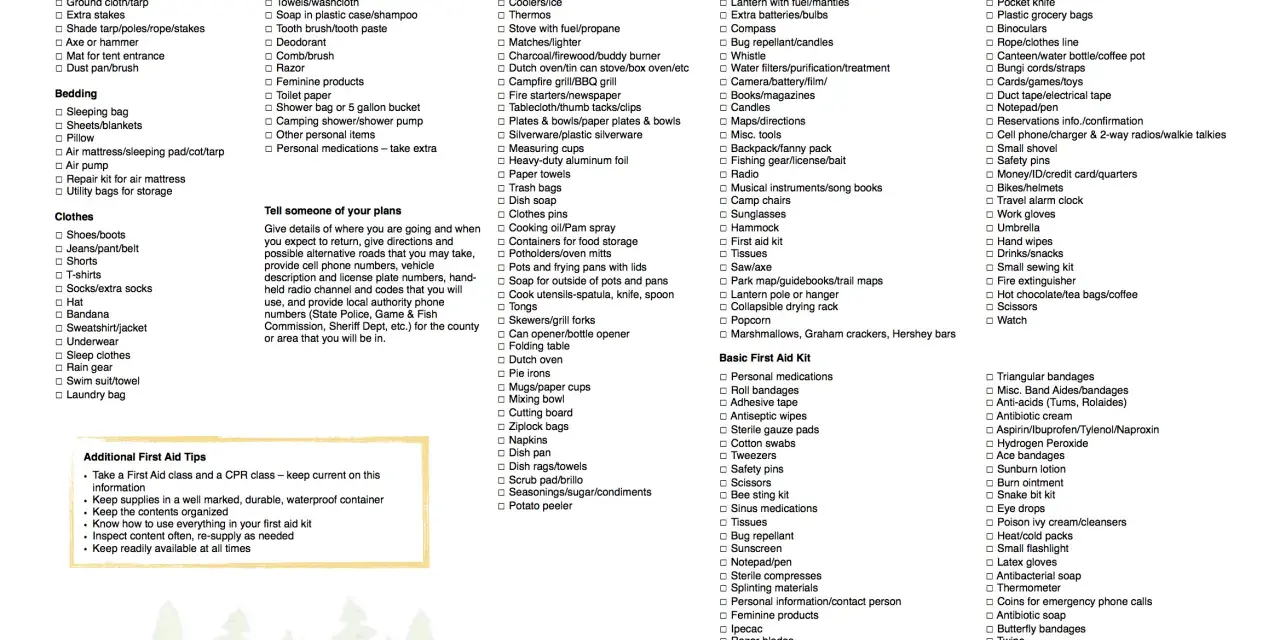
A smooth camping trip usually comes down to what is packed before the car is full. A camping checklist printable keeps the essentials visible, helps you trim the extras, and makes it easier to adapt for UK weather, campsite facilities, or a family weekend away. In this guide I break the kit into the parts that matter, show what changes by trip style, and point out the items people most often forget.
Pack by category and trim the list to the trip you are actually taking
- A printable checklist works best when it is split into shelter, sleep, cooking, clothing, hygiene, safety, and comfort.
- For UK camping, waterproof layers, dry storage, and a reliable torch matter almost as much as the tent itself.
- Trip-specific items such as an electric hook-up cable, dog gear, or extra kids’ clothes should be added only when they are actually needed.
- The most forgotten items are usually pegs, a mallet, batteries, fuel, bin bags, and the small things that make setup easier.
- A good list saves time on departure day and makes repacking much simpler when you get home.
What this checklist should actually do for you
I prefer a checklist that acts like a packing system, not a long inventory. The most useful version is the one that separates what must come, what depends on the trip, and what needs to be checked before you drive away.
- Must-pack items are the things that make camping possible at all: shelter, sleep kit, food prep, lighting, and safety basics.
- Trip-specific items cover the variables: hook-up leads, baby gear, dog bowls, fishing kit, or extra layers for cold nights.
- Leave-home checks are the boring details that prevent trouble later: charge batteries, fill water containers, test the stove, and confirm your booking.
That simple structure is what turns a checklist into a practical tool instead of a box-ticking exercise. Once that is in place, the core kit becomes much easier to sort.
The core kit I would not leave home without
If I were packing for a typical campsite trip in the UK, this is the base kit I would treat as non-negotiable. It covers the essentials that matter whether you are heading to a family site in Dorset, a simple pitch in Scotland, or a small European campsite with basic facilities.
Shelter and sleep
- Tent, inner tent, flysheet, poles, pegs, and guy lines
- Groundsheet or footprint sized for the tent, not a random sheet that collects water
- Tent mallet or peg hammer
- Spare pegs and a few repair patches or tape
- Sleeping bags suited to the season
- Sleeping mats or airbeds
- Pillow, or a fleece inside a pillowcase if you want to save space
- Extra blanket for colder evenings
Camp kitchen
- Stove and fuel
- Lighter and waterproof matches
- Pan, mug, plates, bowls, cutlery, and a spoon or spork for each person
- Tea towel, washing-up liquid, sponge, and a small washing-up bowl
- Cool box or insulated food bag
- Water container and refill bottle
- Bin bags and a small roll of kitchen paper
- Bottle opener and a compact multi-tool
Clothing and footwear
- Waterproof jacket and, if space allows, waterproof trousers
- Warm layer for evenings, even in summer
- At least one spare change of clothes
- Extra socks and underwear
- Hat or cap, depending on the weather
- Camp shoes, trainers, or wellies, depending on the ground
- Sun protection for exposed pitches and long travel days
Hygiene and health
- Toilet roll or tissues
- Hand sanitiser
- Toothbrush, toothpaste, and basic toiletries
- Microfibre towel or travel towel
- Sunscreen and insect repellent
- Personal medicines, blister plasters, and a small first aid kit
- Wet wipes for muddy hands, sticky faces, and quick clean-ups
Read Also: Car Camping UK - Your Guide to Comfort & Legality
Safety and power
- Headtorch or torch, ideally one per person or at least one per tent
- Spare batteries or rechargeable power source
- Power bank and charging cables
- Offline map, booking details, and emergency contact numbers
- Cash or card depending on the campsite
- For campervan trips, a carbon monoxide alarm is worth carrying if cooking or heating is involved
The point is not to bring everything you own. It is to make sure the basic camping system works the moment you arrive, so you can spend less time hunting for missing kit and more time setting up properly. From there, the best version of the list depends on how you are camping.
How I adapt the list to different camping styles
One checklist can cover several trip types, but it should not treat them all the same. A weekend on a campsite, a family break, a walk-in pitch, and a campervan holiday all need different extras and different levels of comfort.
| Trip style | Pack more of | Leave lighter on | Why it matters |
|---|---|---|---|
| Weekend campsite | Comfortable bedding, chairs, a lantern, and a cool box | Navigation gear and ultralight kit | This is the easiest setup, so small comfort upgrades make a bigger difference than extra gadgets. |
| Family camping | Spare clothes, snacks, wet wipes, games, and a laundry bag | Duplicate electronics and bulky “just in case” items | Children need predictable comfort, and parents need a cleaner way to sort the mess. |
| Wild camping or hike-in camping | Dry bags, compact food, water, a map, and a lighter sleep system | Chairs, tables, heavy cookware, and oversized comfort items | Weight and volume matter more than convenience because you are carrying everything yourself. |
| Campervan or motorhome trip | Hook-up cable, adaptor, levelling blocks, cleaning gear, and bedding | Tent gear and duplicate shelter items | The vehicle replaces part of the shelter kit, so the checklist shifts toward power, storage, and setup. |
I find this table especially useful for family trips, because it stops the list from becoming either too bare or too bloated. The same idea also helps when you move between simple UK sites and more structured European campsites with different facilities. Next, the local details that change packing become much easier to spot.
UK details that change the packing list
Camping in the UK is less about extreme gear and more about being ready for changeable conditions. A dry afternoon can turn into a damp evening very quickly, and that is where a smart list pays for itself.
- Rain is normal, not exceptional. I always pack a waterproof outer layer, an extra pair of socks, and something to keep electronics dry.
- Wind matters more than people expect. Stronger pegs, a mallet, and a few spare guy lines make pitching far less frustrating on exposed ground.
- Electric hook-up changes the loadout. If your pitch has power, bring the right cable and adaptor, and check what the site allows before you arrive.
- Fire safety should shape setup. Keep tents, cars, and any cooking flame well apart, and do not rely on candles inside a tent.
- Wild camping needs more planning. Always check the local rules and landowner permission first, because the right kit does not solve a bad legal or access decision.
- Mud, insects, and rough grass are part of the package. That means boots, wipes, insect repellent, and a simple mat or rug can be more useful than one more gadget.
These adjustments are small, but they prevent the classic UK camping problem: you packed for the idea of summer, then arrived in a cold breeze and wet grass. Even with the right gear, there are still a few mistakes that catch people out.
The mistakes that catch people out
Most camping problems are not dramatic. They are small oversights that become annoying once you are tired, wet, or trying to cook dinner in fading light.
- Packing the tent but not the full tent kit. Pegs, poles, a mallet, and guy lines are easy to miss when they are stored separately.
- Assuming the site will cover your basics. Some campsites have shops, power, and good wash facilities; many do not.
- Forgetting light after dark. A torch is useful; spare batteries are what stop it becoming useless on the first evening.
- Not testing fuel or equipment at home. If a stove, lamp, or inflatable mat has a problem, you want to find it in the garden rather than at the pitch.
- Overpacking food that needs perfect cooling. If you only have a small cool box, choose meals that are easy to store and quick to cook.
- Bringing too many “nice-to-haves”. The first things into the car should be the items that keep you warm, dry, fed, and safe.
I usually do one quick floor check before loading the car: shelter, sleep, kitchen, clothing, hygiene, and power all laid out in separate piles. That ten-minute habit prevents more stress than any fancy packing system I have seen. Once those basics are under control, the final layer is comfort.
The few extras that make a pitch feel organised from day one
These are the items I add after the essentials are packed. They do not make or break the trip, but they change how relaxed the campsite feels once everything is set up.
- Folding camp chairs and, if space allows, a small table
- Lantern or soft camp light for evenings around the pitch
- Rug, picnic blanket, or tent mat for a cleaner living area
- Clothes line and pegs for damp towels or wet swimwear
- Small broom or brush for mud, sand, and crumbs
- Notebook, cards, or a small game for quiet time
- Extra tote bag or crate for muddy shoes and loose items
- Dog bowl, lead, waste bags, and towel if you are travelling with a pet
- For children, one comfort item, one snack box, and one labelled change of clothes
I keep coming back to one rule: if an extra reduces friction, it earns its place; if it only looks clever, it usually stays at home. That is why a camping checklist printable works best when it stays simple enough to use but specific enough to cover rain, mud, children, and late arrivals. Keep a master copy in your gear box, update it after each trip, and you will pack faster every time.
