
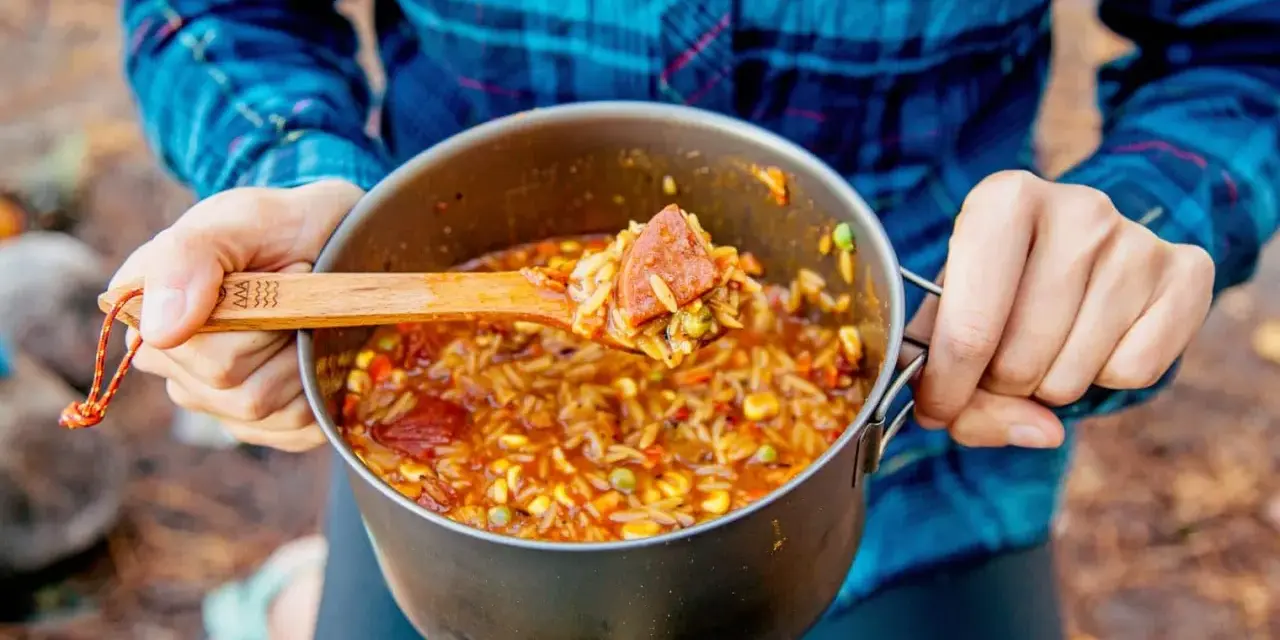
Campfire jambalaya is one of the best one-pot meals for outdoor cooking because it gives you smoke, spice, and a filling dinner with very little washing up. I’m going to walk through the cookware that actually works over fire, the ingredient choices that hold up on a campsite, and the small heat-control decisions that stop the rice from going mushy or catching on the bottom. I’ll also cover the food-safety details that matter when you are cooking away from a fridge, which is where many camp meals go wrong.
What matters before the pot hits the fire
- A heavy lidded pot is the easiest choice because it holds steady heat and protects the rice from hot spots.
- Long-grain rice is the safest bet for texture; it stays separate better than short-grain rice.
- Browning first, simmering later is the method that builds flavour without overcooking the rice.
- Steady embers beat a roaring flame once the liquid goes in.
- Food safety still matters outdoors, especially when meat, seafood, and leftovers are involved.
Why this dish works so well over a campfire
I like a rice-based one-pot meal outdoors because it gives me a proper dinner without turning the campsite into a production line. The fire adds a little smoke, the sausage leaves flavour in the pot, and the rice absorbs everything instead of letting it run off into a sauce that needs constant babysitting.
What makes it especially useful for family camping is that the dish can absorb minor timing mistakes. If the heat slips a little, you can usually recover with a splash of hot stock. If it is left too fierce for too long, though, the bottom layer turns stubborn fast, so the real trick is not confidence but control. That is where the right pot and the right fire setup start to matter.

The kit and ingredients I would pack
I do not think you need specialist kit, but I do think the pan matters more here than it does for most camp meals. A cast-iron Dutch oven is my first choice because it holds heat evenly, survives direct fire, and gives me enough depth for rice, stock, and meat all at once. If I had to cook this in a thinner pot, I would keep the fire gentler and stay closer to the lid.
| Setup | Best for | What to watch out for |
|---|---|---|
| Cast-iron Dutch oven | Even heat, browning, and a relaxed simmer for 4 to 6 people | Heavy to carry and easy to overheat if the fire is too aggressive |
| Deep lidded pot | Smaller loads when pack space matters | Less forgiving on hot spots and more likely to scorch rice |
| Large skillet with lid | Browning the meat quickly before a shorter simmer | Shallow surface area makes rice harder to steam evenly |
| Paella-style pan | A drier, wider version with more crust | Demands constant attention and a very controlled heat source |
For ingredients, I keep the base simple and practical. Long-grain rice, onion, celery, green pepper, garlic, stock, and a good smoked sausage are the backbone. In the UK, andouille is not always easy to find, so I usually reach for a strong smoked sausage with enough fat to brown properly, or a paprika-led sausage if I want a deeper, more peppery note.
For a family of four to six, I usually start with about 300 g long-grain rice, 500 g smoked sausage, 400 to 500 g chicken thighs, 1 onion, 1 green pepper, 2 celery sticks, 3 garlic cloves, 800 ml stock, 2 teaspoons smoked paprika, 1 teaspoon dried thyme, 1 bay leaf, and a pinch of cayenne. If I want a Creole-style finish, I add 400 g chopped tomatoes; if I want a slightly drier pot, I leave them out. That flexibility is useful, because the campsite is rarely as predictable as a kitchen, and the next section is where that matters most.
How I manage the fire and the heat
The biggest mistake I see is treating the campfire like a stovetop. It is not. Once the rice goes in, I want a steady bed of embers and a calm simmer, not a licking flame under the base of the pot. Open fire is great for browning meat, but it is too aggressive for the final cook.
If I am using a Dutch oven, I keep the pot mostly over embers rather than direct flame and rotate it every 10 to 15 minutes if one side looks hotter than the other. I do the same with the lid if the top is running unevenly, although for a rice-heavy pot I do not rely on lid heat the way I would for baking. For this kind of dish, the real job is to hold the temperature steady, not to blast it from both directions.
- Build a two-zone fire so you can brown on the hotter side and simmer on the calmer side.
- Let the flames burn down first; glowing embers are much easier to control than active tongues of fire.
- Stir only when needed; too much stirring turns the rice sticky and breaks the grains.
- Add hot stock if the pot tightens up; cold liquid drops the temperature too sharply.
- Keep a small safety buffer by moving the pot off the hottest patch as soon as the simmer gets lively.
That setup gives me the consistency I want: browned meat, soft vegetables, and rice that cooks through without turning into paste. Once the heat is behaving, the actual method is straightforward.
A reliable campfire method I trust
For a family-sized pot, I start by heating a little oil in the Dutch oven and browning the sausage first. That fat gives the onions, celery, and peppers more depth than they would get from oil alone, which is why I do not rush the first few minutes. I then brown the chicken thighs, season lightly, and leave the browned bits in the pot because that is where the flavour sits.- Heat 2 tablespoons of oil in the pot over a controlled fire.
- Brown 500 g sliced smoked sausage, then lift it out.
- Add 400 to 500 g chicken thighs in chunks and brown the outside well.
- Stir in the onion, celery, and green pepper, then cook for 5 to 8 minutes until softened.
- Add the garlic, smoked paprika, thyme, bay leaf, black pepper, and cayenne.
- Stir in the rice and coat it in the fat for about 1 minute.
- Pour in the stock and, if you want the wetter Creole style, the tomatoes too.
- Return the sausage to the pot and bring everything to a gentle simmer.
- Cover and cook for about 18 to 25 minutes, checking once or twice near the end.
- Add shrimp in the last 5 minutes if you are using them, then rest the pot for 10 minutes before serving.
I check the rice at the 18-minute mark because campfires rarely behave the same way twice. If it is still firm in the centre, I add a small splash of hot stock, put the lid back on, and give it a few more minutes. If it looks loose but the liquid has almost gone, I leave it alone and let the rest period finish the job. That restraint usually matters more than any single ingredient, which is why the next section is all about sensible swaps rather than clever ones.
Easy UK-friendly swaps and flavour tweaks
I do not think a campsite meal needs to be historically perfect to be good. It needs to be practical, satisfying, and easy to source from a UK supermarket or a road-trip food stop. That is why I am happy to bend the ingredient list a little, so long as the pot still tastes smoky and balanced.
- Use smoked sausage, chorizo, or kielbasa-style sausage if andouille is not available.
- Choose chicken thighs rather than breast if the fire is uneven; thighs stay moist longer.
- Add prawns at the end only because they turn rubbery very quickly.
- Keep the spice mild for children and put hot sauce on the table instead of in the pot.
- Go vegetarian with mushrooms and extra peppers if you want the smoke and texture without meat.
- Hold back some stock when the weather is hot and dry, because rice can tighten faster outdoors.
If I want a richer, slightly more European flavour, I sometimes lean into smoked paprika and a bit of tomato paste rather than chasing heat. That does not make the dish less authentic in spirit; it just makes it more realistic for a campsite where ingredients, weather, and appetite all vary.
The mistakes that ruin the pot more than the recipe does
Most bad camp rice comes from control problems, not from the idea itself. Once I stopped blaming the recipe and started looking at the fire, the results improved immediately. The same few errors show up again and again, and they are easy to avoid once you know what to watch for.
- Cooking over fresh flames instead of embers, which scorches the bottom before the rice is ready.
- Skipping the browning stage, which leaves the dish flat and less savoury.
- Using short-grain or quick-cook rice, which can go soft and sticky too fast for this style of dish.
- Adding all the liquid too late or too cold, which throws off the simmer and makes timing unpredictable.
- Lifting the lid too often, which releases steam and makes the rice cook unevenly.
- Adding shrimp, delicate fish, or fresh herbs too early, which turns them dull or overcooked.
I also think people underestimate resting time. A 10-minute rest after the pot comes off the heat gives the rice a chance to settle, which makes the texture feel more finished and less frantic. That small pause leads neatly into what to serve with it and how to keep the leftovers safe.
What I serve with it and how I handle leftovers
On a campsite, I like one fresh side and one simple starch alongside the pot. A chunk of crusty bread works well, and so does a plain green salad, pickled onions, or grilled corn if I already have the fire going. The dish itself is rich enough that it does not need much help.
For leftovers, I am strict. According to the Food Standards Agency, cooked food should reach 70°C for 2 minutes, and perishable food should not be left sitting around for long once it is cooked. In practice, I cool the pot quickly, move leftovers into shallow containers, and get them into the cool box or fridge within 2 hours. If the weather is hotter than usual, I shorten that window and become even less casual about it.
When I reheat it, I make sure it is piping hot all the way through before serving again. That matters just as much as the original cook, especially with rice dishes, because the texture only stays good if you reheat gently and do not dry it out. That is the difference between a meal you are happy to repeat and one you only make once.
The version I keep coming back to on family trips
If I had to reduce the whole method to a few rules, I would keep it simple: use a heavy pot, brown the meat properly, and let the fire calm down before the rice goes in. That combination gives the dish enough smoke and depth to feel special, but it also keeps the cooking manageable when the campsite is busy or the weather changes halfway through the meal.
For me, the best outdoor versions are never the most complicated ones. They are the ones that taste deliberate because the heat was controlled, the seasoning was layered, and the pot was given time to finish properly. That is the version I trust, and it is the one I would serve again without changing much at all.
