
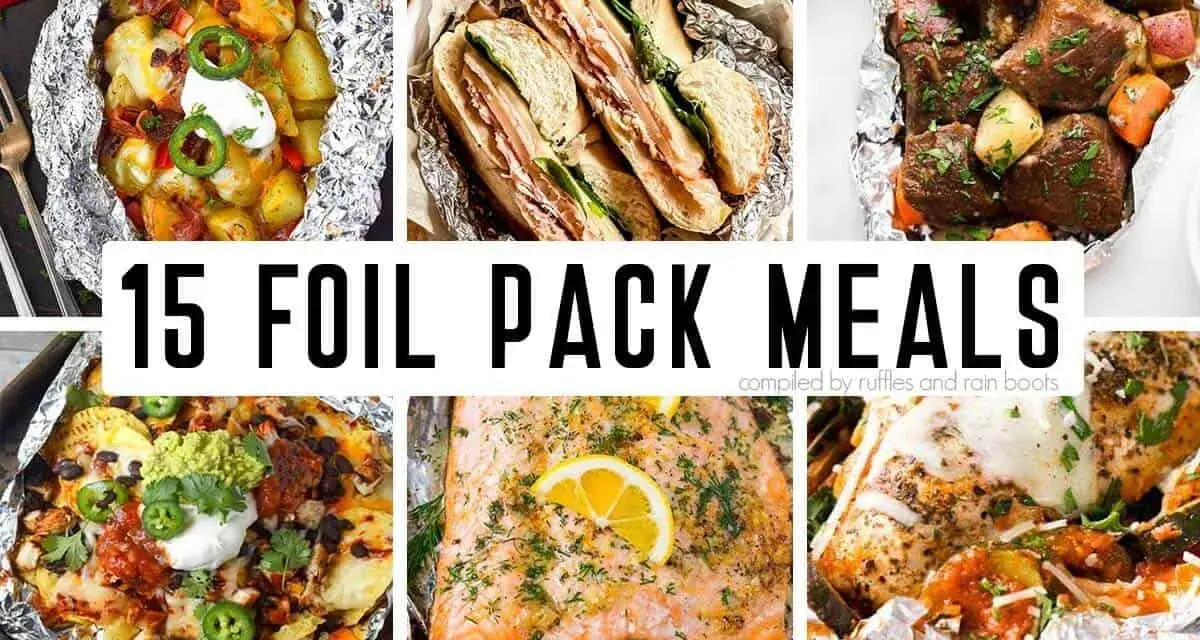
Foil packet cooking is one of the easiest ways to put a proper hot meal on the table at camp without creating a pile of pans to wash afterwards. The real trick is not just wrapping food in foil; it is choosing the right filling, sealing the packet properly, and cooking it over steady heat so the centre cooks through before the outside dries out. In this guide, I walk through the method, the best ingredients, the safest way to cook it, and the mistakes that most often ruin a campsite supper.
The quickest way to get a reliable camp meal
- Use heavy-duty aluminium foil, or double up regular foil if that is all you have.
- Keep the packet flat and tidy; a mound that is too tall cooks unevenly.
- Place hard vegetables lower down and delicate ingredients on top.
- Cook over embers, a grill, or a barbecue, not over open flames.
- Check the centre with a probe thermometer; in the UK, 75°C is a simple safe target for most meat and poultry packets.
- Open carefully, because trapped steam can burn faster than people expect.
Why foil packets work so well at camp
I like this method because the packet acts like a small steam oven. Juices, butter, and a little trapped moisture circulate around the food, so potatoes soften, vegetables stay seasoned, and the whole meal travels well in a cool box. It also suits campsite life: I can prep the food at home, chill it flat, and cook it later with almost no mess.
The limitation is just as important as the advantage. A good packet needs enough space for steam to move, and it needs steady heat rather than a fierce flame. Too tight, and the centre lags behind; too hot, and the foil scorches before the middle is ready. That is why the choice of foil and filling matters before you even start folding.
Choose the right foil, filling, and packet size
When I am building a packet meal, I think in layers. The foil has to hold together, the filling has to cook at a similar pace, and the total portion has to stay compact enough to heat evenly. A single adult packet is usually best when it is roughly 2.5 to 3 cm thick once sealed. That gives the steam room to move without turning the contents into soup.
| Part | What works best | Why it matters |
|---|---|---|
| Foil | Heavy-duty aluminium foil, or two layers of regular foil | Reduces tearing when you turn, lift, or unwrap the packet |
| Protein | Chicken thigh pieces, salmon, sausages, halloumi, chickpeas | These are camp-friendly and hold up well to packet cooking |
| Vegetables | Baby potatoes, carrots, courgette, peppers, onions, green beans | They soften at a pace that suits packet meals |
| Fat and flavour | Olive oil, butter, garlic, herb mixes, spice rubs | Helps prevent dryness and carries flavour through the packet |
| Wet or sticky fillings | Use parchment inside the foil if needed | Makes the packet easier to open and helps stop sticking |
I usually keep the filling simple rather than clever. The best packets are often the ones with a short ingredient list and one strong seasoning direction. Once the ingredients are balanced, the fold itself becomes the deciding factor.

How to fold a packet that stays sealed
This is the part that separates a tidy meal from a leaky one. I aim for a flat, sturdy parcel with a seam that can survive being turned with tongs. If the packet opens at the edges, the juices escape and the food dries out.
- Cut a sheet of foil about 30 to 35 cm long for one portion. Go larger if you are making a family packet or cooking a whole fillet of fish.
- If the foil feels thin, layer two sheets crosswise so the seams do not line up.
- Place the food in the centre, leaving at least 5 cm of border on all sides.
- Keep the mound low and compact. A packet that is too tall cooks unevenly.
- Add oil, butter, herbs, salt, and pepper. I rarely use more than 1 to 2 tablespoons of liquid per packet.
- Bring the long sides together over the filling and fold them over twice to make a tight seam.
- Fold and crimp the short ends so the packet is fully closed but not smashed flat.
- If the filling is wet, wrap the whole parcel in a second layer of foil.
I want a neat seam with no gaps, but I do not seal the packet so tightly that it becomes a hard little brick. A little air space inside helps steam circulate, which is exactly what you want. From there, the only real question is how to cook it without burning the outside.
Cook over steady heat, not flames
Foil packets cook best on steady, medium heat. On a campfire, that means glowing embers or grey coals, not active flames. On a barbecue, it means indirect heat with the lid down if possible. If I can control the heat, I can control the result.
| Method | Best setup | Typical time | Best for |
|---|---|---|---|
| Campfire embers | Place packets on glowing coals or on a grill above the coals | 12 to 25 minutes | Potatoes, chicken, mixed vegetables, sausage |
| Charcoal barbecue | Use a steady bed of coals and keep the heat indirect where possible | 15 to 25 minutes | Family meals and larger packets |
| Gas barbecue | Run at medium heat with the lid closed if the barbecue has one | 10 to 20 minutes | Fish, quick vegetables, pre-cooked ingredients |
I turn the packet once halfway through, using long tongs and a steady hand. That helps the heat distribute more evenly and stops one side from scorching. For raw meat and poultry, I use a probe thermometer rather than guessing; 75°C in the thickest part is a simple safe target in UK camp cooking, and I do not rely on colour alone. Fish should look opaque and flake easily, and I usually let packets rest for 2 minutes before opening so the heat settles.
Heat control is the difference between a well-cooked supper and a foil parcel with a burnt edge and an underdone middle. Once that is sorted, the filling itself becomes much easier to plan.
What to put inside for the best camp dinners
The most reliable packets are the ones built around ingredients that like the same cooking pace. I keep a few combinations in rotation because they work on a barbecue, over coals, or in a campsite grill pan if the weather turns. The point is not to be fancy; it is to be dependable.
| Packet idea | Why it works | Best cooking note |
|---|---|---|
| Chicken, baby potatoes, green beans, rosemary, butter | Classic one-packet dinner with a familiar flavour | Dice the potatoes small so they catch up with the chicken |
| Salmon, new potatoes, asparagus, dill, lemon zest | Light, fast, and excellent for a barbecue supper | Use parchment inside the foil if you want easier opening |
| Sausages, peppers, mushrooms, red onion, paprika | Very forgiving and easy for family camping | Slice the vegetables evenly so nothing stays crunchy |
| Halloumi, courgette, sweetcorn, mushrooms, oregano | A sturdy vegetarian option that does not fall apart | Add halloumi near the middle so it browns without drying out |
| Chickpeas, pumpkin, spinach, cumin, olive oil | Hearty meat-free meal with a warm, spiced flavour | Drain the chickpeas well before packing |
If one ingredient needs much longer than the others, I cut it smaller or pre-cook it at home. Foil packet cooking rewards even sizing more than clever seasoning. That principle saves a lot of disappointment, and it leads straight into the mistakes I see most often at camp.
The mistakes I see most often
- Using foil that is too thin - it tears when you turn the packet or lift it off the heat.
- Overfilling the parcel - the centre stays underdone while the outside goes soft.
- Mixing ingredients that cook at very different speeds - chunky potatoes and delicate fish rarely finish at the same time unless you plan for it.
- Adding too much liquid - the packet turns watery and the flavour gets diluted.
- Cooking over direct flames - the foil blackens before the food has a chance to cook through.
- Trusting sight alone - a browned packet can still hide an undercooked centre.
- Opening it toward your face - steam escapes fast and can burn skin in an instant.
If a packet needs rescuing, I double-wrap it, move it to gentler heat, and let it finish slowly. That is nearly always better than trying to rush the outside. Small corrections like that make the method far more reliable, which is why I keep one simple formula in mind every time I plan a campsite meal.
A campsite formula that always works
When I want a dependable packet meal, I use a simple structure: one protein, one starch, two vegetables, one fat, and one herb or spice. That gives enough balance to make the food satisfying without making the packet busy or awkward to cook. It also makes family camping easier, because everyone can share the same base while keeping the seasoning mild or bold depending on who is eating.
- Protein - chicken, salmon, sausage, halloumi, or chickpeas.
- Starch - baby potatoes, new potatoes, or sweetcorn.
- Vegetables - courgette, peppers, carrots, mushrooms, or green beans.
- Fat - butter, olive oil, or a spoonful of pesto.
- Finish - parsley, dill, rosemary, paprika, black pepper, or lemon zest.
When I prep at home, I assemble the packets flat, chill them in the cool box, and cook them the same day. That small bit of organisation makes camp cooking feel calmer: less guessing, less mess, and a much better chance that dinner lands hot, balanced, and ready at the same time as everyone else.
