
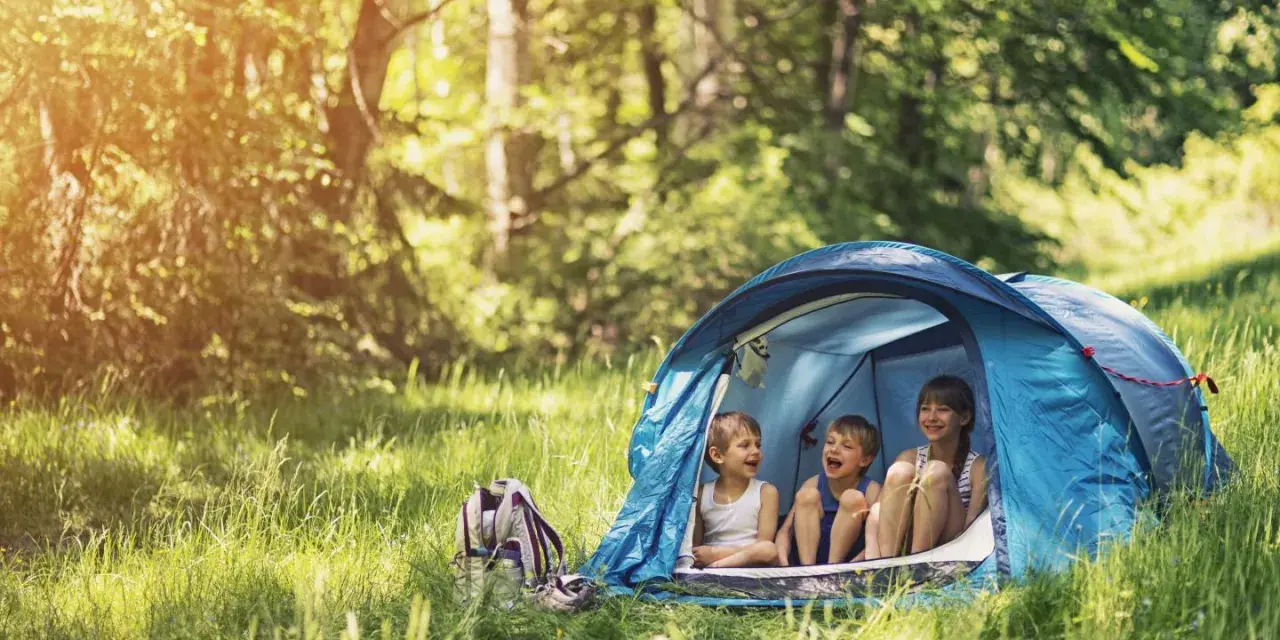
Good camping days are usually built from simple, well-timed moments rather than one big event. This guide covers the best camping activities for families, couples, and mixed-age groups, with practical ideas that work on British campsites where weather, daylight, and facilities can change the plan quickly.
What matters most is choosing activities that fit the site, the weather, and the people with you
- Start with the landscape: coast, woodland, lakeside, or open field all call for different kinds of fun.
- Keep one active idea, one calm idea, and one backup plan so the trip never stalls.
- Short games and simple challenges usually work better than long, complicated plans.
- Wet-weather options matter in the UK, so pack for drizzle rather than perfect sunshine.
- Evenings are often the most memorable part of the trip if you keep them easy and unforced.
Start with the setting, not the activity
I like to choose the activity after I have looked at the campsite itself. A coastal pitch, a woodland site, and a field beside a village all invite different kinds of movement, and that matters more than people think. If you match the plan to the place, the day feels easier and more natural.
That approach also helps when you are camping with children or mixed ages. A child who wants to explore will usually stay happier with a short trail, a den-building corner, or a scavenger hunt than with a long walk that was designed for adults. Adults, meanwhile, tend to enjoy the same trip more when there is a real reward at the end, such as a viewpoint, a swim, or a quiet fire in the evening.
| Setting | Best fit | Why it works |
|---|---|---|
| Coast or beach nearby | Rock-pooling, kite flying, beach games, sunset walks | There is enough space to move, and the sea gives the day a natural rhythm. |
| Woodland or forest site | Tree spotting, den building, nature trails, insect hunting | Shade and shelter make slower, more curious activities feel rewarding. |
| Lakeside or riverside | Skimming stones, paddling, birdwatching, canoeing where allowed | Water adds interest without needing a packed schedule. |
| Open field or farm campsite | Rounders, frisbee, ball games, flying a kite | Open space is ideal for simple, energetic play. |
Once you know what the site naturally supports, the rest of the trip becomes much simpler to shape.

Outdoor ideas that keep everyone moving
For daytime fun, I prefer activities that do not need much setup and can be stopped without drama. The best ones are flexible, cheap, and easy to scale up or down depending on energy levels. A 20-minute walk can be enough on one day; on another, the same walk becomes a full adventure if there is a stream, a viewpoint, or a wildlife sighting along the way.
- Short ramble or trail walk - Keep it to 30 to 90 minutes and choose a route that has one clear destination, such as a viewpoint, pub, beach, or picnic spot.
- Nature scavenger hunt - Make a list of 10 to 15 things to spot: a feather, a pine cone, three different leaves, a bird call, a yellow flower. It keeps children alert without feeling like homework.
- Bike ride - This works best when the campsite has safe routes nearby. It is a strong option for older children and adults who want to cover more ground without turning the day into a hike.
- Wildlife watching - Binoculars help, but they are not essential. Even a quiet 15-minute sit can turn into a proper activity if you ask everyone to notice birds, tracks, or insects.
- Den building - This is one of those classic camping activities that children will return to again and again. A tarp, a few pegs, and some cord can be enough to turn a patch of grass into a small project.
- Simple water play - If the site allows it and you are near a safe shallow area, paddling or stone-skimming can fill an hour without much effort.
I usually keep the day to one active block and one slower block. That stops the trip from feeling like a programme, which is exactly the point of being outside in the first place. It also leaves room for the sort of unplanned moments that often become the best memories.
Easy group games and challenges that need almost no gear
When people are tired, hungry, or new to camping, the simplest games are usually the ones that land best. I would rather have three short options than one elaborate activity that nobody wants to explain after dinner. The trick is to keep the rules light and the rounds short, usually 10 to 15 minutes at a time.
- Nature bingo - Give each person a small list of things to spot and tick off. It turns a walk into a game without extra noise or equipment.
- I-spy with a theme - Use plants, colours, campsite objects, or animals instead of random guesses. A theme keeps younger children engaged for longer.
- Story chain - One person starts a sentence, and everyone adds one line. This works especially well in the evening when everyone is settling down.
- Card games - Pack one compact deck and you can fill a wet afternoon, a quiet breakfast, or the last hour before bed.
- Camp Olympics - Keep it playful: longest skip, best stick whistle, fastest peg challenge, or the neatest packed rucksack. The point is not winning, it is getting everyone laughing.
- Photo challenge - Ask everyone to take one picture of something textured, one of something moving, and one of something unexpected. It gives older children and adults a shared mission.
The best version of these games is the one that feels almost accidental. If you have to sell it too hard, it is probably too much work for a campsite. A good rule is this: if it can start in under a minute, it is worth packing.
Rain-ready options for British weather
Anyone camping in the UK should have a plan for damp weather, even in summer. I do not mean a worst-case survival plan; I mean a realistic fallback that keeps morale steady if the sky turns grey for a few hours. The mistake most people make is waiting too long to switch. By the time everyone is cold and bored, the mood is already harder to rescue.| Wet-weather activity | What you need | Why it helps |
|---|---|---|
| Cards or board games | One compact game, a dry table or mat | Instant entertainment with almost no setup. |
| Sketching or journalling | Notebook, pencils, somewhere dry to sit | Good for quieter campers and older children. |
| Cooking under cover | A sheltered awning or communal space, simple ingredients | Makes the weather feel less like a problem and more like part of the trip. |
| Short rain walk | Waterproofs, boots, spare socks | A little drizzle is often manageable if everyone is properly dressed. |
| Indoor backup outing | Car access and a nearby attraction | Useful when the rain becomes the main story rather than the background. |
If I am packing for a family trip, I always include waterproof layers, dry bags, a spare fleece, and one calm indoor option that can be used at any time. That combination is boring in theory and extremely useful in practice. It keeps the trip flexible without making it feel overplanned.
Evenings are where a campsite usually wins
The evening is often the moment when a campsite feels most different from everyday life. The noise drops, the light changes, and people slow down in a way that is hard to fake at home. That is why I think the best evening activities should be simple rather than flashy.
- Stargazing - On a clear night, this needs almost nothing beyond a blanket and a bit of patience. It is one of the easiest ways to make the trip feel special.
- Campfire cooking - Only where permitted, and only with proper care. Toasting marshmallows or warming bread turns dinner into a shared event instead of a routine.
- Sunset walk - A 20-minute walk before dark can reset the whole evening, especially if the campsite is near water or open countryside.
- Torch games - Treasure hunts, shadow shapes, or a simple relay keep children entertained without needing screens.
- Slow storytelling - This is one of the cheapest and most memorable options. The point is not to perform, just to keep the group together a little longer.
I would always keep the fire or stove routine contained and calm rather than turning it into the centre of the night. A campsite evening works best when it feels like a wind-down, not a performance. That balance also makes the next morning easier, which matters more than most people expect.
How I plan a trip so the fun actually happens
The strongest camping plans are not the most detailed ones. They are the ones with enough structure to prevent dead time and enough space to let the day breathe. My rule is simple: bring one active idea, one low-energy idea, and one fallback for wet weather. That gives you options without turning the weekend into a timetable.
- Pack for the activity, not just the pitch - If you want walks, bring proper shoes. If you want games, bring a deck of cards or a ball. If you want evening time outdoors, add head torches and a blanket.
- Keep the first day light - Travelling, pitching, and unpacking already use up energy. A short walk or a small game is usually enough on arrival day.
- Use small, visible goals - Children often respond better to a 10-item hunt than to a vague promise of fun later on.
- Respect the site rules - Fires, noise, drones, bikes, and access paths all vary by campsite. Checking those rules early avoids awkward surprises later.
- Build around meals - Breakfast, lunch, and dinner naturally divide the day. If you place activities around those points, the trip feels more organised without becoming rigid.
When I pack, I also think in terms of comfort. A sit mat, dry socks, a thermos, sun cream, and a small towel can make the difference between an activity that feels easy and one that feels like effort. Those details do not sound exciting, but they are what keep people saying yes to the next walk, game, or evening outside.
The simplest plan is usually the one people remember
If I had to strip a camping trip back to its essentials, I would keep three things: one way to move, one way to play, and one quiet moment at the end of the day. That is enough to make the trip feel full without making it feel crowded.
The best camping trips do not try to entertain every minute. They create room for simple things to happen naturally, and that is where the good memories usually come from.
