
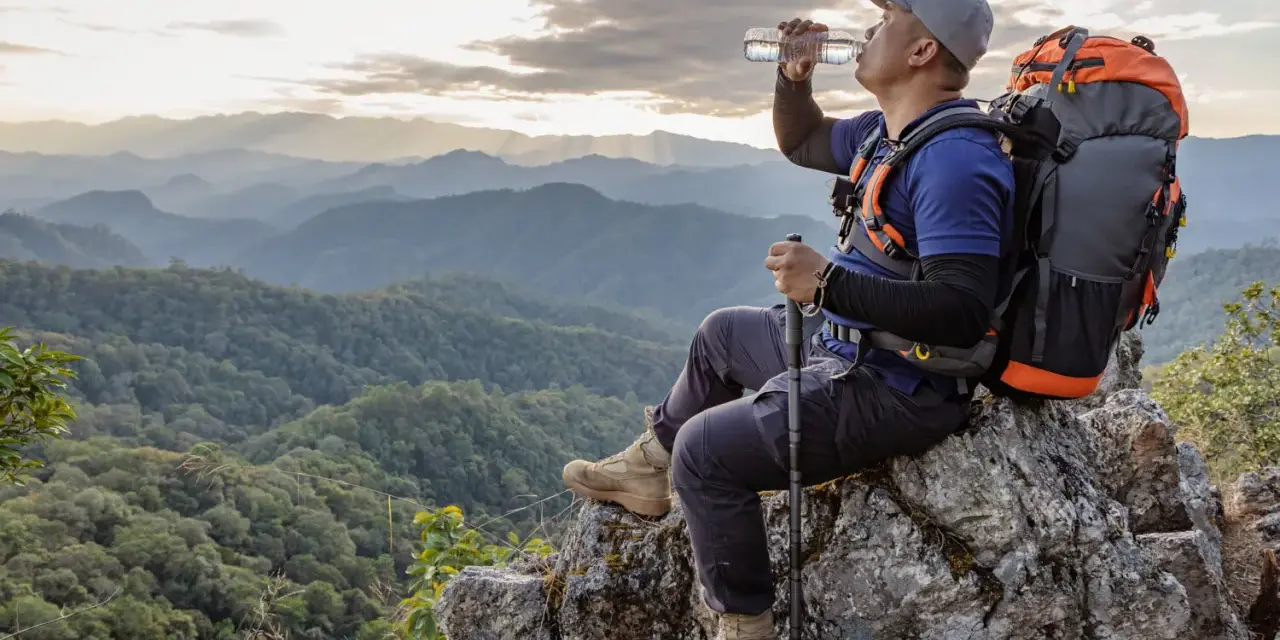
The real answer to how much water to bring backpacking depends on the next stretch of trail, the weather, and how easy it is to refill safely. I plan in litres rather than vague “a couple of bottles” terms, because a cool woodland route in the Peak District is a very different hydration problem from an exposed summer crossing on moorland or a long dry ridge. Here I’ll break down the numbers, the conditions that change them, and the simple checks I use to avoid carrying too little or wasting energy on dead weight.
Key takeaways at a glance
- 2 to 3 litres is a sensible starting point for many mild UK backpacking days between reliable refill points.
- 3 to 4 litres is safer on warm, exposed, or hilly sections where you will sweat more and refill less often.
- 4 to 6 litres may be necessary for long dry stretches, hot weather, or remote camps with no water nearby.
- For camp cooking and breakfast, add 0.5 to 1.5 litres per person if you cannot refill at camp.
- Natural water in the hills is not automatically safe, so plan to filter, treat, or boil refill water when needed.
- Use urine colour and how you feel to course-correct early, before thirst turns into a problem.
The short answer for most UK backpacking days
If I had to give one practical answer, I would say this: for a normal day in mild conditions, start with around 2 to 3 litres between reliable water sources. That usually covers a steady walking pace, a lunch stop, and a bit of margin for delays. If the route is warmer, more exposed, or steeper than expected, I would move that up to 3 to 4 litres.
The reason I avoid a single fixed number is simple. Water need is partly about distance, but it is also about effort, heat, wind, pack weight, and whether you can top up when you want to. A 1-litre bottle is also 1 kilogram once it is full, so the difference between “enough” and “too much” matters very quickly on a long day.
That baseline is useful, but the route itself decides whether you stay near it or move well above it. The next step is to turn that into a carry plan you can actually use on the trail.

A simple formula for the next stretch of trail
The easiest way to estimate a backpacking water carry is to work backwards from the next dependable refill point. I usually think in litres per hour, then add a small buffer for uncertainty. In moderate conditions, a useful working range is about 0.5 to 1 litre per hour, with the lower end fitting cooler, easier walking and the higher end fitting warm, exposed, or strenuous sections.
| Trail situation | Starting point I would use | Why it works |
|---|---|---|
| Cool, shaded, easy pace | 0.5 to 0.75 L per hour | You still need steady sipping, but sweat loss is lower. |
| Mild weather with hills | 0.75 to 1 L per hour | Effort rises on climbs, especially with a full pack. |
| Warm, exposed, or windy ridge | 1 L per hour or a little more | Sun and effort can drain you faster than the temperature suggests. |
| Long dry stretch with no reliable source | Plan for the whole gap, then add 500 ml | Buffer matters when the next source is uncertain or seasonal. |
So if you have a 4-hour section on a warm day, I would usually start at 3 to 4 litres for that stretch, then adjust based on the map and the forecast. If the next source is questionable, I add 500 ml to 1 litre rather than gambling on a perfect day.
Once the stretch is clear, the next question is what changes the number in real life.
What pushes your water needs up or down
On British trails, the biggest mistake is assuming the weather at the car park will match the weather on the ridge. I have seen cool starts turn into thirsty afternoons simply because the route opened out into sun and wind. The same distance can feel mild in a sheltered valley and much harder on an exposed moor or fell.
- Heat and sun increase sweat loss even when the day does not feel extreme.
- Wind can mask thirst because evaporation cools you, but the fluid loss still happens.
- Steep climbs and a heavier pack raise effort and breathing rate, which increases water need.
- Body size and sweat rate matter, so two hikers on the same trail may need very different amounts.
- Food choices make a difference too; salty or dehydrated meals usually call for more fluid at camp.
- Walking with children means more frequent drink breaks and a little extra margin, because they often do not flag thirst early.
The NHS notes that you may need more fluids if you are in a hot environment or physically active for long periods, and that matches what I see on the trail. The number on the bottle is only part of the picture; conditions decide how quickly that bottle empties.
Those variables matter even more when you are also planning where to sleep, because camp changes the math again.
Why camp water matters as much as trail water
Backpacking is not just about reaching the next checkpoint. If you are camping away from a tap, you need to think about dinner, breakfast, drinks, and basic hygiene. I usually treat camp water as a separate line item, not something I will “just figure out later.”
For a typical overnight trip, I would allow roughly 1 to 2 litres per person for camp use, depending on the meal plan. A dehydrated dinner, breakfast porridge, and a hot drink can easily use up 1 to 1.5 litres before you even think about rinsing a mug or cleaning a spoon. If I know I will be dry camping, I plan a little higher.
- Dehydrated dinner: usually 300 to 500 ml
- Breakfast porridge or similar: usually 300 to 500 ml
- Tea, coffee, or soup: usually 250 to 500 ml
- Basic wash-up and hygiene: a small extra margin if no water is nearby
I do not carry washing water all day unless I have to, because the weight adds up quickly. Instead, I try to arrive at camp with enough for the evening and enough confidence that I can refill safely if I need more. That leads straight into the part people often get wrong: where the water actually comes from.
Refilling safely from streams and taps
In the UK, a stream can look clean and still be poor drinking water. Livestock, runoff, and general contamination are enough reason for me to treat natural water unless I am absolutely sure of the source. If I am refilling from anything other than a trusted tap, I use a filter, treatment tablets, or boiling depending on the trip.
My rule is simple: if the source is not clearly reliable, I plan around the assumption that it needs treatment. That is especially true on popular or lowland routes, where water can pick up contamination long before it reaches you. A filter is the most convenient option on moving days, while tablets are light and useful as a backup.
- Reliable taps and campsite water are the easiest option when they are available.
- Streams and springs are useful, but I only trust them after treatment.
- Lakes and standing water need even more caution, because they are less predictable.
- Carry a backup if the whole route depends on one source that could be dry or contaminated.
The best water plan is not the one with the lightest bottle list. It is the one that keeps you hydrated without making you anxious about what is in the bottle. Once your refill strategy is sorted, the final piece is carrying the water in a way that does not ruin the hike.
How to carry enough without hating the weight
Because 1 litre of water weighs about 1 kilogram, how you carry it matters almost as much as how much you carry. I like to split water into containers that are easy to monitor, easy to refill, and easy to sip from while walking.
| Carry method | Best for | Trade-off |
|---|---|---|
| Two hard bottles | Straightforward trips and easy volume tracking | Takes a little more pack space, but I always know what is left. |
| Hydration bladder | Continuous sipping on the move | Harder to judge remaining water and more awkward to refill. |
| Soft bottle or flask | Shorter carries and lighter setups | Less rigid protection, so it is best as part of a system rather than the whole solution. |
| Collapsible reservoir | Camp water and emergency extra capacity | Useful, but not as convenient as a main trail bottle. |
For most UK trips, I prefer a simple split: one or two bottles for visible tracking, plus a bladder only if the route is long enough to justify it. That keeps the system obvious. When I can see the remaining water, I make better decisions and I avoid the classic mistake of finishing a climb with far less left than I expected.
And if your body starts sending warning signs, the plan has to change immediately, not later.
When to increase the amount immediately
You do not need to wait until you feel terrible before reacting. The early signs of dehydration are easy to miss if you are focused on pace or scenery, but they are the point where I start adjusting the plan. The NHS lists symptoms such as thirst, headache, dizziness, tiredness, and dark yellow urine, and those are the same signals I watch for on trail.
- Dark yellow urine means you are already behind and need to drink.
- Less frequent peeing is another sign that your intake is too low.
- Dizziness or light-headedness should make you stop, slow down, and reassess.
- Dry mouth, headache, and unusual fatigue are not things to push through on autopilot.
My practical check is simple: if the colour is getting darker and the day is getting harder, I do not wait for thirst to “catch up.” I drink in small amounts, slow the pace, and get back into the shade if I can. During exercise, small sips every 10 to 15 minutes are usually more effective than trying to recover with one big drink later.
With that in mind, here is the carry plan I would choose on a typical British weekend route.
The water carry I would choose on a British weekend route
On a mild one-day walk with regular sources, I would start with 2 litres and plan to refill once. That is enough for many British valley routes, forest paths, and easier ridge days where water is not far away. If the forecast is warm or I know the terrain is exposed, I move to 3 litres before I leave the car.
- Cool, wooded 10 to 15 km day: 1.5 to 2 litres is often enough if a safe refill point is available.
- Mild 15 to 25 km hill day: 2 to 3 litres is a sensible starting point.
- Warm, exposed or windy day: 3 to 4 litres gives more breathing room.
- Overnight with a dry camp: carry what you need for the hike plus about 1 to 2 litres for dinner, breakfast, and drinks.
If I am unsure, I prefer to carry a little more than I think I need and drink steadily, rather than start light and hope the route behaves. That approach keeps the pack sensible, protects against a longer-than-planned day, and still respects the fact that water weight is real. For me, the smartest backpacking hydration plan is the one that matches the route you actually have, not the one you wish you had.
